
192 search results for “a quiet cell with” in the Student website
-
Quiet rooms
Quiet rooms
-
Quiet room Gorlaeus Building
Gorlaeus Building, Einsteinweg 55, 2333 CC, Leiden
-
Quiet room Oude UB
Oude UB, Rapenburg 70, 2311 EZ, Leiden
-
Quiet room FSW building
FSW building, Wassenaarseweg 52, 2333 AK, Leiden
-
Quiet room Wijnhaven
Wijnhaven, Turfmarkt 99, 2511 DP, The Hague
-
Quiet room WSD-complex
Lipsius, Cleveringaplaats 1, 2311 BD, Leiden
-
Quiet room Van Steenis
Van Steenis, Einsteinweg 2, 2333 CC, Leiden
-
Quiet room Sylvius
Sylvius, Sylviusweg 72, 2333 BE, Leiden
-
Quiet room Oort
Oort, Niels Bohrweg 2, 2333 CA, Leiden
-
Quiet room KOG
Kamerlingh Onnes Building, Steenschuur 25, 2311 ES, Leiden
-
Quiet room Lecture Hall Gorlaeus
Lecture Hall, Einsteinweg 57, 2333 CC, Leiden
-
Study Rooms/Spaces
University Library, Witte Singel 27, 2311 BG, Leiden
-
 Micha Drukker
 -
 Dennis Claessen
 -
Library
Leiden University Libraries (UBL) has several locations in Leiden and The Hague. As a Leiden University student, you can make use of all locations.
-
 Willem Fibbe
 -
 Frank Schaftenaar
 -
 Douwe Atsma
 -
 Erik Danen
 -
Studying with autism spectrum disorder (ASD)
Autism spectrum disorder, or ASD, is the term for a range of neurodevelopmental conditions or differences which can impact your studies at Leiden University.
-
Studying with ADHD and ADD
AD(H)D stands for Attention Deficit(-Hyperactivity) Disorder, which is a common disorder that can impact your learning at Leiden University.
-
 Noortje Dannenberg
 -
 Joost Beltman
 -
 Luuk Reinalda
 -
 Tessa Vergroesen
 -
 Ewa Snaar-Jagalska
 -
 Anita Liao
 -
 Marjolein Crooijmans
 -
 Arthur Ram
 -
 Christine Mummery
 -
Study and co-working spaces
Study spaces
-
 Serkan Aslan
 -
LUMC receives tens of millions for research into new stem cell-based treatments
Leiden University Medical Center (LUMC), as a partner in the reNEW consortium, is once again receiving tens of millions of euros for research into new treatments based on stem cells. The collaboration will receive a total of €150 million to develop new therapies in regenerative medicine.
-
First patient in the Netherlands successfully treated with stem cell gene therapy
Researchers from the Leiden University Medical Center (LUMC) have successfully used stem cell gene therapy to treat a baby with the severe congenital immune disorder SCID. An important milestone: it is the first time stem cell gene therapy of Dutch origin has been administered to a patient, and also…
-
 Saloni Saxena
 -
 Joey Zuijdervelt
 -
 Peter Bouwman
 -
A Jonker-de Roode
-
Other facilities
Find out about the practical facilities available in and around the university to support you in your daily student life.
-
Stilteruimte Old Observatory
Old Observatory, Sterrenwachtlaan 11, 2311 GW, Leiden
-
Online teaching and assessment
Online education and assessments
-
 Joost Willemse
 -
 Lecture Hall
Einsteinweg 57, Leiden
-
 Sylvia Le Dévédec
 -
 Alireza Mashaghi Tabari
 -
 Bob van de Water
 -
 Gorlaeus Building
Einsteinweg 55, Leiden
-
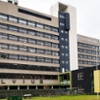 Sylvius
Sylviusweg 72, Leiden
-
 Remko Offringa
 -
 Jingchao Wu