2,693 search results for “stem cell differentiation” in the Public website
-
Development of organ-on-a-chip systems for translational and personalized medicine
We have developed a microfluidic platform for complex 3D organotypic cell cultures (so-called organ-on-a-chip systems) which are suited for integration in 96 or higher well plate format.
-
Chemical genetics strategy to profile kinase target engagement reveals role of FES in neutrophil phagocytosis, Nat. Comm. 2020
Chemical tools to monitor drug-target engagement of endogenously expressed protein kinases are highly desirable for preclinical target validation in drug discovery. Here, we describe a chemical genetics strategy to selectively study target engagement of endogenous kinases.
-
Small molecule prevents tumour cells from spreading
Leiden chemists, together with colleagues at the University of York (UK) and Technion (Israel) have discovered a small, sugar-like molecule that maintains the integrity of tissue around a tumour during cancer. This molecule prevents tumour cells from spreading from the primary cancer site to colonise…
-
Two-photon microscope captures plant cells
Leiden physicists are helping Wageningen plant researchers to study unpredictable plant embryos. For this, they are using a novel two-photon fluorescence microscope, aided by a 30 thousand euro ZonMW grant.
-
New insight into immune cell behaviour offers opportunities for cancer treatment
An international group of scientists has discovered that certain cells of our immune system – the so-called T cells – communicate with each other and work together as a team. To fight an infection they stimulate each other’s growth, but at the same time, they inhibit each other when there is a surplus…
-
Student experience
Lifelong learning | “Even though we were spread across five continents, there was a strong sense of connection.”
-
Careful restart Cell Observatory and labs
With the necessary measures, researchers restart their work in various laboratories. The Leiden Cell Observatory is one of the places where scientists resume their lab work.
-
Cancer cells play hide-and-seek with immune system
When the immune system attacks cancer, the tumour modifies itself to escape the immune reaction. Researchers at LUMC published on this subject in Nature on 28 June.
-
Exploring the potentials of nurture: 2(nd) and 3(rd) generation explant human skin equivalents
BACKGROUND: Explant human skin equivalents (Ex-HSEs) can be generated by placing a 4mm skin biopsy onto a dermal equivalent. The keratinocytes migrate from the biopsy onto the dermal equivalent, differentiate and form the epidermis of 1(st) generation Ex-HSEs. This is especially suitable for the expansion…
-
Immunity, Infection and Tolerance
Our immune system protects us against disease, but every now and then, something goes wrong: an enemy invades our bodies or our immune system attacks our own cells and we become ill. Doctors and researchers at the Leiden University Medical Center (LUMC) want to be able to manipulate the immune system…
-
‘How can we translate the language of cells into cancer therapies?’
On 23 April 2021, Professor Alfred Vertegaal from the Department of Cell and Chemical Biology at the Leiden University Medical Center (LUMC) delivered his inaugural lecture ‘Unraveling and exploiting cellular communication codes’. Vertegaal used the opportunity to describe how research in the field…
-
Polar auxin transport: translating environmental signals into plant developmental responses
1. What is the exact role of PIN proteins in PAT? 2. How is PIN polarity established, and how is it modulated by AGC kinase-mediated phosphorylation? 3. What is the role of the AGC kinase, as modulators of PAT, in translating environmental signals, such as gravity, light or mechanical stress, to plant…
-
 Tessa Vergroesen
Faculty of Science
-
 Luuk Reinalda
Faculty of Science
-
Cancer Drug Target Discovery
We focus on a better understanding of the mechanisms of cancer drug resistance and metastasis.
-
Auxin
Mathematical and computational analysis of the dynamics of polar transport of the plant hormone auxin.
- About this minor
-
Quantum particles and bacteria without cell walls: KLEIN grant for Beenakker and Claessen
Are Weyl particles the ideal conductors? Do cells without a cell wall play a role in chronic Tuberculosis infections? Carlo Beenakker and Dennis Claessen want to answer these questions. They both received a KLEIN grant from the NWO. With these grants, NWO wants to stimulate innovative, fundamental r…
-
 Ewa Snaar-Jagalska
Faculty of Science
-
Therapeutic Immunomodulation
The Therapeutic Immunomodulation Group is led by Prof. Johan Kuiper. In this group we aim to identify novel immunologic targets and apply immunotherapy to inhibit or even prevent the development of atherosclerosis.
-
Human iPSC Hotel
The LUMC iPSC Hotel offers the generation of research grade human induced pluripotent stem cells (hiPSCs) from different tissue sources using state of the art reprogramming techniques.
-
Mathematical modelling of adverse outcome pathways
In this project, we aim to develop mathematical models to mechanistically and quantitatively predict the dynamics of cellular stress pathway activation and its relation with toxic effects when cells are exposed to various toxicants.
-
Krijn Rietveld Memorial Awards
These awards honour researchers who turn scientific insight into real-world impact. From master’s students to postdocs, they highlight exceptional work in life sciences, health sciences, biotech, or environmental health sciences with data science at the core. Meet the 2025 winners.
-
Modulation of the immune system for treatment of atherosclerosis
Cardiovascular diseases are the primary cause of death in the world with atherosclerosis as primary underlying cause.
-
Specialised immune cells have potential for new cancer immunotherapies
Researchers from Leiden University Medical Center (LUMC) and Netherlands Cancer Institute (NKI) have discovered how specialised immune cells can detect and remove cancers that are ‘invisible’ to the conventional defence mechanisms of the immune system. Their work has been published in Nature. The findings…
-
How killer -T-cells migrate towards virus-infected cells
Joost Beltman (LACDR, Leiden University) has provided novel insights in the way T cells migrate towards virus-infected cells. This was accomplished by a combination of experimental research in the group of Ton Schumacher (Dutch Cancer Institute, NKI) and computer simulations in collaboration with Rob…
-
New cell therapy facility at Leiden Bio Science Park
American pharmaceutical company Bristol Myers Squibb will be building a new (CAR-T) cell therapy facility in the Oegstgeest part of the Leiden Bio Science Park. The company will manufacture and develop CAR T-cell therapy for patients with blood cancer (leukaemia), for example.
-
How cells talk by pulling on a fibre network
Mechanics play a larger role in blood vessel formation, and other developmental biology, than previously thought. Cells appear to respond to mechanical signals, such as pressure. Through the extracellular matrix, a network of fibrous proteins, cells can supposedly exchange those mechanical signals over…
-
Quantitative Super-Resolution Microscopy
Promotor: T. Schmidt
-
How oxygen deprivation causes cancer cells to spread
In breast cancer, metastasis rather than the primary tumour is the cause of death. A lack of oxygen in the tumour cells promotes this metastasis, accompanied by a reprogramming of the cell's metabolism. PhD candidate Qiuyu Liu investigated these alterations to get more knowledge about the actionable…
-
Capturing dynamics with noisy quantum computers
Quantum computing represents a fundamentally new computational paradigm, capable of addressing problems that are intractable for classical computers.
-
Sensing drug responses of single cells using optical tweezers
Light can be used to apply forces on single cells. Focused lasers have been used by physicists to tweeze particles and to manipulate them. These so called “optical tweezers” can be used as mechanical phenotyping tools for characterising the mechanics of materials and living objects.
-
Cancer cell mechanism found to be used against itself
Leiden biophysicists have found a new possible way to attack cancer cells. They have located ‘sinkholes’ on the cells where receptor proteins disappear from the surface. If a drug could push these proteins towards those areas, it would kill the cancer cell.
-
Bacteria without cell wall gobble up DNA from environment
A bacterium hiding from the immune system and picking up bits of DNA from its environment. The result: gaining new traits, such as better protection against antibiotics. Fortunately, we have not found such a damning scenario yet. However, PhD student Renée Kapteijn did find the first clues, which…
-
 Marjolein Crooijmans
Faculty of Science
-
Luca Giomi wins ERC Consolidator Grant for flowing cells
Theoretical physicist Luca Giomi receives a 2 million euro ERC Consolidator Grant for research into flowing cells in a strange hexatic phase, which is half fluid, half solid.
-
Immunotherapy to limit atherosclerosis
Atherosclerosis is a chronic inflammatory disease, and vaccination may be an attractive method to induce long lasting protection against endogenous factors that contribute to the development of atherosclerosis. We have shown that for example vaccination against modified LDL or interleukin-12 limits…
-
Greater understanding of specialised cell could prevent strokes
Ilze Bot wants to reduce the prevalence of cardiovascular diseases. Her research focuses on mast cells, which protect us from infections but can also make us ill.
-
Cells with stress: predicting drug-induced liver and kidney damage
How can we prevent drug-induced liver and kidney damage? PhD candidates Marije Niemeijer and Lukas Wijaya investigated what happens in the cells during the onset of this damage: a stress response. Both focused on a different subtopic and made some interesting discoveries.
-
How cells work together: the mathematics behind biological shapes
How do biological cells join forces to form a structure? In her PhD research, Daphne Nesenberend uses mathematics to show how forces and cooperation between cells create structure – and how simulations and experiments can reinforce each other.
-
 Emilie Prast
Faculty of Social and Behavioural Sciences
-
Computational modeling of tumor growth and metastasis and the role of the immune system in tumor destruction
In this project, we aim to obtain a quantitative understanding of the role of the immune system in tumor regression, of the role of tumor cell heterogeneity in cancer growth and of tumor cell migration properties.
-
forming embryo to cancer metastasis: the significance of collective cell movement
Luca Giomi has the first results of his ERC consolidator grant. He discovered that epithelial cells move collectively but in different ways, depending on the scale you look at. It is hexatic at small scales, and becomes nematic at larger scales: it is a multiscale order. This collective movement of…
-
Max Fernkorn
Faculty of Science
-
 Cecile Herbermann
Faculty of Science
-
 Eliane Züger
Faculty of Science
-
 Rafaella Buzatu
Faculty of Science
-
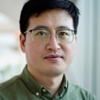 Jingchao Wu
Faculty of Science
-
 Benjamin Tak
Faculty of Science
-
 Daan Vlemmings
Faculty of Science