377 search results for “gene theory” in the Staff website
-
Two researchers receive Rubicon grant for research abroad
Uncovering ageing processes in the brain and research on the use of the word ‘that’. Thanks to a Rubicon Grant, two Leiden researchers who were recently awarded their PhDs will be able to conduct research at a research institute abroad.
-
Key for effective application of a new revolutionary cholesterol lowering drug resides in a 30 year old Leiden Patent
‘’ And then the world changed forever ,welcome to the future’’. These are the words that Kausik Ray (President of the European Atherosclerosis Society) spoke when the worldwide first dose of inclisiran, a novel SiRNA based cholesterol lowering agent, was administered at the Cardiology lipid clinic at…
-
Richard Karlsson Linnér: ‘I expect a future where a genetic test will be as much a no-brainer as getting X-rayed.’
Assistant Professor Karlsson Linnér, who works at the Department of Economics, is one of the recipients of a Veni grant. His research on the accuracy of preventive genetic testing is a fine example of the intersection of economic science and law.
-
Implications of Case (mis-)matches for theories of ATB-movement. Evidence from non-syncretic mismatches involving the genitive of negation in
Lecture, Com(parative) Syn(tax) Series
-
 Maria Boletsi
Faculty of Humanities
-
Paco Barona Gomez ready to work in Leiden: ‘Fundamental research creates opportunities’
Paco Barona Gomez is the newest associate professor at the Institute of Biology Leiden (IBL). The Mexican researcher is fascinated by the evolution of natural products: compounds made by microbes, but also plants and animals. ‘It’s like we investigate chemical dark matter.’
-
From droplets in the freezer to the inception of a potent new antibiotic
What started as an idea during a social gathering led to an unexpected breakthrough in research on resistant bacteria. Biologists and chemists from Leiden developed a new substance that proves to be effective against bacteria resistant to antibiotics. They published their discovery in Nature Chemist…
-
Students build software for real customers
Students gain practical experience while clients receive a solution to their software needs: the student software company LUdev hits two birds with one stone. ‘Through LUdev, students learn what else is involved in software development besides programming.’ Interested? You can now submit new projects…
-
700,000 euros for the fight against aggressive breast cancer
To inhibit proteins that contribute to the growth of aggressive cancer cells, that’s the plan of Professor Bob van de Water and his team. They will receive over 700,000 euros from the KWF Dutch Cancer Society for their research. Researcher Maaike Vreeswijk and pathologist Danielle Cohen are affiliated…
-
Leiden scientists join national effort to advance nanomedicine
A Dutch consortium has received €6.7 million to accelerate the development of nanomedicines together with patients. Researchers from Leiden University play a key role in the project.
-
Three Leiden researchers receive NWO Open Competition grant for innovative science
Sustainable biotechnology, new insights into genome evolution and combining forces in mathematics. The NWO has awarded grants to these three innovative Leiden research projects in the ENW-M Open Competition.
-
Why do we like winners so much?
Hardly anyone in the Netherlands ever watches skeleton racing. But we’ll soon be glued to our TV sets when ‘our’ Kimberley Bos slides down the track at the Olympic Games. All because she stands a good chance of winning a medal. Why do we like winners so much?
-
Sebastian Pomplun joins Oncode Institute to accelerate breakthroughs in cancer research
Sebastian Pomplun manages to reach proteins with drugs even where this was thought impossible. That is why he and his research group have been allowed to join Oncode Institute. With nine others, he had been selected from 72 applicants to contribute to Oncode Institute's mission: to accelerate breakthroughs…
-
Oncode Accelerator funds preclinical development of cancer therapies
Through its Demonstrator Projects, the Dutch Oncode Accelerator consortium provides grants for preclinical cancer therapy development. The first call for these projects is open until September 2025.
-
New Master’s programme in Transfusion Medicine and Cellular and Tissue Therapies
LUMC and Leiden University will start the new two-year online master's program in Transfusion Medicine and Cellular and Tissue Therapies from October 2023.
-
Vici grants for three Leiden researchers
Three Leiden researchers have been awarded a prestigious Vici grant, the Dutch Research Council (NWO) announced on Tuesday. Two of the researchers work at Leiden University and the third at the Leiden University Medical Center (LUMC).
-
Bioart plays with genetic building blocks
Biotechnological developments are moving fast. From genetically modified plant varieties we are now moving to cultured meat. These developments require moral interpretation - and they get it in the form of art. Lotte Pet wrote a dissertation about it.
-
Dissertation Prize for Developmental Psychologist Michelle Achterberg
For her research on social-emotional regulation in children Michelle Achterberg on Wednesday, May 25 2022 received the Dutch Association of Developmental Psychology (VNOP) Dissertation Prize. With her PhD research, she mapped out which mechanisms play a role in social emotion regulation in childhood.…
-
Nature Communications paper on therapeutic melanoma inhibition by local micelle-mediated cyclic nucleotide repression
Cancer immunotherapy represents a significant breakthrough in cancer treatment. However, tumors have numerous mechanisms by which they evade destruction by the immune system. It is therefore necessary to decipher and reverse these mechanisms in order to improve immunotherapies.
-
Leiden biologists get awarded 730k NWO grant
Salma Balazadeh, Víctor Carrión, and Jos Raaijmakers, biologists at the Institute of Biology Leiden (IBL), have successfully applied for an NWO grant and got awarded 730.000 euros. The board of NWO Domain Applied and Engineering Sciences awarded funding for their project within the Open Technology Programme…
-
Medical Delta Professor Eline Slagboom: ‘The delta region is where everything comes together’
Professor Eline Slagboom has been studying multiple generations of families for over 20 years. She collects data on why some people age healthily and others decline early.
-
Thirteen NWO Open Competition XS grants for Leiden researchers
From medicines from snake venom to supercrops and the origin of words. Thirteen researchers from Leiden University will receive Open Competition XS grants from the Dutch Research Council (NWO).
-
 Federico Capannoli
Faculty of Science
-
 Mirmukhsin Makhmudov
Faculty of Science
-
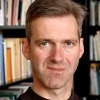 Ernst van Alphen
Faculty of Humanities
-
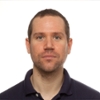 Vedran Dunjko
Faculty of Science
-
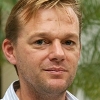 Yasco Horsman
Faculty of Humanities
-
 Frank Takes
Faculty of Science
-
 Kitty Zijlmans
Faculty of Humanities
-
Can extreme antisocial behaviour be traced back to the brain?
The brain structure of young people with conduct disorder differs significantly from that of their typically developing peers. This is the conclusion of an international study that analysed more than two thousand MRI scans, recently published in The Lancet Psychiatry. Dr Moji Aghajani, one of the principal…
-
Not wrapping but folding: Bacteria also organise their DNA (but they do it a bit differently)
Some bacteria, it turns out, have proteins much like ours that organise the DNA in their cells. They just do it a bit differently. This is revealed by new research from biochemists at the Leiden Institute of Chemistry and the Max Planck Institute for Biology. The discovery helps us better understand…
-
Researchers tackle antibiotic-resistant bacteria
When a bacterium becomes more resistant to one antibiotic, it sometimes becomes more sensitive to another. To better understand this interaction, researchers from the Leiden Institute of Biology (IBL) and the Leiden Academic Center for Drug Research (LACDR) under supervision of Daniel Rozen and Coen…
-
Microbiome ecology professor Ákos Kovács' new job feels like coming home
‘Working in Leiden is a dream come true.’ Ákos Kovács studied in his birth country Hungary and worked in Germany, Denmark and Groningen. As professor of Microbiome Ecology at IBL, he immediately started working together with his new colleagues to make discoveries about the versatile bacterial species…
-
'One in five bacteria we tested were capable of breaking down plastic'
Leiden PhD candidate Jo-Anne Verschoor discovered that nearly twenty percent of the bacterial strains she studied could degrade plastic, though they needed some encouragement to do so. ‘Bacteria are just like people,’ says Verschoor. Her research was published in the journal Communications Biology,…
-
Polypeptide Therapeutic Solutions and Universiteit Leiden Announce Collaboration to Develop Advanced Polyaminoacid Drug Delivery Systems
Polypeptide Therapeutic Solutions (PTS), a leader in the design, development and custom manufacturing of polyamino-acid based delivery systems for therapeutic drugs and the Leiden Academic Centre for Drug Research (LACDR) today announced a research collaboration to develop advanced drug delivery systems…
-
Are the brains of males different from those of females? Psychologists produce a podcast on brain research and mental health
Women are more often diagnosed with depression, whereas ADHD is much more frequently detected in men. And there are other more striking differences. What role does the brain play in mental health and what is the influence of the environment? For answers to these questions, listen to the ‘(Un)gendered…
-
Where does this Inca language come from? Verb conjugations should provide some answers
When university lecturer Martine Bruil was on exchange in Ecuador as a teenager, she fell in love with the area's ancient languages. Now, more than 20 years later, she is starting a research project on the kinship of the language Awapit with the Quechua language that was spread by the Incas.
-
Promising new technique to treat cancer receives NWO grant
Biological chemist Nathaniel Martin and his team received an NWO grant to examine how blocking a specific enzyme in our body, NNMT, could be helpful in the treatment of some cancers. Trials with mice have been promising, and together with the Netherlands Cancer Institute, Martin wants to take the next…
-
Oncode Accelerator launched: patients at the centre of innovative cancer drug development
Providing each cancer patient with the right treatment remains a challenge. Oncode Accelerator aims to change this by innovating the way we develop cancer treatments, thus ensuring the patient is at the heart of the process.
-
Vincent Niochet investigates intercultural connectivity in the deep past with an NWO PhDs in the Humanities grant
For already two years, Vincent Niochet has been affiliated with the Leiden Faculty of Archaeology as an external PhD candidate. Now, he has been awarded an NWO PhDs in the Humanities grant, allowing him to continue his research as a paid PhD staff member. ‘The past two years have been quite challenging,…
-
Four Leiden consortia awarded large NWO grants
No less than four Leiden research teams have been awarded a grant by NWO. On 27 July NWO honoured 21 applications in the Open Competition ENW-XL. NWO awards the grants to consortia in the exact and natural sciences who are doing unconnected fundamental research that is 'driven by curiosity'.
-
Jildau Bouwman new professor by special appointment
Jildau Bouwman has been named as professor by special appointment of the chair ‘Remote Health Monitoring’ at Leiden University. The systems biologist and TNO Digital Health Innovation figurehead will investigate how digital solutions can contribute to better healthcare at home. ‘Home care is often more…
-
Introducing: prof. Scott Nelson
Introducing prof. Scott Nelson, the Legum Professor of the Social Sciences at William and Mary, and on the spring exchange at the University of Leiden.
-
Veni grants for 16 Leiden researchers
Sixteen researchers at Leiden University are to receive a Veni grant from the Netherlands Organisation for Scientific Research (NWO). These awards offer promising young researchers the opportunity to further develop their own ideas over a period of three years.
-
Back to the scanner: brain science in times of corona
For their research many neuropsychologists use the brain scanners at the LUMC. At the start of the pandemic, the rules for visiting the hospital became stricter and a large amount of psychology research looked as though it would fall through. Thanks to good protocols the researchers can now pick up…
-
3 October University: from Russian DNA to drug-related violence
In prehistoric times there was a huge wave of migration, from the steppes in Russia and Ukraine to West Europe. The newcomers’ genes began to dominate. Archaeology research in Leiden into burial mounds in the Veluwe and Utrechtse Heuvelrug areas of the Netherlands yielded this spectacular conclusion.…
-
What makes us ill?
Genes predict whether you have a propensity for an illness but environmental factors often have the last word: nutrition, air pollution, lifestyle, stress. The exposome as both culprit and chance. Large-scale research is being carried out into this at Leiden. Thomas Hankemeier, Professor of Analytical…
-
Stiffness and viscosity of cells differ in cancer and other diseases
During illness, the stiffness or viscosity of cells can change. Tom Evers demonstrated this by measuring such properties of human immune cells for the first time. ‘The stiffness of certain cells could be a way to make a diagnosis,’ Evers said. He defended his thesis on March 26th.
-
Nutrition and fasting for the brain: why the Keto diet shows promise
Autism, Alzheimer’s, and bipolar disorder: can the development of these mental health conditions be influenced by the ketogenic diet? Increasingly, research suggests it might. 'For those it helps, it can be life-changing,' says neuroscientist Eline Dekeyster.
-
Students work on bacterium that makes sustainable plastic
A group of biology students are working on a solution to the world’s plastics problem by getting bacteria to make biodegradable plastic.