895 search results for “staten cell technology” in the Staff website
-
Blue Sky Workshop: Terrorist Exploitation of Artificial Intelligence
On 7 and 8 November 2024, the International Centre for Counter-Terrorism (ICCT), the Institute of Security & Global Affairs at Leiden University, and The Netherlands’ National Coordinator for Security and Counter Terrorism (NCTV) partnered to host a ‘Blue-Sky’ Terrorist Exploitation of Artificial…
-
Should states use Social Media to warn civilians in armed conflict?
In a new essay for Ethics & International Affairs, Dr Henning Lahmann, Assistant Professor of International Law & Technology at eLaw, addresses the question whether states should resort to social media to warn a civilian population ahead of military operations.
-
Atherosclerosis resembles an autoimmune disease. Marie Depuydt graduated on this topic, with honours
In addition to cholesterol and high blood pressure as risk factors for atherosclerosis, we may need to address our own immune system to prevent a heart attack or stroke. Marie Depuydt revealed which cells exactly reside in the atherosclerotic plaque that narrows an artery. The presence of a diverse…
-
Healthcare Information System Engineering: AI Technologies and Open Source Approaches
PhD defence
-
AI and the green transition: a ‘match made in heaven’?
Artificial intelligence (AI) is often portrayed as a technological saviour for addressing climate change. But there are risks associated with its use, observes Barrie Sander.
-
Interview Micha Drukker
Micha Drukker
-
Bart Custers in Trouw about new European digital identity
Europe is working full steam towards a digital identity for every EU citizen. And although it might be really useful to be able to hire a car everywhere in the EU with no hassles, Bart Custers, Professor of Law and Data Science at eLaw, the Center for Law and Digital Technologies, sees many loose ends.…
-
On barriers and bridges: autoimmune rheumatic diseases and the road to a cure
Hans Ulrich Scherer is Professor of Rheumatology, in particular Translational Rheumatology. He wants to build bridges between research and clinical practice and between departments and organisations at home and abroad. Scherer will give his inaugural lecture next Friday. ‘To make progress, we have to…
-
Templeton Grant Drukker News
In a project funded by the John Templeton Foundation to the group of Micha Drukker, scientists will produce stem cells from short and long living understudied species to model cellular and organismal lifespan.
-
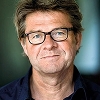 Patrick Dassen
Faculty of Humanities
-
Silver and light: a powerful combination with the potential to save lives
Packages of DNA strands containing silver, measuring just two or three nanometres in size. Leiden physicists Donny de Bruin and Dirk Bouwmeester create these packages, which can enter living cells on their own. They then activate the silver with light, causing the cells to break down. This could, in…
-
Preventing heart attacks by earlier detection of cardiovascular disease
In the Netherlands, 1.55 million people suffer from cardiovascular diseases. Yet, acute cardiovascular events, such as a heart attack or stroke, often occur unexpectedly. That is because many people do not know they are at risk for such an event. Immunological researcher Amanda Foks and her colleagues…
-
Investigating inflammation: new leads for treating atherosclerosis
How do you detect people at high risk of heart attacks and strokes? And how can we improve the treatment of atherosclerosis? These are the questions that keep LACDR researcher Marie Depuydt busy. She is investigating the immune cells that contribute to the worsening of atherosclerosis. ‘It's a challenging…
-
LUMC participates in pioneering type 1 diabetes research
The promising early results of an international study have shown that insulin-producing cells grown from stem cells can cure the disease. The new Cure One LUMC research centre aims to accelerate this breakthrough.
-
Gianclaudio Malgieri Appointed Co-Rapporteur for International Project on Biometrics Governance
Dr Gianclaudio Malgieri, Associate Professor at eLaw – Center for Law and Digital Technologies, has been appointed Co-Rapporteur for a new joint project of the European Law Institute (ELI) and the American Law Institute (ALI): 'Principles for the Governance of Biometrics'. The project aims to formulate…
-
More attention than ever for digitalisation within the government: ‘A good thing’
Minister of Digitalisation Alexandra van Huffelen will give a guest lecture on the government’s ambitions in the field of digitalisation on Monday 12 September. Bram Klievink, professor Digitalisation and Public Policy and founder of The Hague Centre for Digital Governance will act as mediator. ‘Digitalisation…
-
New Master’s programme in Transfusion Medicine and Cellular and Tissue Therapies
LUMC and Leiden University will start the new two-year online master's program in Transfusion Medicine and Cellular and Tissue Therapies from October 2023.
-
Publication on the design of multifunctionalized nanoparticles
Despite considerable progress in the design of multifunctionalized nanoparticles (NPs) that selectively target specific cell types, their systemic application often results in unwanted liver accumulation. The exact mechanisms for this general observation are still unclear.
-
Joey Zuijderveldt won first prize in the ‘Schild-De Groen Onderzoeksprijzen' for cancer research
One of our PhD candidates at the LACDR, Joey Zuijdervelt, recently achieved recognition by winning the first prize in the ‘Schild-De Groen Onderzoeksprijzen’ for cancer research. His award-winning master’s thesis explored glioblastoma multiforme through an innovative orthotopic zebrafish xenograft model,…
-
Turning the tables on tuberculosis: boosting our own immune forces
Tuberculosis bacteria survive by hiding in our immune cells. In her PhD research, biologist Salomé Muñoz Sánchez explores how boosting the body’s own defenses might outsmart this deadly pathogen. Her work reveals two key proteins that help immune cells destroy the bacteria.
-
Modified caffeine molecules help medical research move forward
Before researchers can develop targeted drugs, they need to know exactly how a disease works. Biochemist Bert Beerkens created molecules that allow them to find out. He used caffeine as the basis for new molecules that enable research into certain receptor proteins on cells.
-
Book presentation: 'Stop the Machines: The Rise of Anti-Technology Extremism'
Book presentation
-
New platform to accelerate cardiac drug development
Researchers from Leiden University Medical Center (LUMC) and the Leiden-based biotech company Ncardia have joined forces to develop a new platform that enables the automated production of 3D cardiac microtissues. This platform will allow large numbers of drugs to be tested quickly
-
‘Look beyond your own discipline’
Good research means looking beyond disciplinary boundaries, said Professor of Molecular and Cellular Biochemistry Remus Dame in his inaugural lecture on 10 May. Processes that take place on DNA shouldn’t only be researched in a test tube but also in living cells, for instance.
-
Study evening: Technology and Police training: Forging the next generation of policing professionals?
Lecture
-
Malformations in heart, eyes and nervous system: Nano-plastics disrupt growth
Nano-plastics cause malformations. Meiru Wang, researcher at the Institute of Biology Leiden, looked at the extreme effects polystyrene nano-particles could have, using chicken embryos as a model. Her results were quite alarming. Especially as nano-particles are everywhere. In the air, floating through…
-
Researchers discover how malaria parasite survives in mosquitoes
Researchers from Leiden University Medical Center (LUMC) have discovered how malaria parasites escape the immune system of mosquitoes. The so-called QC enzyme changes proteins on the outside of the malaria parasite such that the immune cells are unable to recognise the parasite. As a result, the parasite…
-
Unlocking the secrets of DNA repair: Sarah’s curiosity might lead to new cancer treatments
How do cells repair their damaged DNA—and what happens when that process is hindered and cancer arises? Sarah Moser has taken a closer look during her PhD, uncovering surprising insights that could help improve future cancer treatments.
-
 Arye Schreiber
Faculteit der Rechtsgeleerdheid
-
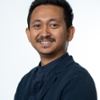 Faiz Rahman
Faculteit der Rechtsgeleerdheid
-
 Li-Ru Hsu
Faculteit der Rechtsgeleerdheid
-
 Gianclaudio Malgieri
Faculteit der Rechtsgeleerdheid
-
Inga van Doornmalen
Faculteit der Rechtsgeleerdheid
-
 Maria-Lucia Rebrean
Faculteit der Rechtsgeleerdheid
-
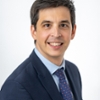 Benjamyn I. Scott
Faculteit der Rechtsgeleerdheid
-
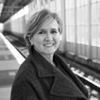 Valerie Frissen
Faculteit der Rechtsgeleerdheid
-
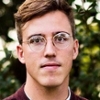 Daniel Vale
Faculteit der Rechtsgeleerdheid
-
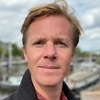 Marc van der Ham
Faculteit der Rechtsgeleerdheid
-
 Ahlam el Barnoussi-el Mhamdi
Faculteit der Rechtsgeleerdheid
-
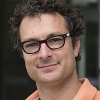 Jeroen Codee
Faculty of Science
-
 Gera van Duijvenvoorde
Faculteit der Rechtsgeleerdheid
-
 Gerrit-Jan Zwenne
Faculteit der Rechtsgeleerdheid
-
 Bart Schermer
Faculteit der Rechtsgeleerdheid
-
 Francesco Buda
Faculty of Science
-
 Marcellus Ubbink
Faculty of Science
-
 Sander van Kasteren
Faculty of Science
-
 Oliver Tuazon
 -
 Rachel Williams
Faculty of Social and Behavioural Sciences
-
 Alexander Vahrmeijer
Faculty of Medicine
-
David van Westerloo
Faculty of Medicine