Alumni event | Arts and Culture
Contemporary Art History and Theory in a Global Perspective - Joint Art Talk by Matthew Rampley and Vera Wolff
- Date
- Thursday 7 May 2026
- Time
- Address
-
Academy Building
Rapenburg 73
2311 GJ Leiden - Room
- Telders Auditorium
With this duo lecture, we are delighted to introduce our new Professor of Contemporary Art History and Theory in a Global Perspective. Dr. Vera Wolff will join our department in the next academic year, and we are very pleased to welcome her on this festive occasion.
We have chosen to mark this introduction with a joint lecture in order to situate research on contemporary art within a broader intellectual and global framework. There is no better interlocutor for this purpose than Prof. Matthew Rampley, whose work on the historiography of modern and contemporary art provides an ideal context for this conversation.
The lecture takes place in the Academy building (Telders Auditorium) and starts at 17:00h. Entrance is free.

Lecture by Matthew Rampley: The Problem with Socialist Globalism: Counter-paradigm or a Case of Projection?
In recent years there has been a growing interest in the attempts by the Soviet Union and its allies in socialist Europe to develop cultural networks with the Global South between the 1950s and the 1970s. It has been claimed that they constituted an anti-colonial global politics that stands opposed to the neocolonialism of the United States and Western Europe. In art history, for example, there has been interest in exhibitions and artistic exchanges with Latin America or the newly decolonised states of Asia, Africa. Much of this argument has relied on individual case studies. Yet if we take a synoptic view, how true is it that socialist globalism was a genuine, alternative model of co-operation? Already in 1955 it was complained at the Bandung Conference that the Soviet Union was not so different from the former colonial powers of Europe. Moreover, was the idea of a commitment to anti-colonial solidarity in art genuine, or was it a matter of ideologically charged rhetoric instantiated in just a few examples? This talk examines recent debates over socialist globalism in art, and it considers the question as to how much can be inferred from case studies as a method of research. More generally, it asks: was it a real counter-paradigm, or are the arguments based on a kind of wish fulfilment, leading to a projection of contemporary preoccupations onto a reading of the past?
Prof. Matthew Rampley works at the Department of Art History of Masaryk University in Brno, Czech Republic.
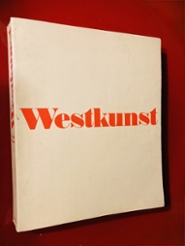
Lecture by Vera Wolff: ‘Westkunst’ from Japan, or Contemporary Art Since 1939
In 1981, Westkunst. Zeitgenössische Kunst seit 1939, a now legendary, and highly controversial exhibition was held in the halls of the Cologne Trade Fair. Contrary to what its title suggests, Westkunst featured art works not only from the USA or Western Europe, but also from South and Central America, the Near and the Far East. Accordingly, the show was critized for its “imperial pretensions,” as it appeared to reproduce the Cold War’s geopolitical order. At the same time, however, Westkunst can also be read as an attempt to lay bare the historical construction of what had come to be called “Western art”. This talk will situate the exhibition within a broader field of contemporaneous and subsequent projects in global art history and Cold War history of knowledge. Thus, it will explore both the limitations and the analytical possibilities arising from the historical Westkunst project, centering on the question of what a history of contemporary art can make visible which rejects the idea of progress and operates without it.
Vera Wolff is a Senior Associate Member of the documenta Institute and has been an Assistant Professor at ETH Zürich. As of August 2026, she will take up the Chair of Contemporary Art History and Theory in a Global Perspective at Leiden University.