
LUF grant for Urban Studies aims to make The Hague safer and greener
Starting this semester, Urban Studies students will be able to work on the urban development of the municipality of The Hague. A LUF incentive grant will enable them to put their knowledge into practice even more effectively. At the same time, a study will be started on the optimal use of urban space.

The LUF grant is awarded twice a year to interdisciplinary research projects. ‘In Urban Studies, we already work with people from different faculties, which made it easy to put together an interdisciplinary team,’ says assistant professor and programme chair Alistair Kefford. ‘What’s more, our project involved both research and education. Normally, you have to choose whether your project focuses on research or on education. We chose to do both at once. Fortunately the LUF also considered this to be an enrichment.’
Collaboration with the municipality
Both the researchers and the students will collaborate with the municipality of The Hague in this project. The aim is to improve the city’s public space. ‘Many municipalities are struggling with the question of how to make urban spaces greener, healthier, safer and more inclusive all at the same time,’ Kefford summarises. ‘As humanities scholars, we are used to dealing with all kinds of different perspectives. Ultimately, we want to deliver a toolkit that municipalities can use to address these kinds of issues.’
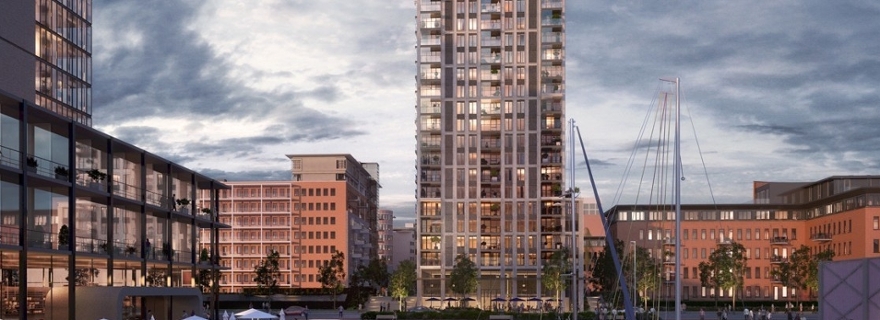
The Binckhorst neighbourhood in The Hague will serve as a testing ground for this project. Located next to The Hague Holland Spoor railway station, this area has been transformed in recent years from an industrial zone to a regeneration district focused on innovative start-up enterprises and attracting new residential populations. Kefford: ‘The municipality of The Hague wants to involve its residents more in ways to make public spaces more attractive. We will therefore also have our students work outside the lecture hall a lot, for example by talking to residents in outdoor spaces. In the context of creative writing, this can lead to new narratives about the meaning of space for people, but we also want to use VR glasses to test how people respond to different types of spatial design.'
Living lab for the future
A new ‘living lab’ to be set up in Binckhorst will play an important role. 'Various small-scale experiments are already underway in Binckhorst to make public spaces more attractive, for example by providing e-bike charging points. We can send our students there to do research that they can then use later for their thesis.' The LUF grant will expire in two years, but Kefford expects that the initiatives currently being set up will continue to exist after that. ‘Once we have the infrastructure in place, we can continue to use it indefinitely.’