
Students come up with creative solutions to make Leiden-Noord healthier
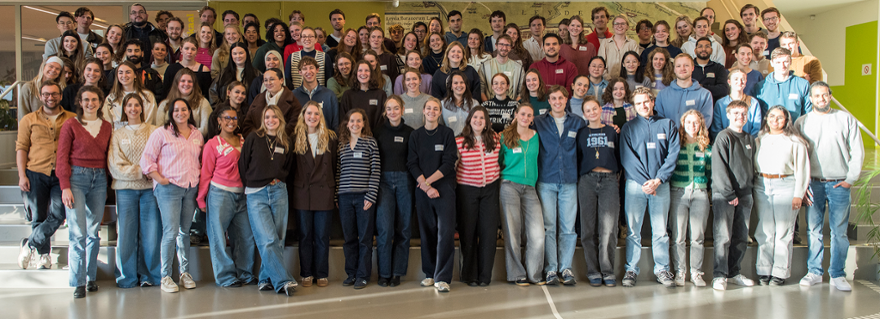
Nearly 100 students from Leiden University, University of Applied Sciences Leiden and mboRijnland worked together to improve the health of Leiden-Noord. They presented their ideas in Het Gebouw community centre.
Small teams of students spoke to healthcare professionals and residents to learn more about the community’s health. Then they brainstormed on how to improve it. They presented their ideas on posters at a small market in Het Gebouw.
Community Kitchen
Several groups focused on nutrition to improve the neighbourhood’s health. Medical student Laura’s group, for example. ‘We heard that 43% of the residents of Leiden-Noord are overweight, and wanted to think of a way to encourage healthy eating.’
This led to the idea for the Community Kitchen, where parents and children cook together each month. ‘The children go to the allotment to pick vegetables and learn about seasonal vegetables and how food grows. Then they cook with their parents and discover that healthy food can taste good too.’
The group consisted of medical students and a senior secondary vocational education and training (mbo) student who is studying Social Work. ‘That was really useful,’ says Laura. ‘She could explain how to start a conversation with parents and how to find out why they find healthy eating difficult.’
Learning with the City
The assignment was part of Learning with the City. This Leiden teaching innovation is a collaboration between the university, the university of applied sciences, mbo, the municipality and civil society organisations. In dialogue with residents and professionals, students tackle urgent challenges in the city.
Easy lifestyle check
The Community Kitchen would be held in Het Gebouw, where local residents have already been having their blood pressure, BMI and blood sugar monitored by trainee GP assistants for some years now. This ‘Health Information Point’ (Gezondheidsinformatiepunt, GIP) was set up because of a lack of internship places for trainee GP assistants.
The GIP has been so successful that they are now considering whether students from other programmes could also help relieve the burden on healthcare providers in the neighbourhood and make the neighbourhood healthier.
A group of medical students (university), trainee GP assistants (mbo) and a student of Social Legal Services (university of applied sciences) proposed a lifestyle check as a GIP service alongside the medical check. ‘We want medical and nursing students to help out at the GIP,’ said medical student Suzanne. ‘They could do a lifestyle check and refer people to the help available in the neighbourhood.’ And students from the new Health, Prevention and Lifestyle internship want to gain more practical experience in the city.
The students gave the example of an 80-year-old man with backache. More exercise could relieve his backache. ‘He could be advised to join a walking group that sets out from Het Gebouw,’ Suzanne explained. ‘That’s an easy way for him to improve his health and would mean he returns with other questions too.’
-
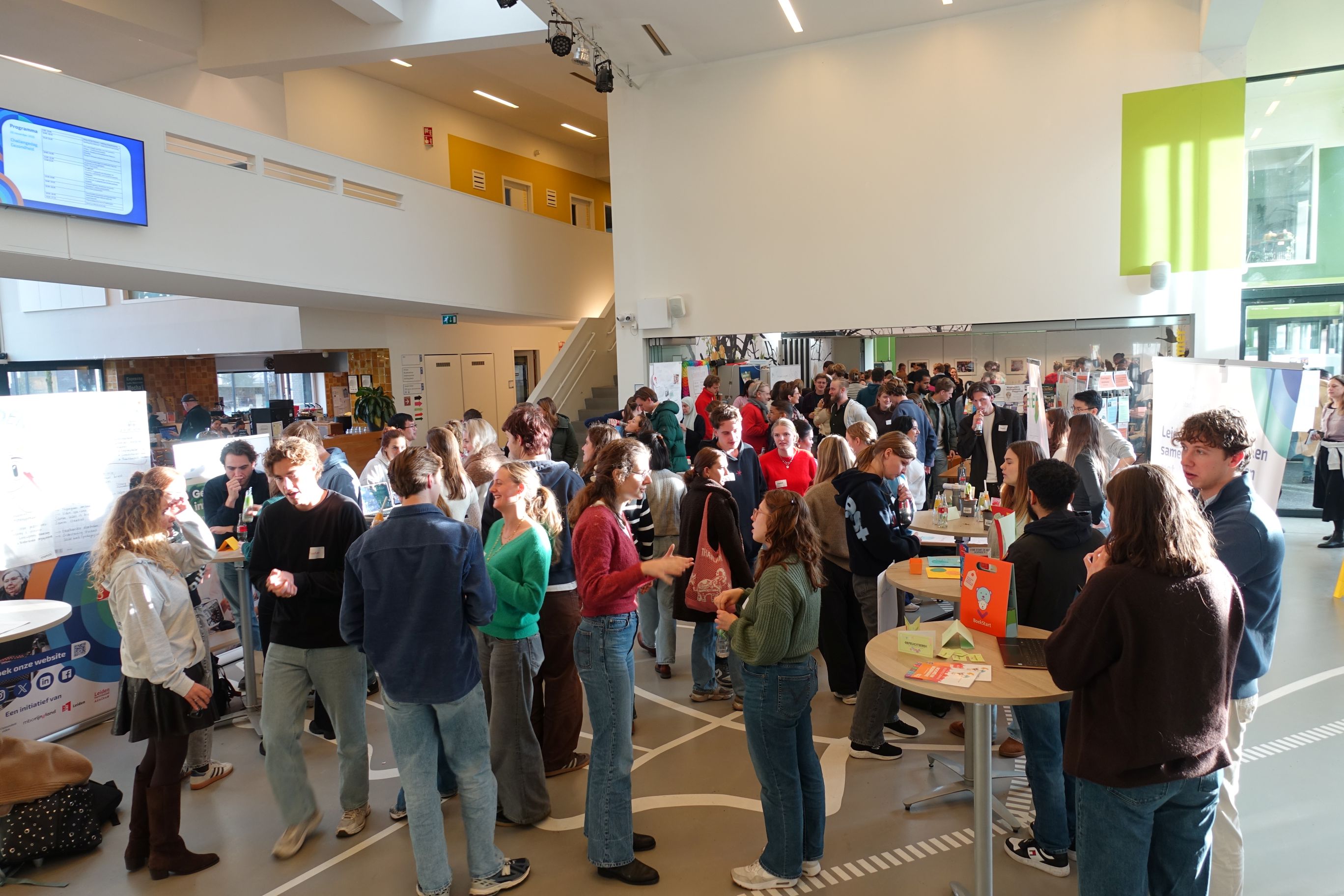
The students presented their ideas in Het Gebouw -
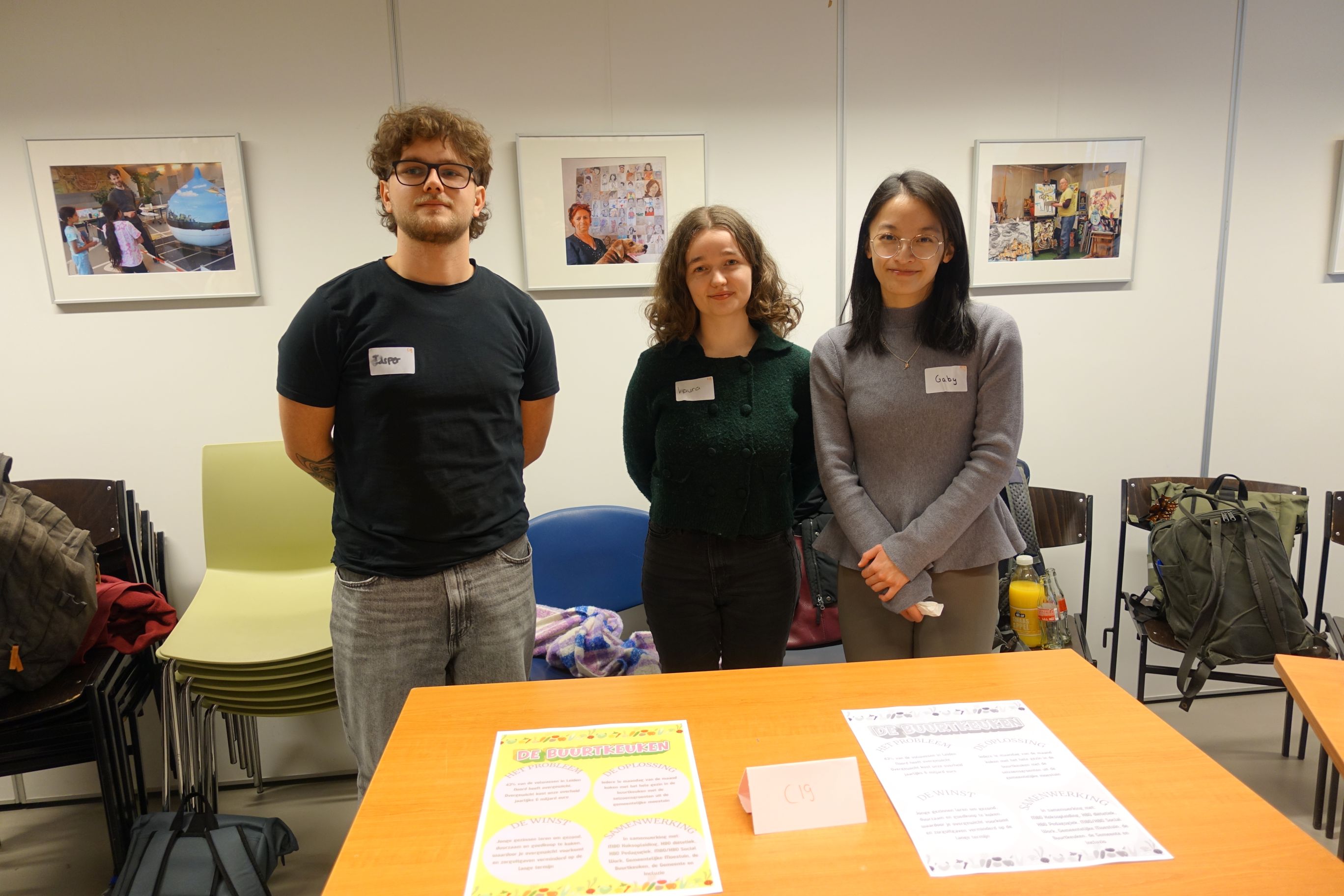
Laura’s group (centre) with their idea for the Community Kitchen where parents and children cook healthy meals every month -
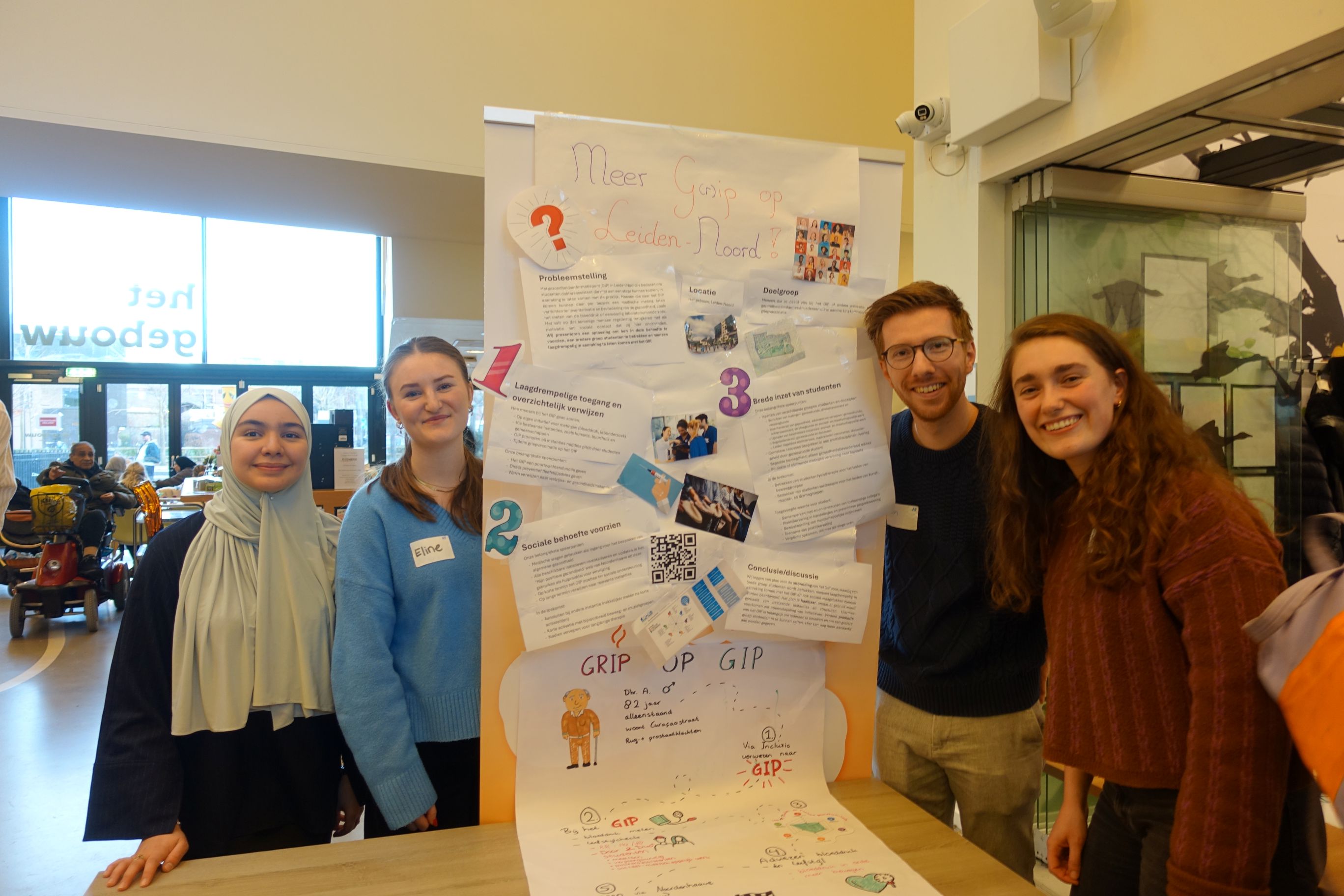
Suzanne (right) and her teammates came up with easy ways for people to improve their health
Talking to teens
Opposite are a group of students who focused on families with teens. ‘This morning we spoke with the CJG [Centre for Youth and Families, Ed.] and they said parents find it difficult that once their children go to secondary school, they no longer know what they’re up to,’ said medical student Mischa. ‘I think lots of parents discover that teens can be difficult to talk to.’
But it’s important to keep the communication open so they know how their child is doing and which difficult topics to discuss with them. ‘Parents sometimes think their child doesn’t do a certain thing, like vaping, and then they don’t ask about it,’ Mischa explains. ‘So our idea was for Social Work students to give sessions on how to talk to your child. Certain questions create openings for a conversation.’
Medical students and Social Work students worked on the idea together. ‘It was great fun because you’re usually in a bubble with medical students,’ said Mischa.
Oral hygiene
Further along, a group stands in front of a large poster saying ‘Tooth-Cleaning Heroes Week’. These students saw that Het Gebouw doesn’t offer anything in the way of oral health. ‘We heard that many Leiden-Noord residents don’t go to the dentist,’ said medical student Lara. ‘So we came up with a combined intervention.’
At the last appointment at the child health clinic, when children turn four, parents would be informed about the dental hygienist (a service the students want the community centre to offer). The parents would be able to visit the dental hygienist with their child for a checkup and information about tooth brushing. ‘We also want students to provide information about going to the dentist,’ said Lara. ‘Many people don’t know that it’s free until you turn 18. Many people think the dentist is expensive. We also want to help people with a language barrier resiger with a dentist.’
Their second intervention is Teeth-Cleaning Heroes Week. Then children can come to Het Gebouw for information on tooth brushing and why that’s so important. ‘We want to involve education students or students from teacher training college,’ says Lara.
-
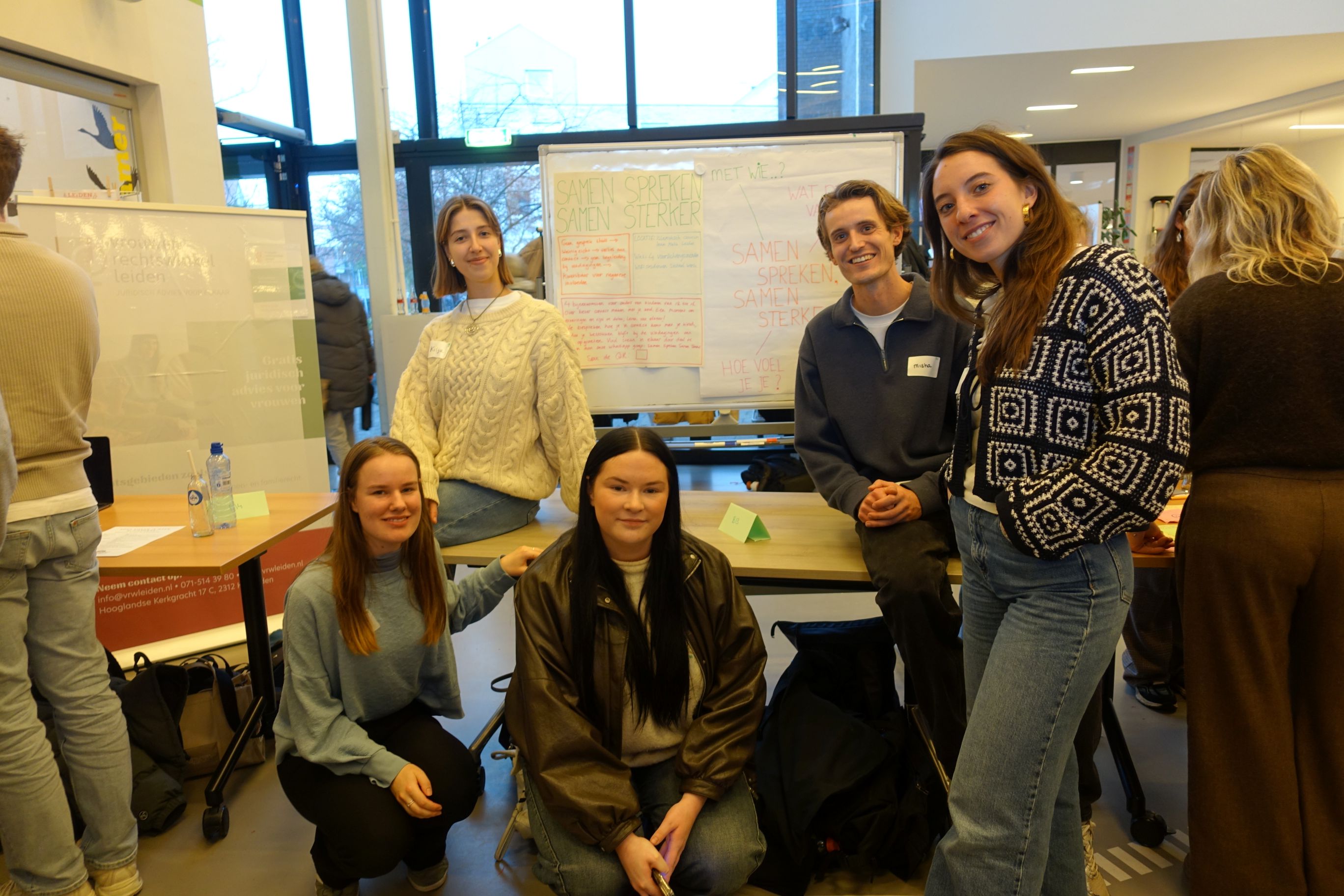
How do you keep talking with your adolescent child? Mischa (second from left) came up with sessions to help parents do that -
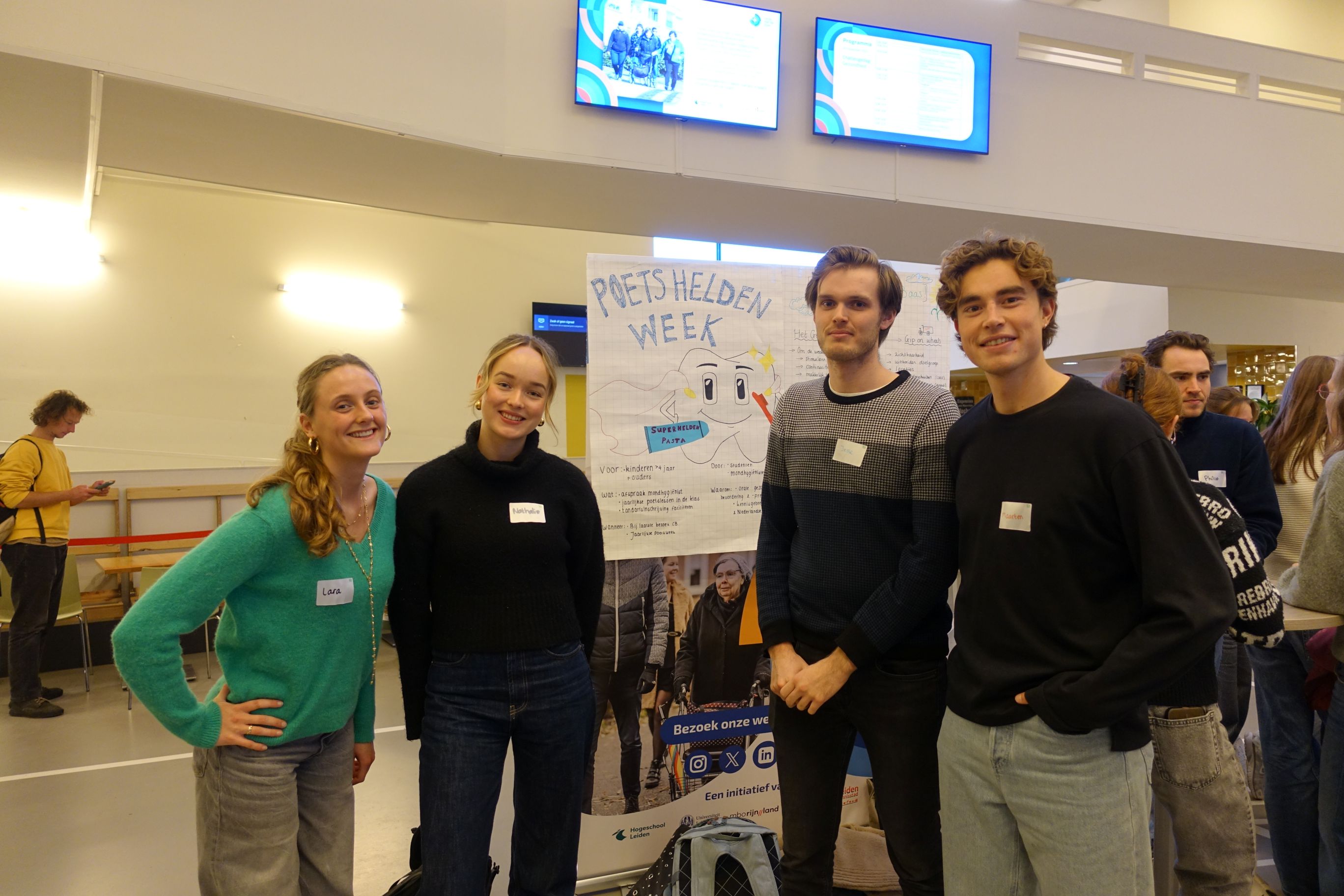
Lara (left) and her teammates noticed that Het Gebouw doesn’t offer oral care services
Developing the ideas
Students from the Leiden Leadership Programme will develop the ideas over the coming year to see which ones can actually be implemented. And Learning with the City’s Health & Prevention team will also look into the solutions provided. They hope that students from different programmes will work together at the GIP in Leiden-Noord.