

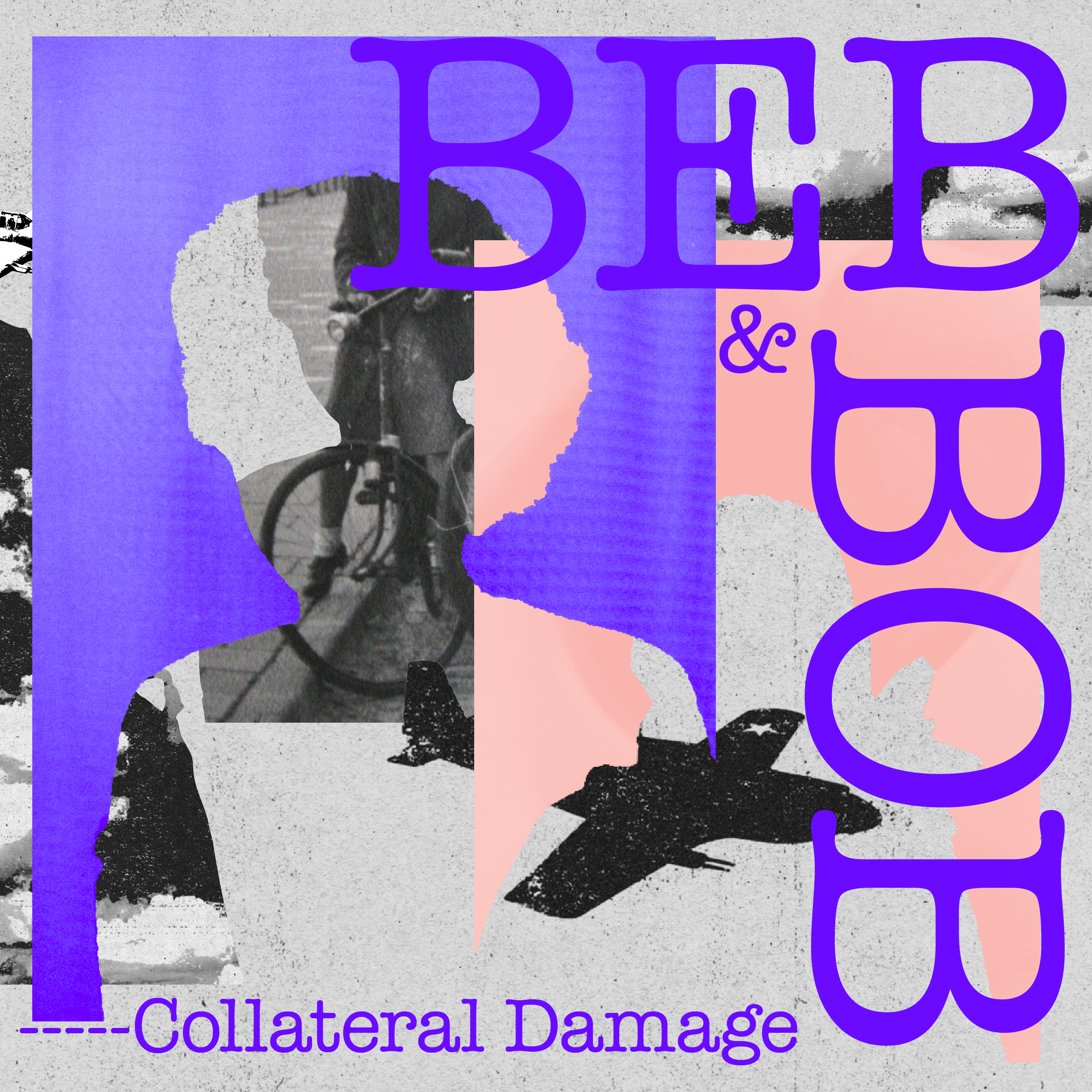
'Beb & Bob| Collateral Damage' shows the human story behind the forgotten bombing of Rotterdam
Alumna Lisa Koolhoven is the granddaughter of a Rotterdam woman who experienced the ‘forgotten bombing’ of the city on 31 March 1943. Her friend Kristen Hayford has an American grandfather who served in the Air Force during the Second World War. In their podcast ‘Beb & Bob| Collateral Damage ’, they investigate whether their grandparents' paths may have crossed.
Rotterdam was bombed more than 300 times during the Second World War. Although the German bombing of the city centre in May 1940 is the best known, most of the attacks were carried out by the Allies, who targeted the city's ports. On 31 March 1943, this went horribly wrong. Instead of the ports, residential areas in Rotterdam West were hit. More than 450 people were killed and over 13,000 were left homeless.
It is this ‘forgotten bombing’ that connects the Koolhoven and Hayford families. When Hayford took part in a cycle tour organised by Koolhoven about the forgotten bombing in Rotterdam, they discovered that Koolhoven's grandmother Beb lived in the bombed area, while Hayford's grandfather Bob was serving in the air force at the time. In the podcast Beb & Bob | Collateral Damage, they investigate whether Bob was indeed involved in the bombing and what the war means for their families in a broader sense.
A delve into personal history
‘During my history studies in Leiden, I was always interested in oral history,’ says Koolhoven. That is why I later started Verhalenpodium, a platform that helps tell personal stories from social organisations, social enterprises and family businesses. I also gave historical tours, for example through Rotterdam. Beb and Bob brings together that interest in history and personal stories. Partly because of that, I wanted to dive right into that history. For Kristen, it was perhaps more complicated, because her family may have been among the perpetrators.’
‘I knew immediately that I had to assume the worst,’ says Hayford. ‘It was a process, but I’m glad we persevered.’ Koolhoven and Hayford delved into letters that her grandfather had sent to his mother, among other things. Hayford: 'I knew my grandfather very well when I was growing up, but he never spoke much about his experience in the war. The letters gave me a completely different picture of his courage and what he experienced, which was also good for me personally. After I emigrated to the Netherlands, I started to wonder more about who I was. It helps to know more about who my family were and what their relationship with the Netherlands was like.'
Hayford and Koolhoven spoke to various experts and witnesses for the podcasts, but they also took a flight over Rotterdam themselves to see for themselves how difficult it was to determine where the bombs should fall. They believe this also makes the podcast healing in a broader sense. 'People don't want to talk negatively about their heroes, but as a result, a lot of trauma has remained unseen. For example, my grandfather often had nightmares after he returned and I also imagine he suffered a bit from survivors guilt after I learned about so many of his buddies who didn’t make it home,' says Hayford. 'We also interviewed a woman from Rotterdam whose mother was killed in the forgotten bombing and who was not allowed by her father to complain about it,' adds Koolhoven.
Continue making podcasts
They believe that it is particularly important to tell such personal stories in this age of disinformation. Hayford: ‘The facts from personal histories are almost the only ones we can rely on.’ Koolhoven and Hayford would therefore like to continue along these lines. ‘We currently have two options,’ says Koolhoven. ‘On the one hand, we would like to explore themes related to this podcast in greater depth, such as trauma or collateral damage. On the other hand, we think it would be nice to continue telling the stories of people on different sides of history. For example, we still know very little about the role the Russians played in the war. And what did victims of bombings in Germany experience? If listeners to the podcast have such stories, we would very much like to hear them.’
More information about the podcast is available on Bebbob.nl. The podcast is available on Spotify, Apple Podcasts and Podcastluisteren.nl.