D&I Symposium 2026: ‘You can’t call something inclusive if it doesn’t include everyone’
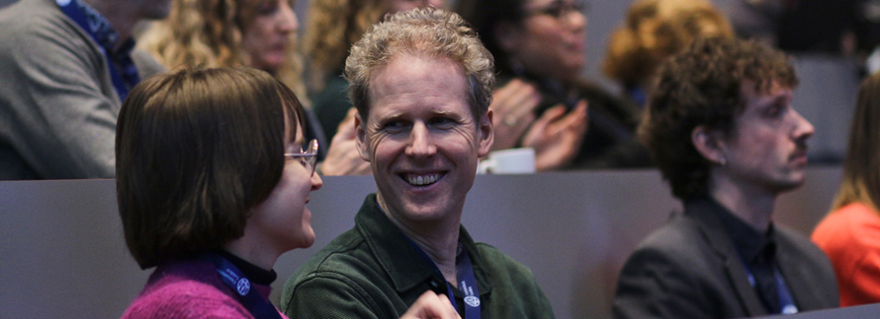
How can our university really become inclusive? This is what students and staff discussed at our annual Diversity & Inclusion symposium. ‘It’s moving from a have-to to a want-to’
A technical glitch is every symposium organiser’s nightmare. But if one occurs, you might as well turn it to your advantage. Just as moderator Nivja de Jong is emphasising in her welcome speech how important language is to inclusion, the live English subtitles on the big screen fail. ‘Goes to show,’ says De Jong, switching to English.
Good education for all
As Professor of Second Language Acquisition and Pedagogy, De Jong works at both the Centre for Linguistics and the Graduate School of Teaching (ICLON). This year, ICLON is co-organising the symposium, whose programme placed a strong emphasis on fostering an inclusive learning environment. ‘ICLON’s core task is good education for all,’ says De Jong. ‘And that means thinking about the role of language. Language is never neutral. It can connect, but it can also exclude.’

Academic freedom under pressure
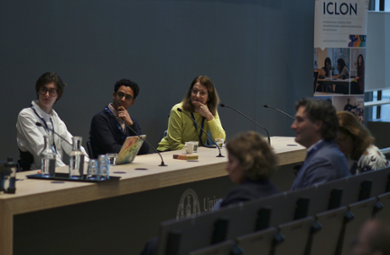
During the panel discussion, Ahmed Mahfouz, an associate professor at the LUMC, reflects on the importance of diversity and inclusion in research. ‘Inclusive science creates space for researchers with different perspectives and backgrounds,’ says Mahfouz. He gives the example of vaccinations. ‘Most colleagues agree that vaccinations benefit society, but some researchers have different views.’
The conversation turns to the increasing pressure on academic freedom in the United States, where it has become nearly impossible to secure research funding if a proposal mentions diversity or inclusion, even in passing. That doesn’t just have consequences for American researchers, says Mahfouz. ‘It affects us all.’
‘Don’t make assumptions’
Panel member Avalon Leiman is a student at LUC The Hague and an advocate for disability rights. She is working on a research project on the accessibility of university buildings. The preliminary finding? There’s much to do. ‘You can’t call something inclusive if it doesn’t include everyone,’ she says. ‘Don’t just think of wheelchair users. People may have hearing loss, for example, or be neurodivergent.’
‘The problem isn’t that I’m a wheelchair user, but that the spaces around us were not designed to accomodate that.’
Despite good intentions across the university, obstacles remain on campus, says Leiman. ‘The problem isn’t that I’m a wheelchair user, but that the spaces around us were not designed to accomodate that.’ Her advice: talk to people with disabilities instead of making assumptions about their needs. ‘A disability shouldn’t be a hindrance, but an opportunity to consider how we can learn from this experience.’
From toolkits to training, the university has taken significant steps in recent years to become more inclusive, says Policy Adviser for Diversity & Inclusion, Judith Jansen. ‘The next step is how to embed all these efforts in our research and teaching, and offer good support.’
No longer a have-to
Saniye Çelik is Professor by Special Appointment of Diversity and Inclusion at the Police. In her keynote speech, she shares lessons from 40 years of diversity and inclusion work. It’s clear that things are moving from have-to to want-to. ‘Forty years ago, diversity and inclusion felt like something you had to do. Fortunately, there’s now much more willingness to engage with it.’ More organisations recognise its urgency, she says, and the number of ambassadors and professionals has grown. ‘The movement has become a discipline in its own right.’
However, real progress depends on how leaders approach the topic, not only people in leadership roles, but also lecturers, supervisors and mentors. And when organisations measure how safe and inclusive they are, average scores do not tell the whole story. ‘What does it mean if an organisation scores an eight for inclusion? We often see that people from a minority group give much lower ratings. Do we have a good picture of these outliers?’
Çelik ends with a call to action. ‘Diversity and inclusion is a vast topic, a really vast topic. Choose one aspect that matters to you and focus on that. That’s how we’ll move forward.’
Female manager
At the end of the symposium, Executive Board Vice President Timo Kos shared his own experience of gender bias. When he started working in higher education, he was repeatedly asked at job interviews whether he would have an issue with a female manager. ‘I thought it was such a strange question.’ Not long afterwards, he realised that in meetings, people automatically addressed him instead of his manager. ‘That feels incredibly uncomfortable.’
When this kind of behaviour occurs within an organisation, it’s essential to call it out, says Kos. ‘Say what is happening. And see it as your problem instead of leaving it to your colleagues.’
What did participants think ?
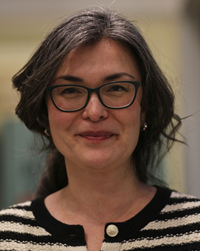
Miyuki Kerkhof, Education Coordinator at Pre-University College The Hague, and a PhD candidate at the Faculty of Archaeology
‘I’m always pleased the university organises this symposium. This year, I was interested in an experiment at Leiden Law School that introduced interventions to improve the starting position of first-generation students. At Honours Academy, I coordinate a one-year extracurricular programme for Year 5 secondary-school students, and I actively recruit first-generation students. I also joined a session on how to deal with difficult situations in the classroom. Our group looked at a case involving a student who is really disruptive and complains that the class is boring. How do you respond? If the behaviour stems from neurodivergence, for example, you would respond differently than if someone doesn’t find it interesting for political reasons or because of personal opinions. I thought it was a good suggestion that lecturers document incidents, so that they can reflect afterwards. I learned a great deal from that.’
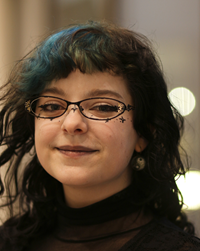
Elise Gosselin, International Studies student and University Council member
‘As a neurodivergent person myself, I really want to work on more inclusion for non-visible disabilities. Mental health is something that’s so underestimated in how it influences education. Therefore, I really wanted to come here today to see what people thought, and meet people who are involved in those processes and maybe see what we can advocate for in the University Council. I feel that during the breakout rooms we were able to exchange a lot on very concrete things. What I loved most was the session hosted by Leiden Law School on implementing social cohesion in their programmes. I also enjoyed the session on language inclusion, and how academic language in particular, is no one's first language. Going forward, I'm definitely going to look into all the research that's been mentioned today.’
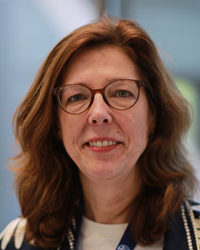
Sarah de Rijcke, Rector Magnificus
‘To be honest, today’s theme first came my way in a rather “forced” manner. When I started my PhD, my supervisor, also a woman, told me, “You’re good at science, but be aware that things won’t always be easy.” At the time, I thought she was exaggerating, but later, as I became more familiar with how the academic system works, I understood what she meant. Now that I hold leadership responsibilities myself, I also feel a duty to actively advance this agenda. By being a woman in a certain position, you’re already sending out an important signal. I found it encouraging to hear in the keynote that progress is being made. At the same time, geopolitical developments worry me, especially in places where these issues can no longer be addressed as a matter of course. My hope is that any setbacks will be temporary dips in an otherwise upward trend towards open and inclusive science.’
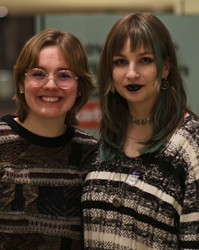
Hannah de Vreeze & Olya Churilina, board members Access & Support Platform (ASP)
Hannah: ‘ASP is a student organisation that aims to improve the situation of students with a disability. For us it’s very important to be part of the conversation here, and to see how staff members feel about this topic and how they are trying to incorporate tactics into how they teach or provide support to students who may need it. I think we met a lot of faculty members today who are advocating for actual change, and want to make Leiden University a more inclusive, accessible and diverse place.’
Olya: ‘We feel that currently, students lack the space to represent themselves to talk about their social disabilities and the necessary changes at the university. So if we know the professionals who work here, we can advise them to create such spaces for the students. Nothing about us should happen without our involvement. Next year, it would be great if this symposium could be promoted more among students, because most of the people here today are professionals. And while their enthusiasm is really valuable, it does feel rather weird to have this conversation without the people for whom the services are intended. It further highlights the harm of the professionalisation of this issue.’
Text: Evelien Flink
Pictures: Camilla Kwende