

The Van der Loon family has had ties with Japan and Leiden University for over a hundred years.
Over a century ago, Alexandra van Elroy's great-grandfather left for Japan, where her grandmother was born. Together with her mother, Maaike van der Loon, she reminisces about her family history, through which a key thread is the study of Japanese and Chinese.

For great-grandfather J.B. Snellen, then 28, the Japanese adventure began in 1921. Together with his very young wife, the barely 18-year-old Minnie Charlotte Schilperoort, he left the Netherlands for a life as an interpreter in Japan. 'He was initially in the navy, but from 1918 onwards, a period of defeatism set in there,' Van der Loon explains at her dining table, surrounded by photo albums and her grandfather's papers.
The idea that the Netherlands would be better off giving up the fight in advance demotivated Snellen so much that he quit his job in 1918 to study Japanese at Leiden University. Van der Loon: 'His mother still had to pay a debt of 1,400 guilders because he had followed a military training course that he would now no longer be using, but he wanted to see the world.'
Warnings to the Netherlands
Once in Japan, the Snellens quickly settled in. The family grew with the arrival of daughter Minnie and sons Jan and Willem. Their mother, an avid amateur photographer, captured dozens of images of them. Snellen worked as a third-class interpreter and secretary to the envoy until, more than 13,000 kilometres from home, the former marine once again encountered the defeatism of the Dutch armed forces.
'When Japan began to expand its military power in the 1930s, he published all kinds of writings in which he described how the military forces were being built up and what troop movements were taking place,' says Van der Loon. 'The navy took great offence at this. Such texts did not fit in with the Dutch pacifist mentality of the time.'
Snellen was not deterred by the disapproving reactions. On the contrary, for his next work he sought inspiration closer to his motherland. In the booklet Nederlandse Zeemogendheid (Dutch Naval Power), he described exactly what the Dutch navy should do to counter German and Japanese troop movements. Van der Loon: 'As a result, I now know exactly how I would build a navy, right down to the shares I would need to buy.'
Although the navy once again ignored his recommendations, Snellen left his wife and daughter behind in Japan in early 1940, where Minnie was due to take her final exams in March. He himself rejoined the Dutch navy. ‘He knew it would be futile, but he felt he had to do what he could,’ says Van der Loon. 'When the Netherlands surrendered, he took his own life. It was seen as a huge disgrace, which was not discussed in the family for a very long time. It was considered a huge disgrace, and for a long time no one in the family spoke about it. I only heard the whole story when I asked my mother about it as an adult.’
-
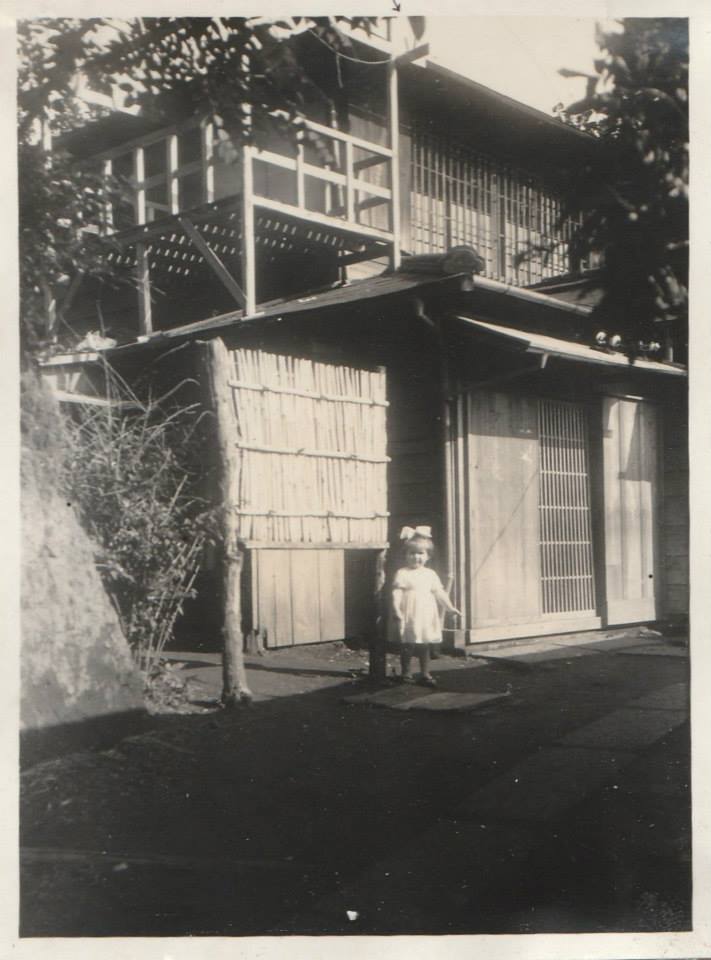
Minnie in Tokyo -
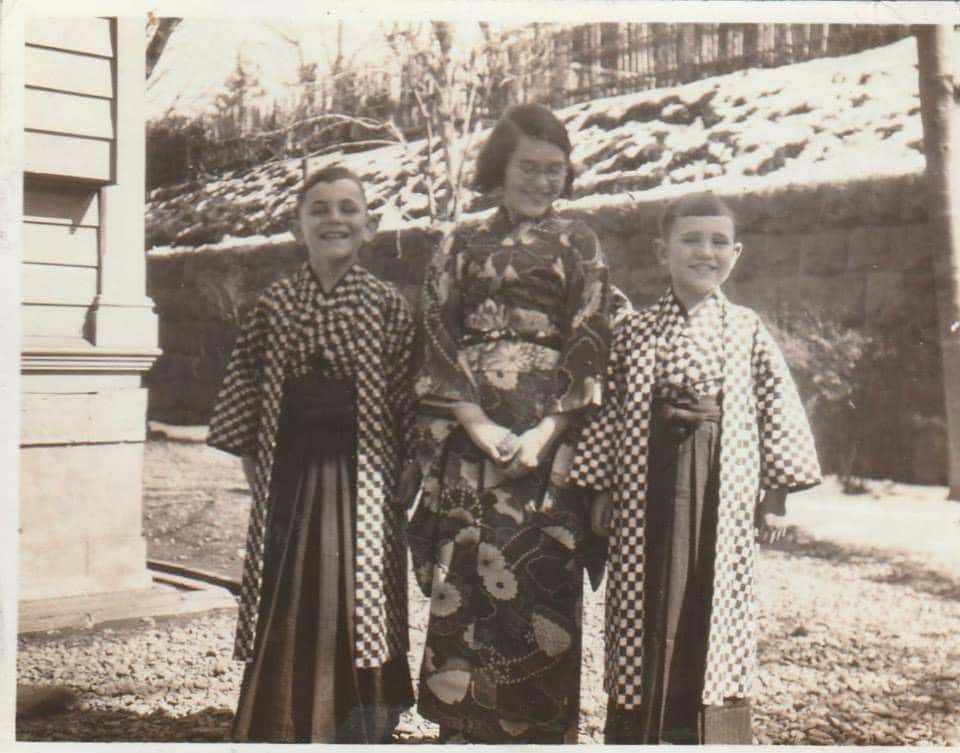
Minnie with her brothers -
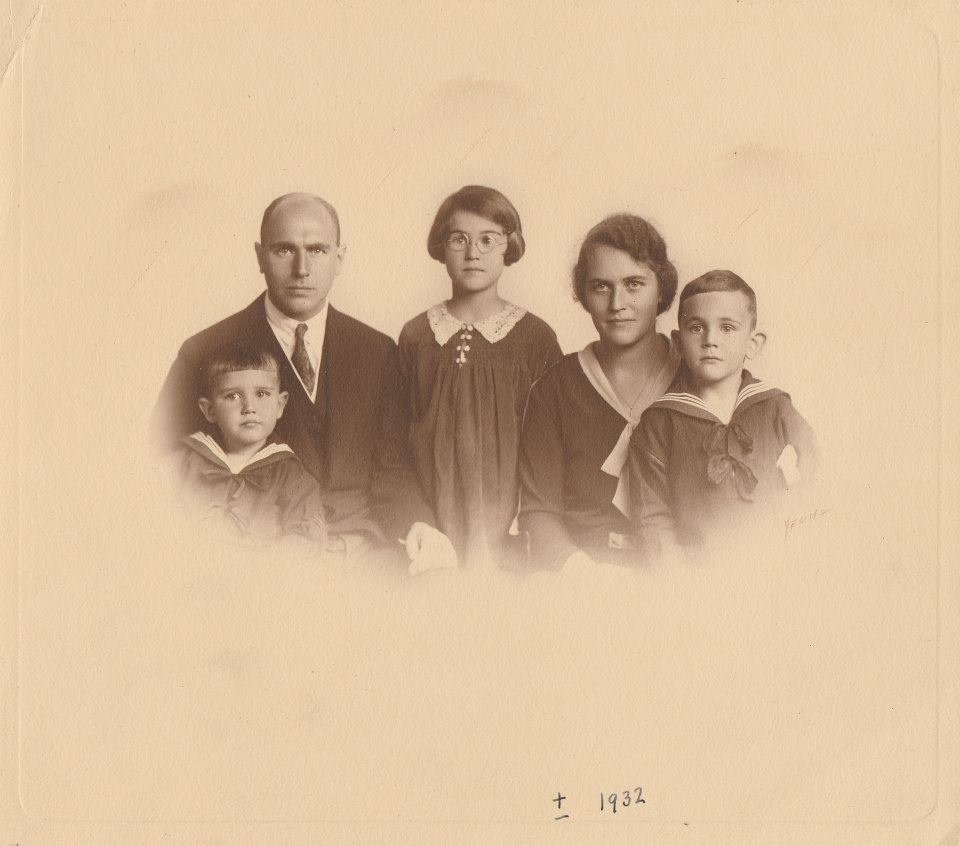
The Snellen family -
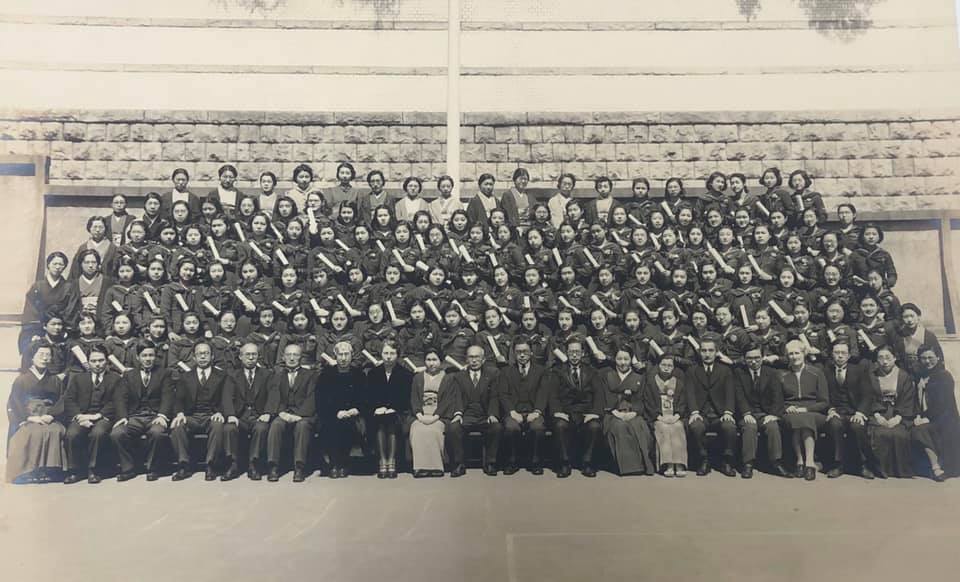
Minnie's graduation photo

Wartime in Oegstgeest
At that time, Snellen's daughter Minnie and his wife were travelling via Vancouver and New York to the Netherlands, where the family's two sons lived with a foster family. ‘Japanese education was very militaristic for boys, which is why they were sent to the Netherlands at the age of twelve, while Minnie attended a Japanese school,’ says Van der Loon.
After a complicated journey through wartime Europe, the family eventually ended up in Oegstgeest, where Minnie discovered that her diploma obtained in Japan was not valid in the Netherlands. For two years, she cycled back and forth to The Hague to prepare for a Dutch state examination. ‘My mother was very intellectual and loved it,’ says Van der Loon. ‘Once she had learned Latin and Greek, she even wrote her Sinterklaas poems according to the metre used by poets from those cultures.
From Leiden to the United Kingdom
She too eventually chose to study Chinese with a minor in Chinese in Leiden. Van der Loon: ‘When she had to translate a piece in class, the lecturer sometimes asked her to stop, because he hadn't prepared beyond that point in the work himself. Being bilingual, she was, of course, very good at it.’
It was in Leiden that Minnie met Piet van der Loon, a student of Chinese Studies. After the war, they left together for England to set up the Chinese department in Cambridge. He later became a professor in Oxford. ‘My mother could have been a professor herself, but in those days you mainly became the professor's wife,’ says Van der Loon. ‘She had my sister and me to take care of, of course, but she was always very involved in his work. She did a lot of typing for him and she was a wonderful calligrapher.’
For Van der Loon and her sister, all this attention to Chinese could sometimes be a bit much. ‘Our holidays were planned around the big sinology conference that was organised every summer,’ she recalls. ‘I ended up studying teaching at Leiden University, but that was mainly because I didn't know that such a thing as a university of applied sciences existed. When my own children grew up, I did end up studying to become a primary school teacher. I really enjoyed teaching right up until I retired.’
Following in her grandmother's footsteps
Granddaughter Alexandra Elroy, one of Van der Loon's three daughters, is fascinated by Japan. ‘I always thought the Japanese prints and kakemono (rolled-up paintings or calligraphy, ed.) that hung on my grandmother's wall were very beautiful,’ she says. ‘My grandmother also often read the Japanese fairy tale ‘Momotaro-san’ to us, about a heroic boy who was born from a peach.’ Van der Loon: 'Alexandra and my mother would sometimes go off to the woods to re-enact that fairy tale.’
She is the founder of an English-language theatre group and has been interested in cosplay since she was a teenager. ‘Because of that, I sometimes found it difficult to make friends in secondary school,’ she says. ‘I was seen as a bit different or strange, but precisely because Japanese was such a specialised subject, I found like-minded people there. Especially when I was studying, there was a lot of interest in all kinds of subcultures. Many of the students could relate to that. And of course it was fantastic to be able to go to Japan for a year.’
Elroy stayed in a different region from her grandmother during that year, but she made several trips to Tokyo. ‘It was very special to walk around there and see places where she must have been, although I didn't go inside most of the buildings. My sister Fiona is better at arranging that sort of thing.’
Van der Loon: ‘I made a trip to Japan with Fiona. We visited all kinds of places from my mother's life, including her secondary school. We were welcomed like royalty there: they had even found her old schoolwork, as well as photos of the graduation ceremony that she herself had never seen, because she had already left for the Netherlands by then. I was also given a few poems that my mother had written. One of the exchange students who lived with Alexandra calligraphed them for me. What I found very special was that I thought I saw my mother everywhere. Many women there had the same posture and mannerisms as she did.'
-
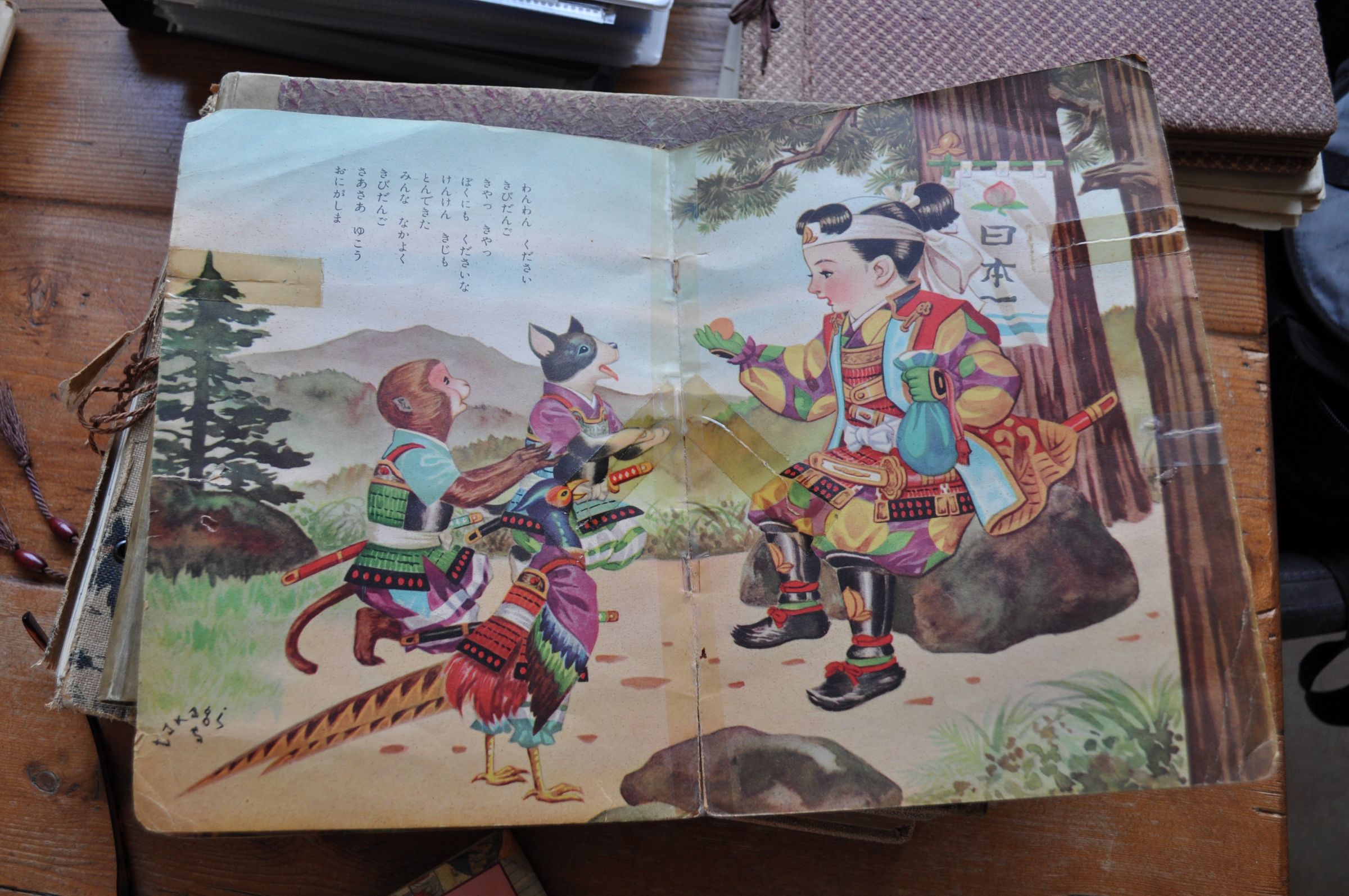
Momotaro-san -
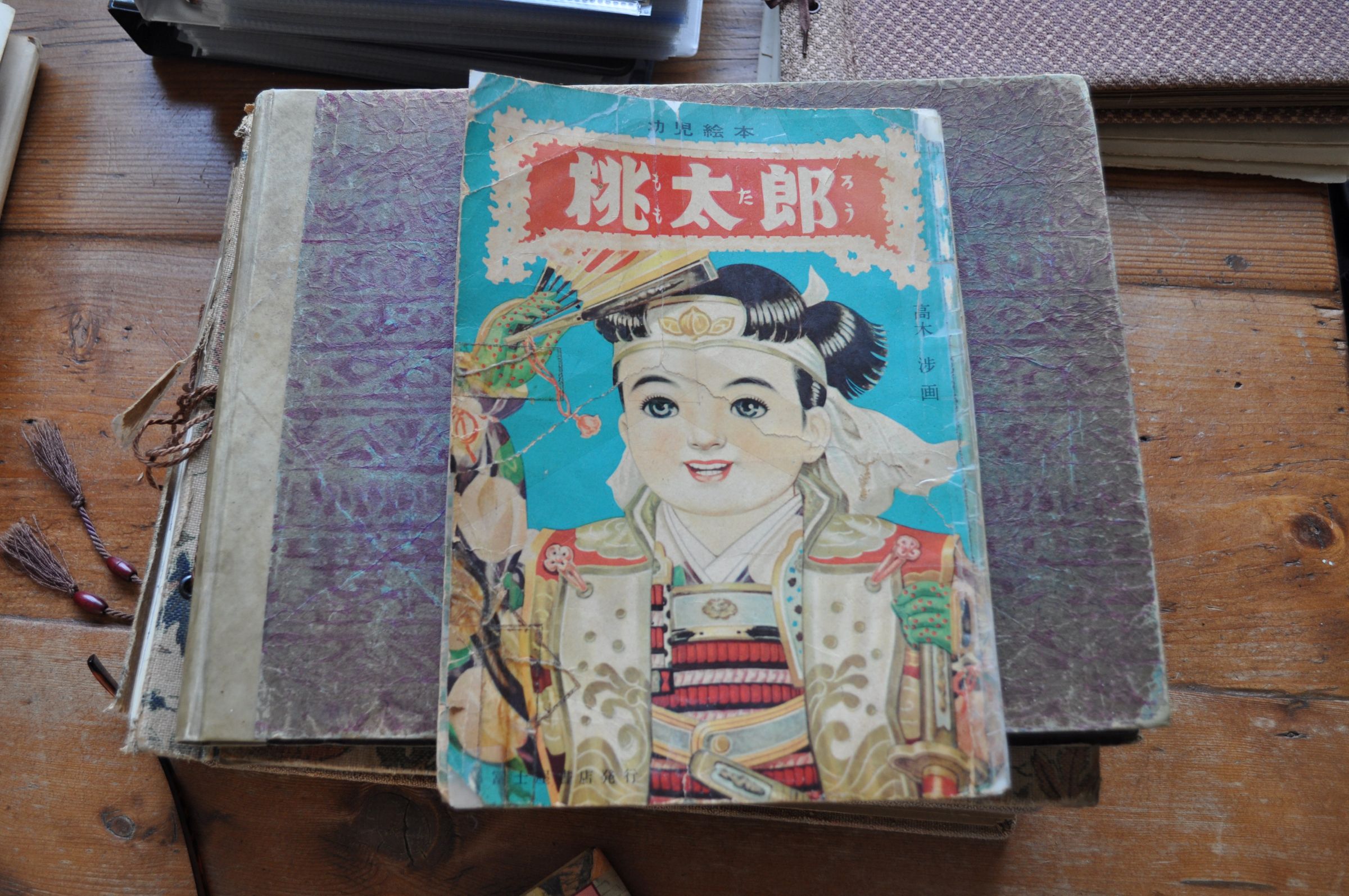
Momotaro-san -
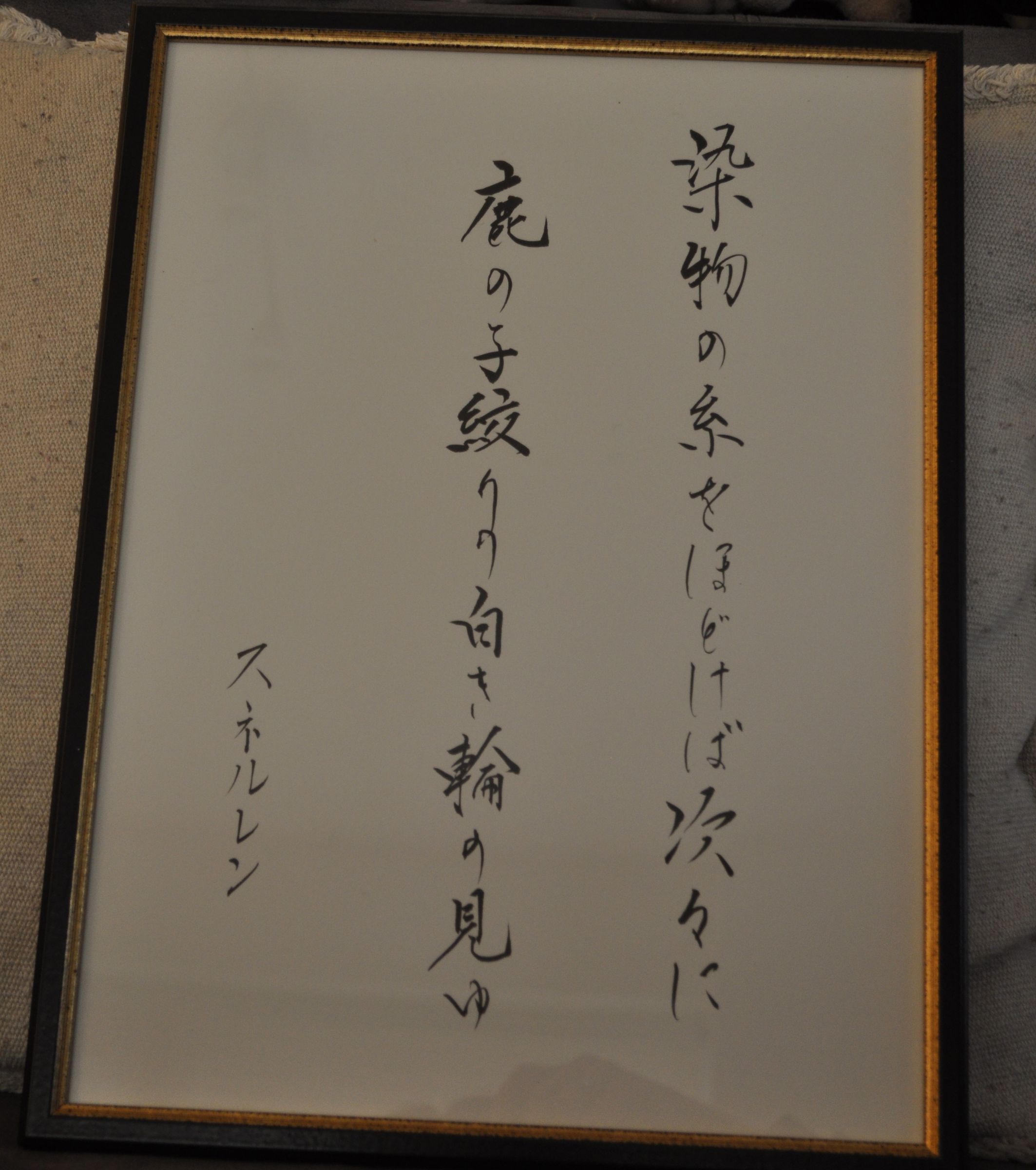
One of the poems -
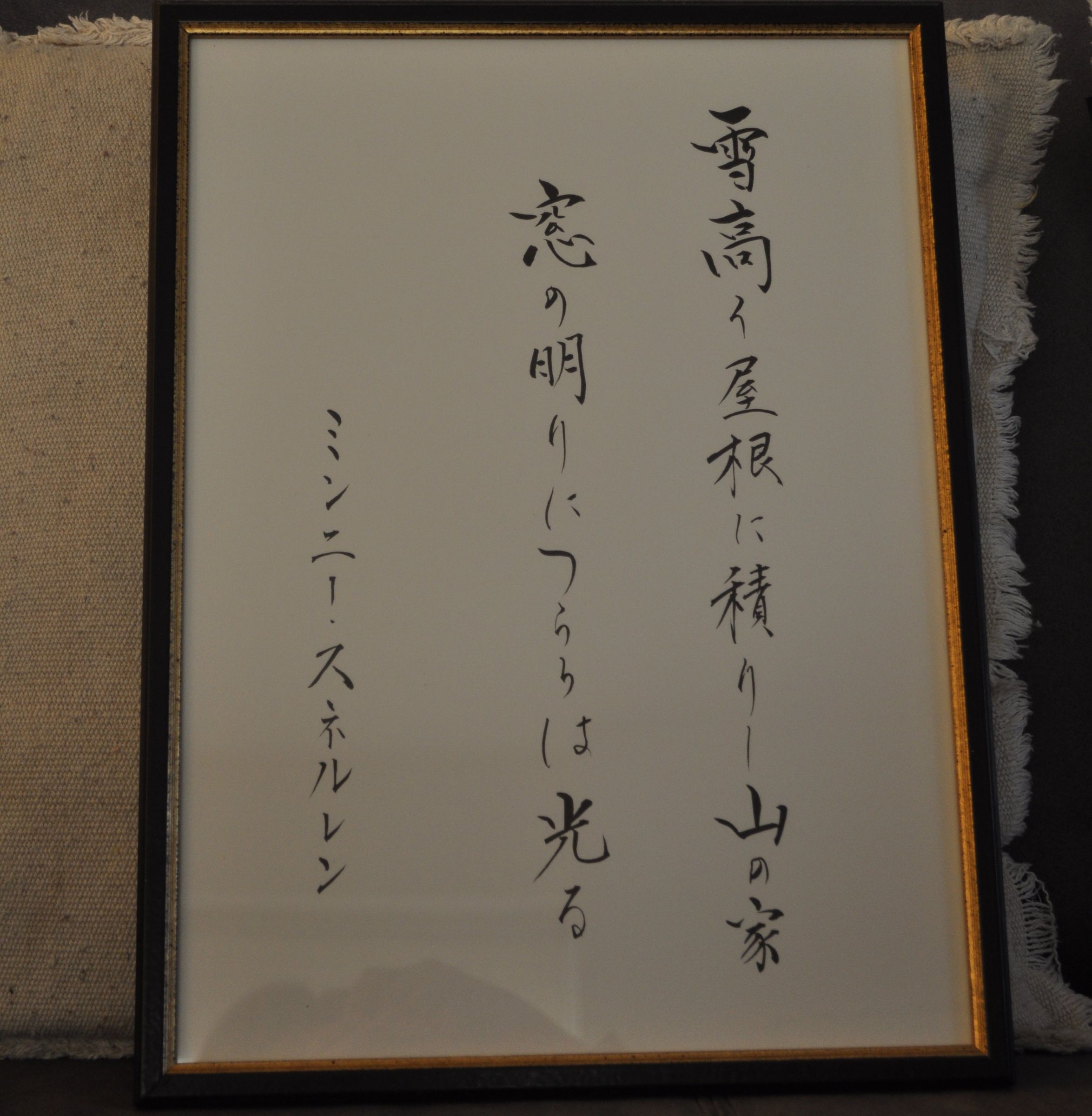
One of the poems
Next generation
Elroy: ‘After graduating, I worked as a translator and cultural copywriter for a while. During that time, we did indeed sometimes have exchange students staying with us. During the coronavirus pandemic, being self-employed with two young children became too uncertain for me. Because I was raised bilingually and I love literature, I decided to become an English teacher. I now enjoy teaching at a Waldorf secondary school, although I still occasionally give my pupils a short lesson in Japanese language and culture.’
Elroy also wants to introduce her own two daughters to Japan. 'They love Asian food and know a few Japanese words. The eldest still remembers our last exchange student well. In a few years, we would like to visit Japan as a family, so I can show them all those places filled with memories.'