
Reflecting on our university’s colonial past
How do colonialism and historical slavery continue to impact the university today? And what should happen next? Students and staff discussed these questions on 11 March.
‘The university was deeply embedded in the colonial system through its research and teaching’, said Timo Kos, Vice-President of the Executive Board, as he opened the meeting. ‘That calls for further research and reflection within our community. It’s not an easy topic, but it deserves our unwavering attention.’
He briefly revisited the results of the exploratory study on Leiden University’s historical links to colonialism and slavery, published in April last year. This showed that administrators, academics and students played an active role in colonial networks such as the Dutch East India Company (VOC) and the Dutch West India Company (WIC), both key actors in the slave trade. Since then, a process of reflection has begun. Faculties and departments across the university are asking themselves: what should we do next?
Next steps
Several initiatives are already underway. The University Library, for example, is examining the provenance of objects in its collections. The Faculty of Social and Behavioural Sciences decided that its main building should no longer bear the name of the 17th-century cloth merchant and free thinker Pieter de la Court, who was found to have links to the slave trade through his company. Following a public vote, the building has now been renamed Agora.
-
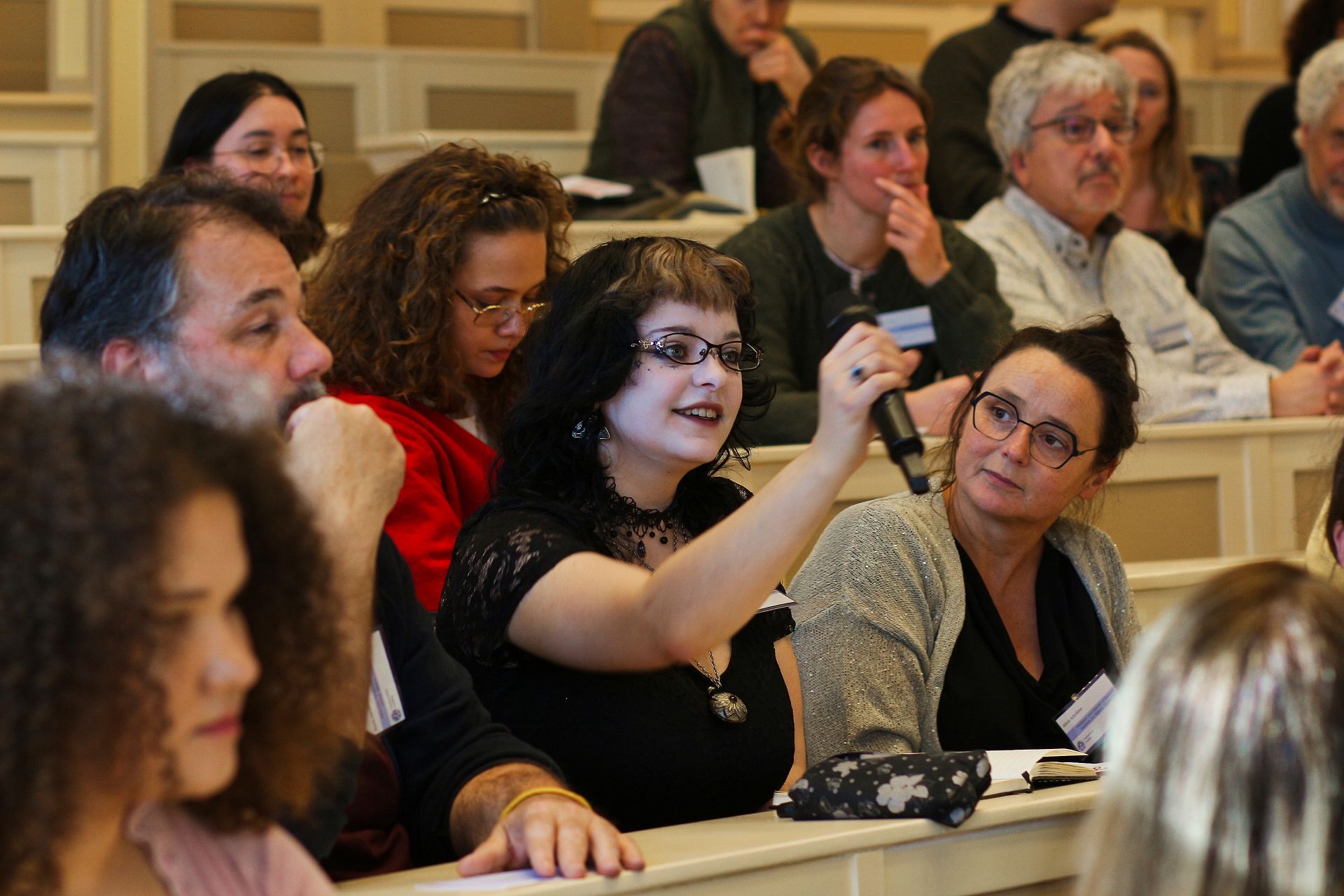
Student Elise Gosslein (pictured with the microphone) asked how accessible restitution processes are. Significant knowledge is often needed to submit claims for the return of cultural objects. -
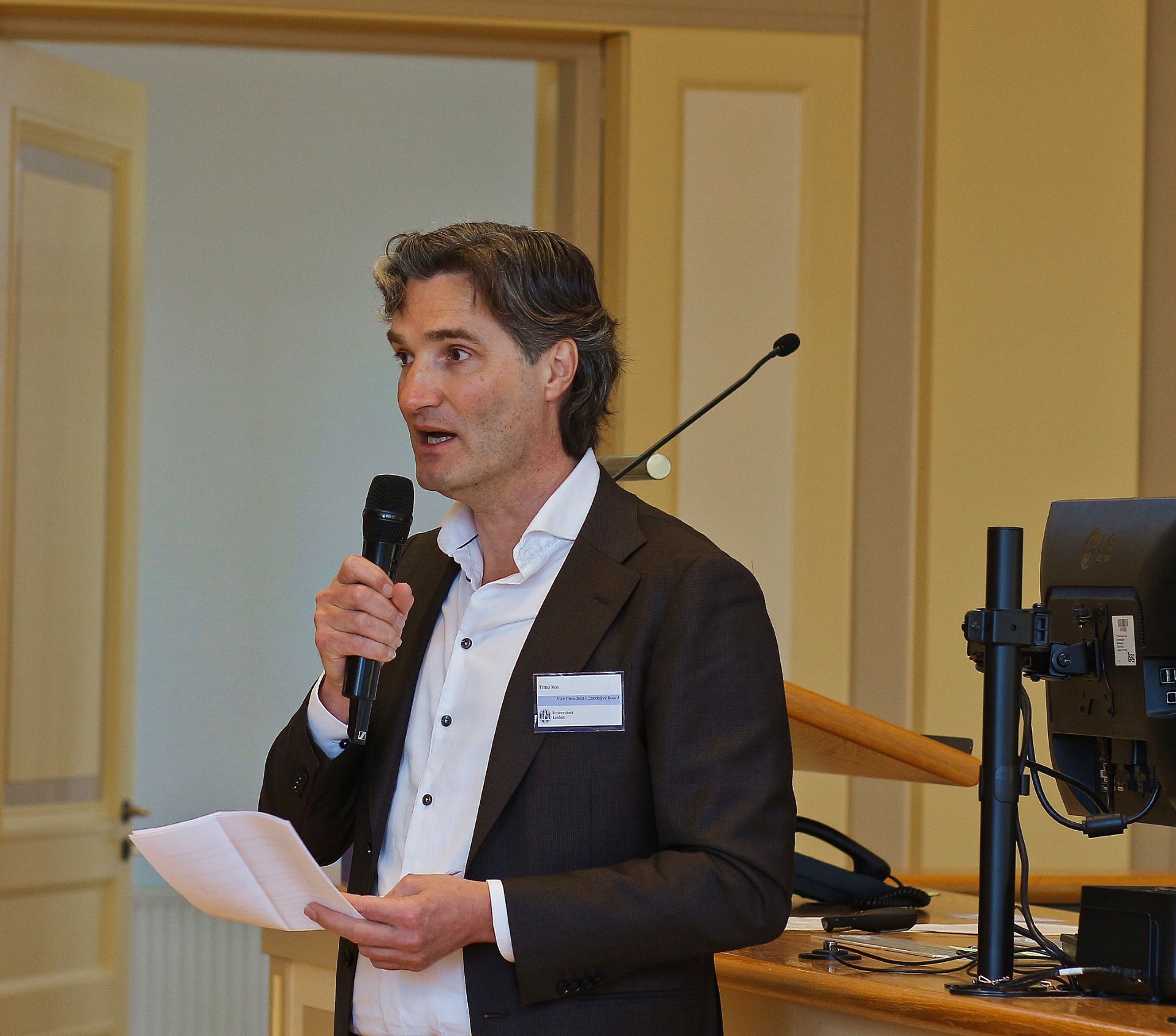
Vice-President Timo Kos: ‘The colonial past calls for more research and reflection in our community.’ -
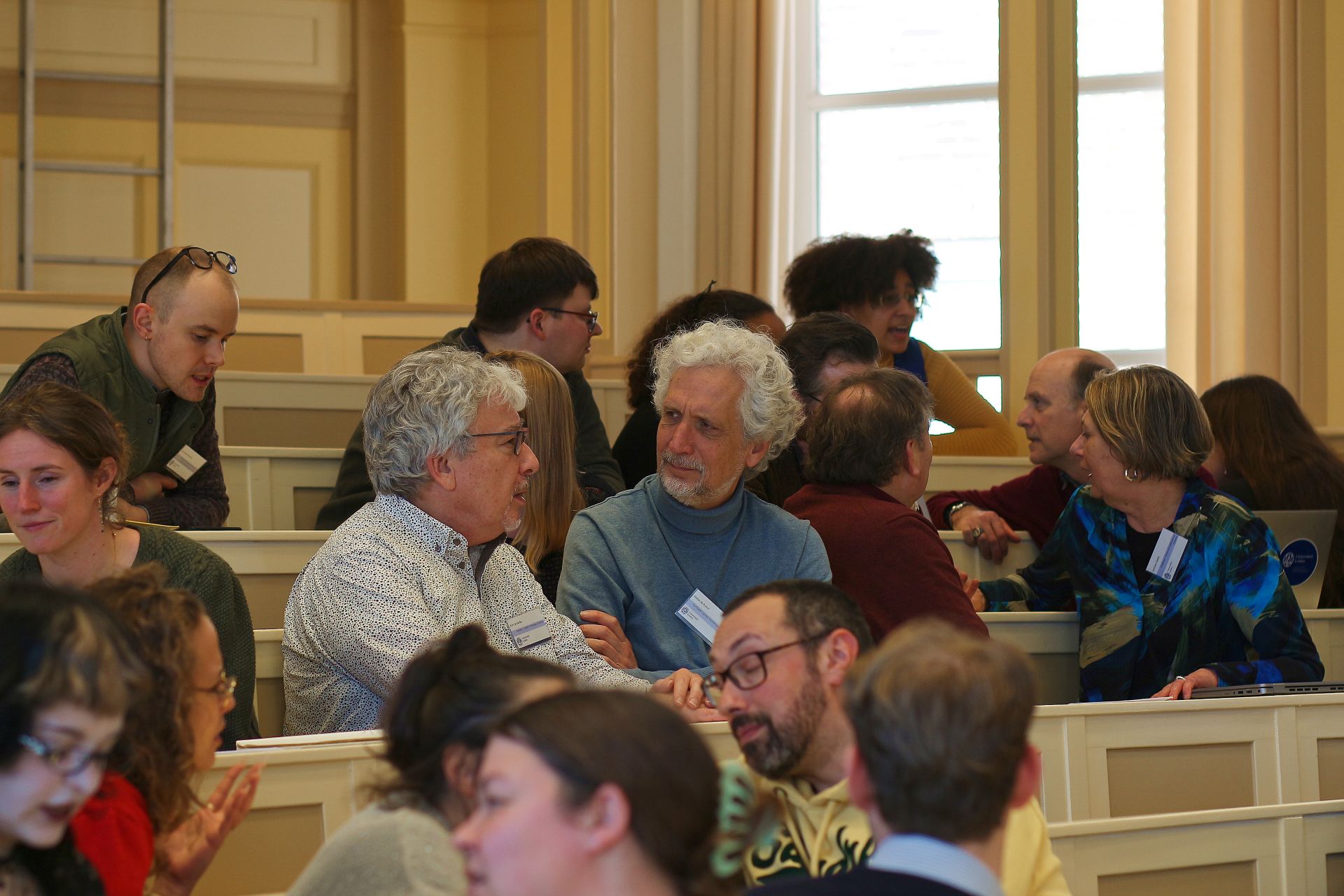
Leiden University Libraries director Kurt de Belder: ‘It’s good to be critical, but we should be careful not to judge everything from the past through today’s moral lens.’
Returning human remains
Archaeologist Jason Laffoon shared how his faculty worked with the local population from the Caribbean island of Sint-Eustatius in 2023 to return pots, shells and human remains. A ceremony was held to mark their return. Laffoon explained that restitution is often far from straightforward: descendants of local communities may disagree with local authorities; conflicts may be ongoing in the country of origin; or the community may lack facilities to care for the returned heritage.
Rethinking curricula
The faculties are also examining their curricula. For example, university historian Pieter Slaman, who also attended the event, made recommendations for the Faculty of Governance and Global Affairs. Students and staff were encouraged to look at their textbooks with a critical eye. Are they still predominantly white and Eurocentric, or is space being created for other perspectives?
Anatomical Museum
In a video interview, historian Ligia Giay, who conducted the exploratory research on the university’s role, share some observations that had struck her. These included the LUMC’s Anatomical Museum collection. Some of the human remains preserved in alcohol were collected in what were then colonies. She is now conduction postdoc research into the provenance of the collection.
Dialogue
After the plenary sessions, participants joined dialogue groups focusing on collections; organisation and culture; teaching; and research. ‘Shouldn’t we as a university reflect on contemporary forms of slavery, such as the exploitation of migrant workers in Westland?’ one participant suggested in the research group. Historian Karwan Fatah-Black added: ‘Each institute should look critically at the impact of the colonial past on its own field.’
Enriching disciplines
Dean of the Faculty of Social and Behavioural Sciences, Bart Barendrecht, emphasised that introducing more perspectives is not only a moral imperative but also enriches disciplines. Psychologist Carolien Rieffe called for sustained dialogue across faculties on this, while Historian Gert Oostindie advised bringing more focus to the reflection process, noting that fragmentation can undermine depth.
Advisory committee
This could be a task for a new committee with students and staff from the different faculties that will be advising the university on the next steps to take. The committee is chaired by historian Alicia Schrikker, recently appointed as Professor of History of the Netherlands in the World. The colonial history will definitely feature in her research. Responding to the suggestions shared during the meeting, she said that one stood out in particular: being aware of our own Eurocentrism.
Even if you were unable to attend the event or did not have the opportunity to share everything you wanted to in the dialogue groups, the organisers would welcome your input for the advisory committee. You can share this with saz@bb.leidenuniv.nl. The committe is still looking for one more student member. Interested students have until 16 March 2026 to apply.