

Why the Netherlands should repatriate foreign terrorist fighters and their families
Dozens of Dutch nationals are being held in detention facilities in Northeast Syria or have been transferred to Iraq, risking torture or the death penalty. PhD candidate Ida Asscher says the Netherlands should repatriate them. 'States must comply with international law, even in difficult situations.'
According to the Dutch state, by choosing to travel to the caliphate, you have signed your own fate. Dozens of men, women, and children who left for Syria from 2011 onwards to join the Islamic State (IS) and other terrorist organisations are currently being held in Northeast Syria and Iraq. They cannot count on assistance from the Netherlands. For years, the Dutch government has largely refused to repatriate their nationals, partly because of the risk they would pose to national security. Only a small number of women and children have been returned to the Netherlands. In some cases, the government has also stripped them of their Dutch nationality. It remains unclear what course the new Dutch cabinet will take.
By taking such a passive approach, the Dutch government is shunning its responsibility towards its citizens and shifting security risks to other states, according to Asscher's PhD research.
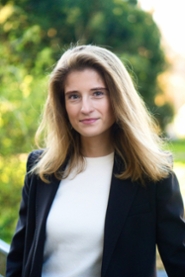
This is about how we deal with ‘foreign terrorist fighters’, the topic of your dissertation which you will defend next week. Can you explain the issue?
‘These people, including Dutch nationals, have been detained in Northeast Syria for years – under appalling conditions and without ever being brought to trial. The government has been able to take its hands off the problem for a long time by not repatriating them and in some cases stripping them of their nationality.
However, due to current developments in the region, the problem has reared its head again. The prisons and camps are no longer controlled by the Syrian Democratic Forces, but by the Syrian government army (see text box). After recent escapes, the United States has initiated the transfer of thousands of prisoners, including Dutch nationals, to Iraq where they could face the death penalty. Torture and hanging are still common practice in Iraq, and a fair trial seems out of the question.
'And what about the children? Are they not victims of terrorism?'
For years, the Dutch government has maintained that it does not need to bring these people back home for the purpose of prosecution because of the risk they pose to national security. With this approach, the Netherlands follows the line of countries such as Australia, the United Kingdom, France and Belgium. The United States, however, is calling upon countries to repatriate their citizens. Dutch security services and experts have been arguing for years for 'controlled repatriation'. They say that it is safer to return these people: then you can bring them to justice, guide them in their return to society and, where necessary, monitor them.'
Who is in power in Syria (and what was the caliphate)?
IS proclaimed its caliphate in June 2014 and at its peak controlled about 100,000 square kilometres in Syria and Iraq. In March 2019, the organisation lost control of its last territory in Syria.
Until January 2026, the Syrian Democratic Forces (SDF) controlled Northeast Syria, including the camps and prisons holding foreign terrorist fighters and their family members.
The SDF, mainly consisting of Syrian Kurds, had been supported by the United States since 2015 in its fight against the Islamic State (IS).
In January 2026, the Syrian government army took control of the area and the detention camps. The SDF has largely been absorbed into that army.
The Netherlands wants these people to be tried in the region. Is that legal?
'An important rule in international law is the prohibition of 'refoulement'. This means that a state may not return or send someone to another state where that person would face a real risk of being subjected to torture, cruel, inhuman or degrading treatment or violations of other fundamental human rights.
'The state is shunning its responsibility to prosecute war crimes and terrorist offences.’
Iraq sentences people to death after court proceedings that have been said to lack fair trial standards. By allowing or even encouraging the transfer of these people to Iraq instead of bringing them back to prosecute them at home, the Netherlands undermines international law.'
So, why does the Netherlands not choose to repatriate these people?
'There are several reasons for this. In addition to security concerns, it can be difficult in a Dutch court to prove what these people have done in a foreign conflict zone. There is some truth to that, because of course when these people come back here, they’ll claim that all they did in the caliphate was bake bread.
As soon as someone is on Dutch territory and is suspected of terrorism or war crimes, the Netherlands is obliged to investigate this and, if appropriate, proceed to prosecution and trial. By not actively repatriating those involved, or by revoking their nationality, the government makes their return more difficult. In doing so, the state is actually shunning its responsibility to prosecute war crimes and terrorist offences.'
Is the resistance to repatriating IS fighters understandable, given the time, cost, and effort that it requires
‘It is very understandable. But the government must act on the basis of international law and not on the basis of emotion. Even when the situation is difficult.
What’s more, it has not yet been proven that all these people are guilty of terrorism or other crimes. They’ve never been tried and have been detained for years. Everyone has the right to a fair trial. And what about the children? Are they not victims of terrorism? Some were taken there by their parents or were born in the region.'
Ida Asscher defends her dissertation 'Shunning Responsibilities and Shifting Risks: States’ Responses to the Foreign Terrorist Fighters Phenomenon & the Limits of Public International Law' on 10 March 2026 at 16.00 in the Academy Building. Read the summary of her dissertation (in Dutch) and follow the livestream of the defence.