

Minister Elanor Boekholt-O'Sullivan: ‘How do you stay true to who you really want to be?’
After more than thirty years in the military, Elanor Boekholt-O'Sullivan has recently become Minister of Housing and Spatial Planning. In a conversation with Leiden University, she previously spoke about how important humanity is to her, and what it takes to remain true to yourself in complex times.
If she had to describe herself in three words, Boekholt-O'Sullivan would say she is sensitive, outspoken and introverted. As an introvert, she likes to seek out silence after social interactions – which take a lot of energy.
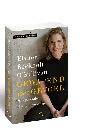
In her book Gewapend met gevoel. Mijn generale kijk op leiderschap presented at the Faculty of Governance & Global Affairs, she discusses, among other things, how leadership, vulnerability and resilience go hand in hand.
'Not everyone wants to take part all the time, but everyone wants to be allowed to take part'
What impact do you want to make?
‘For me, humanity is a much better word than vulnerability. Throughout my career, I’ve been praised for my vulnerability, but I don’t see it that way. I’m not vulnerable, just human. I try to be honest about my feelings, want to deal with emotions quickly and make them something we can talk about, so that I can move on afterwards. If you don’t do that, there’s always something standing in the way: something that wasn’t said, but should have been. Even with yourself.
If you want to have a clear vision and really be able to see things clearly, there must be no fog. I think that it is precisely where people do not understand each other well, or where emotions play a role, that the fog persists.’
So you hope that people will make things open to discussion.
‘Yes, and that this is also recognised and valued as a quality. This is part of talent, not administrative sensitivity, to name but one example. Why isn’t the first thing we want to know about people whether they can deal with human characteristics and remain true to themselves? If everyone can be themselves, you achieve results the quickest: there’s nothing standing in the way.’
Elanor Boekholt-O'Sullivan (1976) was a lieutenant general in the Royal Netherlands Air Force, the first female three-star general in the Netherlands, and Deputy Director-General for Policy at the Ministry of Defence. Prior to that, she served as commander of the Defence Cyber Command and Eindhoven Air Base, among other roles. She was named Top Woman of the Year in 2023 and received the Aletta Jacobs Prize in March 2026 for her contributions to the cause of women’s emancipation. According to the jury, she is an inspiring and encouraging role model.
What made you decide to write a book?
‘These are pieces I’ve written before. I turn things that happen into metaphors, which I then write down as little stories. That way I can sleep well. I used to do this when things happened in my career, such as a colleague reacting rudely and me thinking ‘what a jerk’. I wrote: ‘The jerks are falling from the tree very early this year; is it the tree’s fault that the jerk falls, or can the jerk only fall and can’t do anything about it?’
You’ve no doubt faced criticism, for instance when you took off your tie or with the initiative for modified flak jackets or seats for women in military aircraft. How did you deal with that?
‘It’s not pleasant, but I can cope with it because I’m part of the top. I also think: who am I actually doing this for? I’m not the one getting on that plane or ship myself. I’m doing it for the next generation of women, and that’s rewarding. Of course you’ll criticise me, I think to myself – I should have known – but I’m making things better, perhaps for your daughter.’
‘An uncomfortably beautiful event’
Boekholt-O'Sullivan presented her book Gewapend met gevoel. Mijn generale kijk op leiderschap at the FGGA faculty in October. She would rather not be on a stage like that. ‘I’d rather be in the audience, but I’ve decided to let my own discomfort take a back seat to what I have to say. Humour works well for me – making jokes to break the ice. It makes the bar I have to clear feel a bit lower. All in all, an uncomfortably lovely event.’
Do you have any advice for the current generation of students?
‘You’re living in a complex age. I look on with admiration at how you navigate all the choices and influences that come your way: what’s real, what do you go along with and what don’t you? Social norms and social media play a major role in this, and everyone seems to have an opinion on everything.
'Everyone seems to have an opinion on everything'
How do you stay true to who you really want to be, without running the risk of being left out? Not everyone wants to join in all the time, but everyone wants to be allowed to join. You want to be able to say ‘no’ to a social event and still remain part of the group.
What I’d like to share is this: have compassion for what is different from you. Take up space when it’s appropriate, give space to others, and be curious about why someone does things differently from you.
And for female students in particular?
‘Support one another, in word and action. You can support someone whilst disagreeing with their views. See another woman’s success as a success to which you have contributed – that’s how we lift one another up, towards a shared goal.’
Are there any other topics you think are important to mention?
‘The safety of girls and women on the streets is the responsibility of both men and women – even though that safety is less a given for women. You don’t have to like each other to see each other home, I’ve always told my son.
Ideally, I’d like to help the whole world, but if I can inspire just one person, who in turn inspires someone else, and that person inspires yet another, then I choose to remain hopeful.’
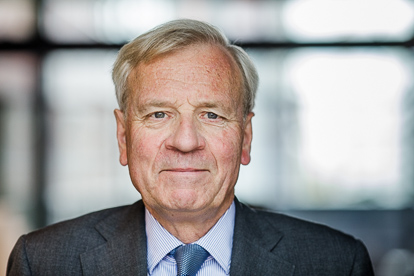
Jaap de Hoop Scheffer, former Secretary-General of NATO, in his speech during the book launch:
‘Elanor, you write: ‘At the end of the day, you are a human being with your own history, feelings, convictions and doubts; the theory is often clear, but practice defies theory. I have always taken my stand, not in spite of but because of my doubts.’
I haven’t often heard a general, MP, minister or Secretary-General say that. At first glance, Elanor, this seems to make you appear vulnerable, but when you read the book, you pull substantial bricks out of the wall. I’m not the first to draw this conclusion: you were already a ‘Top Woman’, and you certainly don’t become one by displaying vulnerability. But your book also shows that being an outsider in a traditional organisation with relatively few outsiders is often an uphill battle, a struggle you take on with verve.’