Bernard Steunenberg is professor emeritus: ‘I’m continuing with joy and enthusiasm’
After 27 years, Bernard Steunenberg, professor and former academic director, is saying goodbye to the Institute of Public Administration. Although as far as he is concerned, it is not really a goodbye: he will simply continue teaching. ‘It is wonderful to hear students talk about European politics and the Dutch role in it.’
It was 1999 when Bernard first walked into Public Administration, then still based in Leiden. ‘That was very exciting. The secretary took me upstairs to my little office. Public Administration was starting to grow a bit at the time. The door swung open, and in the middle of this enormous room stood a tiny little desk. At the end of my career I had a tiny little room and a relatively large desk. That rather illustrates the developments at Dutch universities: square metres have become considerably more expensive. We have to think carefully about where we spend our money.’
Farewell to the Institute of Public Administration
On 26 May, Bernard’s official farewell at FGGA is scheduled to take place; his online profile has already been changed to ‘professor emeritus’. He himself has some doubts about the word ‘farewell’, and he is not exactly eager to give a farewell lecture either. ‘It sounds as though you are taking stock and then immediately closing the door behind you.’ In that sense, his career is not coming to a full stop, but rather to a comma. Bernard will continue teaching and writing about subjects close to his heart.
'I don’t feel fully retired yet, but I’m sure that will come'
There is no question of sitting back and taking it easy for now. His weeks are still full. Not in the same role, but with the same commitment. He writes, works on papers and is awaiting the publication of a textbook on Europe, written for students. ‘I’m very pleased that I no longer have to attend meetings. I don’t feel fully retired yet, but I’m sure that will come,’ Bernard says.
-
-
-
-
-
-
-
-
-

-
-
-
-
-
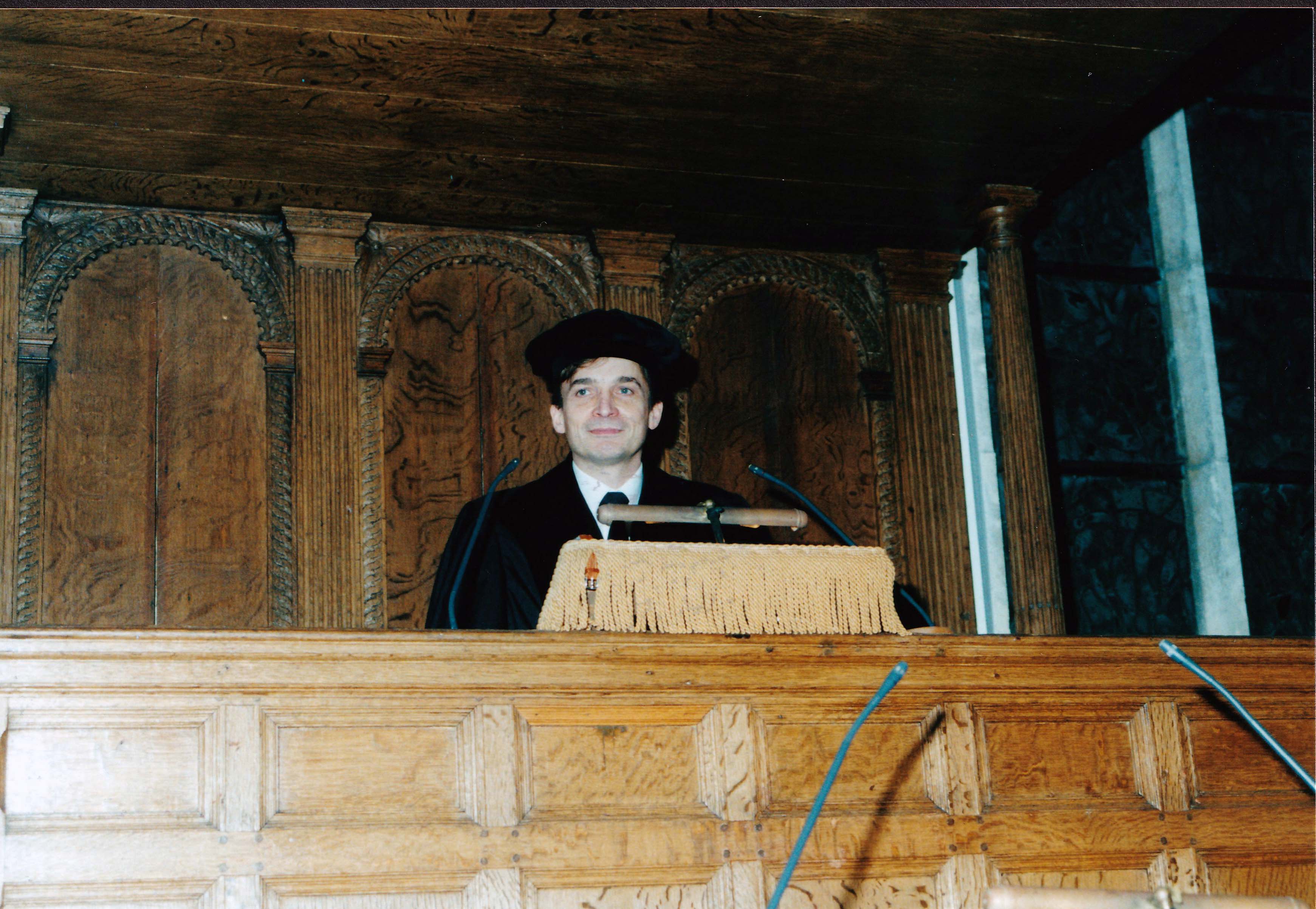
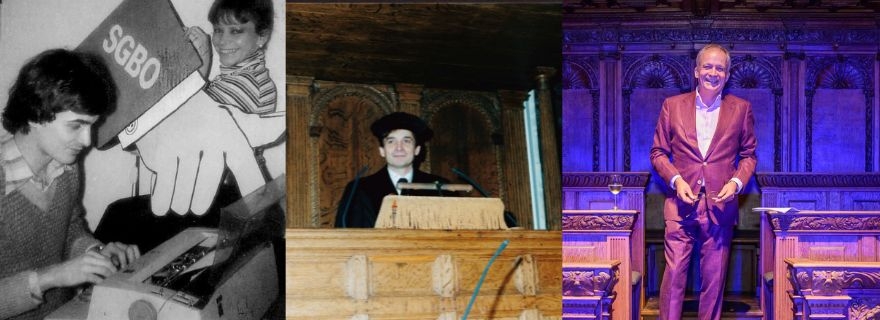
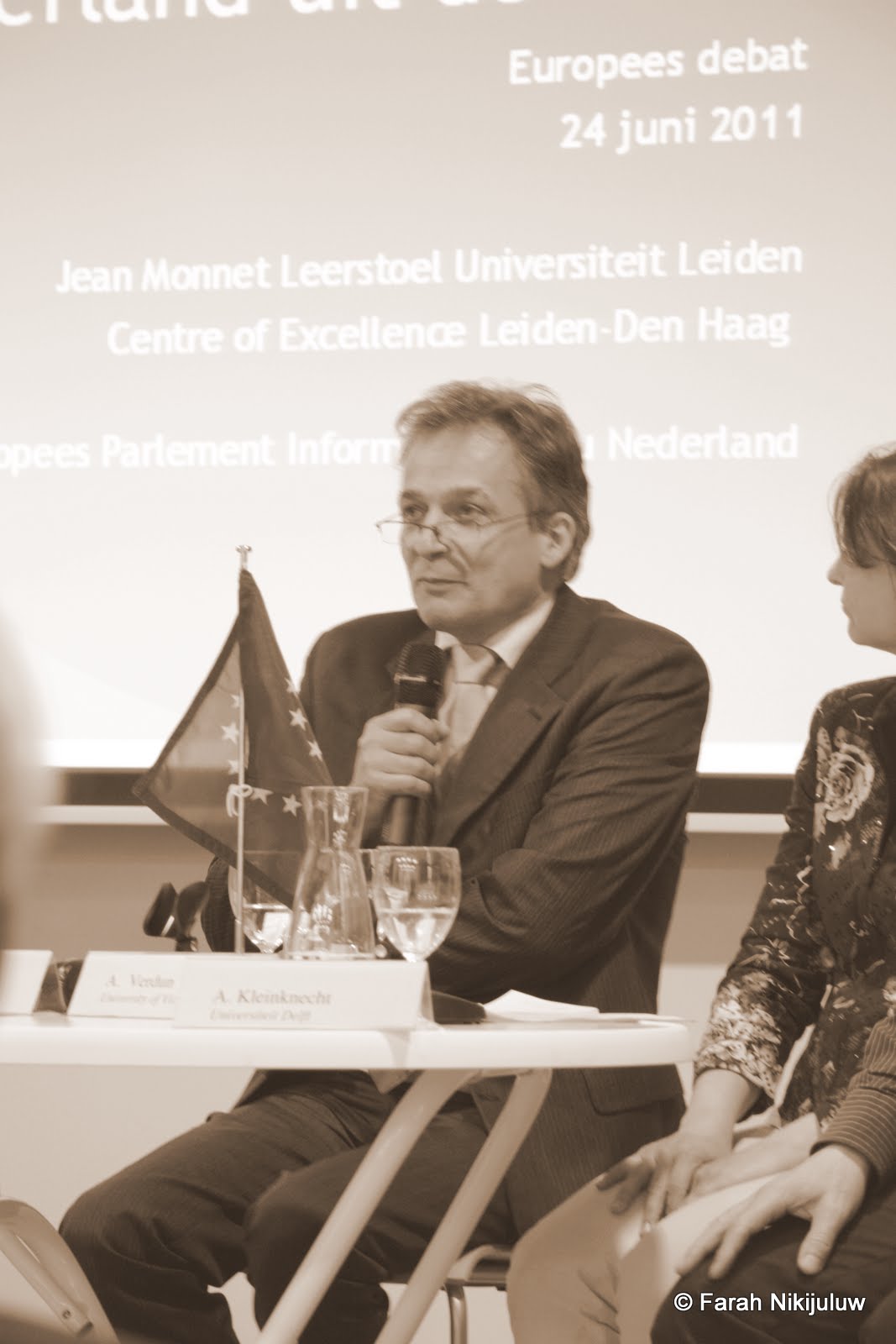
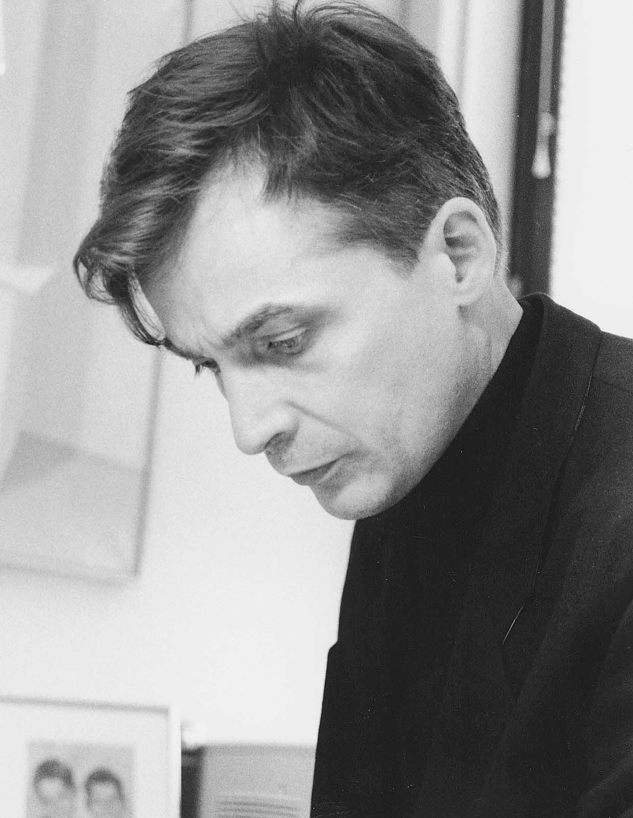
During Bernard’s inaugural lecture. -
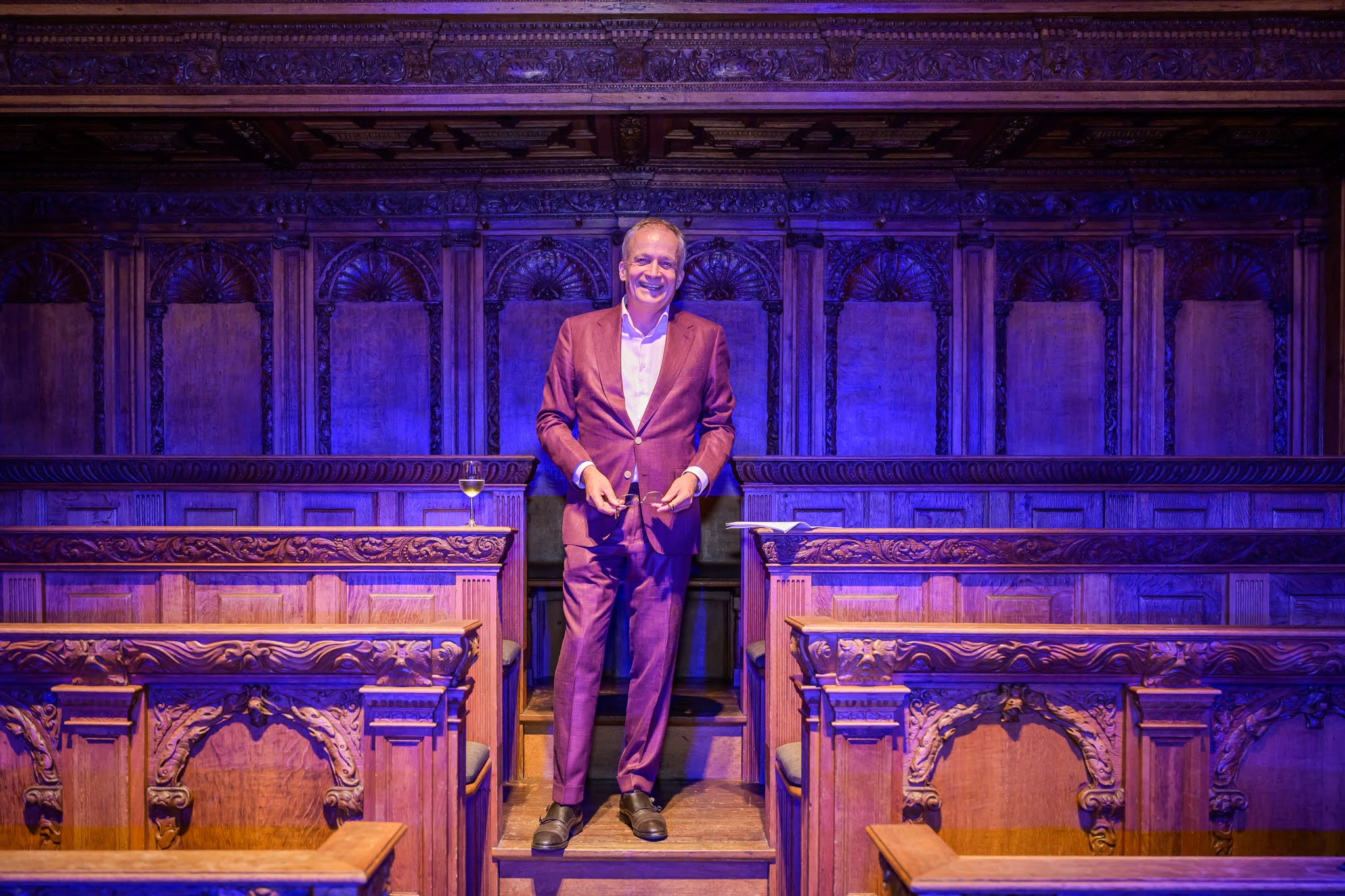
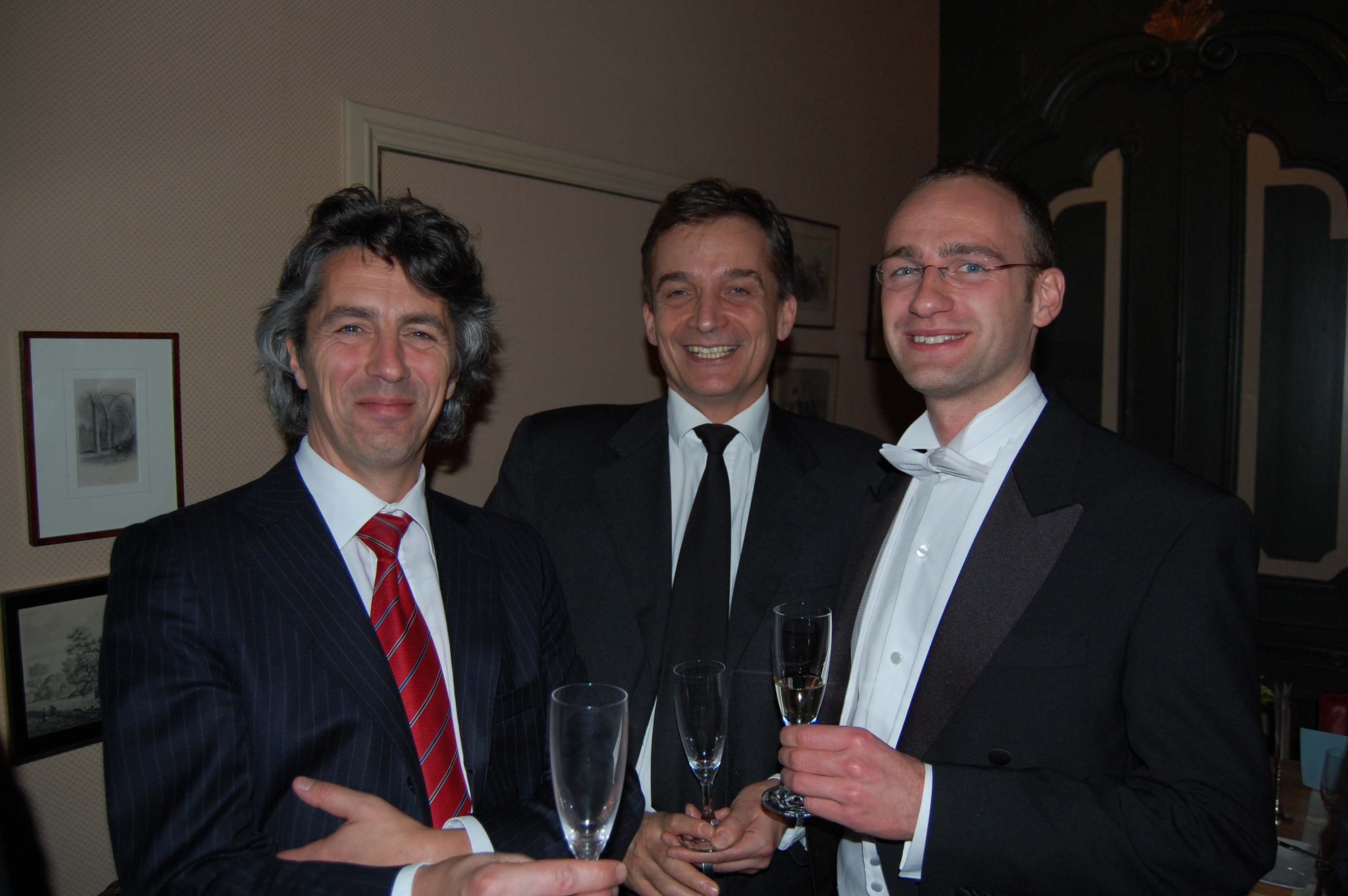
During the 40th anniversary of Public Administration in 2024.
A much bigger project
The idea for the book came after a successful MOOC Bernard made for Coursera almost ten years ago. In the summer of 2016, ‘while everyone else was lying on the beach’, he was writing scripts for videos. They had to be short, but that proved difficult. ‘My texts were always longer than they would have liked.’ It marked the start of a book, a much bigger project than expected: sixteen chapters, each roughly the length of an academic article. ‘While writing, there are moments of deep joy and tremendous pleasure, but there are also moments when you think: gosh, what have I got myself into?’
'There are also moments when you think: gosh, what have I got myself into?'
Europe and the enlargement of the European Union, ‘a kind of old love’, have long occupied Bernard’s thoughts. He is currently writing two papers on the subject. He is not entirely sure where exactly that interest comes from. Perhaps from the time when Europe was far less self-evident than it is now, when you could still find yourself queueing at the border with France and Schengen was something new and exciting. ‘Now it has become an acquired right, but that could change again.’
Chair
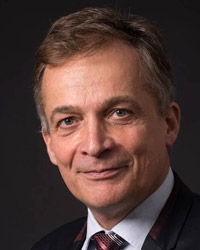
‘My chair has a very unusual name: Public Administration, including the institutional economics of public administration. It took me some time before I could say it in a single sentence without stumbling over the words.’
Decision-making
For Bernard, when it came to the EU, the central question was always how people, countries and institutions reach decisions together. His inaugural lecture, too, focused on decision-making. If you see decision-making as negotiation, you can look at it through an economic lens. But according to Bernard, something always comes before that: do people actually understand one another’s positions? Without mutual understanding, cooperation becomes difficult. A game form, the subject of his inaugural lecture, is therefore, for Bernard, a set of agreements people make with one another in order to be able to reach decisions in the first place.
'Not everything works, and not everything succeeds. Sometimes that is simply part of it'
In recent years, Bernard has mainly held managerial roles, but the lecture hall never disappeared from view. First-year teaching in particular holds a special place for him. A room with 200 to 300 students, young people of 18 or 19, all with their own ideas about politics and governance. ‘You hear the most wonderful things, and you see a miniature version of the Netherlands reflected in the lecture hall. It’s absolutely wonderful.’ For Bernard, that is precisely the value of teaching: not only transferring knowledge, but also staying in touch with the world beyond your own circle. ‘You step outside your bubble.’ That is why he will continue doing it, ‘with joy and enthusiasm, for as long as he can and is allowed to.’
Public Administration offered room
He also speaks warmly about Public Administration. He describes it as a possible ‘academic free state’: a field in which insights from different disciplines come together. Not as a closed cocoon, but as a place where you are allowed to think outside the lines. Public Administration offered room: for Europe, for teaching, for governance and for questions that do not fit neatly within a single discipline.
At the end, Bernard adds a joke. There are all kinds of clichés about economists, political scientists and public administration scholars, he says. You would not trust an economist with your wallet. A political scientist struggles with politics. A public administration scholar cannot govern. And someone who researches decision-making? ‘They cannot make decisions.’ He laughs. ‘So I’ll leave it at that.’
The move to The Hague
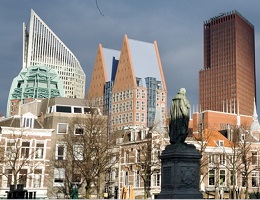
When he looks back on 27 years, the move to The Hague stands out above all. It was an exciting and complex process, marked by resistance and uncertainty, in which he played an important role as academic director. Still, he looks back on it with pleasure. It was a period in which many things began to shift, and in which Public Administration found a new home in the city of governance and policy. ‘Not everything works, and not everything succeeds. Sometimes that is simply part of it. But still, it has been a success.’