
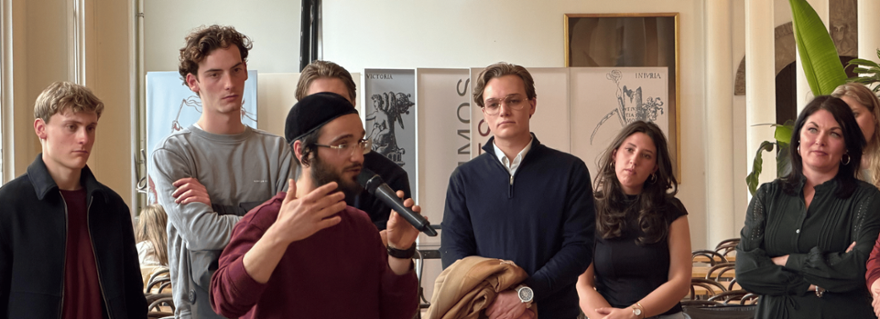
‘Unessays’ exhibition: where law and creativity intersect
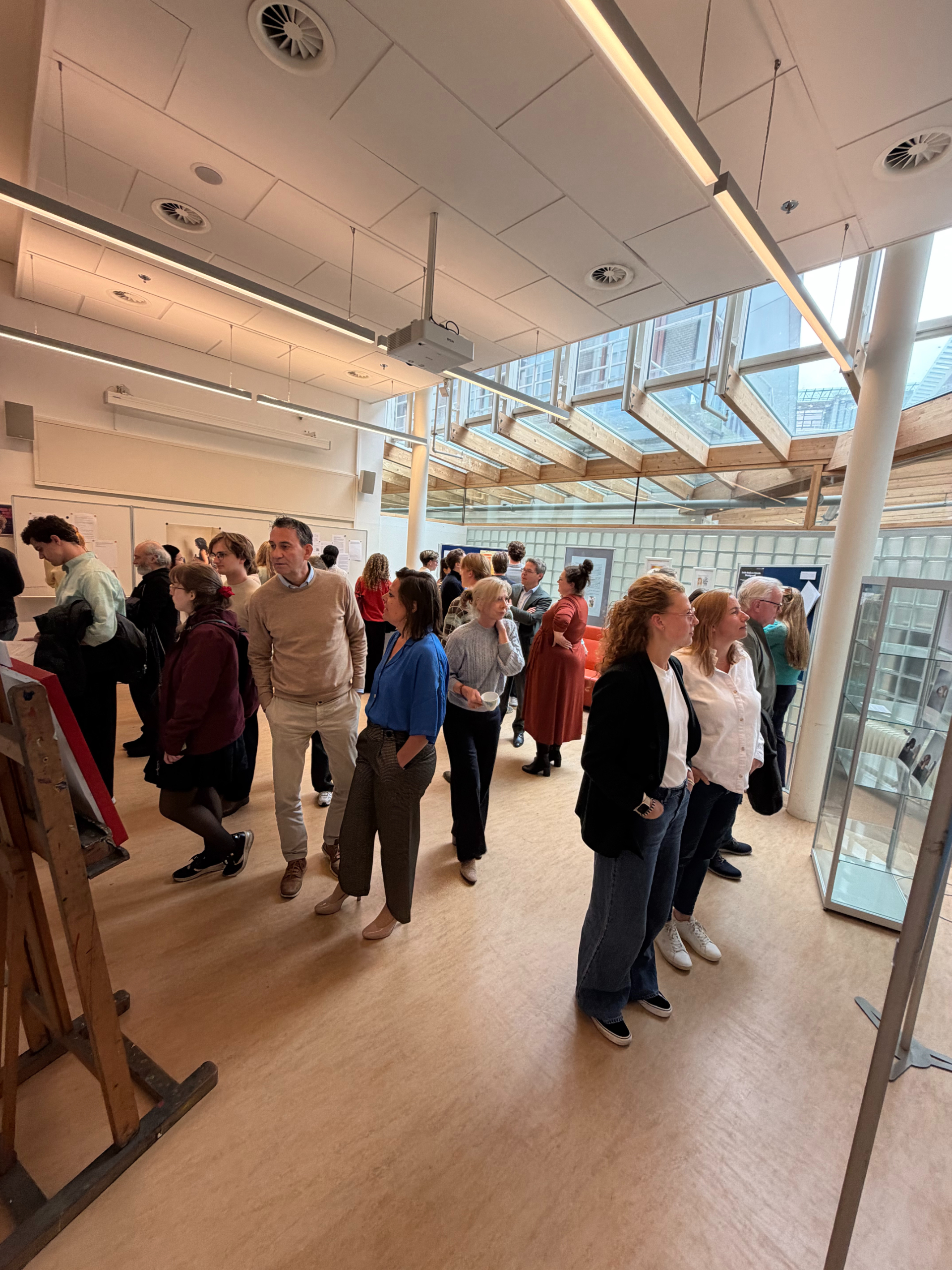
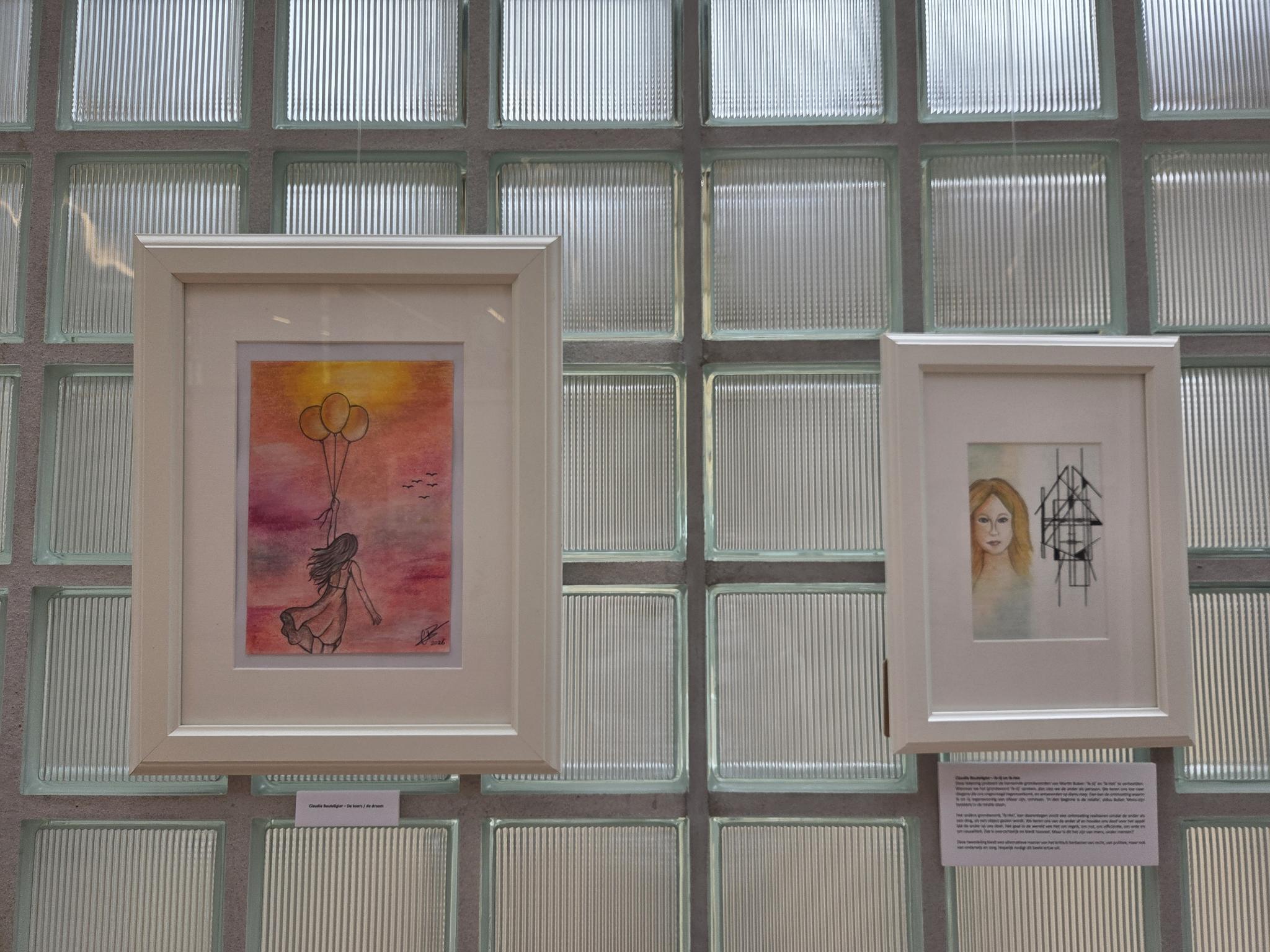
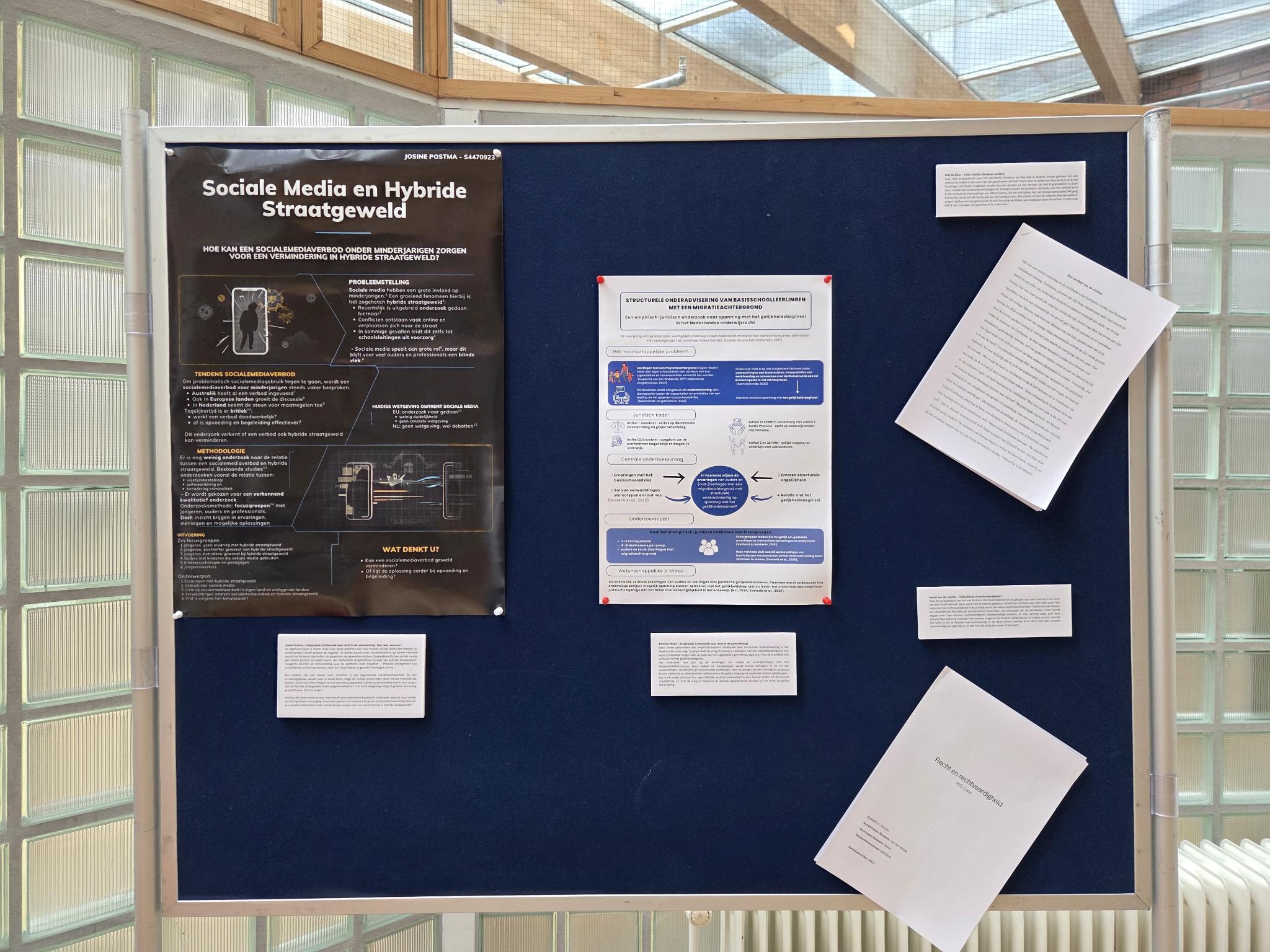
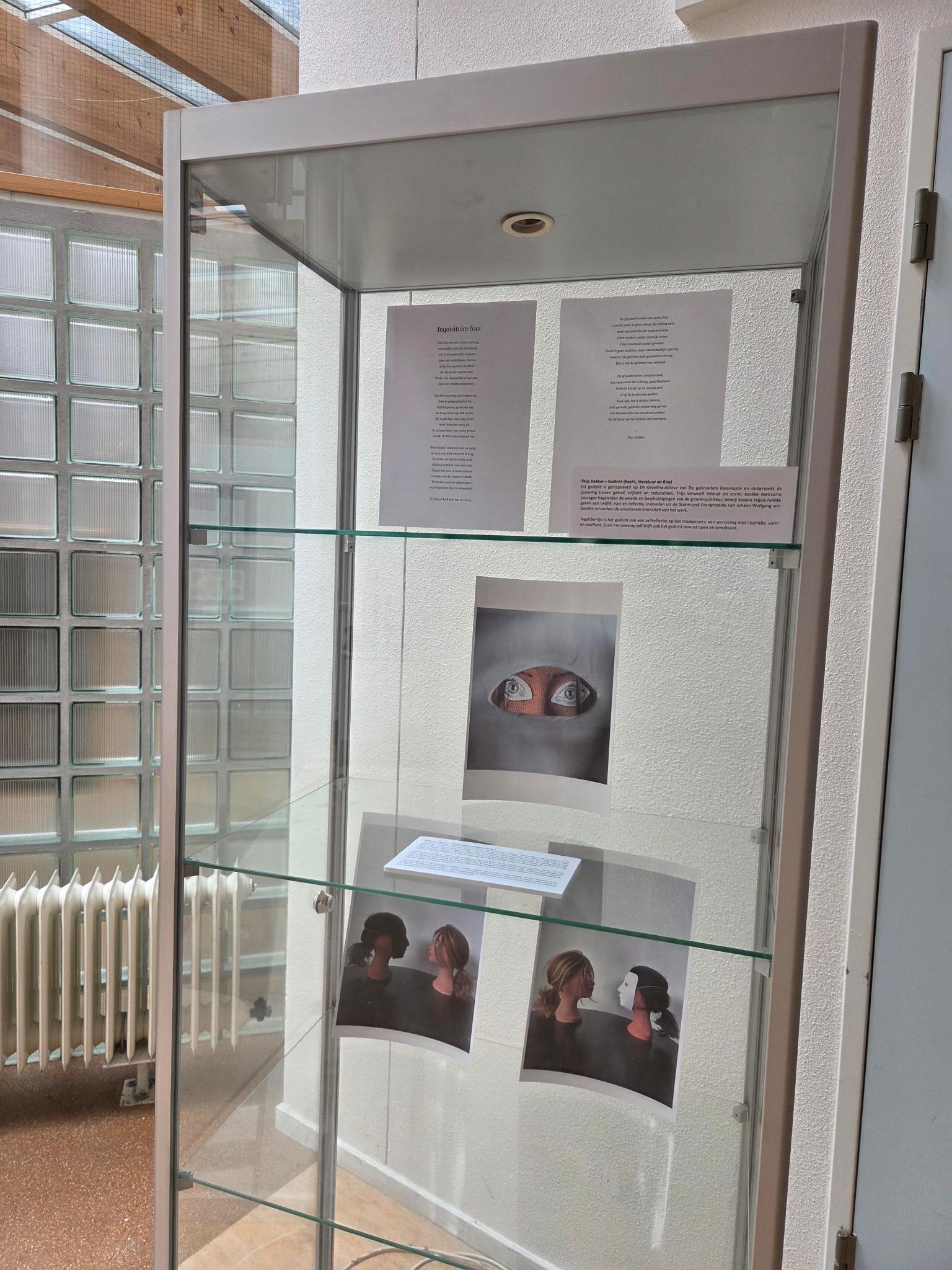
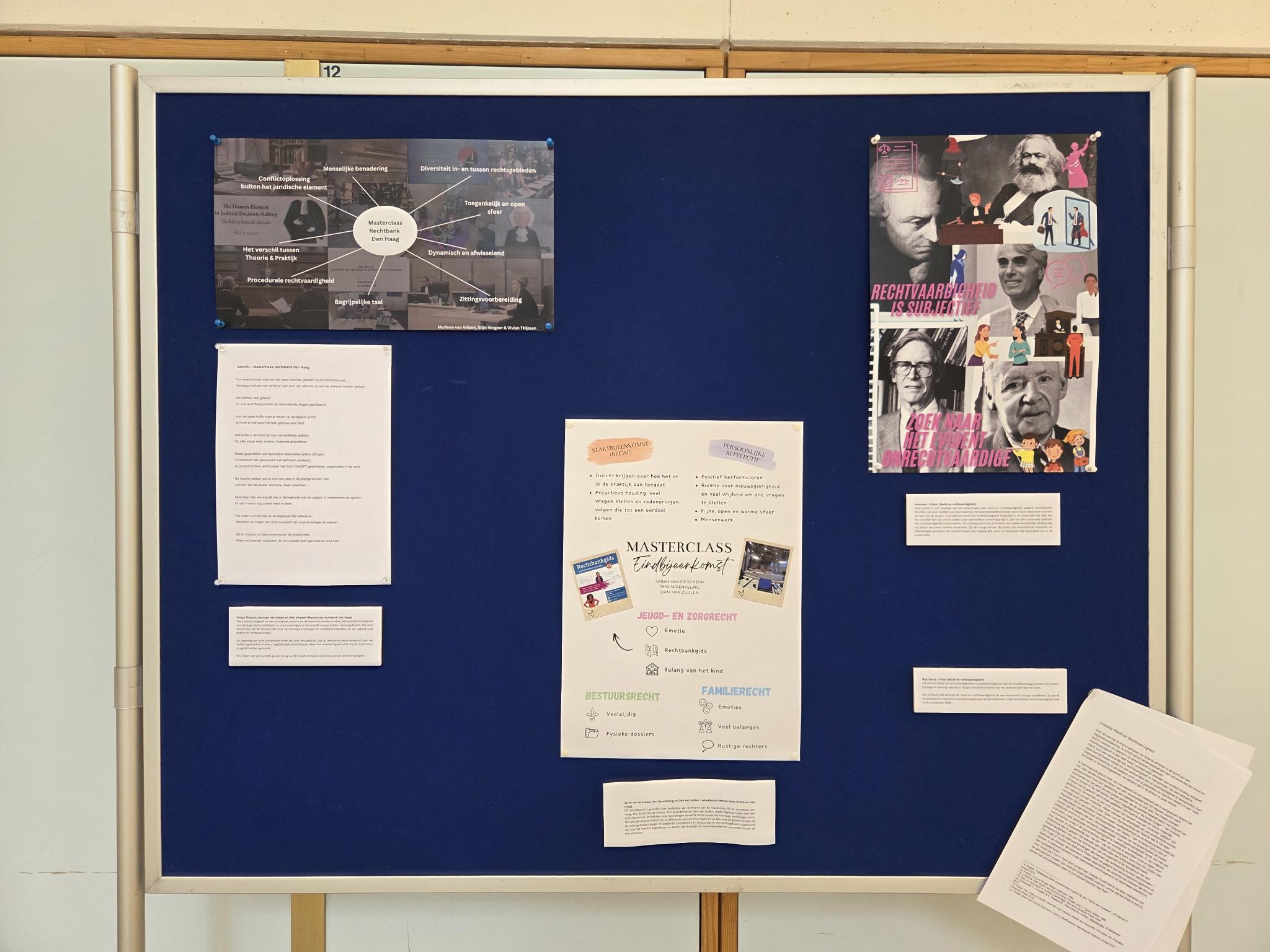
What happens when you let go of the traditional essay and instead invite creativity, imagination and experimentation? Honours College Law students found out with 'unessays', now showcased in an exhibition at the KOG.
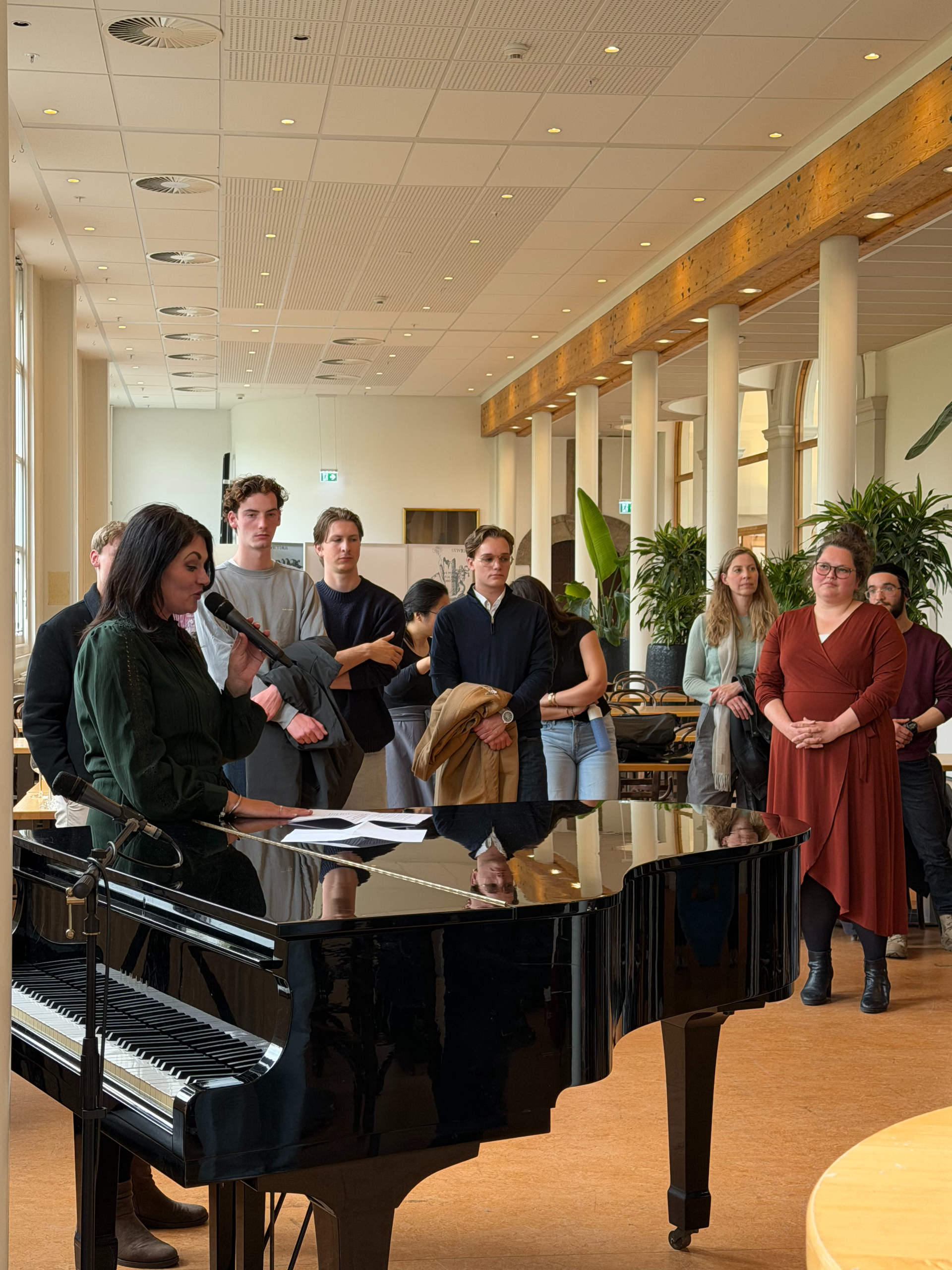
‘Students are not obedient objects whose only task is to reproduce knowledge,’ says Claudia Bouteligier, director and programme coordinator of Honours College Law, at the exhibition opening. ‘They need to apply that knowledge and use it to engage with the world around them.’
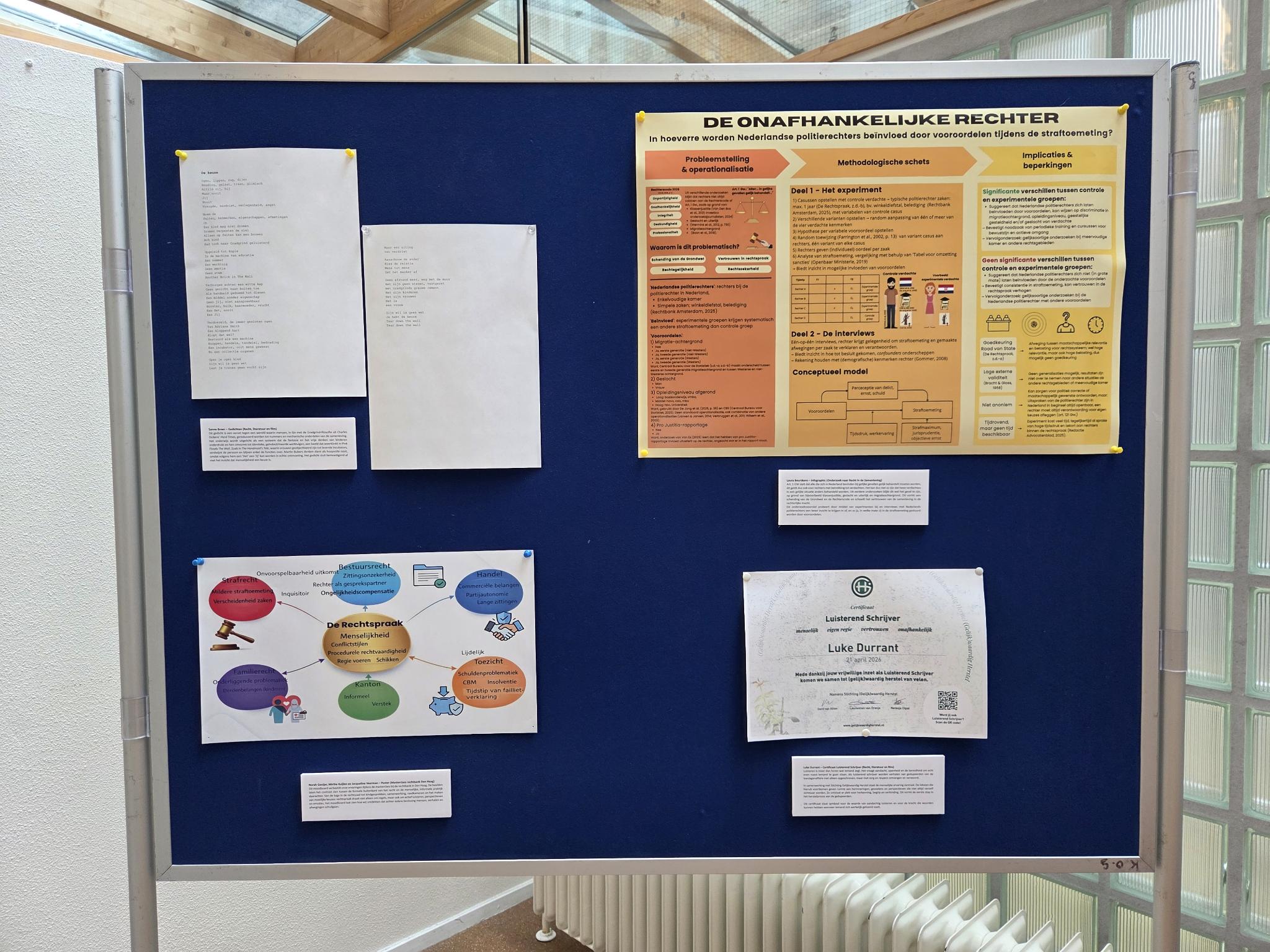
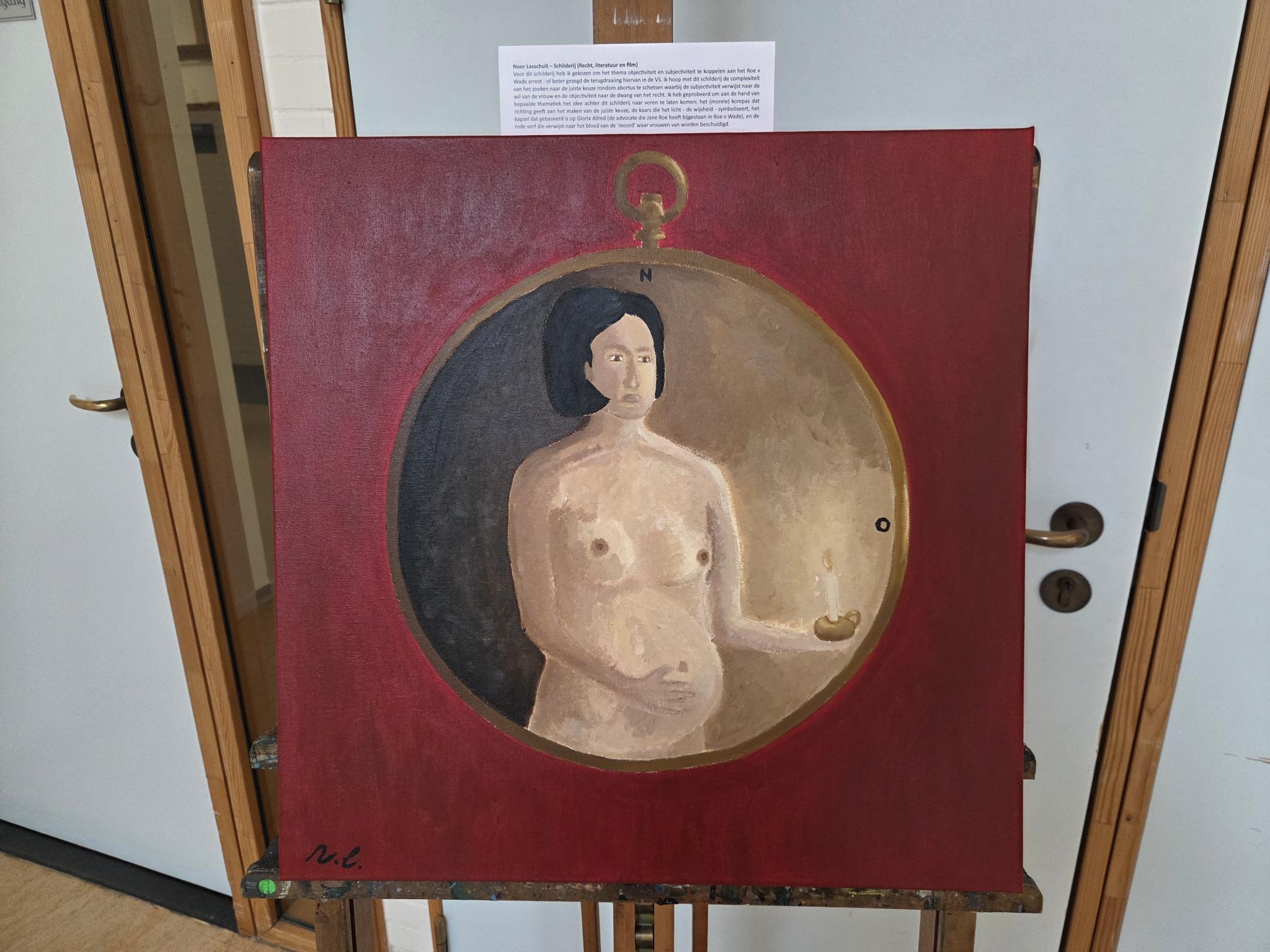
For the past two years, HC Law students have been able to create an ‘unessay’ as their final assignment. The idea is simple: instead of a traditional essay or exam, students choose a free, creative form – for example music, a poem, podcast, painting, poster, vlog or fictional story. They then explain their work in a short reflection in which they discuss their choices and thought process.
According to Bouteligier, this type of assessment challenges students to think beyond the usual boundaries and sparks their creativity. 'The focus shifts from the final product to the learning process itself,' she says. 'What matters to us is each student’s individual learning journey.'
Portraying the courtroom through song
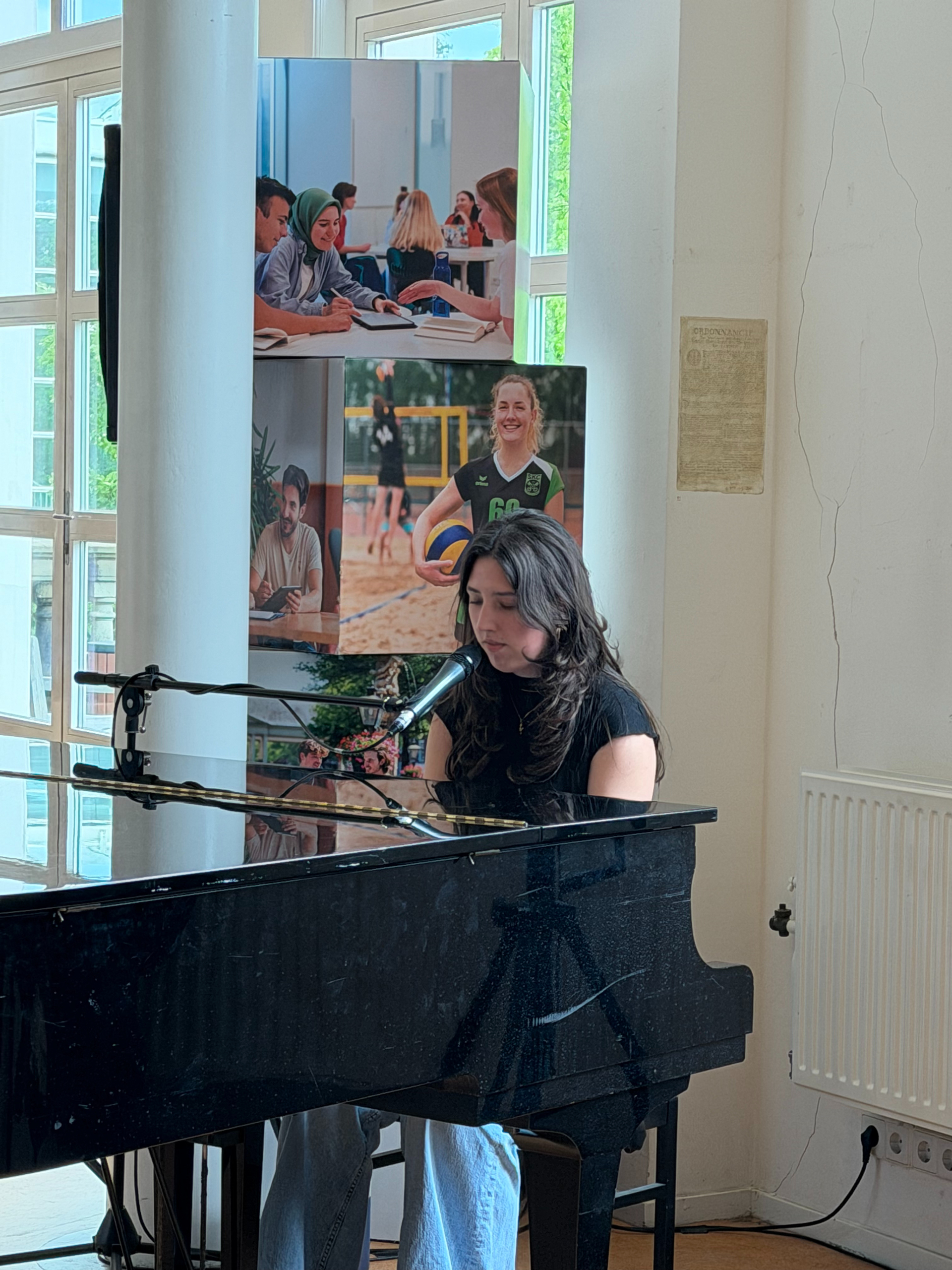
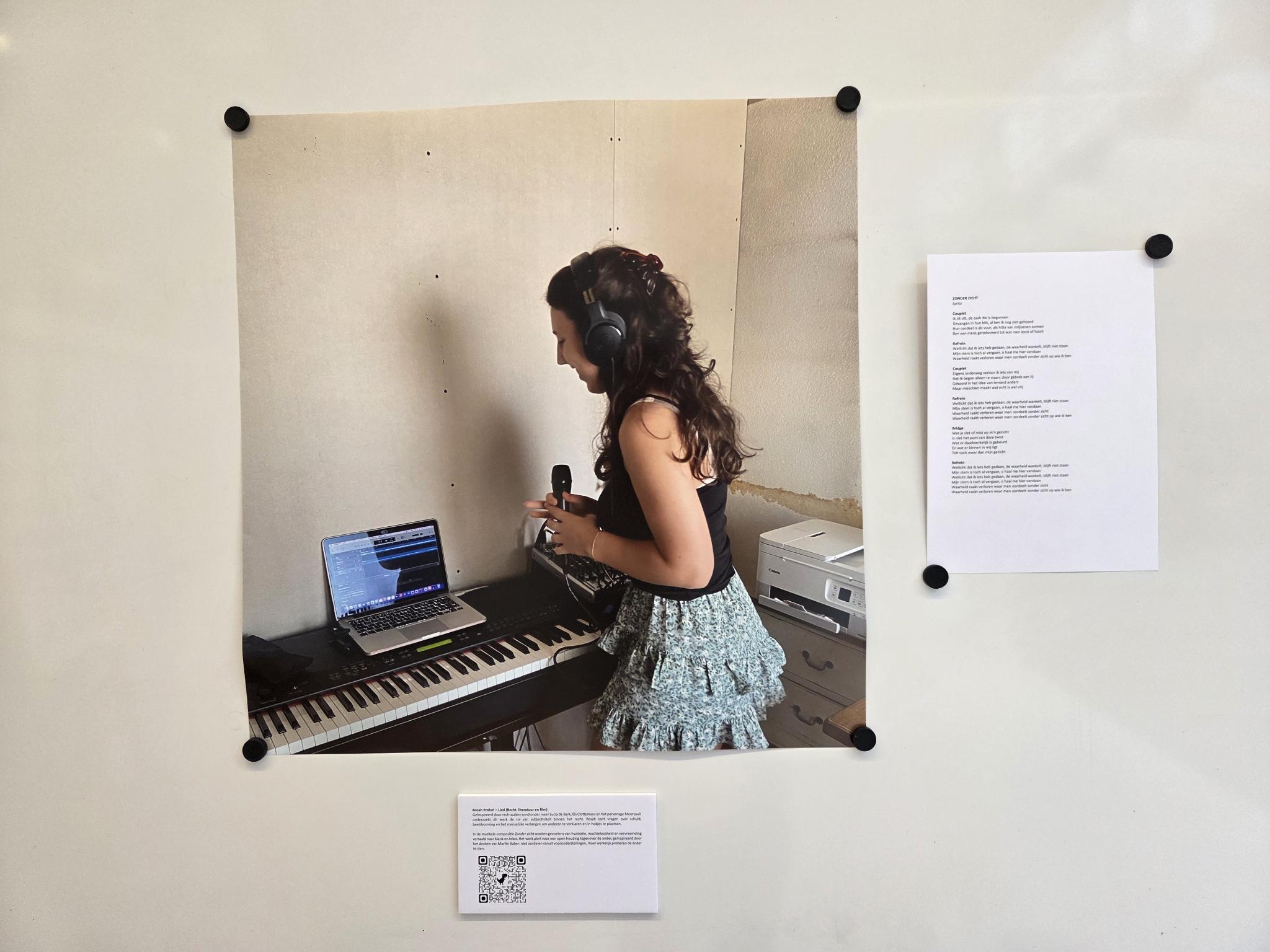
Student Rosah Pothof completed the HC Law course Recht, Literatuur en Film (Law, Literature and Film) by creating a piece of music. At the opening of the exhibition in the KOG restaurant, she sung her own composition, Zonder zicht, accompanying herself on the piano. ‘The song is about subjectivity in the courtroom,’ she explains. ‘I was inspired by court cases like Lucia de Berk and Els Clottemans, and the book L’Étranger (ed. The Stranger) by Albert Camus.’
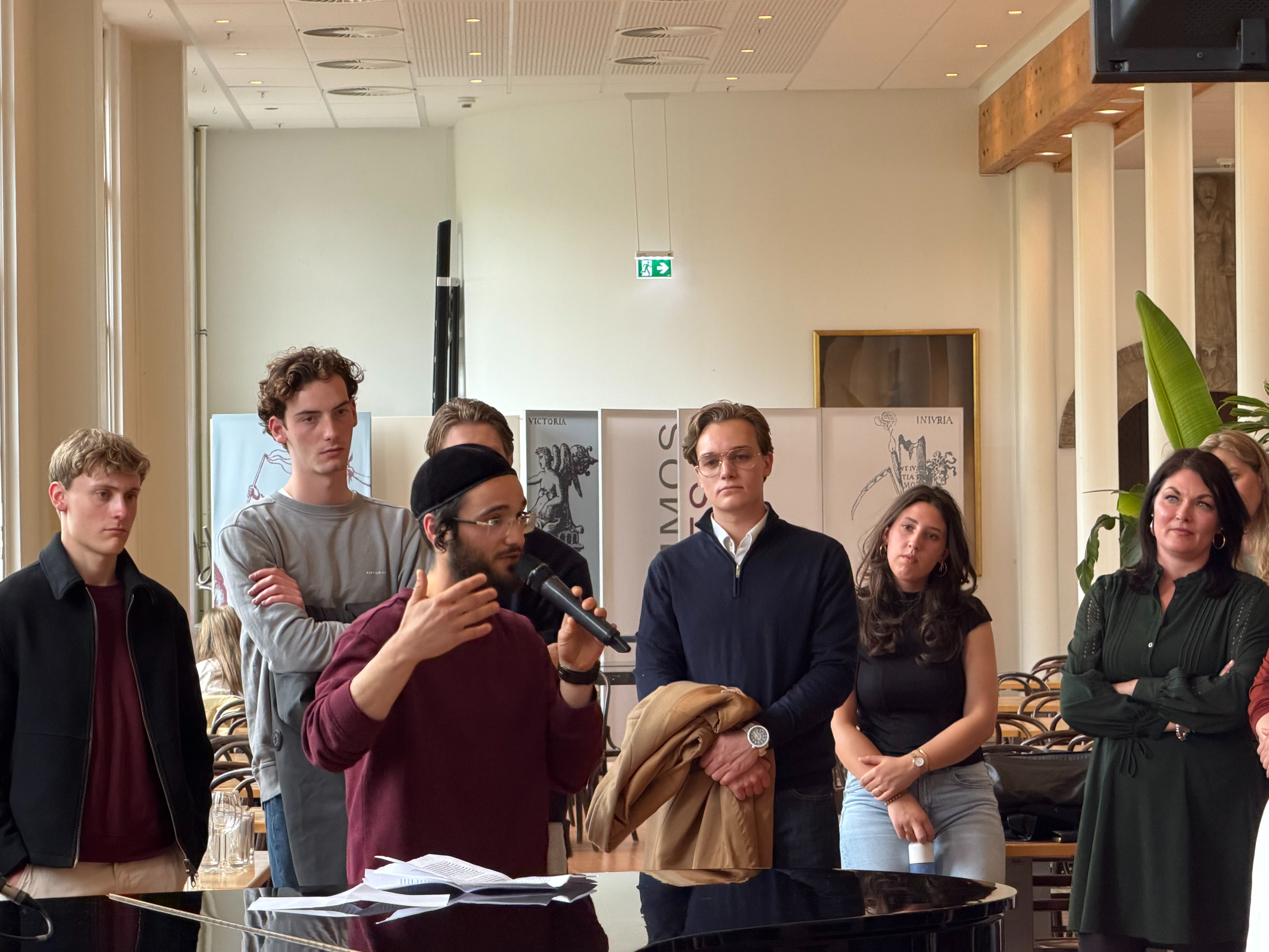
Daniël Clapper also presented his personal unessay. He works for Stichting (Gelijk)waardig Herstel as a voluntary Listening Writer, where he documents the stories of parents affected by the childcare benefits scandal in the Netherlands. Clapper says that it is about more than just financial recovery. ‘It’s an attempt to help with emotional recovery too’ he says. ‘By actually listening to what a person has gone through, you try to restore their humanity in some way.’
Clapper found this emphasis on humanity and connection in the work of philosopher Martin Buber. ‘Buber speaks of the I and Thou relationship, where one person, in their infinite wholeness, addresses another person in their infinite wholeness, creating a genuine connection,’ he explains. ‘I see that as a remedy for the lonely, unnatural way in which our society is organised today.’
Bouteligier says this underlines the value of the unessay. ‘In a regular course, students learn about what went wrong in the childcare benefits scandal from a legal perspective. Though important, that’s just one perspective on the matter’, she says. ‘When students actually speak with parents, the magnitude and depth of the injustice they have suffered becomes tangible: these are human beings, like you and me. In the process, students learn to really listen, without passing judgement.’
No final grade
Pothof appreciates the alternative assessment method of the unessay. ‘I liked it because it’s so different. This is the only course in your degree that lets you be so creative,’ she says, adding that it’s a great way to encourage creativity and thinking outside the box: ‘It activates skills you don’t use for a normal exam or essay. For me, it was a very unique and positive way to complete a course.’
Not only are students not asked to write an essay or sit an exam, they are assessed with a pass or fail instead of getting a grade.’ I think it would be very hard to assess the various final products using the same criteria,’ Pothof says. ‘It would be strange to grade my song and someone else’s painting on the same scale – you can’t compare them.’
Bouteligier says the main focus is on the learning process. During the course, students receive feedback on content and writing skills, after which they decide which type of final assignment suits them best. ‘Some students are better suited to a more traditional essay, while others thrive in a more creative format,’ she says. ‘What matters is that each student is assessed in a way that is appropriate for them.’
Unessays
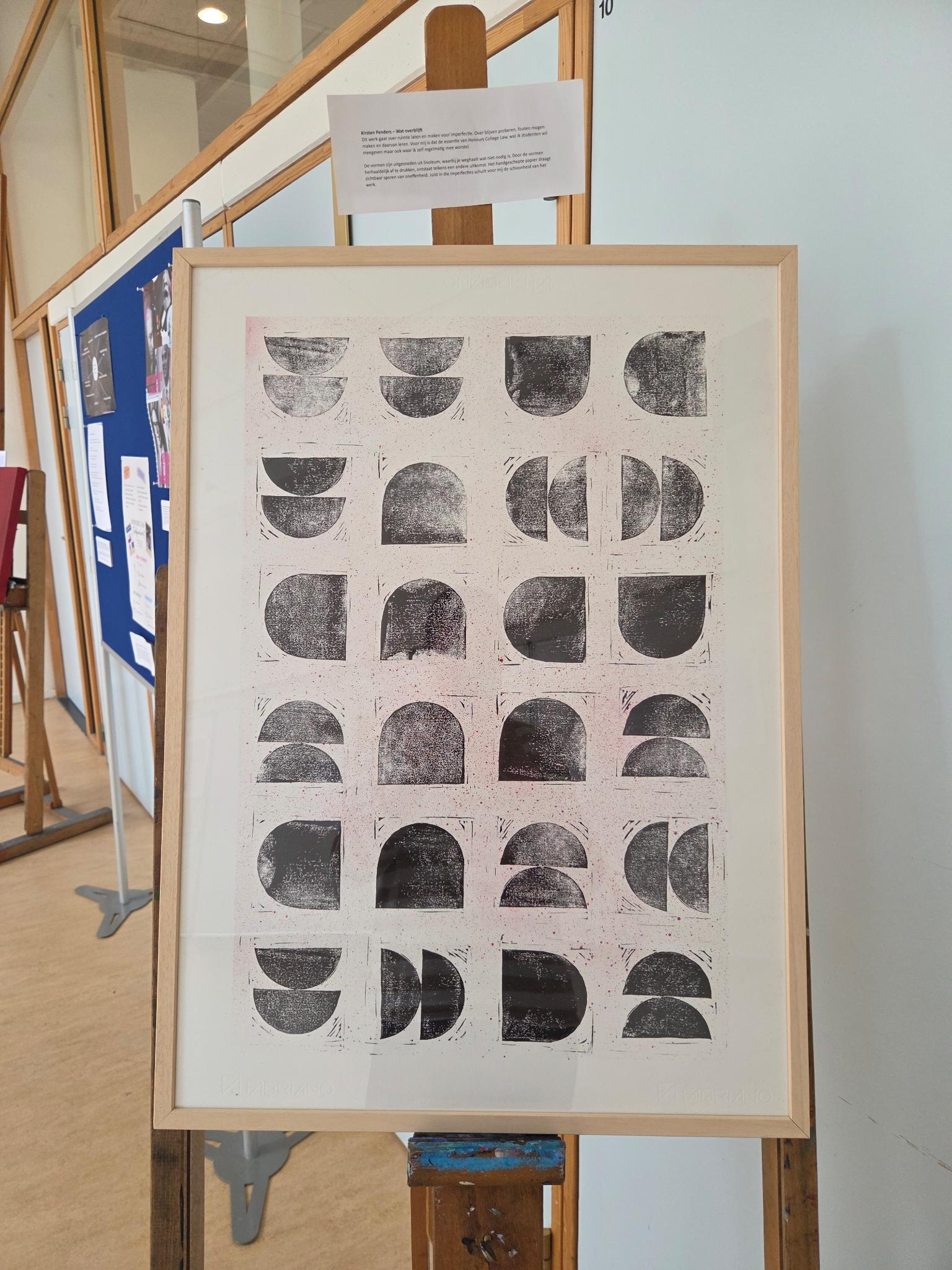
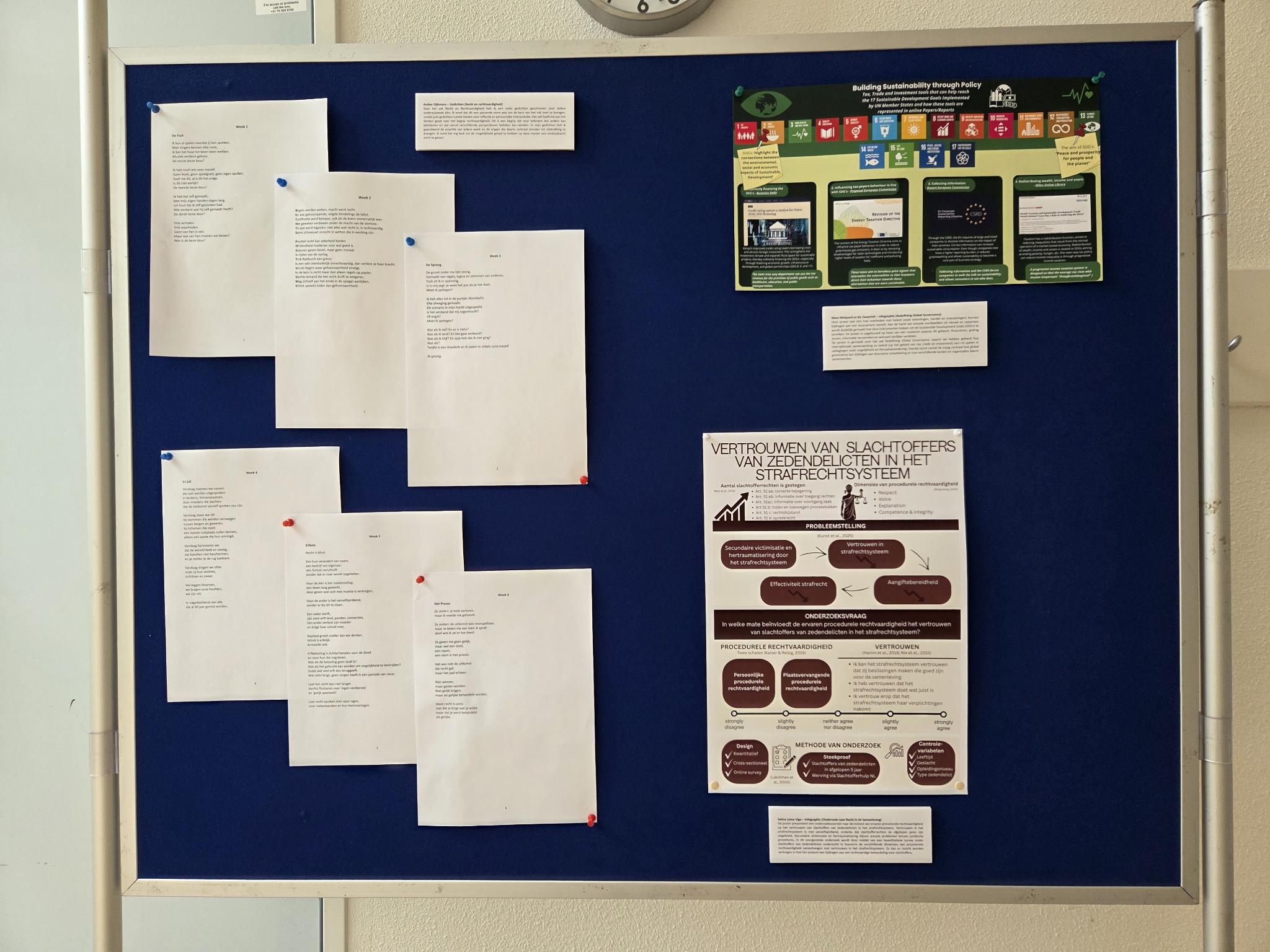
The ‘Unessays’ exhibition displays a selection of final assignments completed by HC Law students, varying from poems and fiction, to podcasts, paintings and music. The works explore themes such as justice, individual responsibility, and human dignity. The exhibition is from 18 to 21 May and can be viewed in room A0.02 at the KOG. So, drop by and discover the unessay.