Climate solutions, fragile systems: who really pays the price?
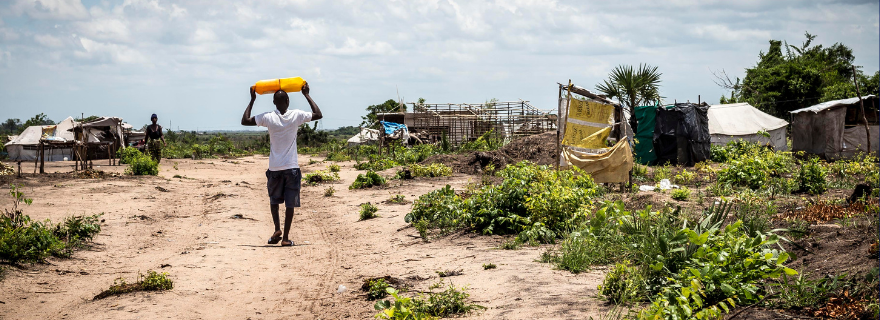
Climate action is often framed as urgent and necessary. But on the ground, it can also unsettle lives in unexpected ways. LUC researcher Bernardo Almeida explores what happens on land rights of vulnerable groups when climate responses meet fragile governance systems.
It rarely starts with abstract theory. Instead, Bernardo’s work grows out of years spent studying land rights in countries like Mozambique., Timor-Leste, Afghanistan and South Sudan. What he began to notice was a pattern: climate change was not just an environmental issue, but a legal and social one, with impacts on people’s rights to land.
‘Many climate-related measures, such as sea walls, drainage systems or relocation of communities need land to be implemented, and will impact someone’s land rights.’
What seems like a technical intervention quickly becomes a political and human dilemma. For instance, moving a community away from an area of recurrent floods often means moving them onto someone else’s land, while also breaking their social networks and livelihoods. While such situations are difficult anywhere, in places where administrative and legal systems have limited solutions for these processes, and do not account for the voices and rights of all affected people, tensions might intensify and the outcomes are often disadvantageous for fragile groups.
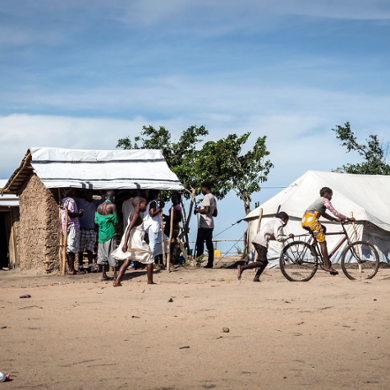
Rather than focusing solely on legal texts, Bernardo’s research combines legal analysis with field-based insights. Conversations with residents, policymakers and officials on the ground reveal how decisions are actually made, and experienced by those affected. ‘The law in practice is, for good and bad, often very different from what is established in the books’ he adds. For instance, talking with residents of an informal settlement might show you that legal systems are simply not designed to incorporate their needs and problems. Talking with state officials allows you to better understand all the constraints they experience in applying the law.
Who bears the cost?
One of the most pressing questions in his work is deceptively simple: who pays for climate action?
Often, it is the most vulnerable communities. Policies designed to reduce risk can unintentionally deepen inequality. A proposed rule in Mozambique, for example, suggested that no land rights should be recognized in high-risk areas. But as Bernardo points out, ‘Who lives in those areas? Usually those who cannot afford safer land.’
For many, the risk of a flood every few years must be weighed against immediate survival, access to food, income, education. Removing land rights in the name of safety may ultimately do more harm than good.
The importance of process
If there is one theme that quietly underpins his research, it is the importance of process. Not the most glamorous topic, he admits, ‘people get bored just hearing about administrative procedures’, but a crucial one.
Without clear guidelines, decisions about relocation, compensation or land use are often improvised. For instance, in my research with my colleague Carolien Jacobs, we concluded that in Mozambique the process through which the state can expropriate land for public purposes is not fully detailed in law. If, for example, the state wants to get land from local residents to build a new drainage system to prevent floods, there is no legally established mechanism that guide state officials through the full process of identifying land rights, consult with affected people, and calculate compensation. Without clear legal guidance, these processes are mostly improvised by state officials, but improvisation, in fragile contexts, tends to disadvantage those with the least power.
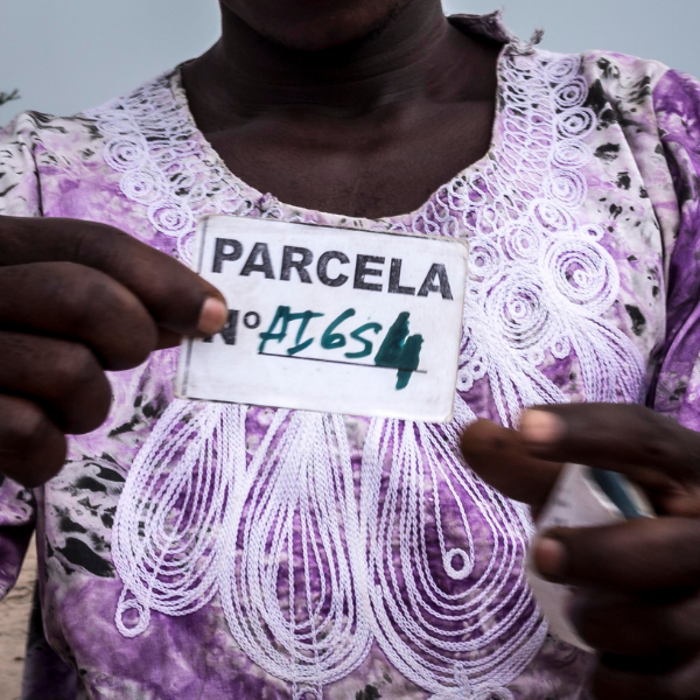
Well-designed procedures, on the other hand, can create space for participation and accountability. They offer both citizens and officials something to hold on to.
‘There is no guarantee that the state will follow their own laws’ he says, ‘but without these structures, everything becomes arbitrary.’
From field to classroom
At Leiden University College, this research does not stay in the field. It feeds directly into teaching and research clinics that Bernardo have been developing with students, shaping how they engage with global challenges.
Real world cases bring complexity into the classroom, challenging simplified narratives. Students are encouraged to approach issues from multiple perspectives, legal, political, social, and to remain open to uncertainty.
That mindset matters. As Bernardo notes, ‘It’s easy to have strong opinions in the classroom. It’s much more humbling when you see how complex problems are on the ground.’
And perhaps that is where meaningful climate action begins: not just with solutions, but with a deeper understanding of their consequences.