
How a small amount of rare earth metal shapes the environmental impact of magnets
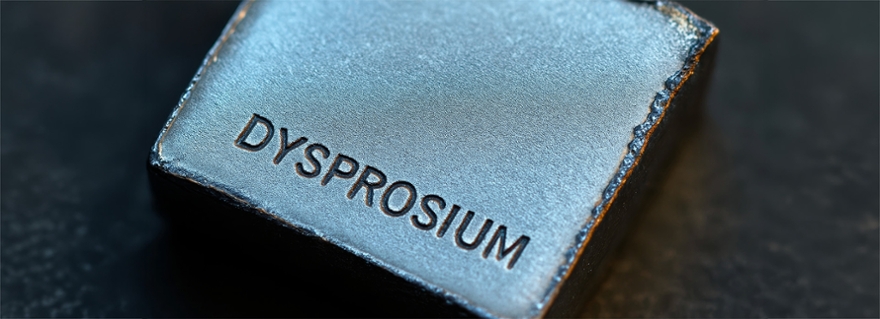
Magnets for electric cars and wind turbines contain only a small amount of the rare earth metal dysprosium. Yet, this metal is responsible for a large share of the environmental impact and costs, according to research by environmental scientists Stellina Samuel, Robert Istrate and René Kleijn.
Magnets used in technologies such as electric cars and wind turbines are essential to the energy transition. These powerful permanent magnets contain a small amount of the rare earth metal dysprosium. ‘This metal improves their performance,’ Samuel explains. ‘More importantly, it prevents them from losing their strength at the high temperatures generated by motors.’
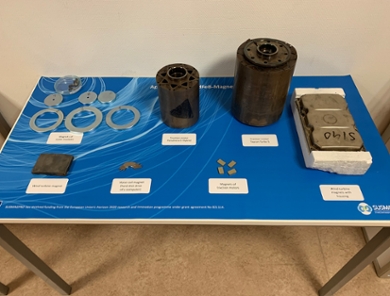
Although dysprosium usually makes up only one to eight per cent of a magnet, the researchers found that it accounts for a surprisingly large share of both the environmental impact and the cost. The scientists studied the magnets throughout their life cycle — from mining to final product — and compared different compositions in terms of environmental impact and cost. For the baseline magnet composition used in the study (4% dysprosium), dysprosium was responsible for up to 78 per cent of the environmental impact and as much as 44 per cent of the raw material cost.
From mine to magnet: where the impact comes from
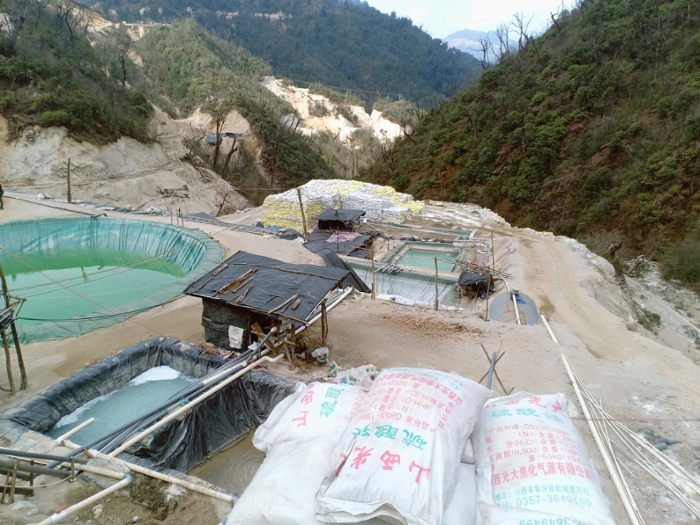
Most of the impact comes from the extraction and processing of the metal. This is done through a method known as in-situ leaching, in which mining companies inject chemicals into a mountain to dissolve rare earth metals. ‘They drill holes hole, pour in chemicals and water, and collect the solution again at the bottom of the mountain,’ Samuel says. The large-scale damage to the landscape is visible in satellite images. Some of the chemicals used can also end up in the surrounding environment.
The next stage is a complex separation process. Dysprosium belongs to the heavier rare earth metals and is difficult to isolate from similar elements. ‘You need large amounts of chemicals and energy to separate them individually,’ Samuel explains. ‘That all adds up to the overall impact.’
Smarter use of materials offers the biggest gains
At the same time, the high impact also shows where improvements can still be made in the energy transition. According to Samuel, the biggest gains lie in using materials more efficiently and in smaller amounts. Europe has little direct influence over the extraction of dysprosium. ‘Mining mainly takes place in Myanmar and southern China,’ she says. ‘What you can do here is look for ways to reduce the use of this element.’ This could involve new technologies or designs that require less dysprosium while maintaining the same magnetic performance.
‘Critical raw materials are a bit like spices in a meal’
Even small reductions in the use of dysprosium could significantly reduce both environmental impact and costs. ‘Critical raw materials are a bit like spices in a meal,’ Kleijn says. ‘You only need a small amount, but they have a huge influence on the final result.’
Less material, less dependency
The study reflects broader developments in the industry, where manufacturers are trying to reduce their reliance on critical materials. Samuel says: ‘It’s not just about cost and environmental impact. Industry also wants to become less dependent on critical raw materials.’ This would make supply chains less vulnerable to geopolitical risks, such as Chinese export restrictions on rare earth metals. In addition, the origin of the metal is often difficult to trace, making supply chains harder to monitor.
What often remains unseen
In follow-up research, the researchers also want to examine the social consequences of extracting critical raw materials. ‘This aspect has received far less attention so far,’ Samuel says. ‘Mainly because it is much harder to measure than environmental impact or costs. These effects are often local and not very well documented.’
According to the researchers, this also raises questions about responsibility within the supply chain, especially because most extraction and processing takes place outside Europe and therefore remains largely out of sight.
Sometimes the biggest footprint is hidden in an ingredient that is almost invisible.
Scientific paper
Stellina Samuel, Robert Istrate, René Kleijn, Mitigating the disproportionate environmental impacts and costs of dysprosium in Nd-Fe-B magnets through material efficiency,Sustainable Production and Consumption, Volume 65, 2026, Pages 203-214,
ISSN 2352-5509, https://doi.org/10.1016/j.spc.2026.04.006.
Funding
This work is funded by the European Union under the Horizon Europe Grant Agreement N ◦ 101129888 as part of the GREENE project. Views and opinions expressed are however those of the authors only and do not necessarily reflect those of the European Union or the European Health and Digital Executive Agency (HaDEA). Neither the European Union nor the HaDEA can be held responsible for them.