
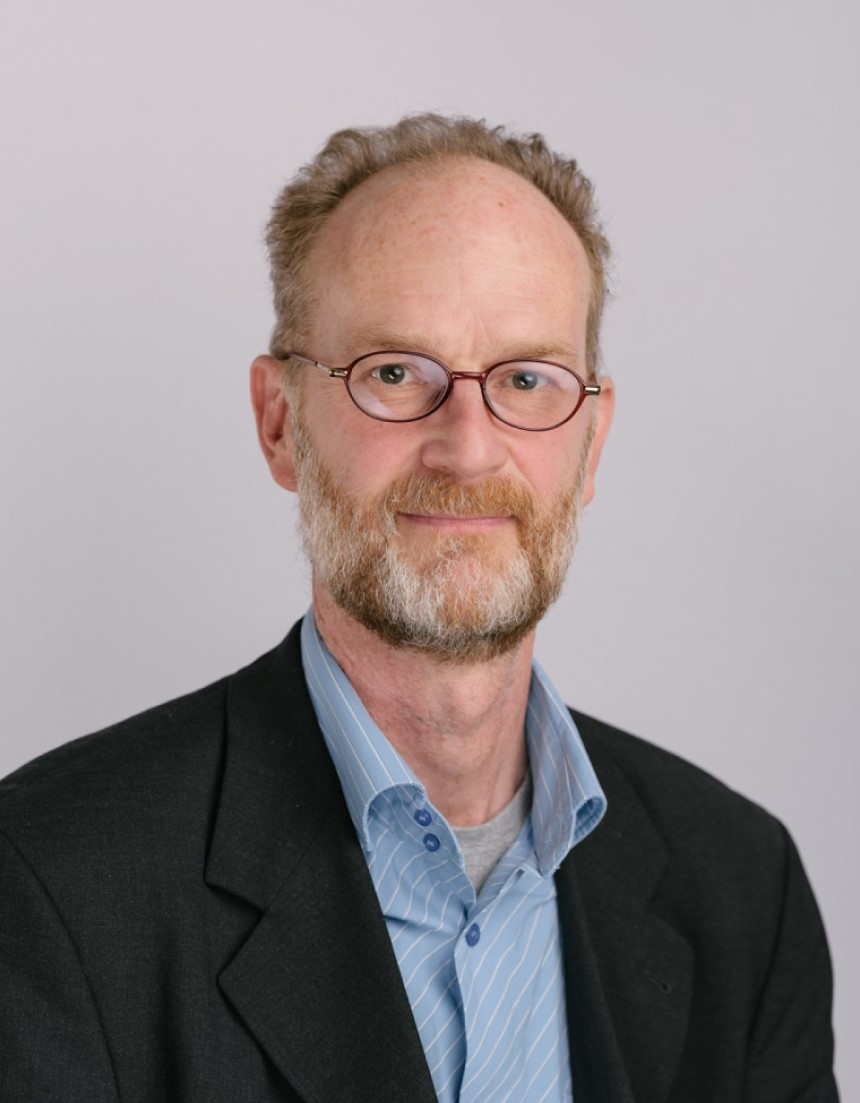
Dorine van Norren appointed Professor by Special Appointment at LUC The Hague: ‘Global ambassador for happiness’
Dorine van Norren has been appointed Professor by Special Appointment in ‘Intercultural Rights, Citizenship, and Sustainability’ at Leiden University College The Hague, Faculty of Governance and Global Affairs, for a five-year term starting on 1 June 2026. The chair was established and is funded by the Dutch Ministry of Foreign Affairs.
You know a great deal about intercultural perspectives on sustainability, development and human rights. Where did your interest in these other perspectives begin?
‘It goes back to an advisory process at the Advisory Council on International Affairs, where I was working at the time. In 2011, we wrote an advisory report on the future of the Millennium Development Goals, which were later succeeded by the Sustainable Development Goals. But we felt an important component was missing: how do the countries we are talking about themselves think about wellbeing and development, from the perspective of their own philosophies and cultures? That was something I had learned in the countries where I had lived, such as South Africa, where people are guided by Ubuntu.’
You later completed your PhD on this topic in 2017. Could you tell us more about that?
‘I examined the Sustainable Development Goals through the lens of three non-Western philosophies that have found their way into the constitutions and policies of South Africa, Ecuador and Bhutan. Ubuntu, often translated as “I am because we are”, emphasises connectedness and community. Buen Vivir is about living well in harmony with nature, and about the rights of nature. Gross National Happiness is based on inner harmony. Bhutan pioneered a broader view of wellbeing, inspired by Buddhist philosophy. In the Netherlands, we now also have the Monitor of Wellbeing. When the Sustainable Development Goals were introduced, the Bhutanese said: finally, the world is going to do what we are already doing. Looking beyond economic growth.’

Why is this topic so relevant now?
‘Because it is becoming increasingly clear that international politics and sustainable development cannot be shaped solely through Western policy frameworks. Countries in the Global South are making it ever more clear that they want to contribute to discussions on international cooperation from the perspective of their own values and worldviews. Looking ahead to 2027, the future of the Sustainable Development Goals is once again being discussed, while they are still far from being achieved. If you truly want to bring people and countries along in sustainable change, you need to connect with the philosophies and cultural frameworks they themselves recognise, such as Ubuntu.’
Has your research also changed the way you look at life?
‘I was changed by living in other countries and by encountering different ways of looking at international relations. My dissertation is the result of that. Through my research in Ecuador, I also became much more aware of how important our relationship with nature is for our own wellbeing. It begins with being able to sense how you relate to yourself and to others. For Bhutan, that is also the idea behind happiness.
At my PhD defence, a Tibetan acquaintance said: “How wonderful that you have become a global ambassador for happiness!” I thought it was quite funny that she said that. But Buddhists mean something rather different by “happiness”: inner balance. If you find that, you can be happy under any circumstances. Even when everything is going against you.’
Chair
The endowed chair ‘Intercultural Rights, Citizenship, and Sustainability’ (0.2 FTE) at Leiden University College The Hague focuses on intercultural perspectives on sustainability, development and rights from the Global South. In addition to her role as Professor by Special Appointment, Dorine van Norren works at the Dutch Ministry of Foreign Affairs as Strategic Adviser for the Western Hemisphere and is an affiliated researcher at the University of Pretoria. Drawing on her research in Ecuador, South Africa and Bhutan, as well as her thirty years of experience at the Ministry, she brings intercultural perspectives on sustainability, development and human rights to LUC students.
Could you give an example of how differently people can think about development?
‘Absolutely. I was in Ecuador, in the Amazon, where I spoke with members of the Achuar community. When I read out the list of goals, they reacted very strongly. No poverty? They did not see themselves as poor. Zero hunger? The forest provided enough food. Good health? Companies from the West were coming to steal their medical knowledge. And when it came to access to clean water, they became truly angry: are you going to privatise our water so you can sell it back to us?
The conversation ended abruptly. I said: these are not my goals, I am researching them. But the conversation was over. It was a huge eye-opener.’

Where does that drive come from?
‘I want to create connection, and give a voice to people who are not being heard. In diplomacy, it is important that you understand one another and are familiar with each other’s worldview. By chance, I once sat in Mandela’s chair after his inauguration in 1994. He emphasised reconciliation. In lectures, I often say: now I have to give something back and pass it on.’
What do these cultural insights mean for policymakers?
‘The Ministry is working on broad partnerships with countries in the Global South that are like-minded on certain issues. We want these partnerships to be based on equality. To achieve that, we also need to learn to listen better. People working in foreign policy or development policy need to understand the local context in which they are operating.’
You have worked at the Ministry of Foreign Affairs for thirty years. How do you bring that practical experience to LUC?
‘The Ministry of Foreign Affairs has a great deal of practical knowledge that is useful to academia; academics, in turn, can inform policy through research and critical reflection. Students can gain insight into what international work looks like in practice.
My hope is that we learn to understand one another better: in the Netherlands, in international relations, and between policy and academia. That requires knowledge, but also listening. For me, that is precisely where the value of this chair lies: bringing people into conversation with one another and creating space for different ways of looking at the world.’
LUC-Dean Giles Scott-Smith:
‘The Special Chair will function as a unique ‘bridge’ linking the academic world of LUC with the policy world of the Ministry, and Dorine is an ideal partner to make this happen. We welcome her as part of LUC’s team and look forward to the new opportunities it will bring for our students.’

Marije Balt, knowledge envoy at the Dutch Ministry of Foreign Affairs:
‘For the Ministry of Foreign Affairs, this chair by special appointment is important because it connects science, education and diplomatic practice. The major international challenges require knowledge-driven policy, new perspectives and young minds. Through this chair, academic insights and policy questions from the ministry can structurally reinforce one another.’