First-ever Opening of the Academic Year in The Hague: ‘One academic community together’
For the first time in Leiden University’s 451-year history, the Opening of the Academic Year took place in The Hague. The programme featured a procession through the city, a talk show on AI and a keynote address by Junior Minister Willemijn Aerdts.
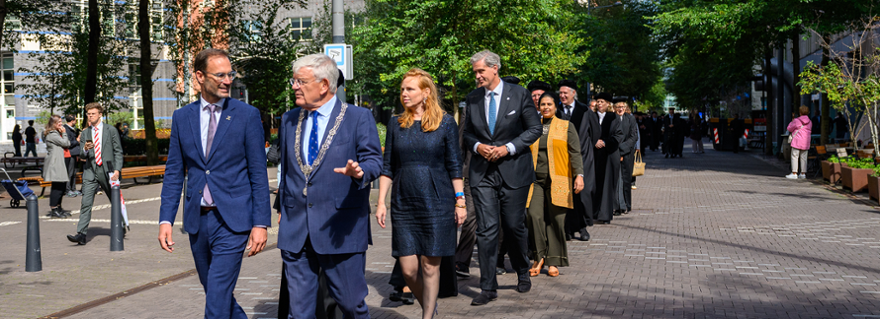
To mark this historic occasion, a procession formed part of the opening ceremony for the first time since 1972. Before the ceremony, students, professors, lecturers, the mayors of Leiden and The Hague, aldermen, speakers and other guests walked from the Wijnhaven building to Amare concert hall. The procession was streamed live for people watching from home and for those in the hall.
Not a copy of Leiden
‘This is a historic moment. After 451 years, we are opening the academic year in The Hague. We are one university in two cities’, said President of the Executive Board Luc Sels. The university is not moving, he stressed. Leiden and The Hague have together become one academic community. Leiden provides the historical foundation and a broad academic tradition, ranging from archaeology to astrophysics. The Hague, meanwhile, as political and international centre, offers new opportunities for research and teaching. The Hague does not need to become a copy of Leiden, said Sels.
Presenter Bo Nieuwenhuis, a former International Studies student who is and now an editor at RTL Nieuws, then put a number of questions to the members of the Executive Board. ‘How can Leiden and The Hague learn from each other?’ she asked Rector Sarah de Rijcke. ‘Leiden has strong academic disciplines, while The Hague offers a metropolitan social context. That makes The Hague an interesting breeding ground for those disciplines.’ She then asked Vice-President Timo Kos how AI, the day’s theme, is changing the university. ‘AI offers many opportunities, but it also calls for reflection and reassessment. Let’s embrace AI wisely’, said Kos.
-
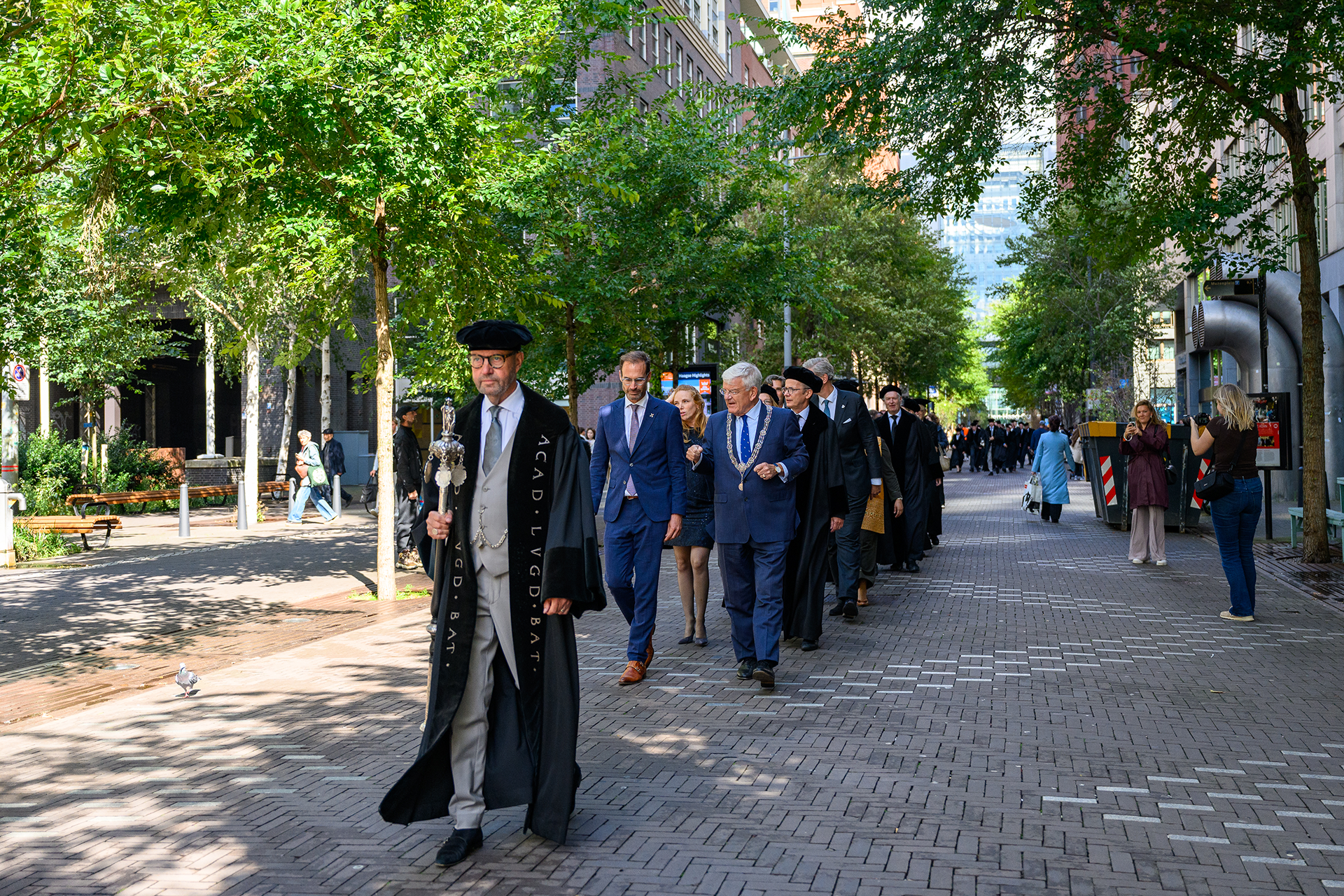
The procession from the Wijnhaven building to Amare concert hall. -
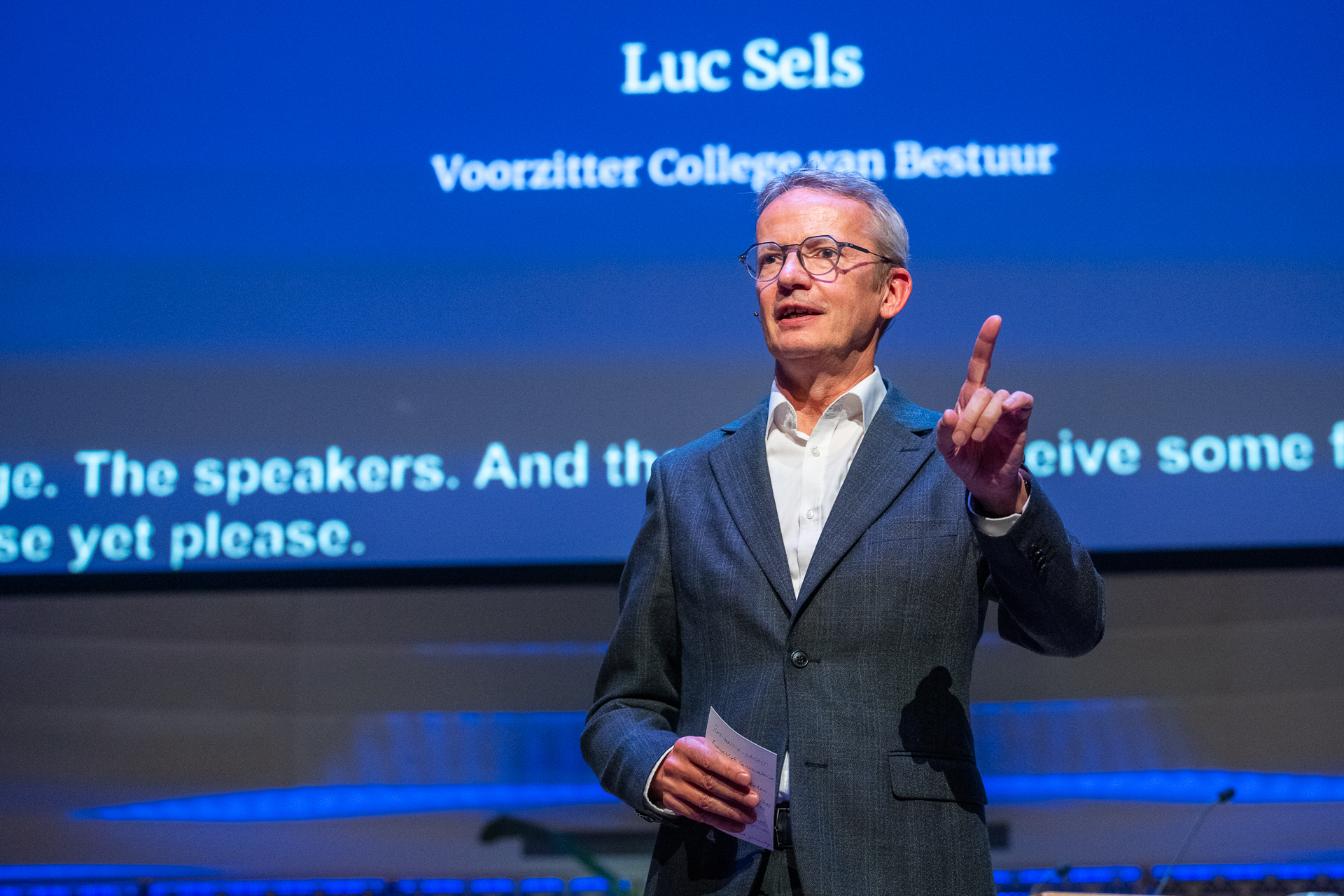
Luc Sels: ‘We’re one university in two cities.’ -
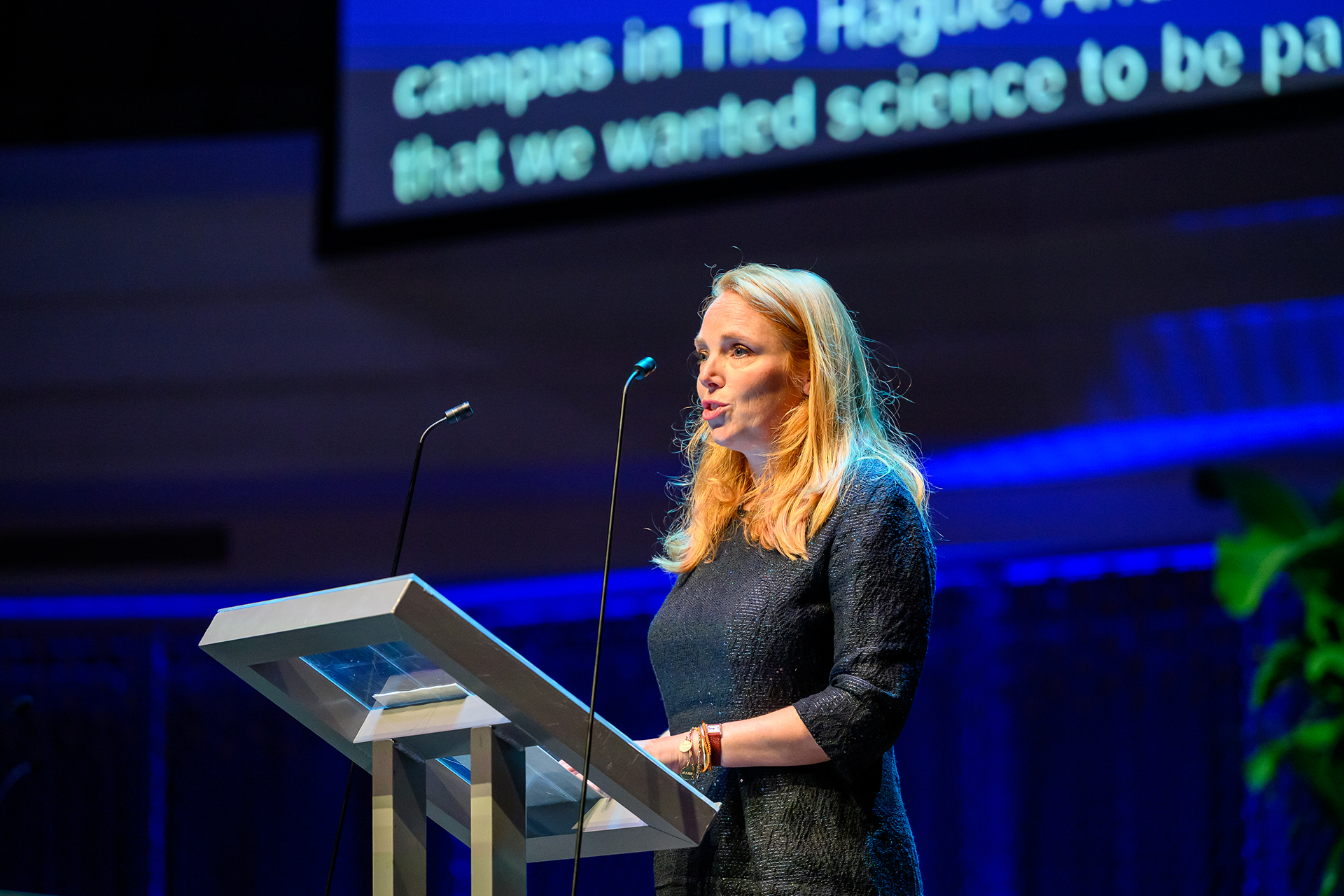
Junior Minister Willemijn Aerdts: ‘We’re in the middle of the AI revolution.’
The AI revolution
Junior Minister Willemijn Aerdts, who until recently was a lecturer and researcher at the Institute of Security and Global Affairs, outlined how artificial intelligence is permeating almost all areas of life. ‘We’re in the middle of the AI revolution.’ AI is becoming faster at detecting diseases such as cancer, and agricultural robots can remove weeds much faster than famers can. But this progress, said Aerdts, also forces us to reconsider what we take for granted. ‘What will happen to our work, and which skills should people continue to develop?’
According to Aerdts, this revolution is about making choices: what the Netherlands and Europe will prioritise, and what they will deliberately choose not to pursue. She called on students and scholars to play a leading role in this process, guided by rigorous research rather than assumptions. With its strong AI research, high-quality high-tech sector and large pool of highly educated talent, the Netherlands is well positioned, although the United States and China remain significantly ahead.
Aerdts called on the Netherlands, as a ‘middle power’, to work with like-minded countries to strengthen Europe’s autonomy. She stressed that everyone should be able to participate, including those who are concerned about what these developments might mean for them. She ended with a message for the new generation of academics: ‘Keep researching. Keep asking questions. Keep pushing boundaries.’
Two mayors
Then Mayor of The Hague Jan van Zanen and Leiden Mayor Peter Heijkoop gave their perspective of the importance of the university for their city. ‘The university has shaped Leiden’, said Heijkoop. ‘Just look at iconic buildings such as the Academy Building and Leiden Observatory, the many jobs it provides and the tens of thousands of students it attracts.’
Mayor Van Zanen welcomed the opening of the academic year in The Hague. ‘It’s a sign of recognition. A quarter of this university’s students now study in The Hague, and that is a valuable addition to our international city.’ Both mayors emphasised that Leiden and The Hague complement one another well. And how does a city take care of first-year students? ‘It’s important to stay connected to the student community’, said Heijkoop. ‘Students do a great deal for the city. But we sometimes have to have a stern word when things get out of hand.’
AI within the university
Philosopher Julian van der Kraats works at the university’s IT department as an AI product owner. He took the audience through the possibilities offered by AI applications being developed by the university itself. He demonstrated three AI platforms that Leiden has developed with other universities: LUCA, LULA and LUChat. LUCA gives teaching staff the opportunity to experiment with training chatbots for their courses. LULA is an assistant designed to improve language skills. And LUChat is a secure university chat platform that runs entirely on green energy.
The university must set the course for how AI is used, Kraats argued. ‘We need critical thinkers in these turbulent times. And we cultivate them by doing what we’ve been doing at this institution for 450 years. Even with the arrival of AI, that essence remains unchanged. But while the essence stays the same, much will change in practice because we need to start using AI in a productive, responsible and constructive way. The question isn’t so much what AI is going to do to the university. The question is what we are going to do with AI.’
-
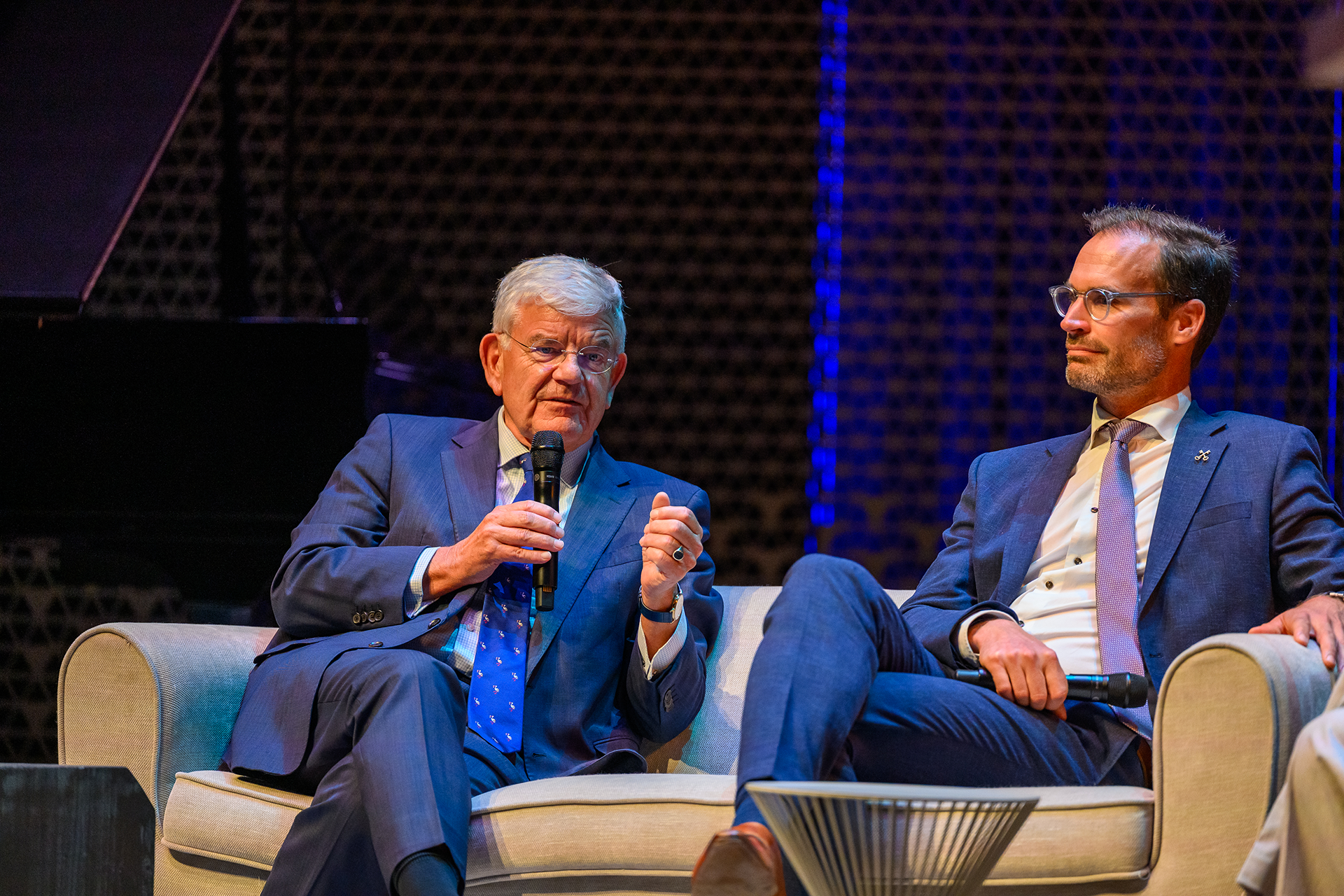
The Mayors of The Hague and Leiden, Jan van Zanen and Peter Heijkoop, spoke about what it’s like being the mayor of a university city. -
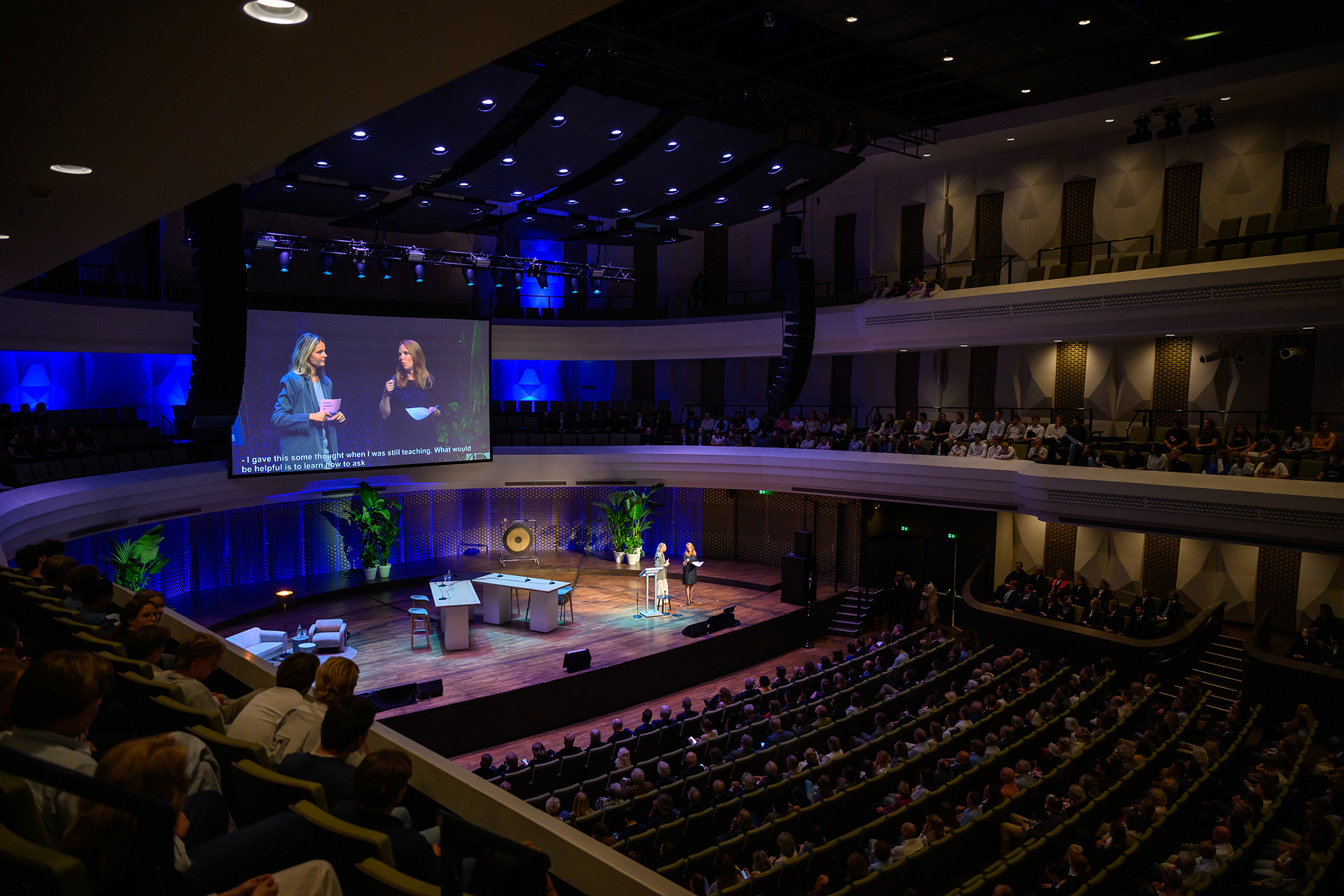
Bo Nieuwenhuis, a former International Studies student, presented the Opening of the Academic Year. -

Philosopher Julian van der Kraats took the audience through the possibilities offered by AI applications being developed by the university itself.
Talk show
Researchers, lecturers and a student from different faculties took part in a discussion on AI and the university, moderated by philosopher Bas Haring. What should students learn at university now AI is everywhere? According to the panel, critical thinking, developing arguments and forming independent insights remain important. At the same time, they discussed whether students’ skill sets should be expanded in response to the widespread use of AI in the workplace.
And how is AI changing the role of lecturers? Computer scientist Joost Batenburg said that, for the first time, he was unable to tell whether an outstanding research paper submitted by his students had been written with the help of AI. ‘You can see it two ways: you can go to the board of examiners, or you can talk to students and PhD candidates about how to use AI responsibly.’ Several panel members stressed the importance of human interaction, something AI cannot replace.
The discussion concluded with a call for clear university guidelines on AI, combined with room to experiment safely.
Teaching prize
The Chair of the Leiden University Student Platform, Friso Croon Boucher, announced the winner of the LUS Teaching Prize. The prize is awarded annually to the lecturer whom students particularly appreciate for their teaching. The winner is awarded 25,000 euros to spend on educational innovation and becomes a member of the Leiden Teachers’ Academy.
From the three nominees, assistant professor of human osteoarchaeology Rachel Schats won the prize. Students praised her ability to make complex topics easy to understand, as well as the time and effort she invests in her teaching. Schats said winning the prize was a ‘huge honour’. ‘Teaching is honest, vulnerable and sometimes uncomfortable, and that’s okay. To my students: thank you for being there. I’ve learned so much from you. It means so much to me to know that my teaching meant something to you.’
-
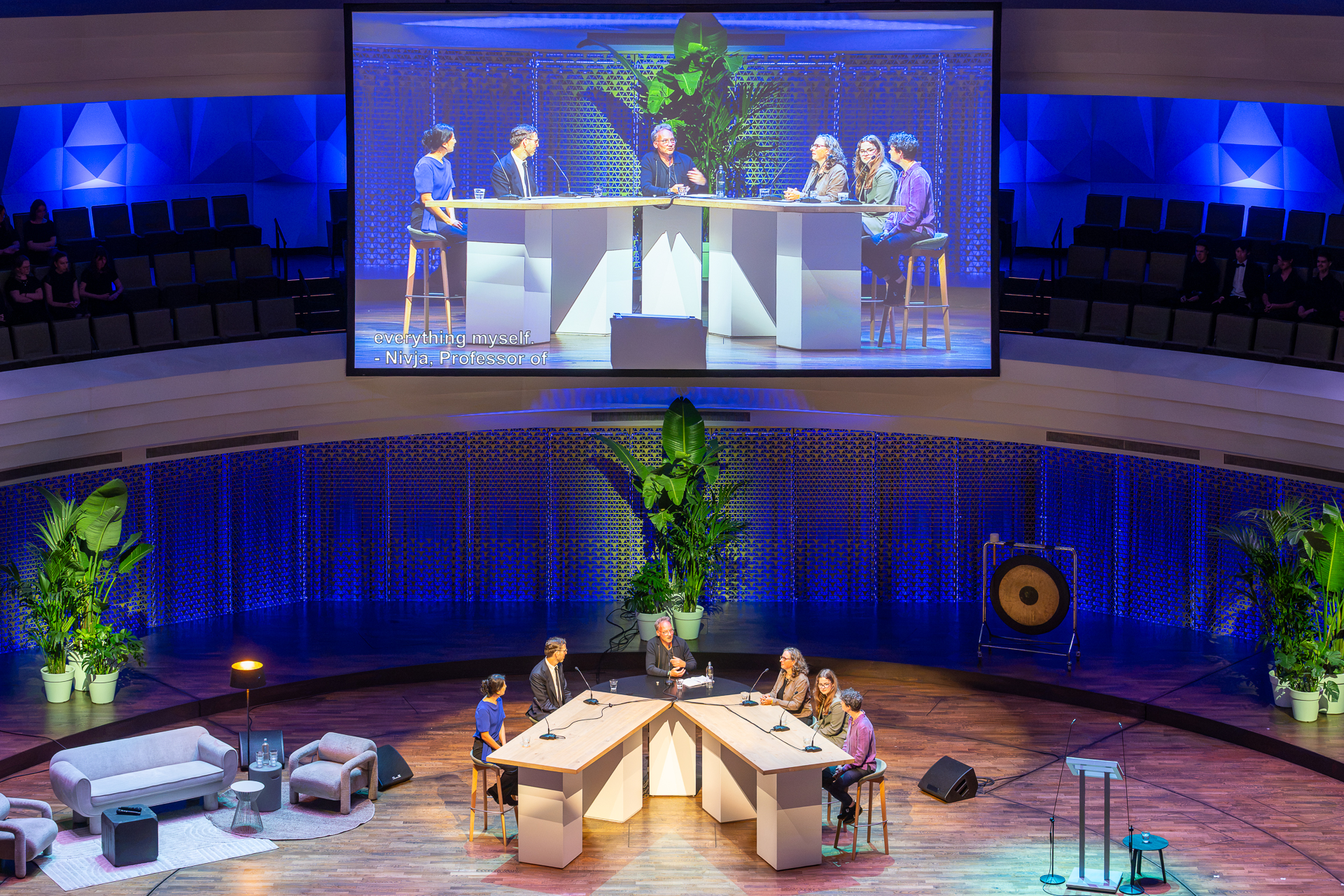
Researchers, lecturers and a student took part in a discussion on AI and the university, moderated by philosopher Bas Haring. -
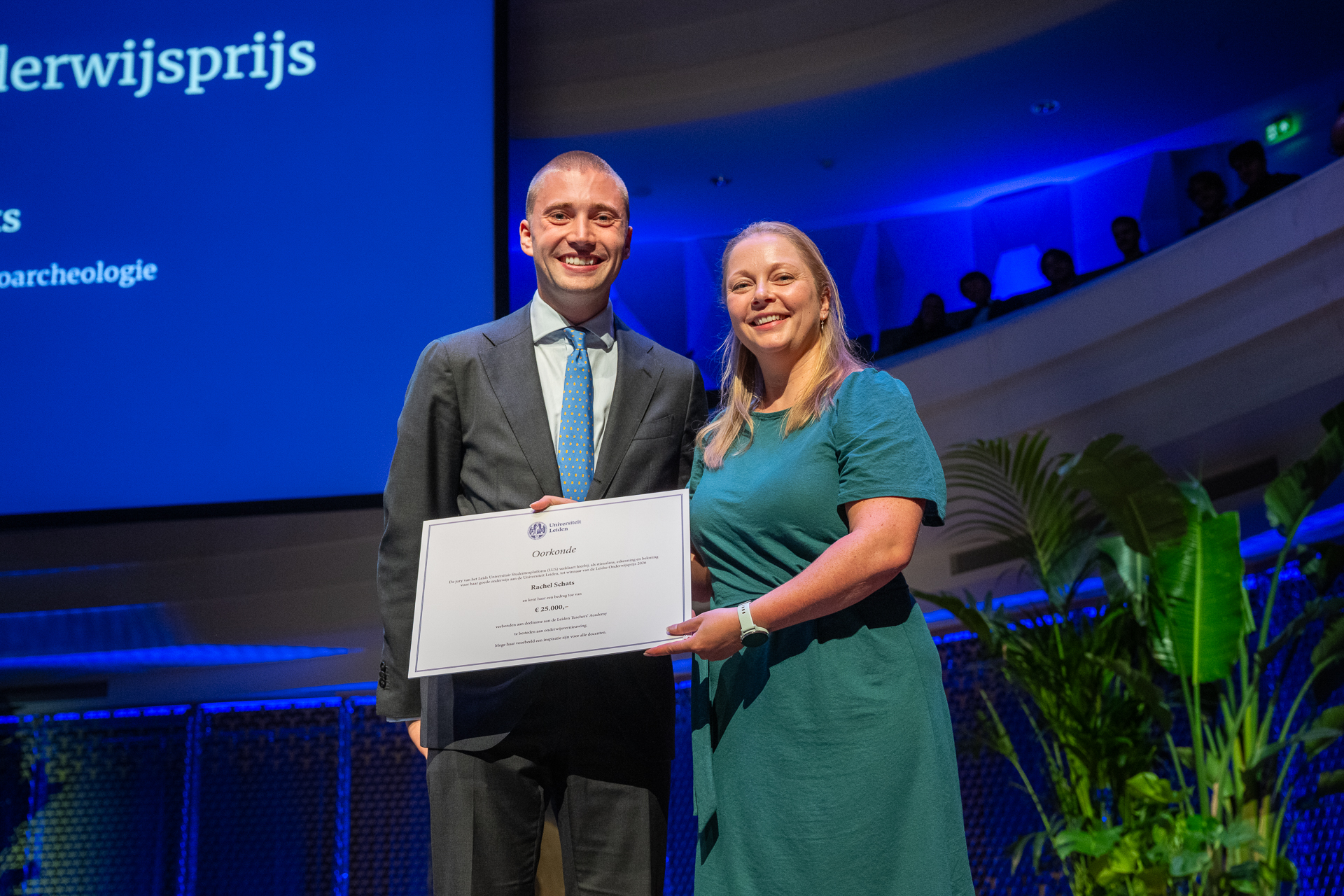
Rachel Schats won the LUS Teaching Prize. -
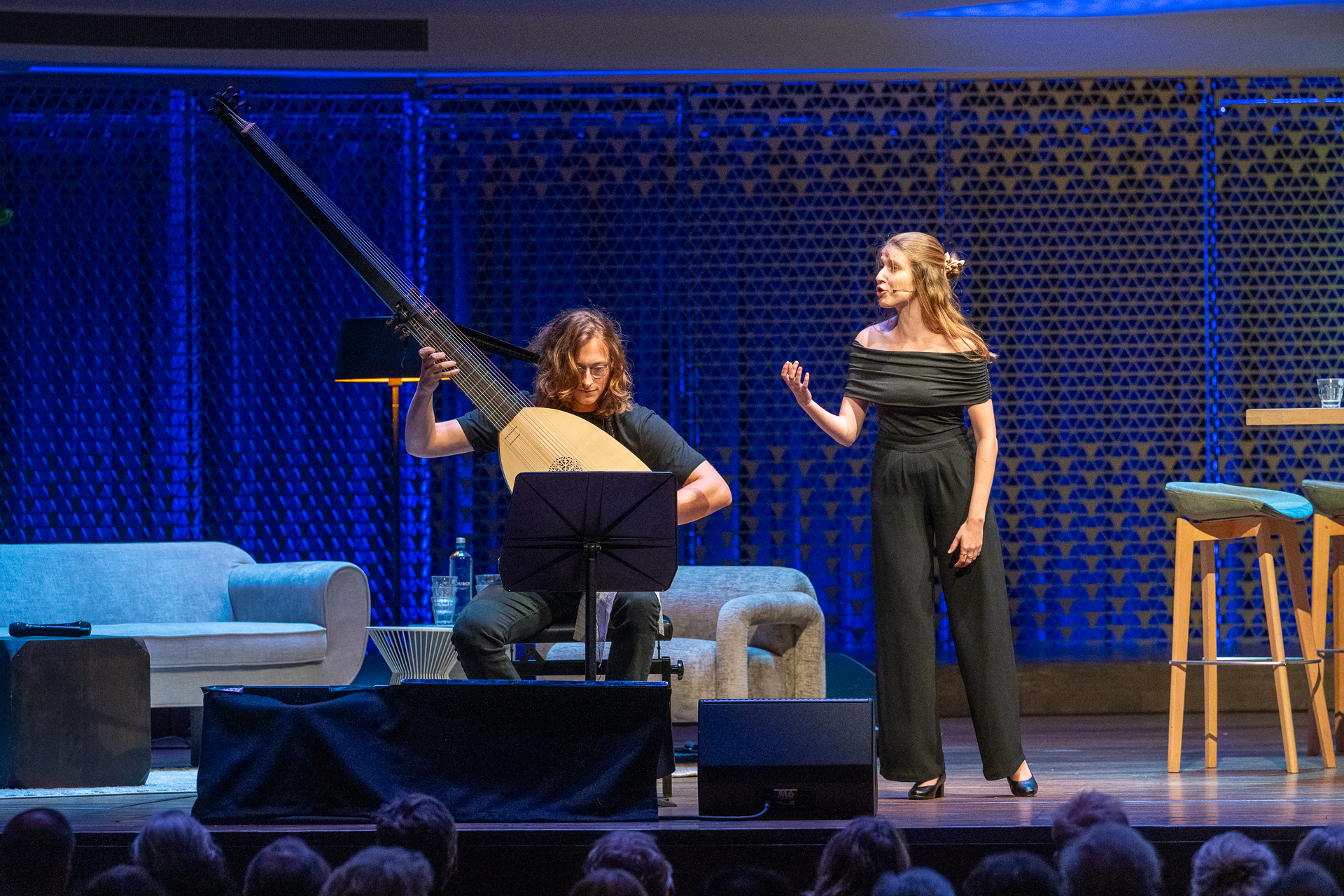
Mónica Beltrão and Martien Abrahamse provided a musical finale. -
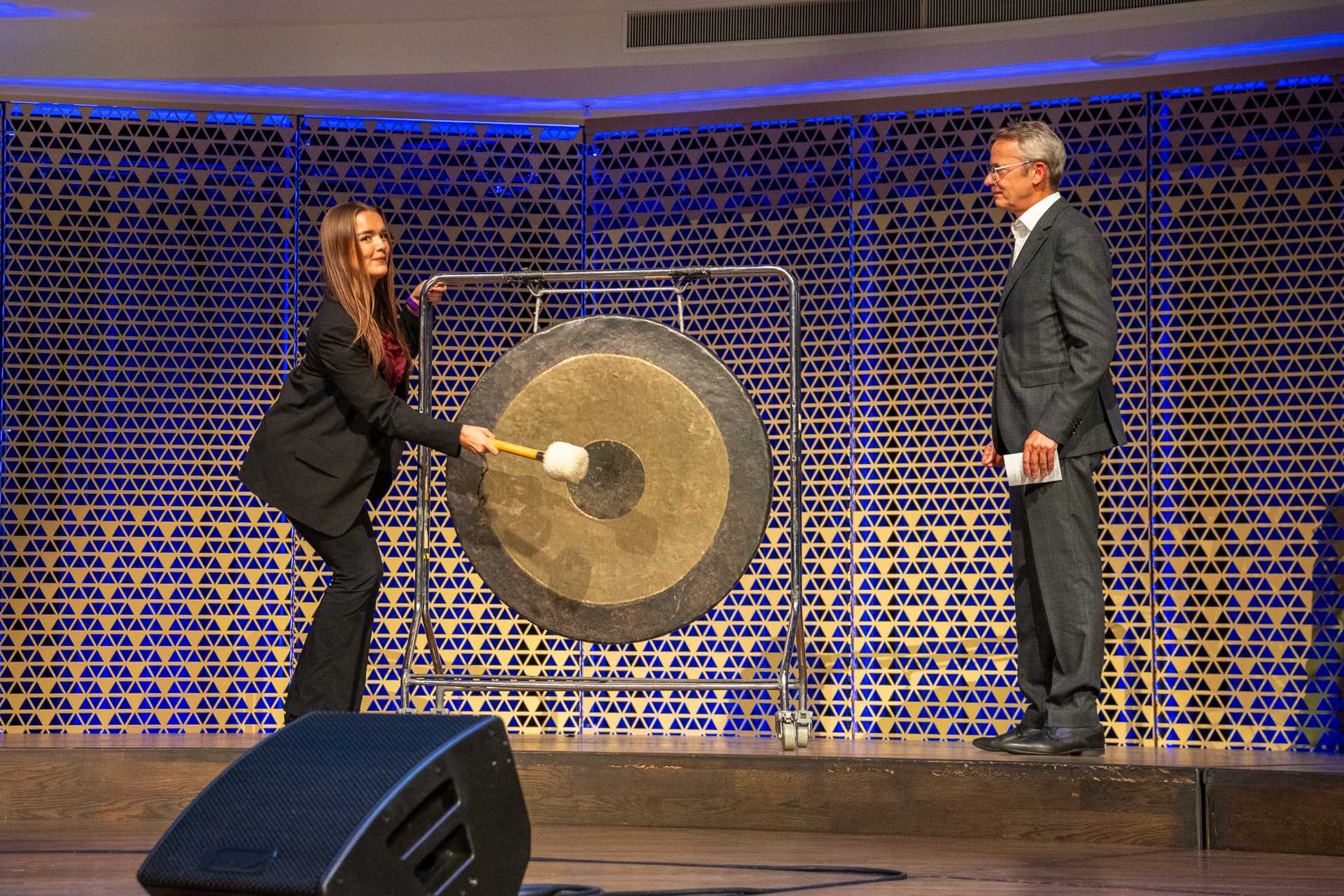
With two strikes of the giant gong, together with public administration student Nanieke Pape, Sels declared the academic year open.
Luc Sels concluded with a reference to the university’s core values. The freedom to explore, to doubt and to challenge can only exist in connection with others and with society. Meeting people who think differently is what strengthens an academic community, he said. With two strikes of the giant gong, together with public administration student Nanieke Pape, Sels declared the academic year open.
Watch again
Due to the selected cookie settings, we cannot show this video here.
Watch the video on the original website or