Three representatives for Archaeology in University Council
The Faculty of Archaeology is celebrating a rare and meaningful milestone: two of its staff members, and one of its students have been elected to the University Council. The staff members are Johan Verweij and Wei Ping Young, the student Sanne Wille. For the smallest Faculty of Leiden University, this triple representation is exceptional.
Not overlooking support staff
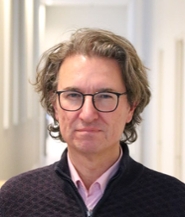
For Johan Verweij, stepping into the University Council is both a personal conviction and a statement of principle. ‘I have a strong feeling for co-participation,’ he explains. ‘Most of the time I’ve been on the other side, as secretary or policy maker for the Faculty Board and University Board at various universities. The University Council is very important as a counterbalance to the governance, just like the Faculty Councils.’
One of his key goals is to ensure that support staff (OBP) are not overlooked. ‘Most policies are about the academic staff. I understand that, but there is also a large OBP staff. In every topic, from work pressure to career policies, this should be addressed: what do we do about the position of support staff? We form a big community.’ Johan is a member of the FNV party, part of the Dutch labour union. ‘For the FNV, several issues are very important, such as reducing workload, ensuring safe workplaces, and placing greater emphasis on diversity and sustainability.’

Essential and vulnerable
As a PhD candidate, Wei Ping Young brings a different, and often underrepresented, perspective. She describes the PhD community as occupying ‘this awkward area,’ both essential to research and yet structurally vulnerable. ‘The PhD community has a lot to offer in shaping the academic institution and the environment.’
When she learned that the PhDoc party needed members, she decided to contribute, despite being early in her PhD. ‘I was hesitant at first, since I’ve been in Leiden only from November last year, but I also see this position as a chance to get to know the broader university.’ PhDoc
Wei Ping represents PhDoc, the body for PhDs and postdocs across Leiden University. As PhDoc pushes for transparency and representation, she emphasises the diversity and complexity of this group: different nationalities, administrative statuses, contract types, and academic challenges. Many of the issues faced by the PhD community is rooted in ‘a lack of social safety’ and support, even among peers. ‘There is a reliance on supervisors, and not enough interaction across the university. Greater inclusivity is needed.’ She points to the situation of external PhDs, who cannot vote and are often excluded from policy processes. Language barriers also play a role, she testifies as an international candidate. ‘It is very hard to do things when there are these language barriers.
Groups in the background
Both Johan and Wei Ping highlight the importance of transparency, social safety, and recognition for groups that often remain in the background, whether support staff, temporary employees, or PhD candidates with widely varying contracts.
Wei Ping hopes to use her term to identify shared challenges and build bridges. ‘There is a lack of exchange and interaction, laterally and vertically. I don’t know as much about support staff, nor many other PhDs from other Faculties. Interactions and brainstorming create good work. We shouldn’t be satisfied with just interacting with people we already know.’

Science side
The Archaeology student perspective is also covered in the upcoming University Council. Sanne Wille was in second place on the list of the Party for Medical and Science Students (PBMS). As a student of both the Medicine as well as the Archaeology programme, she aims at representing the students in the Science programmes. The party got two seats on the council, so Sanne was voted in.
Representing two programmes, Sanne has different goals for each. ‘For Medicine I aim for more online lectures. While for Archaeology, I’d like to reach out to students to hear more about their needs. Moreover, I would like to raise awareness that Archaeology has a very important Science side too.’
Contributions
With Johan’s experience in governance and labour representation, Wei Ping’s commitment to emerging researchers and inclusivity, and Sanne Wille representing the needs of the students, the Faculty of Archaeology is uniquely positioned to contribute to university‑wide conversations on work pressure, transparency, and community building.
The new members of the University Council will start in their new position in September 2026.