
UN Report on Palestinian children’s rights: ‘We shall call out these crimes for what they are’
A recent UN Report exposes the extreme violations of Palestinian children’s rights by the Israeli government since October 2023. Academics and professionals gathered at Leiden University to reflect on the report's implications for children’s well-being, freedom and future prospects.
The report, "The essence of childhood has been destroyed": Israel’s deliberate targeting of Palestinian children in the Occupied Palestinian Territory since 7 October 2023, was released in June 2026. On 28 August, the Department of Child Law and Health Law together with Save the Children hosted an event dedicated to legal and academic reflection on the report.
The report
‘Without any warning, around four or five explosions hit the front of the school. I ran outside to find my three-year-old nephew whose parents were killed in a previous airstrike, covered in blood with his legs cut off, signalling with both his hands for me to pick him up and save him.’

This is just one of many harrowing testimonies documented by the Independent International Commission of Inquiry on the Occupied Palestinian Territory, including East Jerusalem, and Israel in its June 2026 report. Its nearly 100 pages present a thorough analysis of the various ways the conflict has affected children in the Occupied Palestinian Territory. However, what stays with the reader most are the individual voices of victims and witnesses describing what the report calls the ‘systematic and deliberate’ violence and cruelty towards society’s most vulnerable: children.
The report details multiple ways children’s rights have been and continue to be violated. Some are overt: (sexual) violence towards children, targeted shooting with quadcopters and snipers, and bombing residential buildings, schools, displacement camps and hospitals. Others are structural: denial of access to safe food and water, medication, education and housing, resulting in starvation and disease.
Beyond the physical harm, the report highlights the profound psychological toll on Palestinian children of living under constant threat, depriving children of their ‘freedom to play, imagine, hope and develop an identity’.
The event
Attendees at the event were presented with the key findings in the report by none other than the Chair of the Commission that produced it: Commissioner Srinivasan Muralidhar, and his colleague Commissioner Chris Sidoti (joining online from Australia).
-
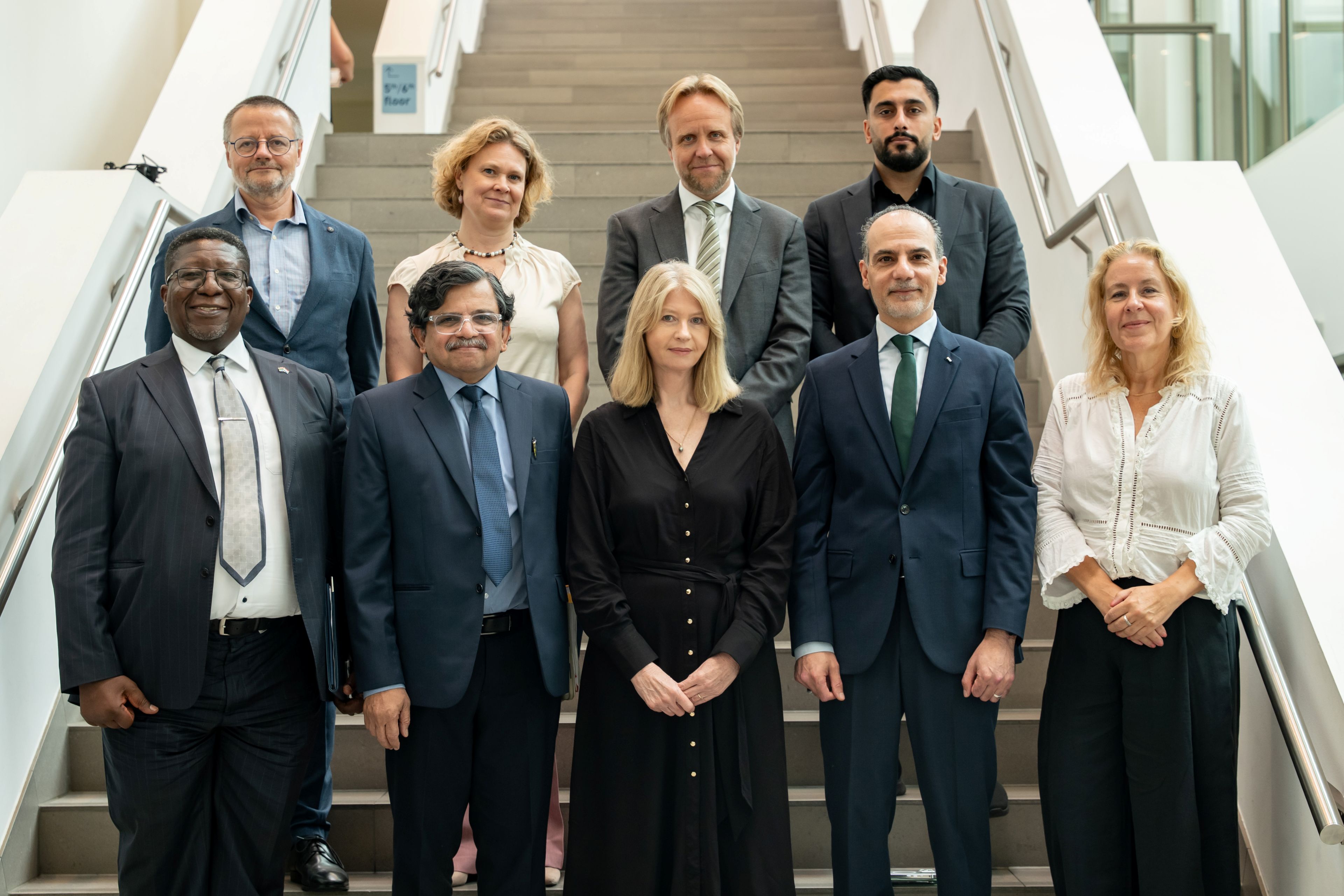
Benoît van Keirsbilck, Larissa van den Herik, Ton Liefaard, Ahmed Abofoul, Vusi Madonsela, Srinivasan Muralidhar, Ann Skelton, Ammar M.B. Hijazi, Juliette Verhoeven -
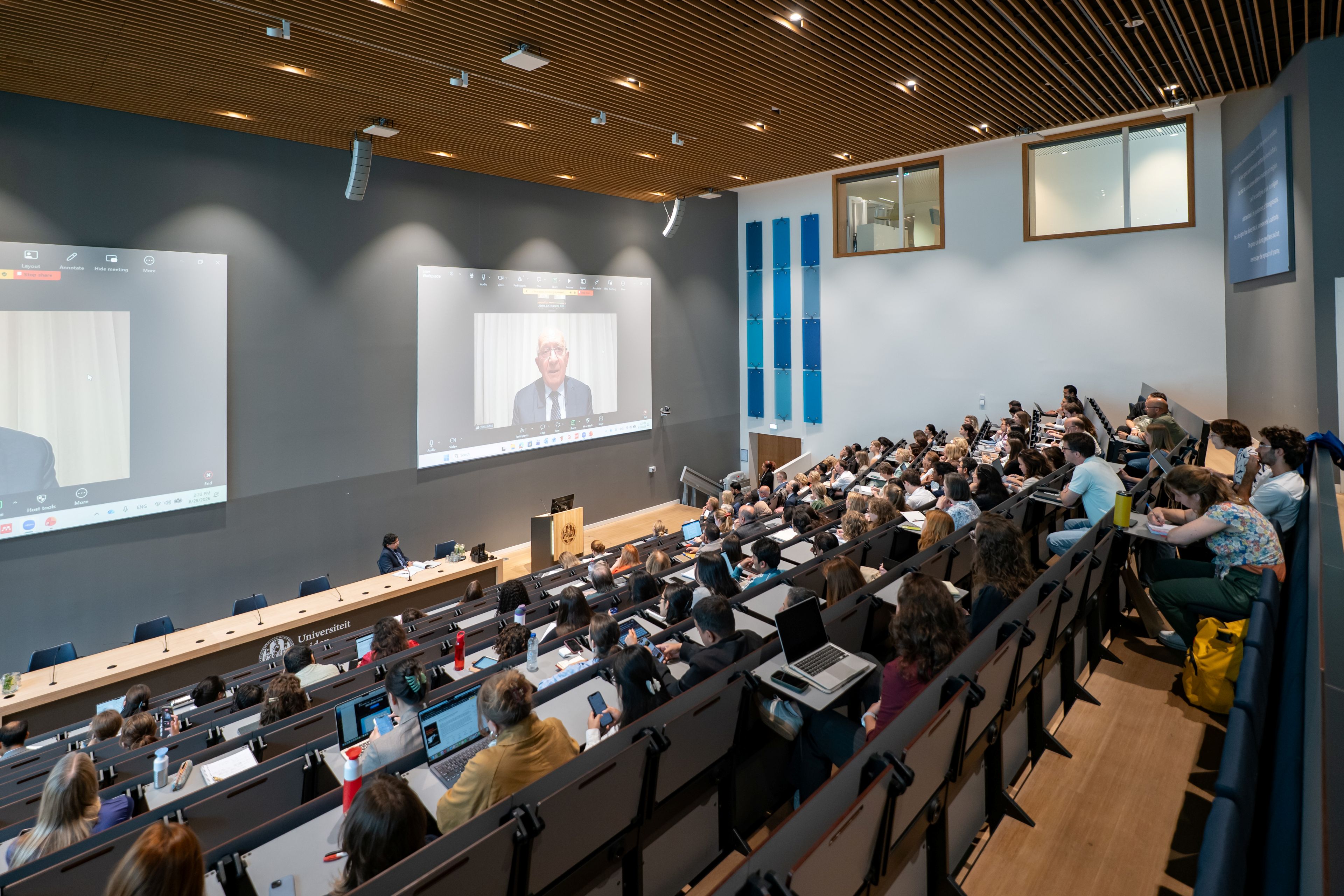
Commissioner Chris Sidoti joined online from Australia. -

Commissioner Srinivasan Muralidhar -

Commissioner Srinivasan Muralidhar shared key findings and statistics -
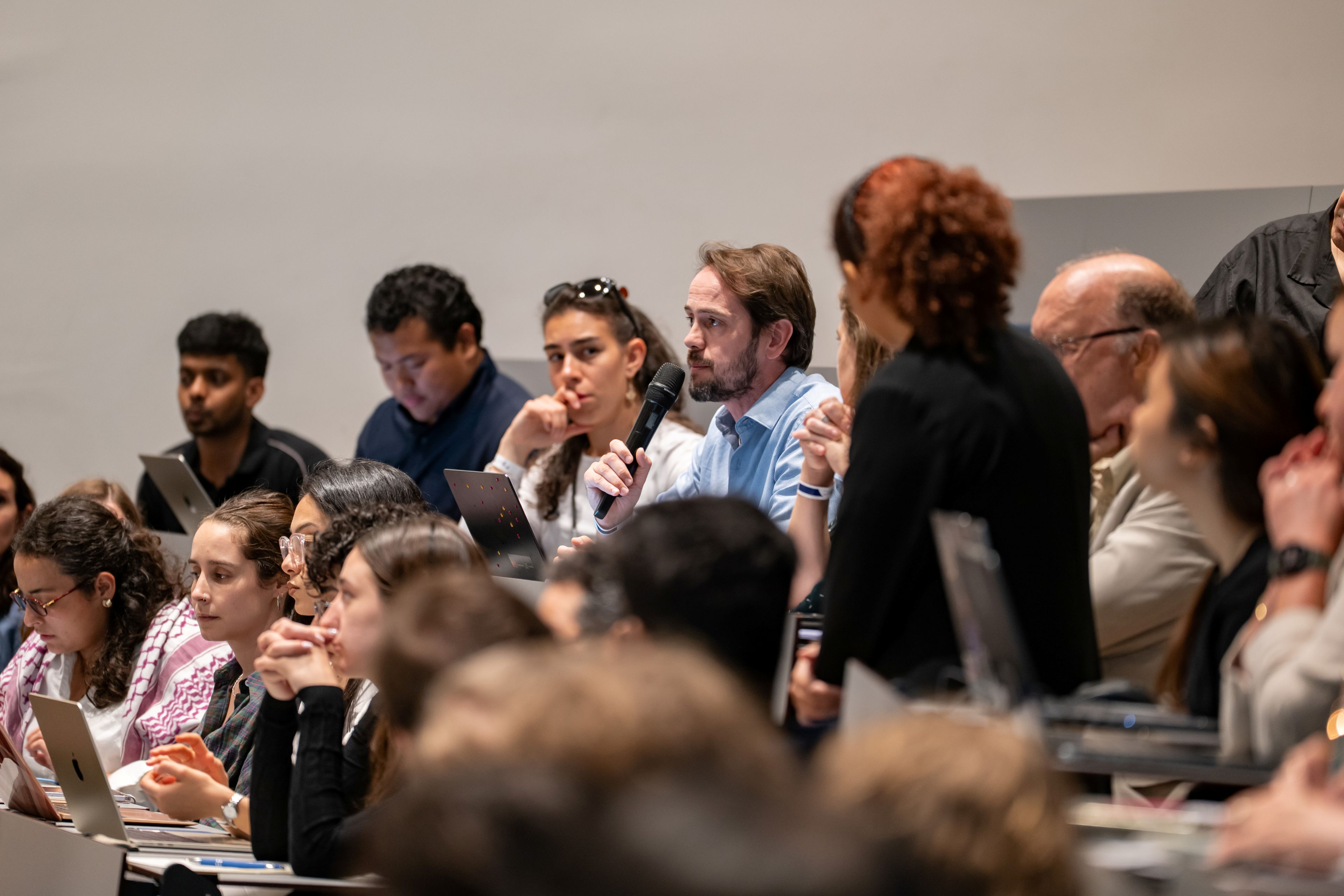
-

Luc Sels addresses the crowd
Sidoti explained how the commission was established in 2021 with a wide mandate: to investigate the ongoing conflict in the area, and to make evidence freely available to be cross-examined in courts. He explained that though the report only looked at the period up to the ceasefire of October 2025, this did not mean that the violence against children had stopped: ‘It’s not a ceasefire – it’s a reduce-fire.’
Commissioner Muralidhar continued by sharing the most important statistics in the report. But beyond the numbers, he recounted what he found even more shocking: how the actions by Israeli soldiers dehumanised Palestinian children. He gave examples of testimonies where soldiers likened long-distance drone strikes to a video game. Muralidhar identified the targeted violence against children, the Palestinian people's next generation, as an act of genocide: ‘We shall call out these crimes for what they are’.
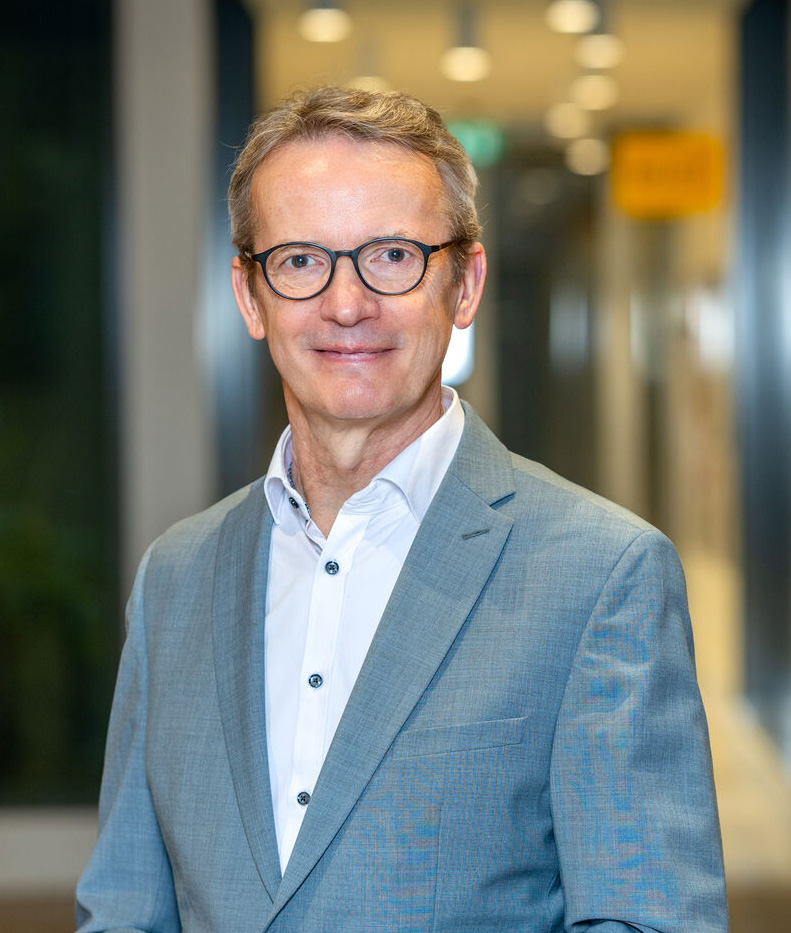
Luc Sels: ‘What happens when the conditions that make childhood possible are eroded?’
Professor Luc Sels, President of the Executive Board of Leiden University, also spoke at the event, and reflected on the university’s responsibility to create space for rigorous, independent and informed discussion of difficult and contested questions.
He also highlighted the role of students and researchers in this work. Universities have a responsibility not only to study what the law says, but also to examine how it operates in practice, where protections fall short, and how research, teaching and the next generation of legal professionals can contribute to stronger protection, accountability and access to justice.
Panel discussions
During the symposium, two panel discussions took centre stage. The first panel, moderated by Ann Skelton (Professor of Children’s Rights at Leiden Law School), examined the legal obligations of states and international institutions. Vusi Madonsela (Ambassador of South Africa to the Netherlands), Ammar M.B. Hijazi (Palestinian Mission to the Netherlands), Benoît van Keirsbilck (UN Committee on the Rights of the Child) and Larissa van den Herik (Professor of Public International Law at Leiden Law School) highlighted the need for swift and effective measures to prevent further violations and to hold perpetrators accountable.
The second panel, led by Professor Ton Liefaard (UNICEF Chair in Children’s Rights at Leiden University), focused on a forward-looking approach with legal and practical steps for protection, access to justice, and reparations. Juliette Verhoeven (Save the Children Netherlands), Professor Helen Duffy (Professor of International Humanitarian Law and Human Rights at Leiden Law School) and Ahmed Abofoul (Al-Haq – Defending Human Rights, Palestine) reflected on a recurring theme: how can we safely and meaningfully include Palestinian children in processes that determine their future?
-
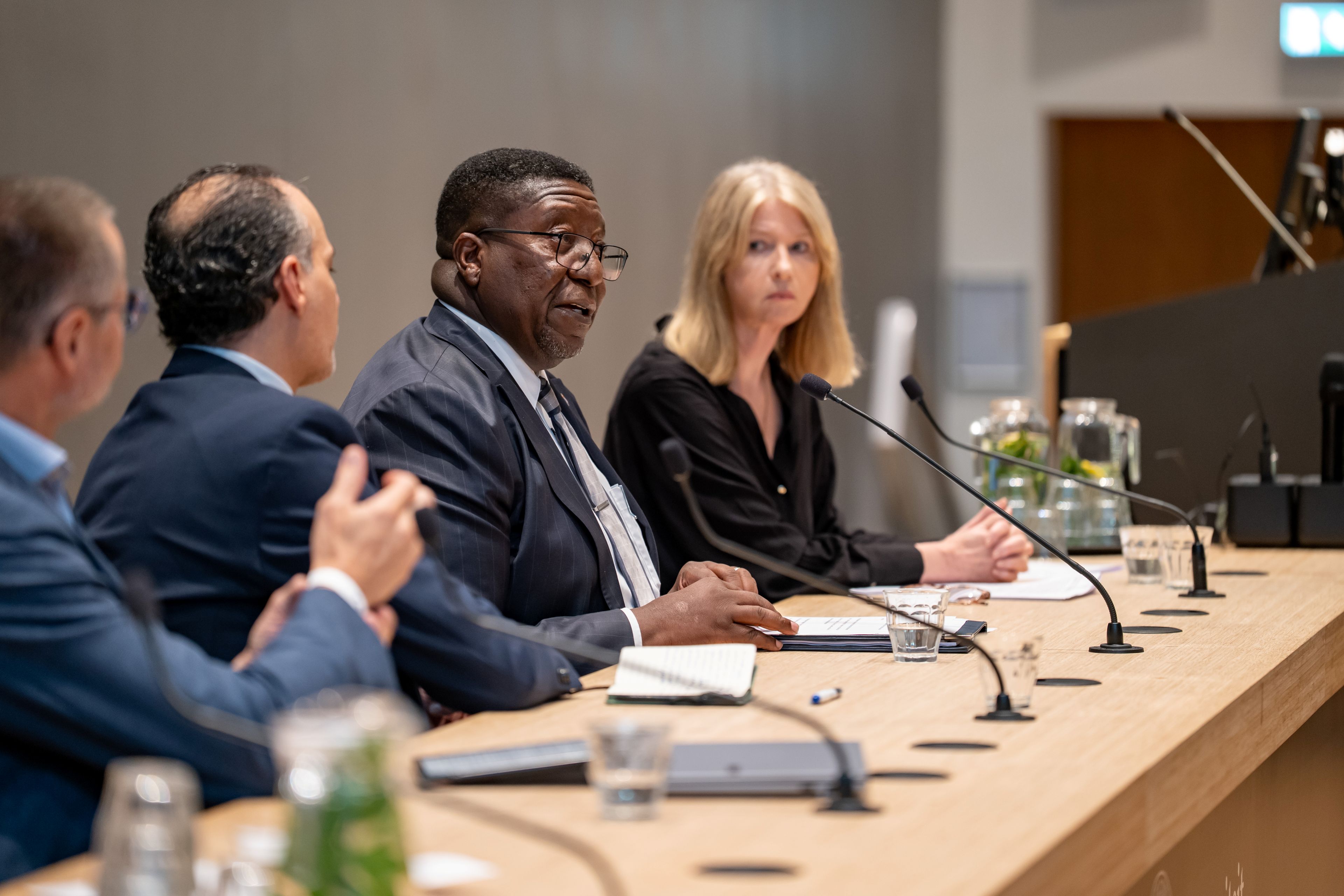
Vusi Madonsela -

Ammar M.B. Hijazi -

Larissa van den Herik -

Helen Duffy -
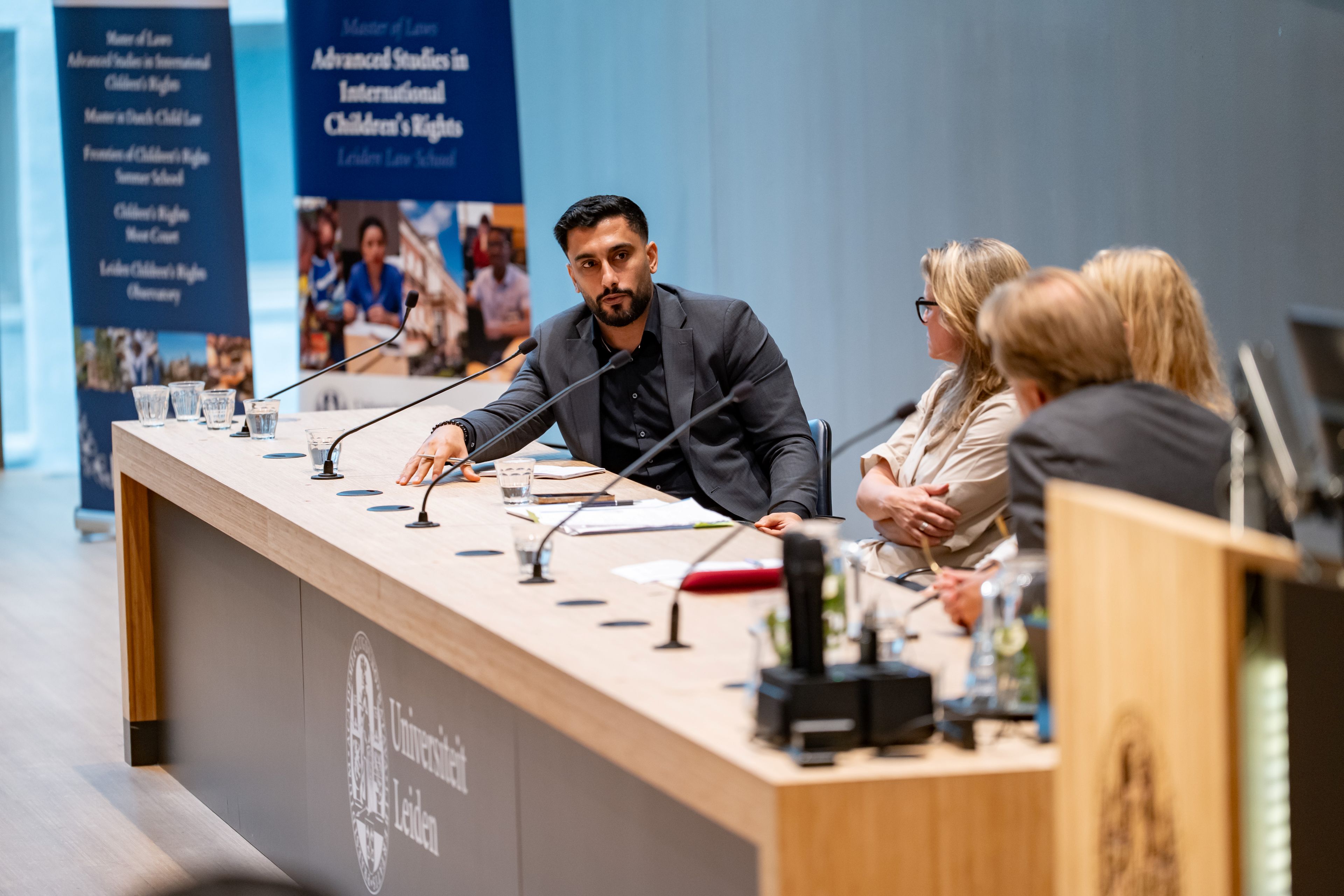
Ahmed Abofoul
Where to go from here?
The report ends with concrete actions for the Israeli government, UN member states and international institutions. The symposium took those recommendations as a starting point and discussed the following questions:

- What is the role of states and international institutions in preventing further harm?
- What does accountability look like, and how can Palestinian children and their families be given effective access to justice and remedies?
- What should immediate and long-term protection and support for Palestinian children involve, including rehabilitation and psychosocial support?
- How can Palestinian children and young people be meaningfully and safely involved in decisions about their own rights and futures?
These are not questions that can be resolved in a single afternoon. The discussions instead underscored the need for sustained legal, political and practical action. Academia, professional practice, civil society and international institutions must work together to ensure that the violations documented in the report do not go unnoticed, and continue to be examined, debated, and taught.
For us as a university, hosting this event was a small contribution to a much larger obligation: to keep asking the difficult questions when doing so is uncomfortable.
More information?
Read the full UN report on the UN Human Rights Council website.
“The essence of childhood has been destroyed”: Israel’s deliberate targeting of Palestinian children in the Occupied Palestinian Territory since 7 October 2023