
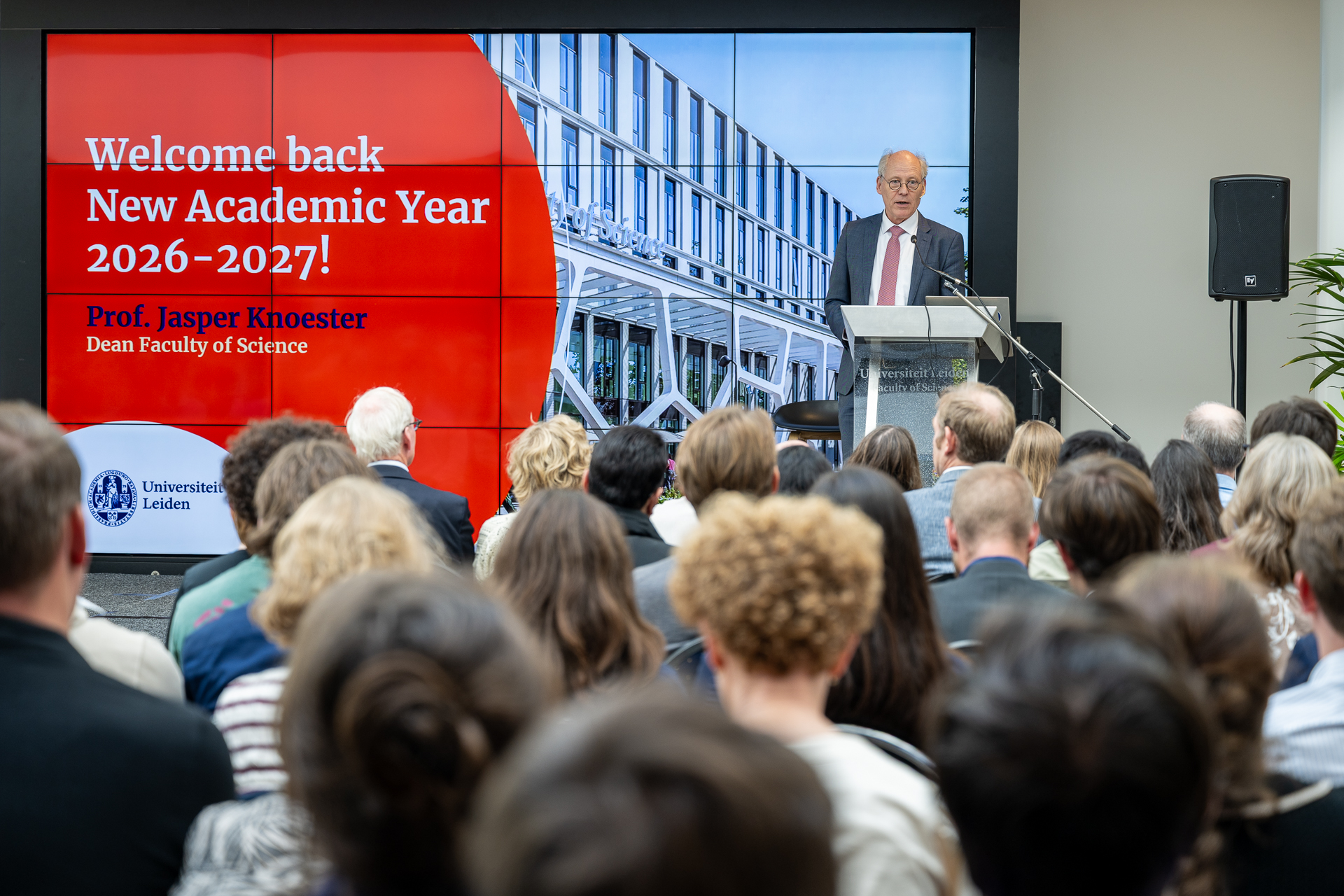
Dean Jasper Knoester kicks off the academic year: ‘Stay curious and make connections’
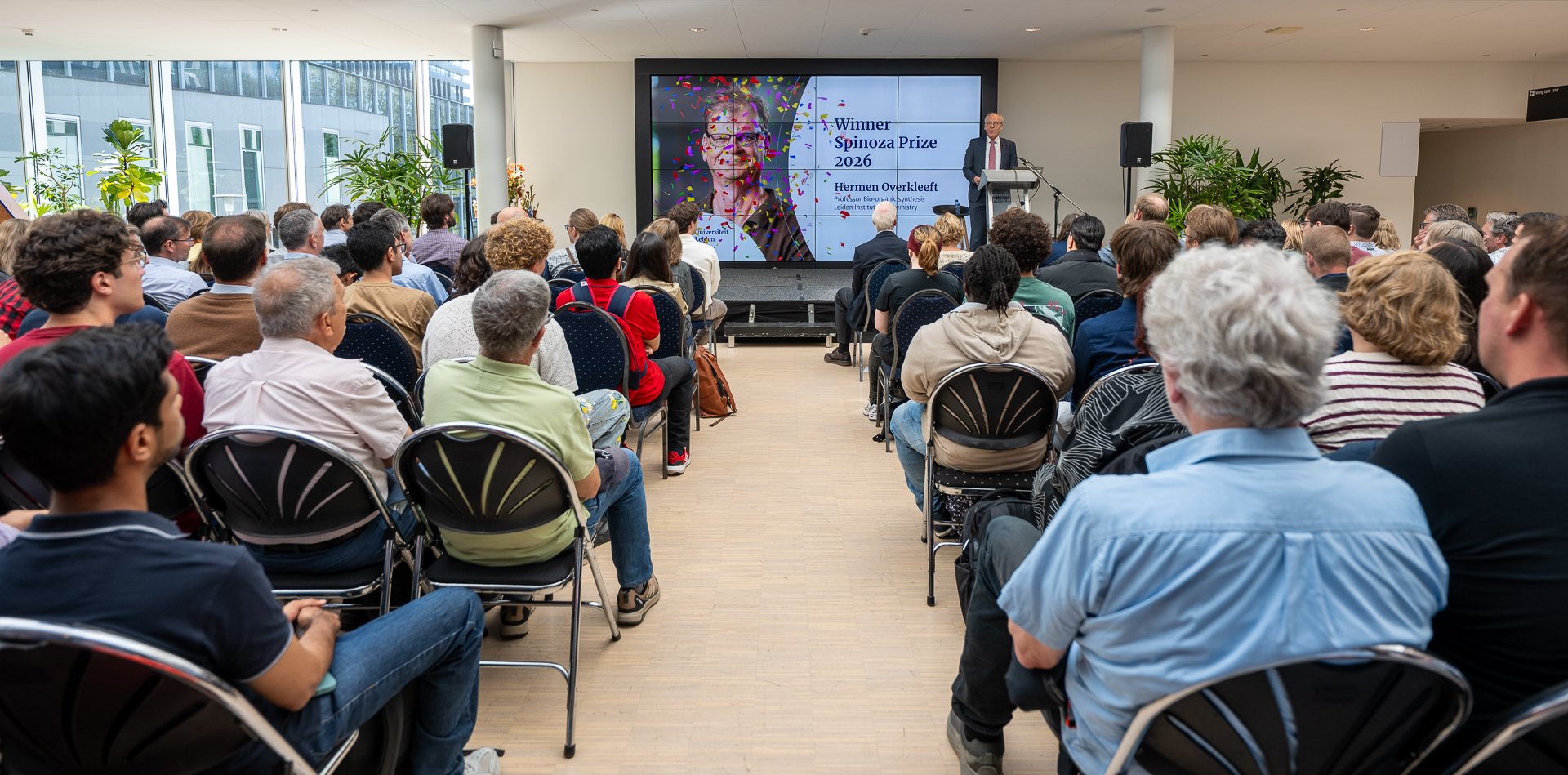
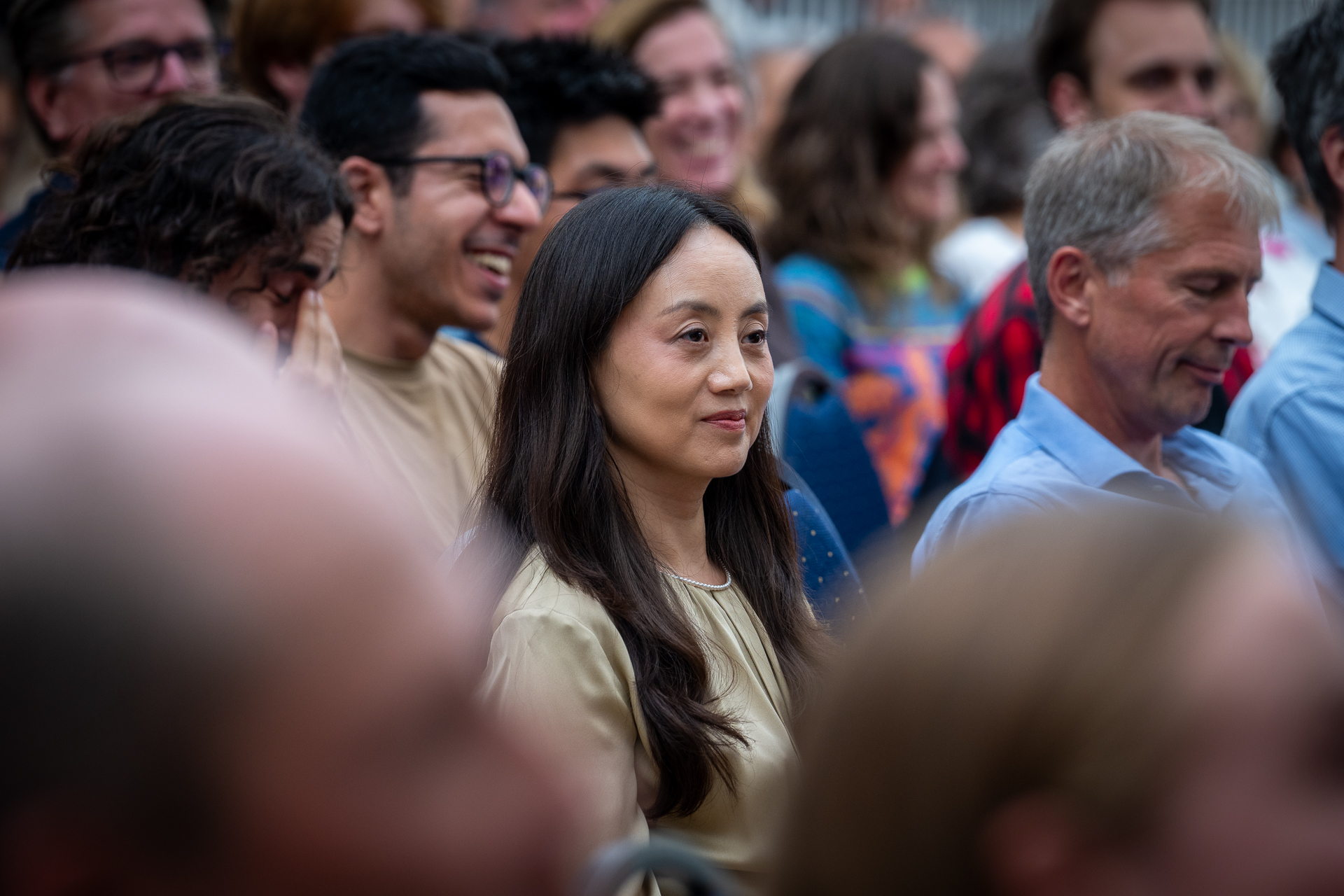
On Tuesday afternoon, Leiden Science officially opened the new academic year in a packed atrium of the Gorlaeus Building. Dean Jasper Knoester encouraged everyone to keep looking beyond the boundaries of their own field. ‘That is the way forward!’
The past year was full of highlights, including Hermen Overkleeft’s Spinoza Prize, the 125th anniversary of LiS, and the 150th anniversary of FMD/ELD. Knoester looked back on the faculty’s achievements, while also adding a light-hearted note. Still recovering from hip surgery, he joked: ‘If anyone needs advice on hip osteoarthritis, feel free to come and talk to me.’
The year also brought its share of challenges. ‘Whatever your political views may be, I think we can all be pleased that the current coalition has shown greater appreciation for science and education, and a better understanding of how important international collaboration and international talent are,’ Knoester said.
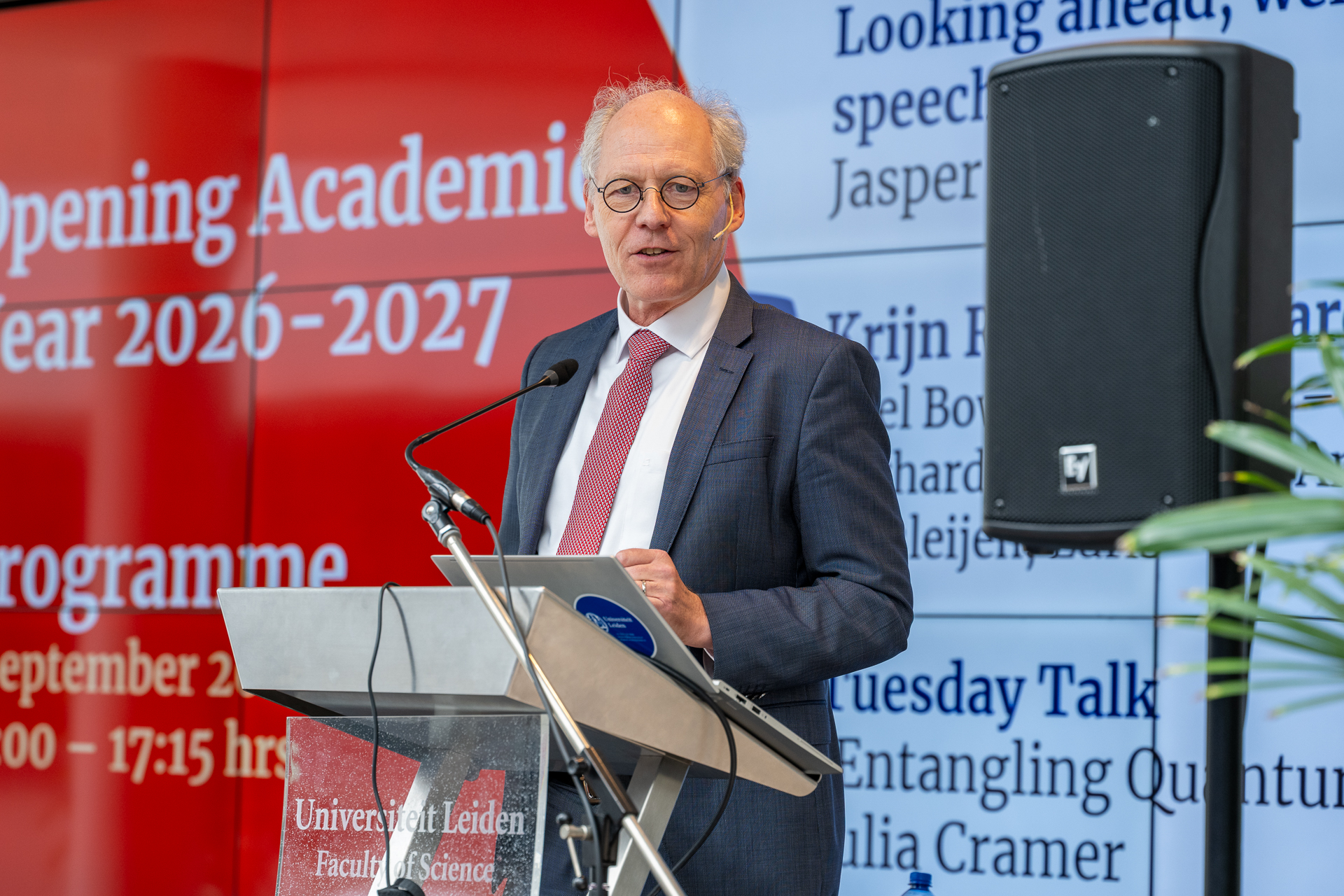
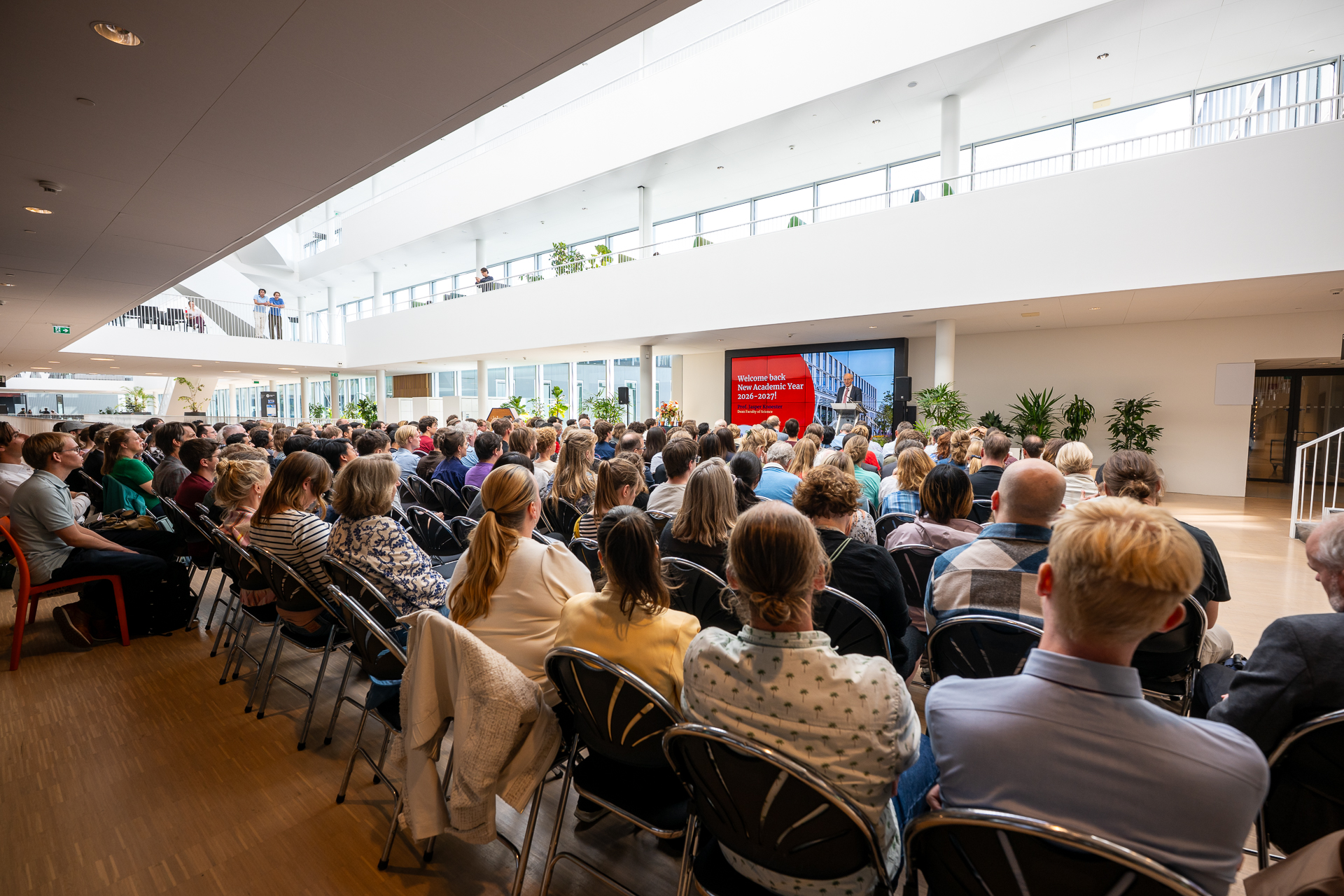
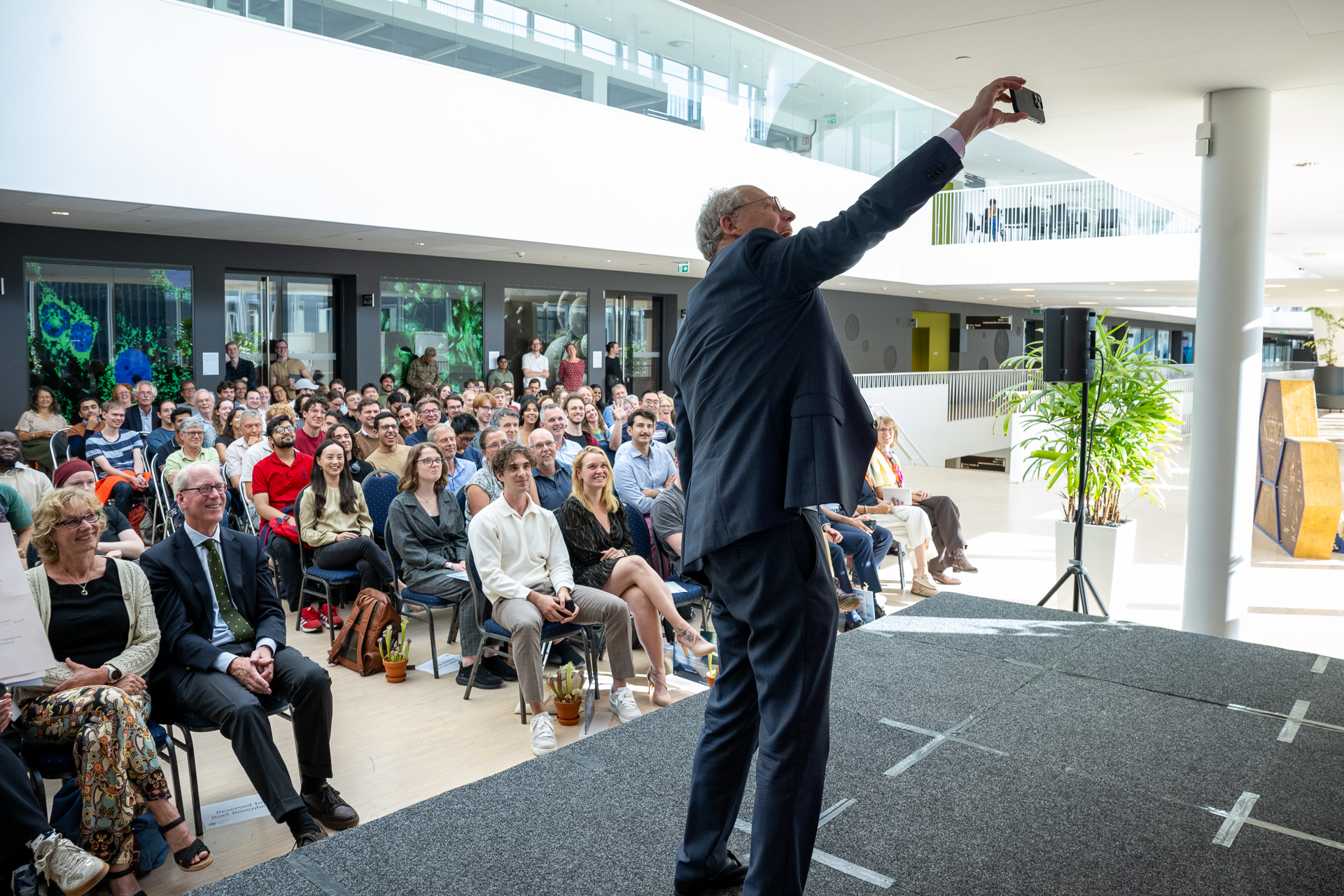
As in previous years, the dean brought a copy of the faculty’s strategic plan with him. ‘This plan is our compass, and we have already made great progress in putting it into practice to make our faculty an even better place to work and study. Most importantly, we are doing this together.’ He thanked everyone involved in these efforts, as well as the Faculty Council for its commitment and hard work. The faculty is currently completing the implementation of Academia in Motion, improving educational logistics, and developing a new section of the Gorlaeus Building.
‘This plan is our compass. And most importantly – we’re doing this together.’
Making connections and staying curious: the heart of Leiden Science
During his speech, Knoester once again emphasised that the faculty’s strategy is built around two key themes: connection and curiosity. This means building connections between disciplines, between universities and professional education, and with partners outside academia. Curiosity encourages researchers and students to look beyond the boundaries of their own fields and use knowledge to drive scientific progress and societal innovation. ‘And that curiosity does not stop at disciplinary boundaries. Stay curious and make connections: that is the way forward!’
‘International collaboration is essential’
Knoester also reflected on the challenges and opportunities of a rapidly changing world. Despite geopolitical tensions, he stressed the importance of international collaboration. ‘We do this to remain at the forefront of science, to share our discoveries, to give our own talented researchers and students opportunities to connect with other centres of excellence, and to attract talented people from around the world to join us.’
Krijn Rietveld Awards
Following Knoester’s speech, it was time for the presentation of the Krijn Rietveld Awards. The awards were established in 2020 in memory of Krijn Rietveld (1956-2018). They recognise innovative research that contributes to a more sustainable world.
Jury chair Cindy Gerhardt, Managing Director of Planet B.io, knew Krijn Rietveld from her time at DSM. ‘Krijn was the best manager I ever had. He always saw opportunities to connect science on the one hand with society and industry on the other. He was highly intelligent and achieved a great deal, while remaining incredibly kind and an excellent mentor.’

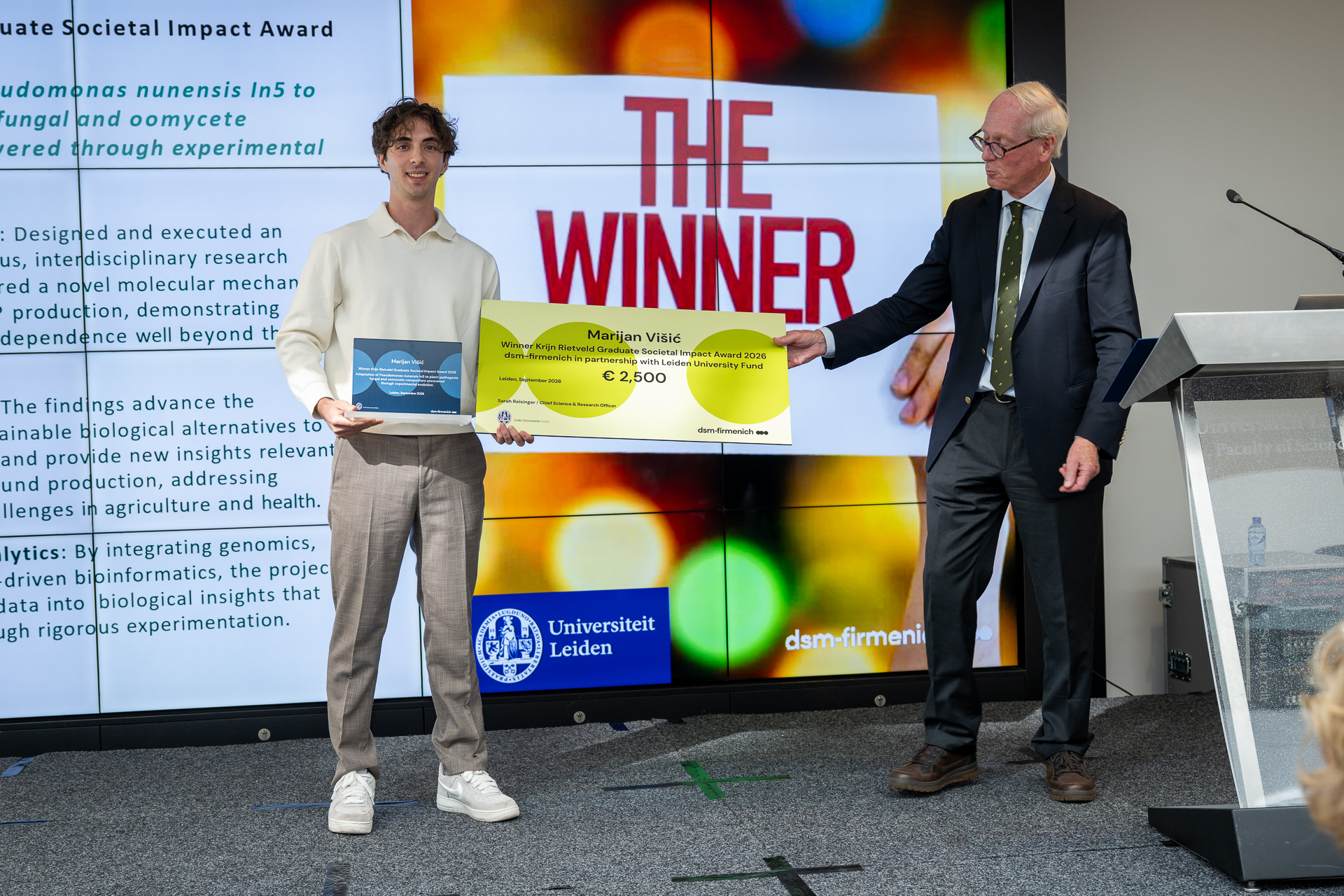
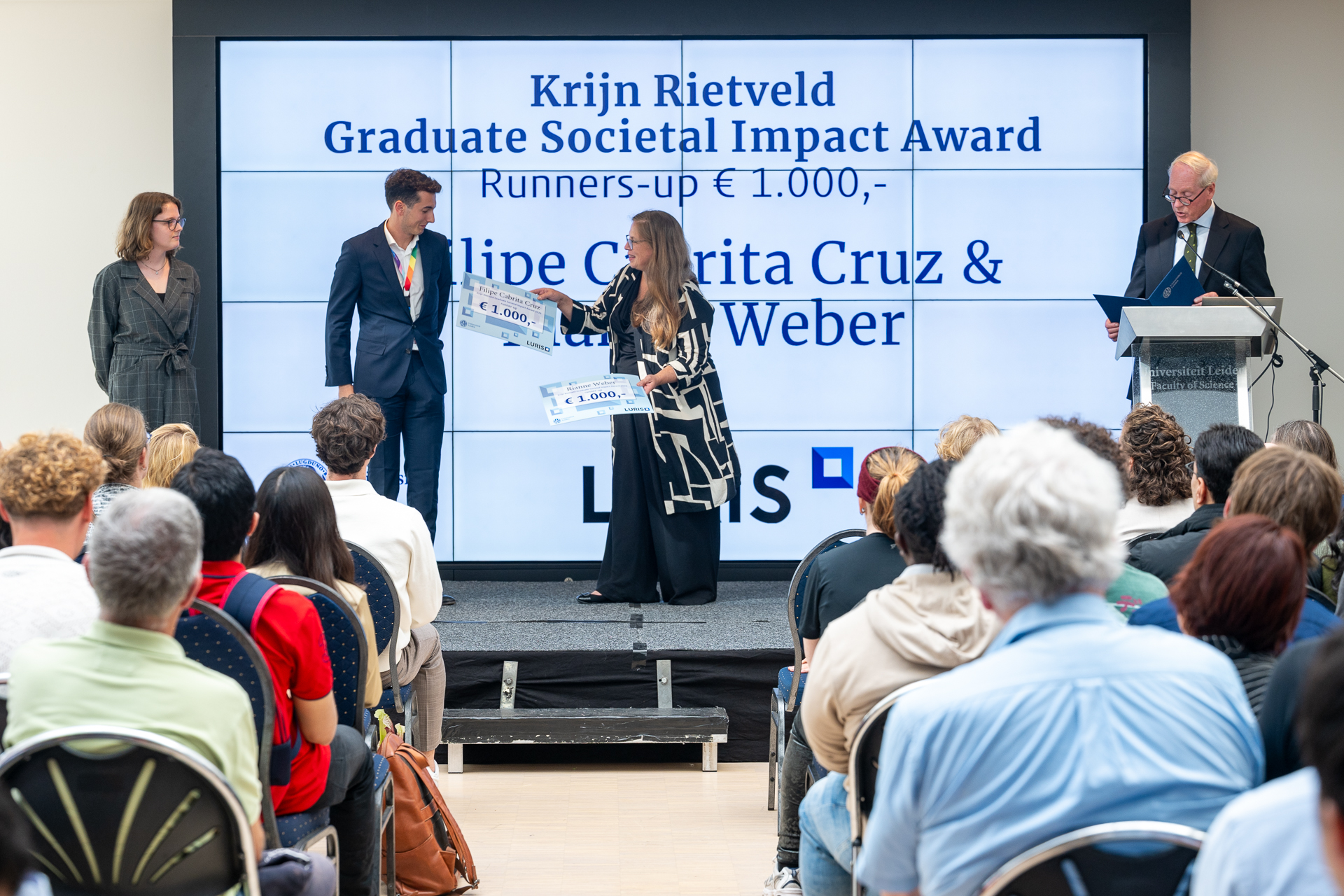
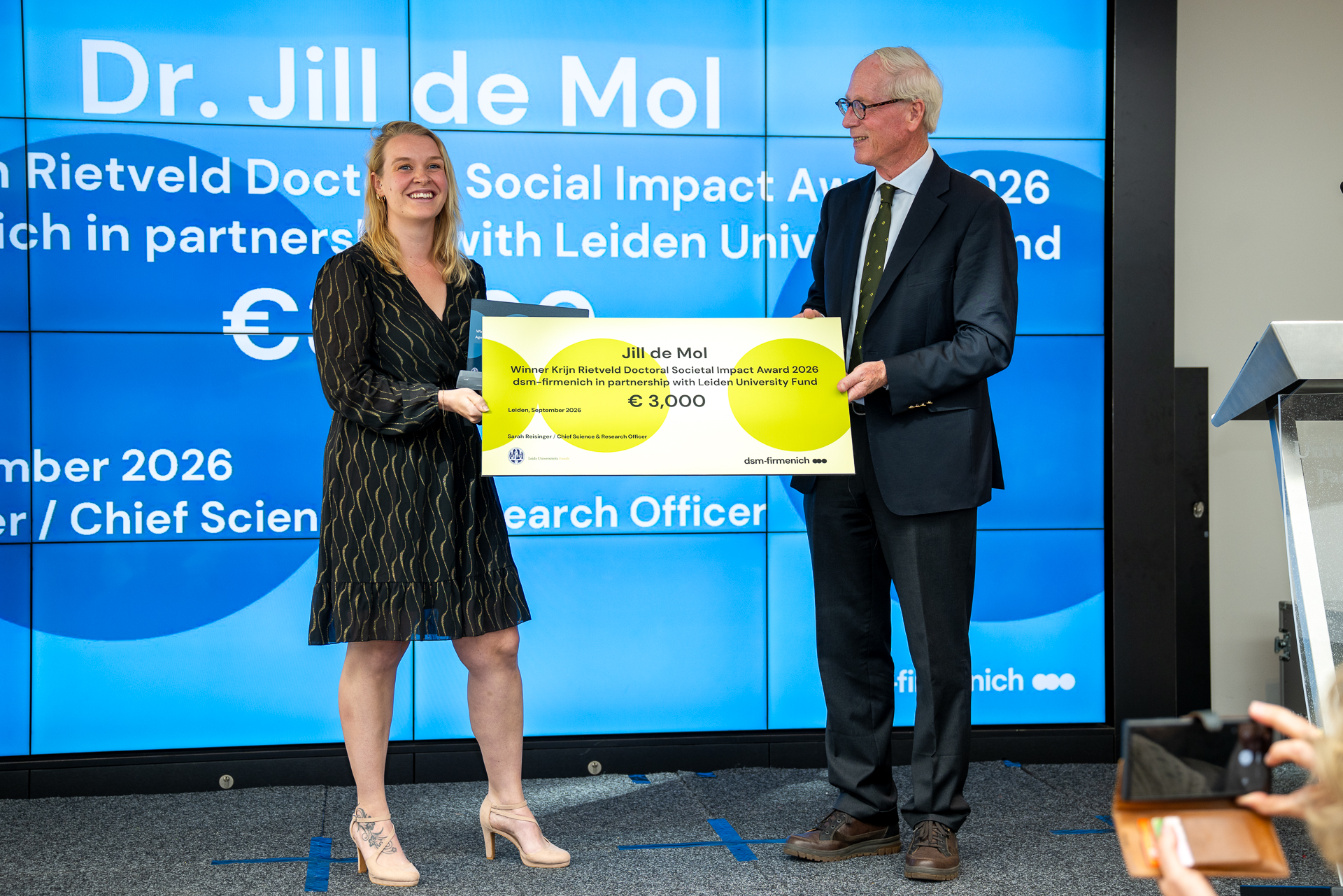

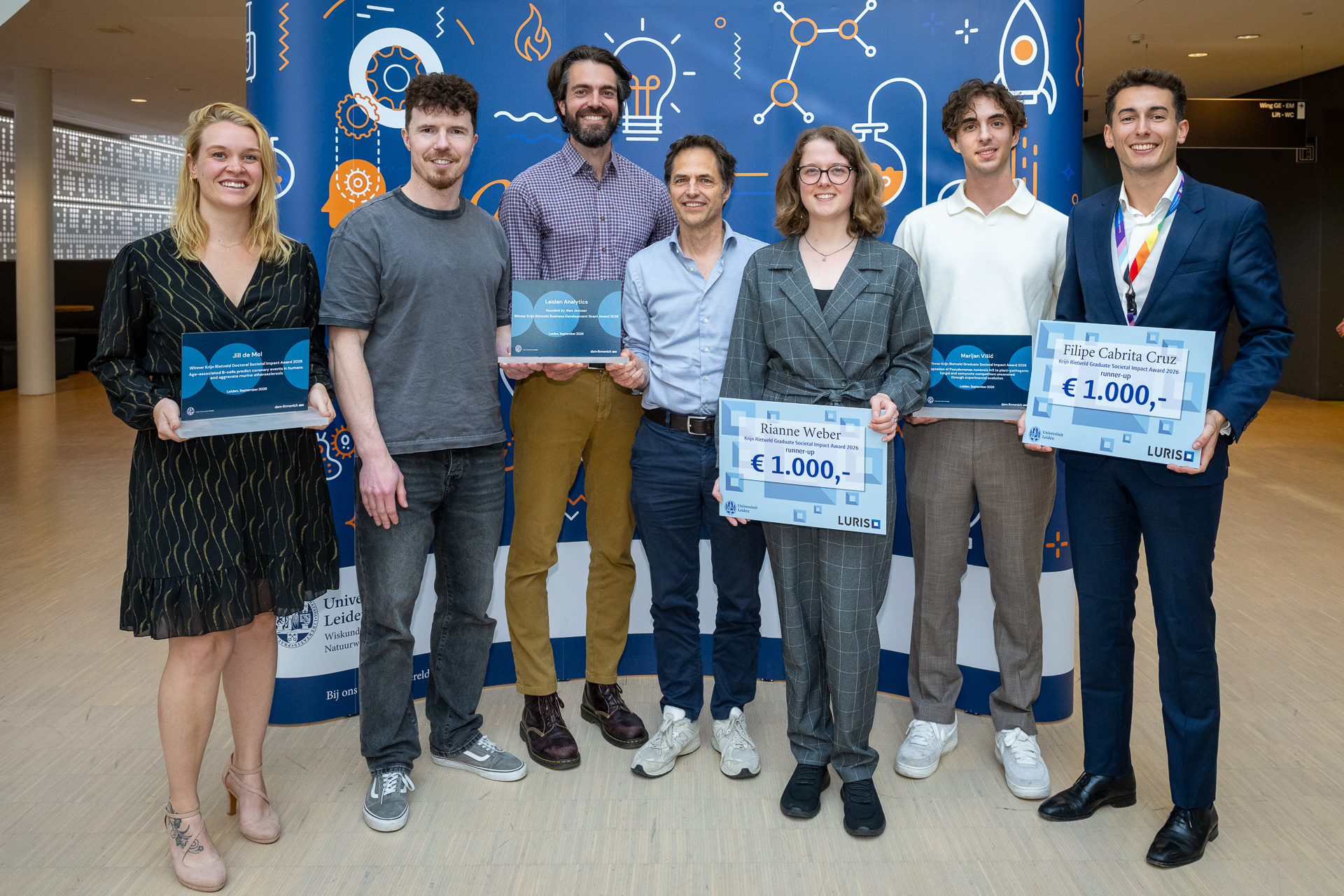
The awards were presented by Roel Bovenberg, Distinguished Corporate Fellow at DSM-firmenich. Bovenberg has fond memories of Leiden. ‘I studied chemistry here, at the same time as Krijn.’
Marijan Višić of the Institute of Biology Leiden (IBL) received the Krijn Rietveld Graduate Societal Impact Award for his research Adaptation of Pseudomonas nunensis In 5 to plant-pathogenic fungal and oomycete competitors uncovered through experimental evolution.
Anouschka Versleijen (LURIS) presented the Krijn Rietveld Graduate Societal Impact Award Runners-up prizes to Filipe Cabrita Cruz and Rianne Weber. These awards recognise master’s students who combine outstanding scientific quality with significant societal impact.
Jill de Mol from the Leiden Academic Centre for Drug Research (LACDR) received the Doctoral Societal Impact Award for her research Age-associated B-cells predict coronary events in humans and aggravate murine atherosclerosis.
The Business Development Grant was awarded to Leiden Analytics, a spin-off of the Metabolomics and Analytics Centre. Postdoctoral researcher Alex Joesaar accepted a cheque for €13,500.
Quantum technology for everyone?
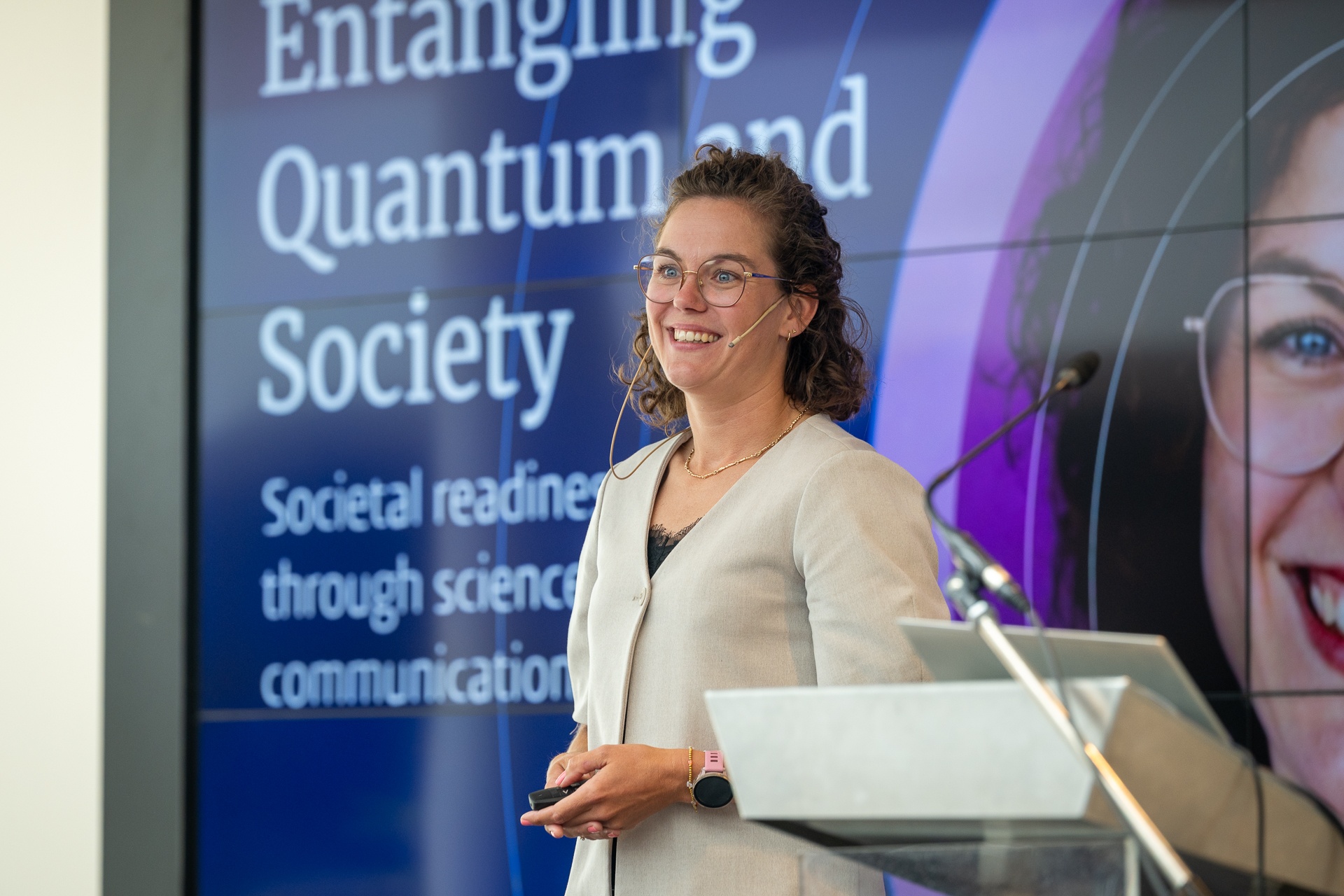
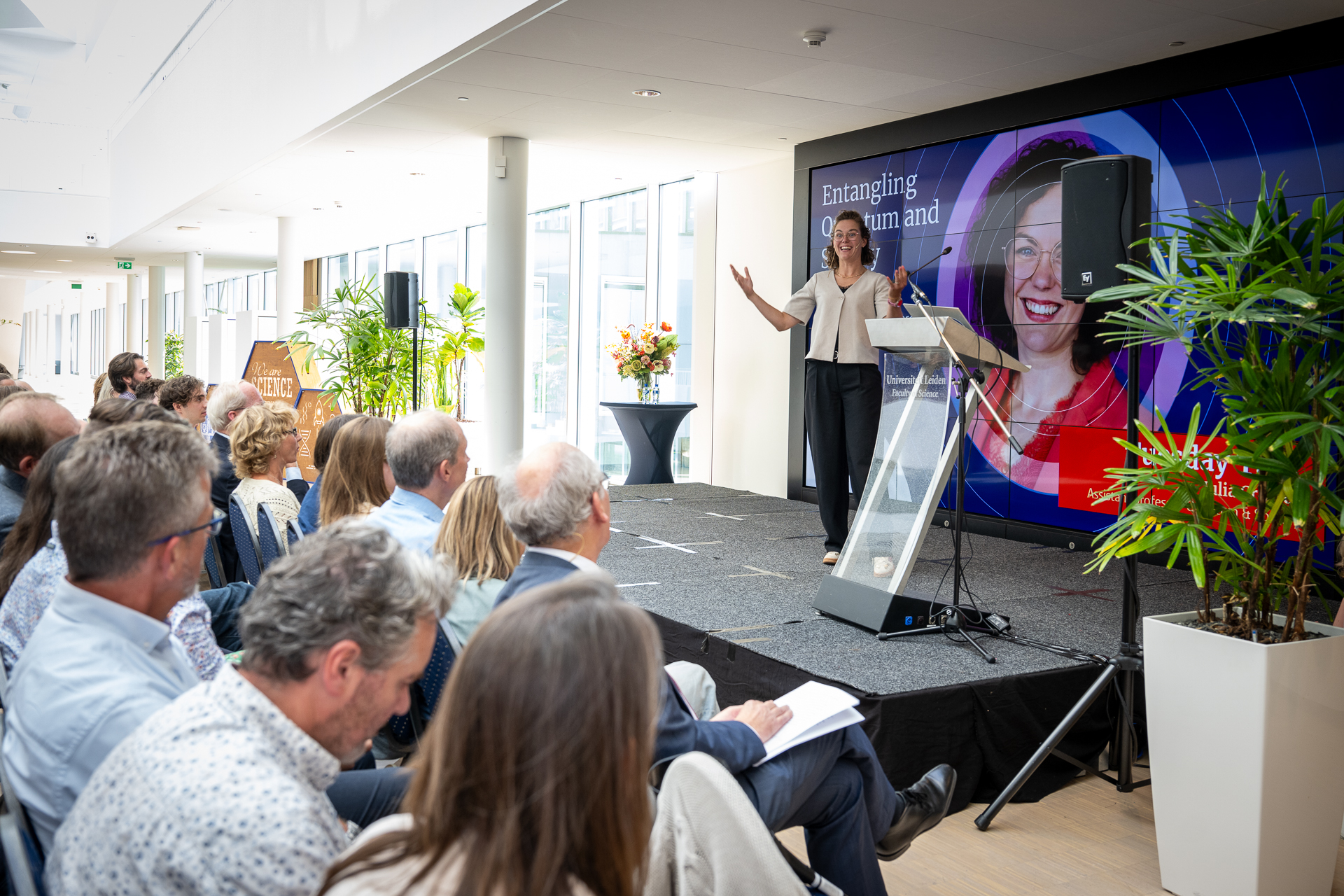
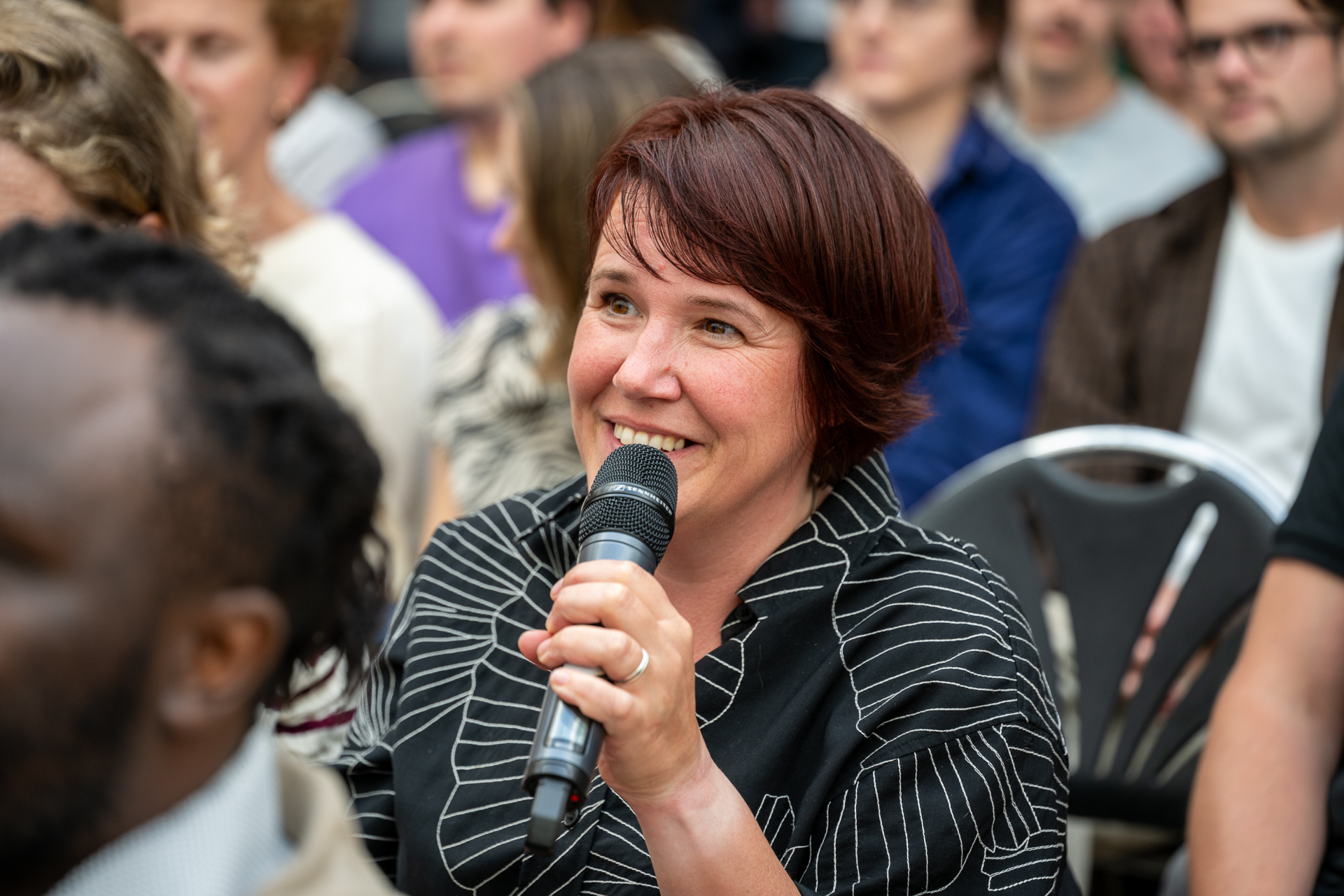
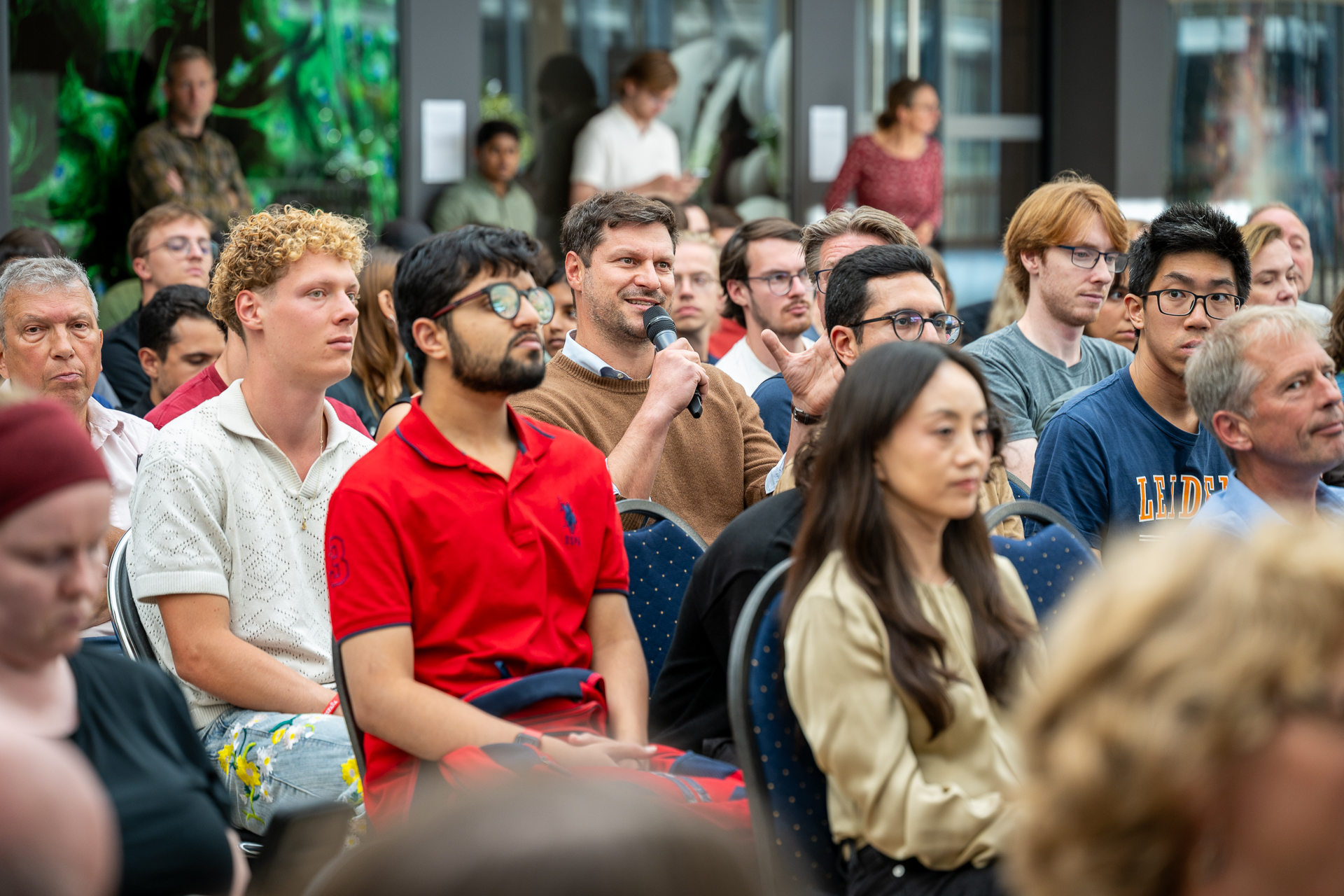
After the awards ceremony, Julia Cramer spoke about the connection between quantum technology and society. She began by asking the audience whether they agreed that quantum technology could become a major breakthrough. A few hands went up. She then asked how many people felt they understood quantum science. Once again, only a handful of hesitant hands appeared. That, Cramer explained, is exactly the issue. Quantum technology could have a profound impact on society, yet very few people feel connected to the topic. Even within the Faculty of Science, many people find it difficult to relate to it.
Searching for effective ways to communicate
How can society be brought into conversations about complex subjects like quantum technology? That is the central question in Cramer’s research. Studies conducted at events such as the Lowlands festival suggest that there is no simple solution. In fact, researchers found that visitors’ interest in quantum technology actually decreased after they visited a quantum-themed exhibition at the festival. The findings highlight the need for more research into effective ways of engaging the public with complex scientific developments.
The afternoon concluded on a festive note, with music by saxophonist Max van Houtum and an informal reception. Leiden Science is ready for a new academic year!