
Contacts between Early Farmers and Hunter-Gatherers Explored Through Rubicon Grant
How did contacts unfold between the first farmers and the hunter-gatherers who were already living in Europe? Lasse van den Dikkenberg, who recently obtained his PhD from the Faculty of Archaeology, has been awarded a Rubicon grant from the Dutch Research Council (NWO) to investigate this question in Vienna.
The first farmers
For his research, Van den Dikkenberg is working with material from the settlement of Eilsleben in Germany, an important site associated with the Linear Pottery Culture. This culture is linked to the first farming communities that migrated from Southeastern Europe into Central and Western Europe around 5000 BCE.
‘What I want to investigate are the interactions between these new farming communities and the hunter-gatherers who were already living there,’ says Van den Dikkenberg. ‘We know there was contact and that objects were exchanged. But did this also influence the way people lived? Did they adopt techniques and practices from one another?’
Microscopic analysis
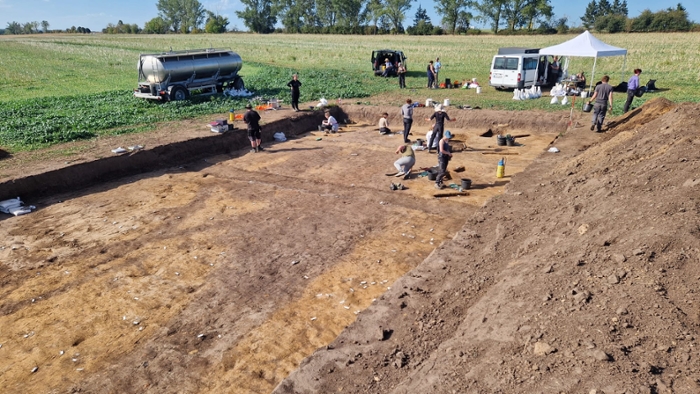
The project builds on archaeological excavations that have already been carried out. Van den Dikkenberg will begin his research in Halle, where the archaeological repository containing finds from Eilsleben is housed. There, he will select artefacts for further study.
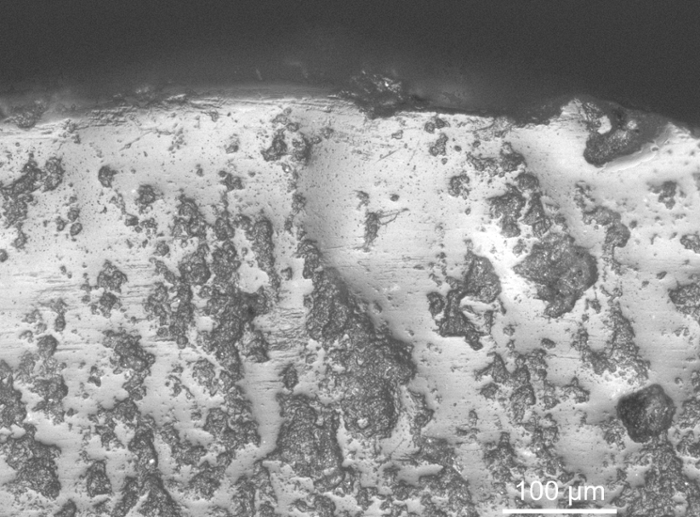
‘I’ll be going to the repository to determine which objects are interesting to examine under the microscope,’ he explains. ‘Flint tools in particular can tell us a great deal about how they were used and which activities people carried out.’
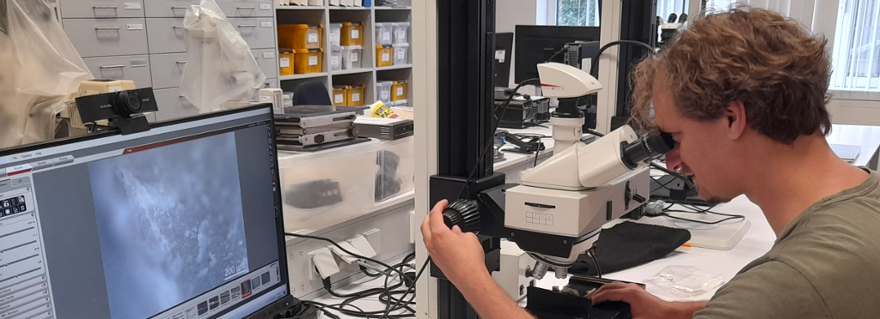
A major part of the project will take place at the Austrian Academy of Sciences in Vienna, where Van den Dikkenberg will make use of an advanced digital microscope. ‘The instrument is still relatively new, and I haven’t worked with it before. I’m very curious to see exactly what it can do. Hopefully, it will provide a greater level of detail and produce high-quality images for publications and for sharing research results.’
Leiden will also remain an important base throughout the project. ‘One of the largest use-wear reference collections in Europe is located here in Leiden, so I’ll still be spending time at the faculty as well.’
Turning point
Through his research, Van den Dikkenberg hopes to gain new insights into the transition from hunter-gatherer societies to societies based on agriculture. This shift is often regarded as one of the most significant transformations in human history.
‘The introduction of agriculture ultimately made developments such as cities possible,’ he says. ‘That is why it is such an important period to understand. But we also wonder whether the idea of a radical transformation is entirely accurate. Did people’s way of life really change so dramatically once they became farmers, or did hybrid forms of both lifestyles coexist for a longer period of time? We still do not have a clear answer to that question.’
By examining use-wear traces on tools in detail and investigating the exchange of knowledge and materials between different groups, he hopes to provide new answers to these questions.
The Rubicon grant gives Van den Dikkenberg the opportunity to further develop his expertise in an international context while shedding new light on a crucial period in European prehistory.