
Claire Ploum, exchange student in Dublin: ‘It’s good to step outside your bubble’
Claire Ploum, bachelor’s student in Law, studied for one semester at Trinity College in Dublin. She took extracurricular courses and immersed herself in Irish culture, the natural surroundings, and her studies: ‘Experiences I’ll cherish for the rest of my life.’

Why study abroad?
‘I liked the idea of going abroad without any “real” obligations. An exchange programme is an easy way to meet lots of international students, and it also challenges you as a person: at a relatively young age, you move abroad on your own and have to figure things out for yourself.’
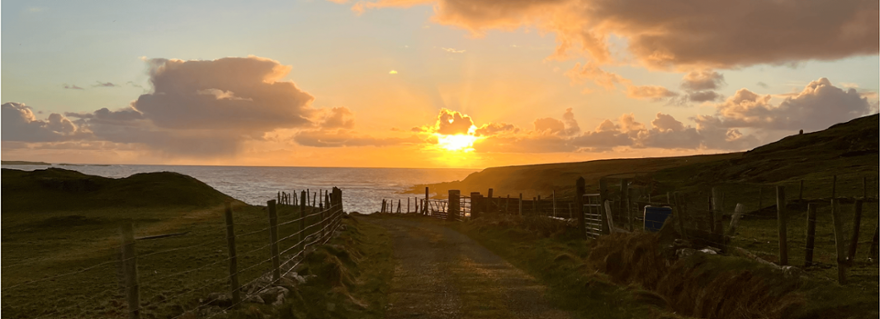
‘I knew I wanted to go to an English-speaking city, preferably where I could receive an Erasmus grant. I was most interested in going to Scotland or Ireland because of the stunning scenery. I also love being outdoors, so that was an important factor in my decision. In the end, I got a place at Trinity College Dublin.’
Did you enjoy it?
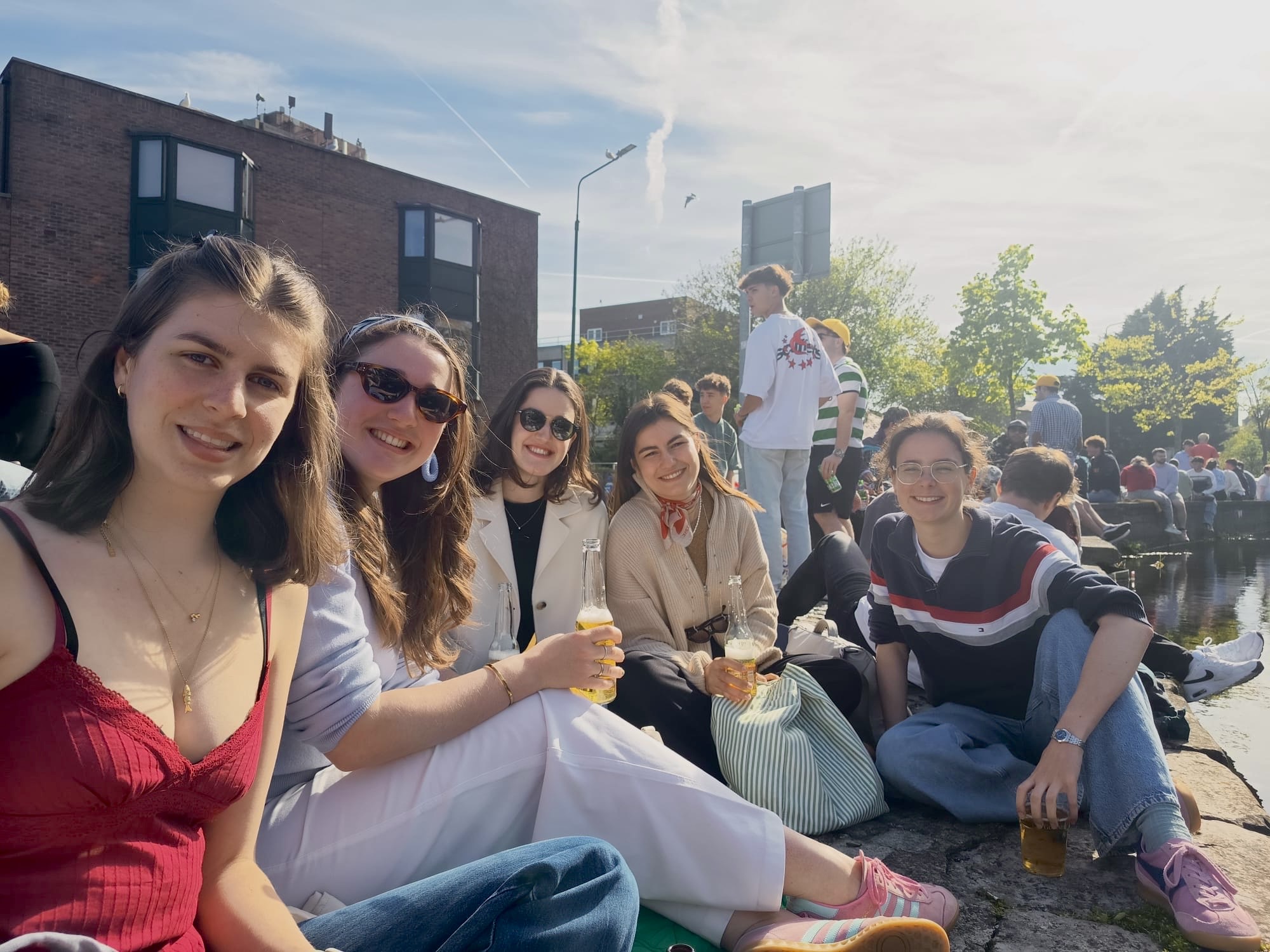
‘I had a fantastic time. It was a bit daunting at first, but the university had organised an orientation week for exchange students. That was a great way to meet each other and get to know the city. Trinity students also helped us discover some of Dublin’s hidden gems and experience the city’s famous pub culture by going with them on pub crawls.’
How did it compare to studying in the Netherlands?
‘Trinity College is very strict: exams are graded between 0 and 100%, but no one ever gets 100%. It can be a bit demotivating if you studied really hard and just get 72% – it feels like you didn’t do very well. That was something I really had to get used to. And of course everything was in English, which was fine, but it’s quite challenging when all your sources are in that language too – especially as legal English is totally different to everyday English.
In the Netherlands, a tutorial group often has around 30 students, while in Dublin there were never more than 10. So, you’re expected to contribute actively in classes and show that you’d done the required preparation. I think that’s also because Trinity College is considered Ireland’s top university, and admission is very competitive.’
What’s your best memory?
‘The pubs and the Irish hospitality. In Leiden, you wouldn't normally strike up a conversation with complete strangers, but in Ireland you can walk into a pub with a group of friends and people start chatting to you straight away. They’re always interested in who you are, what you do, and where you’re from.’






How did you find the study abroad planning and application process?
‘It takes a bit of figuring out, but on the whole it was quite straightforward. You just have to read everything carefully and follow the step-by-step guide on the website. It’s still a bit nerve-racking though, because there are deadlines involved: if you miss one, that's it. It helped that my courses were extracurricular which means you don’t need approval for taking them. Otherwise, you sometimes also have to check with the Board of Examiners.’
What support did the university provide?
‘If I had any questions, I could go to the Office for International Education. They also have an open consultation hour when you can drop by the office if you’re panicking about something. I didn’t need to do that, but I did send emails which often got a fast response. That’s a big help if you’re feeling a bit stressed. Support was also available when I was abroad, for example from a psychologist or someone who could help out with your rental agreement.’
What’s the most important thing you’ve learnt from this experience?
‘When you take a new step and find it daunting, it’s often a sign that it’s good for you. Stepping outside your comfort zone helps you grow as a person – these are experiences I’ll cherish for the rest of my life. At this stage of your life, it’s important to step outside your bubble and discover new sides of yourself.’
Do you have any practical tips for other students?
‘Don’t just stay in the city where you’re studying – a country often has much more to offer. The evaluation reports written by other exchange students are also really useful. They’re available online in a large database and cover various years at universities and cities, with lots of practical tips.’
Interested in doing an exchange?
Are you thinking of doing an exchange in autumn 2027 or spring 2028? Register by midnight on 10 January 2027.
More information is available here!