

Addressing femicide is a clear human rights obligation
On Thursday 22 January, the Honours College Law New Year's event addressed the urgent issue of femicide. Experience-based expert Anne-Marije van den Bersselaar and assistant professors Mojan Samadi and Ellen Gijselaar explored the topic from personal and legal perspectives.
In the Netherlands, a woman dies every eight days as a result of violence. In about half of these cases, their (ex-)partner is the suspect. In 2021, Anne-Marije's sister, Clarinda van den Bersselaar, was murdered in broad daylight by her ex-partner. As a surviving relative, Van den Bersselaar conducts research into relational violence and media representation. She is also an ambassador for Sterk Huis, an organisation that works to create safe home environments.
She believes it is important to continue to tell her sister's story. Not because she is an exception, but precisely because she is one of many. Clarinda worked as a child welfare investigator at the Dutch Child Care and Protection Board. In theory, she had all the knowledge necessary to recognise and protect herself from an unsafe environment. One important question in her story is why this still failed to help her.
Intimate terror
According to Van den Bersselaar, her sister became a victim of intimate terror: a severe form of partner violence marked by a pattern of control and coercion. Within two and a half years, she had gone from falling in love and embarking on a relationship, to moving in together and pregnancy. Her relationship ended, however, in violent abuse, several escape attempts, and the break-up which finally led to her murder.
'My parents and I noticed that she was becoming increasingly isolated and unreachable during that time,' says Van den Bersselaar. She points to the so-called red flags: signs of violence against women that display similarities in many cases. In the case of her sister, she was taken in, manipulated and made dependent from the beginning of the relationship. Physical violence followed, starting during the pregnancy. 'At that moment, the power imbalance in the relationship emerged. A child asks for more attention, so he no longer had total control over my sister.'
Paradoxical gratitude
‘Why she stayed with him is a question people often ask,’ Van den Bersselaar continues. She explains that this is linked to the ideal image in which both father and mother are around to raise a child, but also to a kind of paradoxical gratitude: the violence doesn’t happen all the time, so there’s still room to see the good in the other person.
A ‘sliding scale’ is also an important part in this process. 'The violence escalates gradually, slowly creating an ever-widening gap between your own set of values, as everyone knows you, and the reality in which you’re living,' she explains. 'Your boundaries become stretched and there’s shame attached to talking about it. What happens is that many people choose to adjust their set of values.'
Van den Bersselaar's most important lesson is that even someone with full knowledge of relationship violence is not automatically safe from it. 'My sister followed the early-warning steps, the mediation, therapy and she asked for advice. She was aware of the support procedures through her job, but she was still not protected within that system.' An important reason for her to keep sharing this personal story is to contribute to changes and improvements within the system.
-
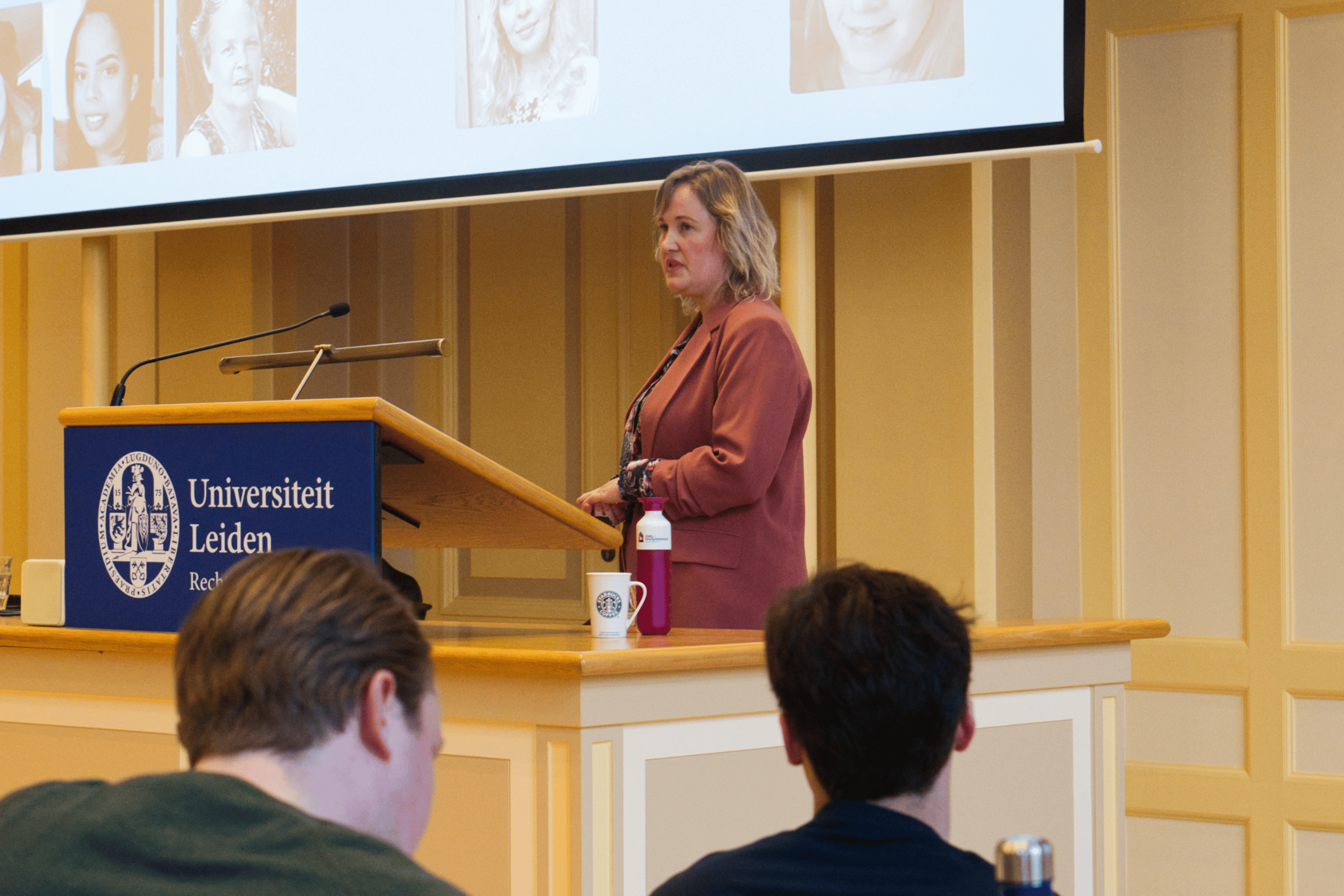
Anne-Marije van den Bersselaar -
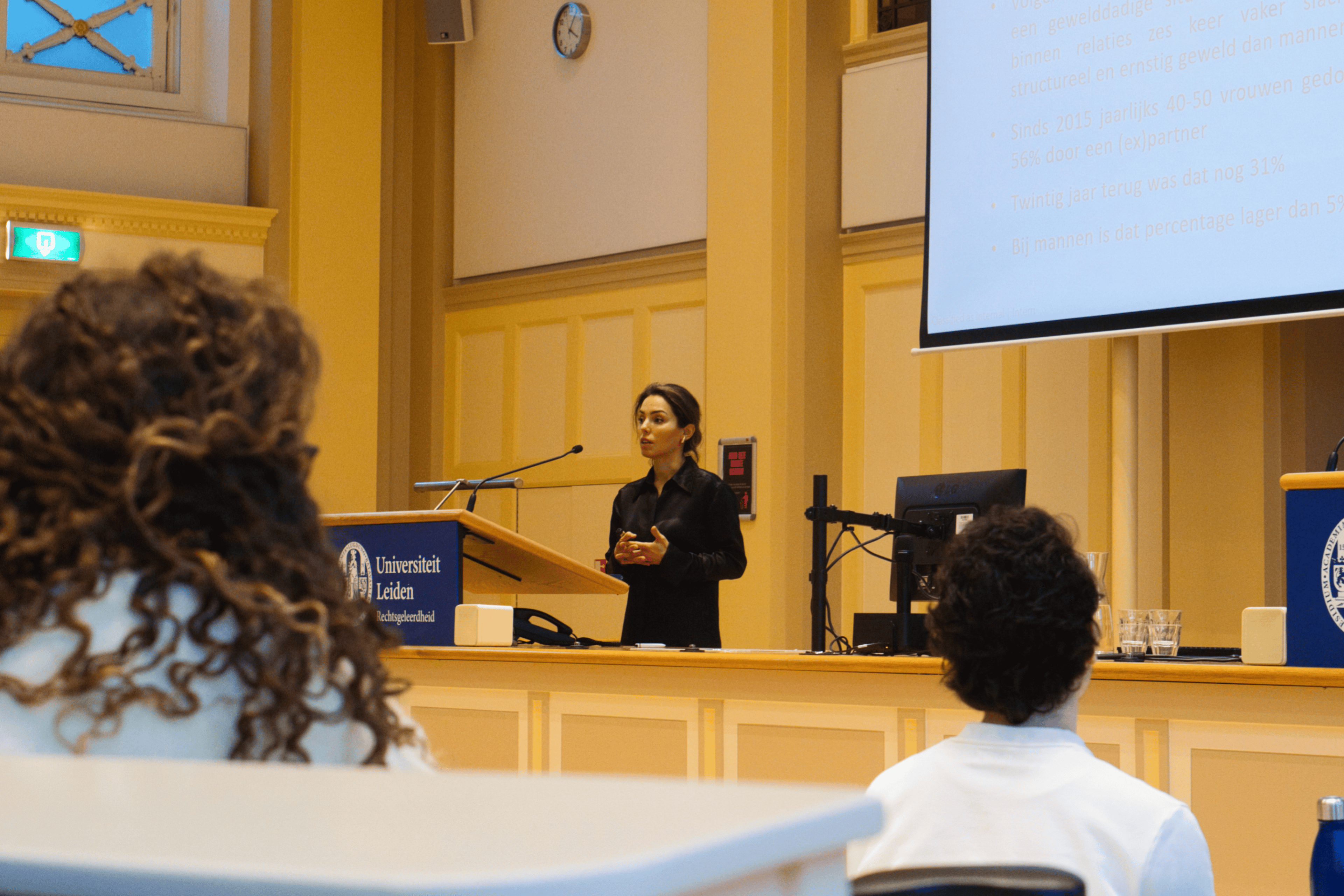
Mojan Samadi -
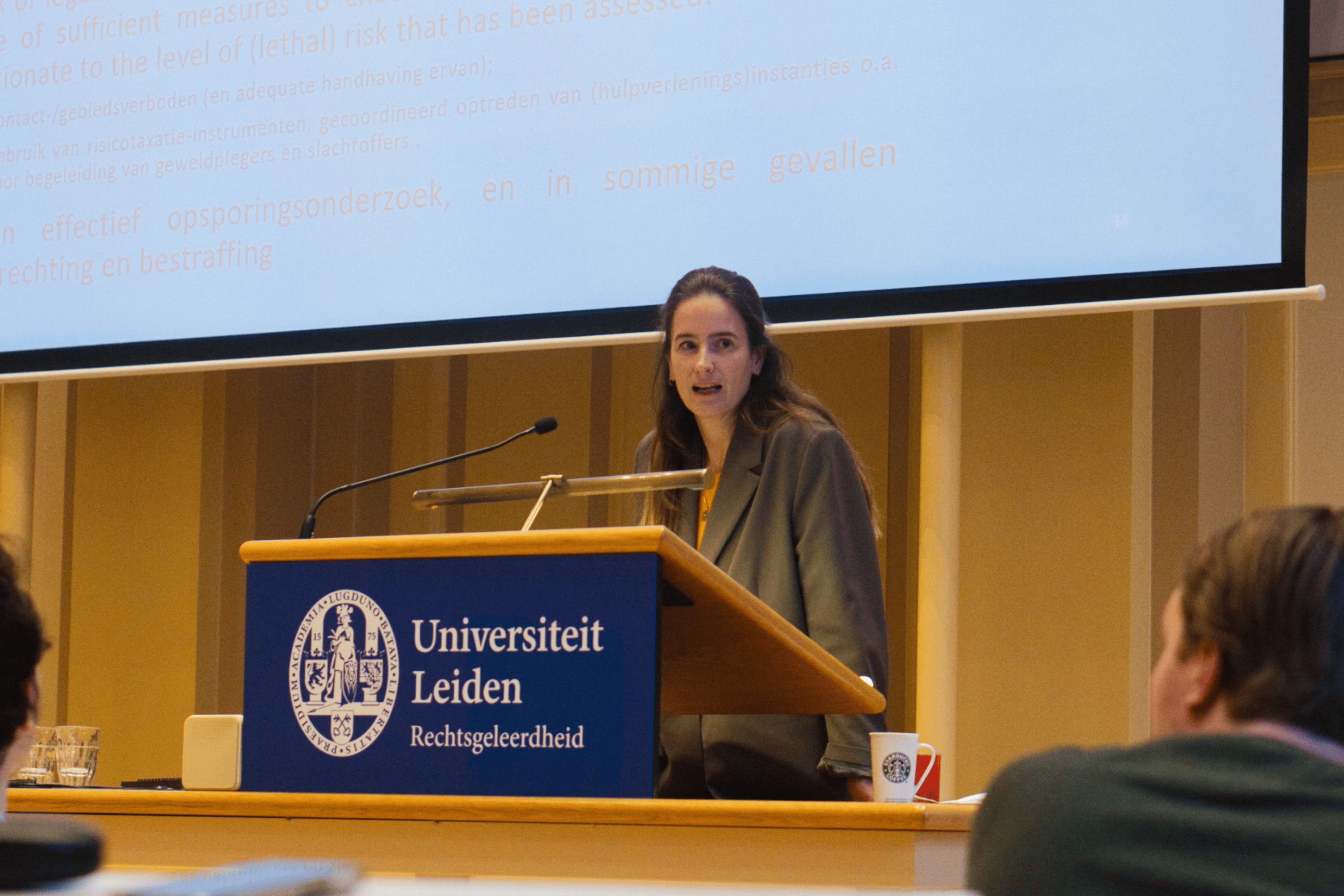
Ellen Gijselaar -
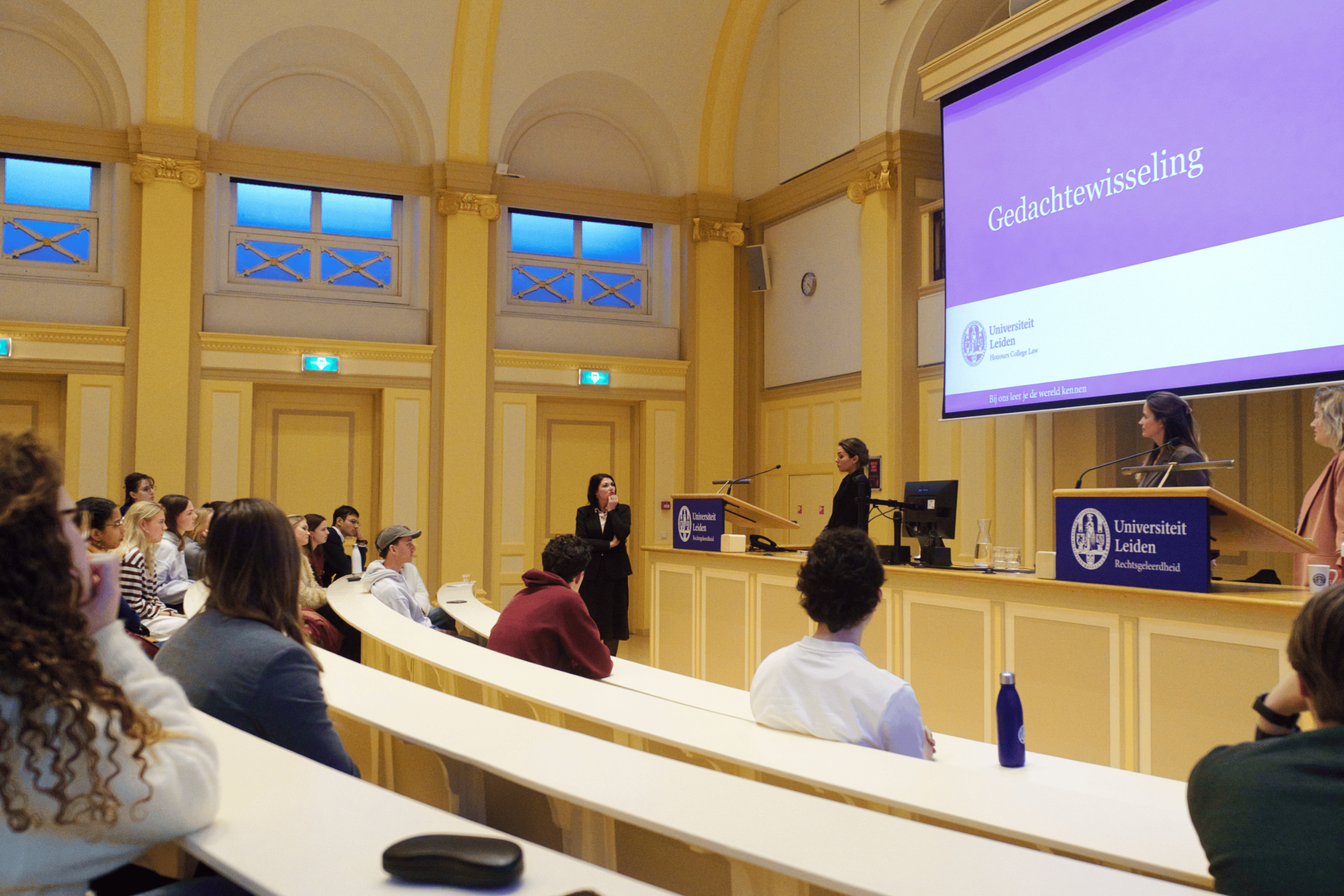
What is femicide?
After Van den Bersselaar’s moving story, assistant professors Mojan Samadi and Ellen Gijselaar discussed the broader legal framework surrounding femicide. One of the most common forms of femicide is the killing of a partner, but the concept is defined more broadly, Samadi explains. ‘Femicide is about the killing of women and girls because of their gender. This implies a misogynistic motive, which is often difficult to prove in legal terms.’
For that reason, the assistant professor says, the focus should not be on the perpetrator’s motive, but on the objective context in which the violence takes place. ‘For example, when a crime affects women structurally or disproportionately,’ she says. ‘Femicide therefore refers to the killing of women within a context of gender-related violence, such as partner killing or sexual violence.’‑related violence, such as partner killing or sexual violence.’
The Dutch Public Prosecution Service (OM) has included femicide as a policy-relevant term since 2022, with the aim of making the phenomenon more visible. This involves recognition, better protection of victims and discerning the appropriate level of punishment for perpetrators. The focus is mainly on (ex-)partner violence with a fatal outcome. According to Samadi, the use of the term femicide underlines the importance of making this violence visible and prioritising efforts to address it. Moreover, she and Gijselaar argue that this approach is a human rights obligation: the government must protect its citizens against it.
Tip of the iceberg
'That obligation follows from the Istanbul Convention, which has been in force in the Netherlands since 2016,' Gijselaar explains. 'Is that well organised in the Netherlands at the moment? Unfortunately not.' According to her, the convention creates a clear obligation to invest in an effective administrative and legal system, preventive measures to stop violence and thorough and effective criminal investigations. 'So it’s not optional, but a clear human rights obligation.'
'Femicide is just the tip of the iceberg when it comes to violence against women,' says Van den Bersselaar. ‘It stems from a broader culture of seemingly innocent comments or sexist jokes, which can slowly develop into serious forms of intimidation and violence.’ Therefore, she says it is essential to tackle precisely that underlying culture, instead of continuing to discuss the statistics or who is committing most of the violence.
After the contributions from Van den Bersselaar, Samadi and Gijselaar, the students could ask questions about, among other things, the ability of offenders to reflect on their crimes, the impact on surviving relatives, the risk of reoffending, and differences in the legal frameworks of other European countries. Afterwards, during the reception, there was time to talk further with one another and with the speakers and to reflect on this important topic.
Honours College Law
Honours College Law (HC Law) is a Dutch-taught extracurricular programme for students at Leiden Law School who would like an extra challenge in addition to their studies. The programme distinguishes itself by 'Outside the Box' education, where critical and creative thinking are key elements as well as the exchange of ideas and cooperation. The New Year's Lecture is an opportunity for students to meet up and gain new insights.