256 search results for “machine geschiedenis” in the Student website
-
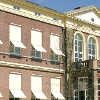 Kamerlingh Onnes Building
Steenschuur 25, Leiden
-
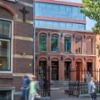 Schouwburgstraat
Schouwburgstraat 2, The Hague
-
 Alan Kai Hassen
 -
 Mayra Nas
Faculty of Humanities
-
 Jay te Beest
 -
 Lu Cao
 -
 Sander van Rijn
 -
 Anna Kononova
 -
 Alexander Schmatz
 -
Computing with rubber
Without electronics carrying out computational tasks our daily lives would look very different. Devices such as elevators, vending machines, turnstiles, washing machines and even traffic lights use a simple form of electronic computing to switch from state to state. But, what if power supply is not…
-
 Constant Hijzen
Faculteit Governance and Global Affairs
-
Smart monitoring of test subjects is the future of clinical research
Knowing whether or not a treatment is working just by wearing your watch? Data scientist Ahnjili ZhuParris has identified a lot of opportunities for the use of machine learning in clinical research to monitor test subjects at home.
-
A quick call with Ella Picavet on affordable period products
Many will add them to their shopping list without a second thought, but what if you don't have enough money to buy period products each month? The university has recently started providing packs of affordable sanitary pads and tampons in the SchoolSupply vending machines. ‘It's just like providing toilet…
-
 Lettie Dorst
Faculty of Humanities
-
Msc Thesis presentation Lars Seldenthuis on Friday 11 July @ 11 AM in HL207
Education
-
Msc Thesis presentation Benjamin Sluijter on Friday 21 March @ 10 am in room Oort 173 (Gorterzaal)
Education
-
A peek inside art objects: new algorithm makes CT scan more accessible
An X-ray scanner, some small metal balls, and a newly developed algorithm. That is all you need to make a 3D model that enables you to look inside art objects without dismantling them. Thanks to the research of Francien Bossema (Centrum Wiskunde & Informatica and Leiden Institute of Advanced Computer…
-
‘Humans are storytellers’: the power of stories in language development of children and AI models
What do ten-year-old children and chatbots have in common? PhD researcher Bram van Dijk studied language development in both children and AI language models. ‘It’s actually quite practical that we attribute human traits to a chatbot.’
-
FLAMINGO: dark matter, ordinary matter, and neutrinos in the biggest cosmological simulation ever
Not only dark matter, but also ordinary matter and dark energy are tracked in the largest ever cosmological computer simulation ever. In the FLAMINGO simulations, you can see virtual galaxies and clusters of galaxies emerging over the course of billions of years. This is no easy task: with more than…
-
 Anna van Buerenplein
Anna van Buerenplein 301, The Hague
-
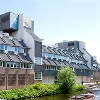 Lipsius
Cleveringaplaats 1, Leiden
-
 Spui Campus
Spui 5, The Hague
-
 Wijnhaven
Turfmarkt 99, The Hague
-
Working together for a safer workplace - 10 - 14 November inspection of electrical devices
Facility, Organisation
-
Google gift for quantum research
Assistant Professor Vedran Dunjko and his team receive a €100,000 gift from Google to support them in their quantum research. The research focuses on whether quantum computers can provide new ways of understanding the mysteries of high-energy physics. Google is committed to supporting ambitious research…
-
Update: Cleaning robot in the Gorlaeus Building
Facility
-
Pilot with cleaning robot in the Gorlaeus Building
Facility
-
 Tessa Verhoef
 -
 Thomas Moerland
 -
 Mike Preuss
 -
 Hazel Doughty
 -
 Marc Molendijk
Faculty of Social and Behavioural Sciences
-
 Janna Houwen
Faculty of Humanities
-
Leiden University researchers receive Vidi grants
The Dutch Research Council (NWO) has awarded Vidi grants to Leiden researchers.
-
Sustainability Day: Sustainability embedded in our education
In our teaching, Leiden University gives all students the opportunity to learn about sustainability themes and issues. Social issues, including sustainable development, are addressed in the teaching and research at all of our faculties. On this Day of Sustainability, we highlight a number of subject…
-
‘Scientists should be careful when interpreting results of AI models’
Anthropologist Rodrigo Ochigame studies how AI is changing the practice of scientific research. From astrophysics to mathematics to climate science, they find that the adoption of new AI models is raising questions about what counts as reliable scientific evidence.
-
Inventors with a nose for technology
Amidst the lathes and welding machines of the Fine Mechanics Department, Emiel Wiegers is working concentratedly on a metal cylinder. He and his colleagues design and construct components for researchers' set-ups. ‘We are a bunch of inventors who enjoy helping the researchers in our Faculty.’
-
Peter Grünwald develops a revolutionary statistical theory with an ERC Advanced Grant
Using mathematics to determine whether scientific results are significant or not. Peter Grünwald, full professor of Statistical Learning at the Mathematical Institute (MI) and senior researcher in the Machine Learning group of Centrum Wiskunde & Informatica (CWI), has been awarded an ERC Advanced Grant…
-
Towards no more glass in the jam with better X-ray scanners
X-ray and CT scanners are widely used devices in research, diagnostics and the industrial sector. And yet they are not nearly as fast and accurate as we would like. Mathé Zeegers is researching the newest technique in the field at the Centre for Mathematics and Computer Science: spectral X-ray imaging.…
-
Applications that never crash again
Doing your taxes, Netflixing or driving a car: more and more daily activities are supported by computer applications. It is challenging and expensive to test software thoroughly, leading to errors in most applications. PhD candidate Benjamin Lion made a mathematical framework to deal with this problem.…
-
Come to the PLNT Festival on 10 July
Social
-
Reality or coincidence? We need to move from probability to evidence.
In studies, it is an old acquaintance, the p-value. But mathematician Peter Grünwald wants to get rid of it. The p-value is too susceptible to fraud and can lead to a distorted picture of reality and chance. That is why he wants to work with the e-value. De Volkskrant spoke to him about it.
-
 Bente de Leede
Faculty of Humanities
-
Last starlight for space telescope Gaia
ESA’s space telescope Gaia, which maps the Milky Way, completes its active phase of scanning the sky on 15 January. Over the past decade, Gaia has made more than three trillion observations of about two billion stars and other cosmic objects. ‘Gaia is already the discovery machine of the decade,’ Leiden…
-
Doing more together for less waste
Leiden University wants to contribute to a sustainable society, a healthy climate and the reduction of litter and waste. This intention is in alignment with the introduction of our Pure concept, the integral concept for our catering activities.
-
 Joost Broekens
 -
 Marco Spruit
 -
 Joost Batenburg
 -
Black holes are sometimes gigantic volcanoes. Martijn Oei earned his PhD on the subject, with honours
Not everything that comes close to a black hole is swallowed by it. Black holes can also hurl material away, and that chance turns out to be considerably bigger than previously thought. Martijn Oei's accidental discovery and his subsequent research on it earned him a cum laude promotion on 12 Decemb…
-
Why take the AI & Society minor? These students explain
The interdisciplinary AI & Society minor of Leiden University brings together students and lecturers from a wide range of disciplines. Together they look at the impact of AI on society. Students are enthusiastic about this merging of worlds.