
447 search results for “a quiet cell with” in the Student website
-
Curator of the National Museum Marion Anker: ‘History can cause friction'
Marion Anker is a junior curator at the Rijksmuseum, the National Museum of the Netherlands. She studied History in Leiden and Amsterdam. Together with her team, she organised the controversial exhibition ‘Revolusi! Indonesië onafhankelijk!’ What did studying History teach her?
-
How a region's contradictions shaped Boris Kowalski's career
Sometimes student life merges rather smoothly into a working adult life. This is the case for Boris Kowalski. At International Studies, he chose Russian as his language and Eurasia as his region of specialisation, he obtained his Master’s degree at Oxford in Russian and Eurasian studies, ended up in…
-
Jasper's day
Jasper Knoester is the dean of the Faculty of Science. How is he doing, what exactly does he do and what does his day look like? In each newsletter, Jasper gives an insight into his life.
-
IOC Vice President: ‘Leiden is where I learned to stand up for myself’
The opening ceremony of the Olympic Games in Munich in 1972 made a big impression on Nicole Hoevertsz. I’m going to be there one day, the eight-year-old Nicole decided. Her passion for sport and her perseverance brought her further than the once so introvert Aruban had dared to hope. Her appointment…
-
From studying international law to touring with your own theatre show
Graduating in international law and fulfilling a childhood dream by performing your own theatre show. Alumna Fleur Verhoeff has achieved both. How did she go from studying law to the performing arts? And how does her background in international law help?
-
How slower breathing really helps against stress
People who are often stressed can feel calmer by making certain adjustments to their breathing. Possibly this also positively affects concentration and attention. Psychologist Roderik Gerritsen studied the effects of breathing differently for the first time, and explains them. Gerritsen receives his…
-
Bats on a break: tracking the secret life of pond bats
What do bats do at night when they’re not hunting? Using tiny GPS trackers, Leiden researchers discovered that pond bats spend a substantial portion of the night resting – often outdoors. This surprising insight could change the way we protect them.
-
 Daphne Wong-A-Foe
Faculty of Social and Behavioural Sciences
-
 Augustinus Lycklama à Nijeholt
 -
Start of classes at Spui Campus – Guide
Education, Facility, ICT
-
Spui updates for Political Science students in The Hague
Facility
-
Final-Year students
Studying is already a lot of work, so on this page you'll find the most sought-after information for students in their final year. Do you feel something important is missing? Let us know via the feedback button, and we'll improve it for the next student.
-
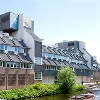 Lipsius
Cleveringaplaats 1, Leiden
-
 Spui Campus
Spui 5, The Hague
-
 Wijnhaven
Turfmarkt 99, The Hague
-
Mentor or tutor
As part of the Leiden study system we provide first-year bachelor’s students with good support and good academic guidance. This guidance is given by tutors and mentors from your faculty or study programme.
-
Mentor or tutor
As part of the Leiden study system we provide first-year bachelor’s students with good support and good academic guidance. This guidance is given by tutors and mentors from your faculty or study programme.
-
Mentor or tutor
As part of the Leiden study system we provide first-year bachelor’s students with good support and good academic guidance. This guidance is given by tutors and mentors from your faculty or study programme.
-
Mentor or tutor
As part of the Leiden study system we provide first-year bachelor’s students with good support and good academic guidance. This guidance is given by tutors and mentors from your faculty or study programme.
-
Mentor or tutor
As part of the Leiden study system we provide first-year bachelor’s students with good support and good academic guidance. This guidance is given by tutors and mentors from your faculty or study programme.
-
Low-sensory room opened in Lipsius
Staff and students who want some quiet time out will now have a low-sensory room available to them. Lipsius 1.38 has been specially designed to help people relax.
- Zen Garden Student Well-being Week
-
 Marije Niemeijer
 -
 Chenlin Feng
 -
 Tessa Hagens
 -
 Maarten Lubbers
 -
 Jos Jonkers
 -
 Hendrikus Tanke
 -
 Paul Hooykaas
 - Alarm test on 8 December 7.00 - 8.30
-
Energy as a weak spot: a new approach to tackle aggressive breast cancer?
Could we stop cancer cells by cutting off their energy supply? That’s what Dione Blok, a bachelor’s student in Bio-Pharmaceutical Sciences, aimed to find out during her thesis research. She investigated a compound that affects the tumour cells’ energy metabolism. ‘Hopefully, these insights will provide…
-
Over €900,000 for new atherosclerosis treatment
How can we slow the progression of atherosclerosis? Researcher Amanda Foks believes the answer may be switching off ageing immune cells. This could lead to an entirely new treatment for heart attacks and strokes. She has been awarded an Established Investigator Dekker Grant by the Dutch Heart Founda…
-
Atherosclerosis resembles an autoimmune disease. Marie Depuydt graduated on this topic, with honours
In addition to cholesterol and high blood pressure as risk factors for atherosclerosis, we may need to address our own immune system to prevent a heart attack or stroke. Marie Depuydt revealed which cells exactly reside in the atherosclerotic plaque that narrows an artery. The presence of a diverse…
-
Preventing heart attacks by earlier detection of cardiovascular disease
In the Netherlands, 1.55 million people suffer from cardiovascular diseases. Yet, acute cardiovascular events, such as a heart attack or stroke, often occur unexpectedly. That is because many people do not know they are at risk for such an event. Immunological researcher Amanda Foks and her colleagues…
-
Investigating inflammation: new leads for treating atherosclerosis
How do you detect people at high risk of heart attacks and strokes? And how can we improve the treatment of atherosclerosis? These are the questions that keep LACDR researcher Marie Depuydt busy. She is investigating the immune cells that contribute to the worsening of atherosclerosis. ‘It's a challenging…
-
LUMC participates in pioneering type 1 diabetes research
The promising early results of an international study have shown that insulin-producing cells grown from stem cells can cure the disease. The new Cure One LUMC research centre aims to accelerate this breakthrough.
-
Silver and light: a powerful combination with the potential to save lives
Packages of DNA strands containing silver, measuring just two or three nanometres in size. Leiden physicists Donny de Bruin and Dirk Bouwmeester create these packages, which can enter living cells on their own. They then activate the silver with light, causing the cells to break down. This could, in…
-
New Master’s programme in Transfusion Medicine and Cellular and Tissue Therapies
LUMC and Leiden University will start the new two-year online master's program in Transfusion Medicine and Cellular and Tissue Therapies from October 2023.
-
Modified caffeine molecules help medical research move forward
Before researchers can develop targeted drugs, they need to know exactly how a disease works. Biochemist Bert Beerkens created molecules that allow them to find out. He used caffeine as the basis for new molecules that enable research into certain receptor proteins on cells.
-
Student Support reflects on 2023: student life is the most important, meaningful time of your life
A Student Living Room, free period products and a wide variety of events. Over the past year, the Student Support Team at Leiden Law School has taken measures to turn the faculty into a safe, accessible social space for all students. They’ve been reflecting on the past year.
-
Tropical bananaquits lose song quality in the city
I think we should go this way. This way! THIS! WAY!! Making yourself heard in a city can be difficult. That is not only the case for humans, but birds seem to be hindered by urban noise as well. Researcher Hans Slabbekoorn of Leiden University already showed that great tits in Leiden communicate differently…
-
Malformations in heart, eyes and nervous system: Nano-plastics disrupt growth
Nano-plastics cause malformations. Meiru Wang, researcher at the Institute of Biology Leiden, looked at the extreme effects polystyrene nano-particles could have, using chicken embryos as a model. Her results were quite alarming. Especially as nano-particles are everywhere. In the air, floating through…
-
Unlocking the secrets of DNA repair: Sarah’s curiosity might lead to new cancer treatments
How do cells repair their damaged DNA—and what happens when that process is hindered and cancer arises? Sarah Moser has taken a closer look during her PhD, uncovering surprising insights that could help improve future cancer treatments.
-
A mathematical three-step rocket helps biologists study tumour blood vessels
Koen Keijzer combined three mathematical models into one unified system capable of making meaningful predictions about how cells form blood vessels. This helps biologists studying the chaotic, leaky blood vessels found in and around tumours.
-
Help shape your future study space!
Organisation
-
Finally solved: how the body's own marijuana spreads through the brain
Since its discovery thirty years ago, it remained a mystery: how does the body’s own marijuana move between nerve cells in the brain? Mario van der Stelt and his research group have now uncovered the answer. This insight could aid the development of new treatments for pain and neurological disorders…
-
ERC grant for Sebastian Pomplun to precisely influence gene expression
In order to stop a whole range of diseases or disorders at their source, you would have to be able to switch certain genes on or off. Sebastian Pomplun wants to develop substances that can do this very precisely. For example, he wants to disrupt cancer processes and make cells produce an important missing…
-
Can Parkinson's be stopped by unravelling protein fibres? Anne Wentink finds out with a Vidi grant from NWO
In brain diseases such as Parkinson's and Alzheimer's, proteins clump together to form fibres. ‘Chaperone proteins’ unravel those fibres, but in the test tube biochemist Anne Wentink saw that this can also cause new problems. She is going to find out what happens inside cells to determine what a drug…
-
Building the best possible mini-liver (without making it too complex)
How do organs work in the body, and how can we create mini-organs to study diseases and test new medicines? That’s the idea behind organ-on-a-chip technology. During his PhD, Flavio Bonanini worked on developing the best possible mini-livers. ‘Make them as simple as possible, and as complex as neede…
-
LUMC researchers use viruses to fight prostate cancer
Modified viruses can both kill cancer cells and activate the immune system. This is what an LUMC team discovered while researching a new prostate cancer therapy.