209 search results for “stem cell differentiation” in the Student website
-
 Zoran Gavric
 -
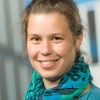 Chantal Pont
 -
 Linglu Xu
 -
 Lukas Wijaya
 -
How Oncode-PACT is bringing new cancer medicines closer with 325 million in Growth Fund money
How can you ensure that more experimental drugs reach the finish line? At the moment, only one in twenty cancer drugs that are tested on humans makes it to the market. This is an enormous loss for patients and society. With a grant from the National Growth Fund, Oncode-PACT aims to efficiently select…
-
Discover the world of life sciences at Dutch Bio Science Week
Curious about what goes on at the Leiden Bio Science Park? During Dutch Bio Science Week (27 June - 5 July), organisations across the park will open their doors. For nine days, Leiden will be dedicated to life sciences and health, with activities for all.
-
‘Make science communication more work and less hobby’
Young researchers met this month for the fifth Science Communication Summer School. ‘This is the first time some participants get to meet other researchers who also enjoy science communication. It’s great to see’, says Julia Cramer, one of the coordinators.
-
Come to the (science) fair on 3 October!
Want to find out how to assemble a human skeleton? Do you know what chemistry can be found around you? And are you easily fooled by fake news? Discover this and more at our Science Fair on 3 October.
-
 Paul Hooykaas
 -
 Tessa Hagens
 -
 Hendrikus Tanke
 -
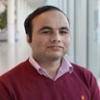 Raju Sharma
 -
 Cecilia Bergonzini
 -
 Chenlin Feng
 -
 Maarten Lubbers
 -
 Marije Niemeijer
 -
 Jos Jonkers
 -
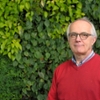 Jan Willem van der Laan
 -
 Guus Kroonen
Faculty of Humanities
-
Better understanding of cancer drugs – Leiden spin-off Omivera receives seed investment
How do you know if a drug will actually work? The Leiden-based spin-off Omivera is developing a new technology that could provide clearer answers. The young company received a seed investment from the investment fund UNIIQ to support its development.
-
 Fred Janssen
ICLON
-
‘Universities are changing, but they remain essential to society’
From academic freedom to security and medical breakthroughs: during Leiden University’s 451st Dies Natalis, the speakers reflected on the role of universities in a world of social and geopolitical tensions.
-
Reporting from ESOF: ‘How can we use science to solve the next crisis?’
From global warming to the decolonisation of knowledge. At the EuroScience Open Forum (ESOF) in Leiden over 500 speakers from 60 countries have come together to discuss the big themes of our times. Why have the delegates come?
-
Algorithms can also learn without examples
In donut-shaped buildings, particle accelerators take super-detailed X-ray images. Yet those images are not good enough to learn how to drive on hydrogen for example. Mathematics PhD student Allard Hendriksen has developed an algorithm that improves the images without having to learn from data from…
-
Veni grants for 22 researchers from Leiden University
An impressive 22 research projects by Leiden researchers have been awarded Veni funding from the Dutch Research Council (NWO).
-
 Gerhard Burger
 -
 Adriaan IJzerman
 -
 Bram Slütter
 -
 Roxanne Kieltyka
 -
 Olivier Béquignon
 -
So long, Gravensteen: ‘History dripped off the walls’
Historic and iconic yet expensive and cold. It’s with mixed feelings that the university is leaving the Gravensteen building, which dates back to the 12th century. How was it to work and study in this former Leiden prison?
-
‘Just because something is technically possible doesn’t mean we should do it’
In a world where medical advances are progressing rapidly, Professor of Obstetrics and Gynaecology Ben Cohlen argues that these must always go hand in hand with ethical reflection and careful decision-making. Because behind every technological advance lies hope, uncertainty and sometimes sadness.
-
Broadening the scope of the Social Resilience & Security programme: investigating suicide prevention skills and mental health of Ukraine refugees
The Social Resilience & Security interdisciplinary programme broadens its scope by embedding two research projects lead by Dr. Joanne Mouthaan. The projects adress suicide prevention skills and mental health of Ukraine refugees. Both projects will be integrated in the programme with the aim to improve…
-
Vici grants for seven researchers from Leiden University
From research on stellar winds to sign language: an impressive seven researchers from Leiden University will receive a prestigious Vici grant from the Dutch Research Council (NWO).
-
 Annemarie Meijer
 -
 Remus Dame
 -
 Han de Winde
 -
King of Sweden visits Leiden University
Collaborating in drug discovery and health research was the goal of a visit to the Leiden Bio Science Park on 14 May by a Swedish delegation including His Majesty King Carl XVI Gustav of Sweden. The delegation visited Leiden University’s Faculty of Science.
-
Seven Comenius grants for Leiden lecturers
Eleven lecturers from Leiden University have been awarded Comenius grants that will allow them to work with their teams on an innovation project within their own teaching. They have been awarded three grants of 100,000 euros within the Senior Fellows programme and four grants of 50,000 euros within…
-
Researchers awarded NWO grants for green technology and new enzymes
Developing safer alternatives to harmful PFAS filters and seeking new enzymes for medical applications. Two projects with Leiden researchers have been awarded funding through the Dutch Research Council's (NWO) Open Technology programme.
-
Mensenrechten overal anders geïnterpreteerd. Hoe kan dat?
Hoe kan het dat universele mensenrechten wereldwijd niet hetzelfde in de praktijk worden gebracht?
-
BrAInpower exhibition: tremendous and troubling uses of AI in our daily lives
Care robots, medical treatments, deepfakes and self-driving cars all with the aid of artificial intelligence (AI). The BrAInpower exhibition at Rijksmuseum Boerhaave shows spectacular applications of AI and explains how it can make such huge leaps. Bas Haring, Professor of Public Understanding of Science,…
-
Royal honour for former Rector Magnificus Carel Stolker
Carel Stolker, former Rector Magnificus and President of the Executive Board of Leiden University, has been made an Officer in the Order of Orange-Nassau for his services to the city and University. Mayor Henri Lenferink awarded the royal honour to Stolker at the University’s Dies Natalis on 8 February…
-
Our perspective on history is changing and our museums are changing too
Museums have long focused on power, wealth and a few famous figures. But that is changing, says Valika Smeulders, head of the history department at the Rijksmuseum. What this change comprises and how it has come about is the subject of her keynote speech at the D&I Symposium on 11 January.
-
Freedom: what does it mean?
On 5 May we celebrate freedom, a basic human right that should not be taken for granted. We asked international students and staff what it means to them.
-
Vidi grants for eight researchers from Leiden University
Eight scientists from Leiden University have been awarded a grant by the Dutch Research Council (NWO). With this Vidi funding, the researchers can set up an innovative line of research and further expand their own research group over the next five years.
-
Meet the professor: ‘Can my sister be prosecuted for stealing my eraser?’
On the university’s birthday, professors teach a class of 10 and 11-year-olds during Meet the Professor. The professors were bombarded with questions.
-
Unique exhibition translates science into music, images and dance
Leiden researchers from different disciplines look together at complex social problems. What happens when they join forces with artists? The results could be seen on Tuesday 11 June during a unique exhibition. Take a look for yourself:
-
 Anne Land-Zandstra
 -
Leiden University celebrates curiosity at 449th Dies Natalis
How has evolution shaped our curiosity? And how does that curiosity ensure that we now have the technological ability to discover whether we are alone in the universe? This was all covered during the celebration of Leiden University’s 449th Dies Natalis.