
552 search results for “machine biodiversity” in the Student website
-
 Amie Corbin
 -
Using AI to track greenhouse gas emissions
PhD candidate Julia Wąsala searches for greenhouse gas emissions in satellite data. As a computer scientist, she bridges the gap between computer science and space research. ‘We really can't do this research without collaboration.’
-
Wolves in the Netherlands feed mainly on wild animals – but also target grazing cattle in areas with less prey
Wolves in the Netherlands mainly feed on wild animals such as wild boar and red and roe deer. But in areas such as Drenthe where these are scarce they also prey on free-roaming cattle used for nature conservation
-
Lorentz Lecture - Why study islands?
Lecture
-
Veni grants for 22 researchers from Leiden University
An impressive 22 research projects by Leiden researchers have been awarded Veni funding from the Dutch Research Council (NWO).
- Media | Art | Politics (MAP)
-
Building a sustainable future: 'Combine the forces of natural and social sciences'
The United Nations has declared May 22 the International Day for Biological Diversity. A moment of global reflection on everything on Earth and its indispensability. Anthropologist Marja Spierenburg stresses the importance of the interaction between natural and social sciences in addressing sustainability…
-
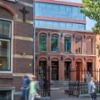 Schouwburgstraat
Schouwburgstraat 2, The Hague
-
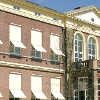 Kamerlingh Onnes Building
Steenschuur 25, Leiden
-
ESA grant to improve the Earth's 'digital twin'
Global warming, deforestation, nature conservation. All major environmental challenges that call for major measures. To see what the effects of these measures are, observation data from the Earth is used. Researchers at LIACS receive €90,000 from the European Space Agency (ESA). With this they are investigating…
-
Exploring river rewilding with LUC students in the Geul river
LUC students research the Geul river’s restoration, combining sediment studies, biodiversity assessments, and policy insights for global environmental challenges
-
IPBES: Positive outcomes for people and nature are feasible, but we must act now
Changes to halt further biodiversity loss are more urgent than ever and feasible, says IPBES, the United Nations biodiversity panel. In two reports released this week, the panel calls on governments worldwide to develop coherent policies that address biodiversity, climate change, water, food and health.…
-
eLaw publishes in Nature
Researchers of eLaw, the Center for Law and Digital Technologies at Leiden University, published their research in Nature Machine Intelligence. The publication, written by Eduard Fosch-Villaronga, Pranav Khanna, Hadassah Drukarch, and Bart Custers, focuses on the legal and regulatory implications of…
-
 Mayra Nas
Faculty of Humanities
-
 Alan Kai Hassen
 -
 Anna Kononova
 -
 Jay te Beest
 -
 Lu Cao
 -
 Sander van Rijn
 -
Making sustainable biotechnology a reality: joined forces aim to improve biocatalysts
Everything biobased: Plastic, medicine and fuel. It seems like a futuristic utopia. But for how long? A collaboration of researchers now proposes an idea to accelerate the development process. By combining machine learning and laboratory automation, this biobased ideal may become a reality rather sooner…
-
Barbara Gravendeel appointed new scientific director of Hortus Botanicus Leiden
Barbara Gravendeel has been appointed as the new scientific director of Hortus botanicus Leiden. Additionally, she has been named Professor of Plants and Society. Gravendeel succeeds Paul Keßler, who held the position for nineteen years. Currently, she works as a group leader at Naturalis Biodiversity…
-
Computing with rubber
Without electronics carrying out computational tasks our daily lives would look very different. Devices such as elevators, vending machines, turnstiles, washing machines and even traffic lights use a simple form of electronic computing to switch from state to state. But, what if power supply is not…
-
Visit by Members of Parliament highlights interdisciplinary research and collaboration
High-quality education, research involving multiple faculties, collaboration between universities and central government funding to make all this possible: these were the topics covered in a working visit of the Standing Committee for Education, Culture and Science (OCW) to the Association of Universities…
-
Alumnus Simone participating in National ThinkTank: ‘A good imagination is essential’
Say biodiversity loss, and then say humanities. These two terms may not seem an obvious combination, but alumnus Simone Scholte explains that her Film and Literary Studies degree actually offers a unique perspective on the problem. She is therefore one of the 20 students participating in this year’s…
-
Lettie Dorst: ‘Translation programmes change how we interpret the world’
Associate Professor Lettie Dorst has received a Vidi grant to research how machine translation programmes such as Google Translate and ChatGPT translate words and expressions used metaphorically. This still regularly goes wrong, resulting in far too literal, incorrect and sometimes incomprehensible…
-
What is the future of translation software within the university?
Is there a place for machine translation engines like Google Translate within the Faculty of Humanities? Associate professor Lettie Dorst’s new educational website aims to help students and teachers find an answer to this question. ‘The use of AI tools, such as Bing and ChatGPT, shouldn’t be seen as…
-
Smart monitoring of test subjects is the future of clinical research
Knowing whether or not a treatment is working just by wearing your watch? Data scientist Ahnjili ZhuParris has identified a lot of opportunities for the use of machine learning in clinical research to monitor test subjects at home.
-
Beavers had a big influence on how people in the Stone Age lived
For thousands of years, beavers had a big influence on the Dutch ecosystem and the people that lived there. This is the conclusion of research by archaeologist Nathalie Brusgaard.
-
Lab coats off and rain boots on: students do research in the polder
The Vrouw Vennepolder near Oud Ade has been transformed into the Polderlab. Scientists and students from Leiden University, together with farmers and citizens, investigate how to manage peatland in a sustainable and profitable manner. A great opportunity for students to experience how scientific knowledge…
-
Archaeologist Amanda Henry linked to Naturalis as Professor by Special Appointment on the Evolution of the Human Diet
Starting September 2024, Amanda Henry has started a new role as Professor by Special Appointment on the Evolution of the Human Diet at Naturalis Biodiversity Center in Leiden. She will use this position to draw closer ties between the Faculty of Archaeology and Naturalis, and explore means for public…
-
Harvest: a garden for learning, experimentation and community
LUC students and staff came together this past semester to transform a local urban garden into a hands-on space for learning, experimentation, and community building.
-
Hybrid Intelligence: Making the unknown visible for Humans and AI
A consortium made up of Leiden University (Institute of Public Administration/Digitalisation & Public Policy, Bram Klievink, Sarah Giest, Bart Schermer), VU (Professor Fabio Massacci), TU Delft, TNO, and Thales has been awarded a NWO grant of 1.5 million euros. This research project looks into the ‘metadata…
-
Meet archaeologist Tuna Kalayci: ‘How can we integrate robots into archaeology?’
In the course of 2020 the Faculty of Archaeology was bolstered by some new staff members. Due to the coronavirus situation, sadly, this went for a large part unnoticed. In a series of interviews we are catching up, giving the floor to our new colleagues. We kick off with Dr Tuna Kalayci, who joined…
-
A quick call with Ella Picavet on affordable period products
Many will add them to their shopping list without a second thought, but what if you don't have enough money to buy period products each month? The university has recently started providing packs of affordable sanitary pads and tampons in the SchoolSupply vending machines. ‘It's just like providing toilet…
-
Carole Tiberius appointed professor of Computational Linguistics: 'If you know how systems work, you can better assess their limitations'
ChatGPT, translation machines and bots: for Carole Tiberius, they are a piece of cake. On 1 January, she was appointed professor of Computational Linguistics. 'There ae two elements to the field: computer science and linguistics.'
-
Guidelines for the use of GenAI in assessment
Education
-
 Victor Carrion Bravo
 -
 Maarten van 't Zelfde
 -
 Jill den Boer
 -
 Marnix Medema
 -
 Jos Raaijmakers
 -
 Mariana Avalos Garcia
 -
‘When I leave the lecture and students are still discussing, I know I did a good job’
‘It was the biggest bunch of flowers I’d ever seen,’ says Emily Strange about the moment she won the Leiden Teaching Prize 2022. The judge praised the conservation biologist for her passion, engaging personality, and the way she motivates her students. On the Dutch Day of the Teacher, we get to know…
-
‘Climate damage and nature loss are unfairly distributed. And so are the solutions’
In the fight for a liveable planet, we desperately need a fairer distribution of wealth and equal rights for all, argues anthropology professor Marja Spierenburg. ‘That will also generate broad-based support for sustainable development.’
-
Educational adventures in the tropics: discovering rainforests in Borneo
Photographing fluorescent flowers, searching for frogs and shooting tropical cucumbers out of trees: this is only a small part of the course Tropical Biodiversity and Field Methods. For this class, master’s students biology traveled to Malaysian Borneo for two weeks to gain experience in fieldwork.…
-
Oude UB exhibition shows the beauty of ‘pavement plants’
For a few years now, Leiden’s Hortus botanicus has been mounting a campaign to cherish wild plants in the city – for the biodiversity and beauty of this spontaneous vegetation. Botanical artists reveal this beauty in an exhibition at Oude UB in Leiden.
-
New video on Leiden student city feature Archaeology student Azra and Biology student Floris
In Leiden University's video series on Leiden and The Hague as student cities, students interview each other at their favorite spots. In the fifth video of this series, archaeology student Azra spoke with Biology student Floris in Naturalis Biodiversity Center.
-
Using data science to promote a healthy life style
Movement behaviours, such as physical activity, sleep, and the amount of time we sit each day, impact our health. Recently, more researchers are looking at the influence of these behaviours combined, but this is a challenging task. For example, it is difficult to monitor in what way movement behaviours…
-
Evolutionary change in protective plant odours
Plants can’t run away from enemies. Still, it would like to keep life-threatening herbivores at a distance. This can be done with odours. Klaas Vrieling of the Institute of Biology Leiden found out with his team how plants change odour production to keep the munchers at a distance.
-
What DNA in droppings can reveal about an animal’s diet
Imagine scanning lion dung or a mouse dropping and instantly knowing exactly what and how much the animal has eaten. Thanks to new DNA techniques, this is becoming increasingly feasible. PhD student Kevin Groen tested how effective these techniques are at unraveling the diets of wild animals.