1,877 search results for “more” in the Student website
-
More education facilities
Other facilities
-
More student organisations
As well as student associations, you can also join one of the independent non-profit student organisations that are active in Leiden and The Hague. Become a member and develop your skills while making new friends and contributing to social causes.
- More support facilities
-
Internships, research, fieldwork, summer schools and more
internship, research project, fieldwork, summer school, conference, excursion, field trip, thesis
-
Internships, research, fieldwork, summer schools and more
internship, research project, fieldwork, summer school, conference, excursion, field trip, thesis
-
Internships, research, fieldwork, summer schools and more
internship, research project, fieldwork, summer school, conference, excursion, field trip, thesis
-
PhD Candidates: Get more success with less stress
Personal development, Working effectively
-
Neighbours shape plant life more than expected, Leiden scientists find
Scientists at Leiden University have discovered that plants are strongly influenced by their neighbours, not just above ground but also through hidden networks in the soil. Their findings challenge long-held ideas about how plants shape their environment and could help improve sustainable farming.
-
Cheaper, more accurate DNA sequencing
A new graphene-based method could make for faster, cheaper and more accurate DNA sequencing, say a group of Leiden physicists and chemists.
-
Dutch people are understanding the term ‘violence’ to mean more and more
When do we say violence was used in an incident? The answer may seem obvious at first. But interim results from a study by Jolien van Breen show that Dutch people are labelling events in increasingly broad contexts as violent.
-
A more sustainable Leiden through citizen science
In the Leiden Municipality Challenge, 25 students investigated how Leiden could become more sustainable. In doing so, they enlisted the help of the city's citizens. 'When citizens themselves participate in the research process, they have a better understanding of how science works.'
-
Students help make Maldives more fertile
Its idyllic setting and white sandy beaches have made the Maldives a hotspot for tourists. This provides an income but is a problem for the fragile natural environment. Students from various universities worked with the local people to make the soil more fertile. How did they go about it?
-
How to make cryptographic techniques more efficient?
Sharing scientific data, transferring money, or sending other sensitive information online: with cryptography, applications make sure your data does not fall into the wrong hands. Mathematician Thomas Attema (CWI/TNO/Leiden University) helps with this. For his PhD research, he developed a new technique…
-
Doing more together for less waste
Leiden University wants to contribute to a sustainable society, a healthy climate and the reduction of litter and waste. This intention is in alignment with the introduction of our Pure concept, the integral concept for our catering activities.
-
Student section of University Council more fragmented
In the University elections in April, the eight student seats on the University Council have gone to six parties, and newcomers the Liberal Student Party and the Party for Biomedical Students have each won one seat.
-
More housing in cities is possible without sacrificing green spaces
Building more in urban areas is, in most places in the Netherlands, the smartest way to tackle the housing crisis. This is evident from research conducted by Janneke van Oorschot, published in a partner journal of Nature. Remarkably, this does not have to come at the expense of green spaces in cities.…
-
Carrot or stick: which is better motivation to exercise more?
Free cinema tickets or a step tracker paid for by your health insurance. Some insurers offer rewards to promote healthy behaviour. But does the threat of losing something like a deposit work better? And what do patients think? This is what PhD candidate David de Buisonjé researched.
-
This platform is making machine learning more transparent and accessible
What began as a PhD project has grown into a website with 120,000 unique visitors each year. With the platform OpenML, researcher Jan van Rijn is contributing to open science, aiming to make machine learning more transparent, accessible, and fair.
-
‘War with Russia more likely now Trump has spurned Europe’
Europe’s security suddenly looks uncertain now President Trump has started negotiations with Putin. What does this mean for the Netherlands? What do we need to do?
-
Lowlands visitors will teach scientists more about quantum mechanics
Goldband, Skrillex, Róisín Murphy and... quantum: the latter may not be a band but is part of the Lowlands line-up nonetheless. Scientists from Leiden University are using the festival for research on the very smallest particles.
-
Smart data for sustainable agriculture: less hassle, more green
In supermarkets, consumers are drowning in a sea of sustainability labels. Confusing for them, but also farmers can't see the forest for the trees. Obtaining these labels demands an enormous amount of time and effort. Berent Baris is investigating ways to simplify this process, benefiting both farmers…
-
Anti-Asian racism deserves much more attention
Racism and discrimination come in many different shapes and forms – in the Netherlands too. Verbal attacks, stereotypes and violence: some people are confronted with these on a daily basis. A group that is often not included in research and the debate on racism is people of Asian descent. The Diversity…
-
A circular economy is about much more than just recycling
It’s Circular Economy Week, from 1 to 6 February. But what is it that makes an economy circular? And just how circular is our university? René Kleijn, lecturer on the honours class Circular Economy: from challenge to opportunity, explains.
-
Interdisciplinary symposium on restitution policies seeks more diverse perspectives
Taking responsibility concerning colonial heritage and restitution is a pressing issue for countries and museums worldwide. On 23 and 24 May, a Leiden University interdisciplinary symposium will explore new perspectives as a basis for policies. Organising professors Carsten Stahn and Pieter ter Keurs…
-
Assessing total environmental impact is becoming even more important
Life cycle assessment (LCA) reveals the total environmental impact of products or production processes, and EU rules are going to make this even more important.
-
Why search engines and chatbots are becoming more alike
Search engines are getting better at answering our questions. And chatbots are increasingly likely to search the internet for relevant sources. ‘Search engines and chatbots will become more closely entwined’, says Professor Suzan Verberne.
-
‘Make science communication more work and less hobby’
Young researchers met this month for the fifth Science Communication Summer School. ‘This is the first time some participants get to meet other researchers who also enjoy science communication. It’s great to see’, says Julia Cramer, one of the coordinators.
-
How fungi are helping us be more sustainable
Professor of Fungal Genetics and Biotechnology Arthur Ram explains how fungi can help us be more sustainable.
-
More Dutch at the university? ‘We desperately need internationals’
He did an English-taught degree, completed a master’s abroad and now teaches on an English-taught programme at Leiden University College The Hague. Jan Meijer is the definition of an international researcher and he’s proud of it.
-
How oak seedlings teach us more on dune restoration
What is the best way to restore dune ecosystems? The project TERRA-Dunes researches the role of soil microbes in the development of natural dune areas. Recently, the project went into a new phase: planting 412 oak seedlings grown in different type of soils.
-
With this algorithm, new medicines can be found more quickly
Did he dare take a gamble with his PhD research? Jeroen Methorst didn’t have to think long about it. It could fail or turn out very well. The latter is the case. Methorst developed a computer system that helps researchers find the protein they need. ‘Our whole group is now using this program.’ Methorst…
-
 L. Jan Slikkerveer
 -
 Robert Passier
 -
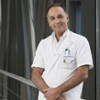 Ian Alwayn
 -
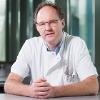 Sander Dijkstra
 -
Higher CO2 levels are making our food more calorific and less nutritious Food crops
More CO2 in the atmosphere is making food crops more calorific, less nutritious and potentially more toxic.
-
Survey: Leiden students want to learn more about sustainability in their studies
Students at Leiden University believe that their degree programmes should focus more on sustainability. These are the findings of a survey of more than 550 students by Leiden University Green Office.
-
More pubs on campus? Here's why students and staff care
There should be more social meeting places on our campus. That's one of the outcomes of to the second brainstorming session on the strategic plan. On Tuesday, education and the campus took centre stage during the meeting in Corpus. Professor and programme director Miranda van Eck and student assessor…
-
Artwork in the new Gorlaeus Building: ‘Academics and artists have more in common than we think’
Leiden artist Jos Agasi gets to create the artwork for the atrium of the new Gorlaeus Building. His work was chosen from several entries and will be a real eye-catcher in the building. The artist has a fascination for light and uses it to create works of art with all kinds of materials, objects and…
-
Learn more about your apprenticeship or job options. Visit the Career Days 14-17 April 2025
Education
-
How to make an old antibiotic a hundred times more potent
Nathaniel Martin, Professor of Biological chemistry, wondered what would happen if you take an antibiotic that has been known for 70 years and try to improve it with the latest tools of modern chemistry. Turns out it can become up to a hundred times more potent and prevent the growth of some drug-resistant…
-
A cocktail of chemicals in surface water is more toxic than each substance individually
Pesticides can form a toxic cocktail when they occur in combination in surface water. This is the finding of research that Leiden University and the Dutch National Institute for Public Health and the Environment (RIVM) presented on Monday 14 October. The Dutch Ministry of Infrastructure and Water Management…
-
Let the robot lend a hand in the pharmacy (it’s more sustainable too)
Can a robot help prepare cancer medication in a hospital pharmacy? That’s what hospital pharmacist Tjerk Geersing investigated in his PhD research. He compared manual and automated preparations in terms of quality, efficiency, and safety. He graduated on 19 March.
-
New University Sports Centre officially opened: more than a sports building
Sport brings people together. This became clear on 9 April during the official opening of the new University Sports Centre. In a varied programme with live sports acts and even a basketball session with an Olympic champion, sport, history and human connection came together in a building designed for…
-
 Matthias Barz
 -
University Council at 50: ‘Everything in Leiden was a tad more Leiden’
After the May elections a new University Council has now taken seat. The university democracy is the result of the long-lived national student protests in 1969. Students from Leiden joined the protests for greater representation, although their actions were less revolutionary than at other universities.…
-
programme to established field: ‘Science communication is becoming ever more important’
Anne Land has been working at Science Communication & Society — the department that researches and teaches science communication — for fourteen years. What makes her work special? ‘That moment when students suddenly realise: this is exactly what I want to do.’
-
Towards no more glass in the jam with better X-ray scanners
X-ray and CT scanners are widely used devices in research, diagnostics and the industrial sector. And yet they are not nearly as fast and accurate as we would like. Mathé Zeegers is researching the newest technique in the field at the Centre for Mathematics and Computer Science: spectral X-ray imaging.…
-
Help making higher-education assessments more fair in the age of GenAI
ICT, Security
-
Dutch people are interested in science, but want to be more involved
Citizens still see great value in science communication and want to be increasingly involved in science. This is evident from research by the National Expertise Centre for Science & Society (NEWS) and researchers from the Science Communication and Society department at Leiden University.