261 search results for “chemische we ons” in the Public website
-
Collegecolumn: Cyberveiligheid is een verantwoordelijkheid van ons allemaal, maar hoe doen we dat?
Het zal niemand ontgaan zijn dat de digitale dreigingen blijven toenemen. Uit monitoring door onze cybersecurity-experts blijkt dat er continu wordt geprobeerd om ook onze systemen binnen te dringen. Wat doen wij daartegen en hoe kan jij als medewerker bijdragen aan onze cyberveiligheid?
-
Dirk Bouwmeester in NRC: ‘We understand the quantum world fantastically well—now we still need to grasp the transition from the quantum to the
Recently, Austrian physicists succeeded in placing minuscule metal spheres with a diameter of 0.000008 millimetres into superposition.
-
Critical moments: How do events affect how we should judge the legitimacy of political authorities?
In what ways do historical and current events affect how we should judge the legitimacy of political authorities?
- Kickstart your curiosity and learn about science at one of the many stands
-
Gorlaeus Building Tour
The doors of the new Gorlaeus Building are officially open! With an additional lab wing, new lecture halls and offices, a library, a brasserie, and spaces for student associations, the building offers a vibrant and inspiring environment for research, study, and social interaction. Explore on your…
-
Hall of Fame 2023
In 2023, many of our students and staff won great prizes and secured important research grants.
-
We navel-string bury here
Landscape history, representation and identity in the Grenada islandscape
-
Cohen, The Right-Wing ‘One-State Solution’
Mateo Cohen (research assistant at the Open University of Israel and PhD candidate at Leiden University’s Institute of Political Science) studied arguments articulated by diverse members of the Right-Wing elite in Israel and explains how these views lead to the rejection of a two-state solution and…
-
The power of one qubit in quantum simulation algorithms
Quantum computing is an emerging technology, which holds the potential to simulate complex quantum systems beyond the reach of classical numerical methods.Despite recent formidable advancements in quantum hardware, constructing a quantum computer capable of performing useful calculations remains challenging.In…
-
One million spins as study tools and study objects
.
-
Finding one’s own voice as an indigenous filmmaker
In this dissertation Itandehui Jansen examines the ‘Voice’ of the filmmaker from a political and aesthetic perspective.
-
Andrei Poama for PLOS ONE: Does suffering suffice?
Does suffering suffice? Andrei Poama, Assistant Professor at Leiden University, and Paul C. Bauer, research fellow at the Mannheim Centre for European Social Research, did an experimental assessment of desert retributivism. Their resulsts were published on April 20 on PLOS ONE.
-
Anthe Janssen receives Unilever Research Prize 2014
Anthe Janssen graduated ‘summa cum laude’ for the master’s programme Chemistry.He used NMR methods to gain insight in the syntheses and behavior of bio sugars. With this knowledge future therapeutics and research tools in hemical and medicinal biology can be developed. Anthe was awarded € 2.500.
-
Symposium Diversity and Inclusiveness - Tuesday 14 April 2015
On April 14 we will celebrate the launch of our Faculty action plan ‘diversity and inclusivity’ with a symposium. We will present the action plan and our colleague Professor Tomas Brage will be keynote speaker. He is the Director of Education at the Physics Institute of Lund University in Sweden and…
-
 Reza Shaker Ardekani
Faculty of Social and Behavioural Sciences
-
'We are already 1-0 behind': Perceptions of Dutch Muslims on Islamophobia, securitisation, and de-radicalisation
This article presents the findings of an explanatory study into the perceptions of Dutch Muslims in The Hague concerning pre-emptive counter-extremism and de-radicalisation policies.
-
Are we there yet? Advances in anytime-valid methods for hypothesis testing and prediction
Statistical considerations guide the design and implementation of the experiments that scientists perform. For instance, in a clinical trial about a the efficacy of a treatment, its effect in a certain minimum amount of patients has to be observed in order to make confident assertions about the efficacy…
-
 Ineke van der Ham
Faculty of Social and Behavioural Sciences
-
Is it one Nile? Civic engagement and hydropolitics in the Eastern Nile Basin: the case of Egypt, Sudan and Ethiopia
What determines civic engagement in transboundary hydropolitics and why has it been muted in the Eastern Nile Basin?
-
launches Vision on Student Well-Being: ‘An open culture where we look out for one another’
How can we work together to create a safe study and learning environment and offer students the support that they need? The Vision on Student Well-Being outlines the University’s plans to promote student well-being in the coming years.
-
Roitman & Veenendaal, 'We Take Care of Our Own'
Jessica Vance Roitman and Wouter Veenendaal, researchers at the KITLV/Royal Netherlands Institute of Southeast Asian and Caribbean Studies, investigate the origins, development, and consolidation of political oligarchy in the Caribbean island nation of St. Maarten.
-
The Story of Constitutions: Discovering the We in Us
Today, 189 out of 193 officially recognised nation-states have a written constitution, and 75% of these have been ratified since 1975. How did this worldwide diffusion of constitutions come about?
-
 Maia Casna
Faculty of Archaeology
-
 Sjoerd Lindenburg
ICLON
-
Veronica Janssen
Faculty of Social and Behavioural Sciences
-
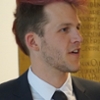 Henning Basold
Faculty of Science
-
Five languages in one poem
In the Bachelor Honours Class ‘The Noble Art and Tricky Business of Translation’, Honours students learn about the tricky business of translation. To gain hands-on experience, students had to translate a poem for the seminar on poetry. For some translators-to-be, one language was simply not enough.
-
Plasmonic enhancement of single-molecule fluorescence under one- and two-photon excitation
This thesis aims to improve the detection from ultra-weak single emitter by enhancing their emission properties with plasmonic nanostructures. We exploit the wet-chemically synthesized single crystalline gold nanorods (GNRs) as our basic frameworks in the whole studies, simply because of their unique…
-
One-year practice effects predict long-term cognitive outcomes in Parkinson’s disease
Up to 50% of individuals with Parkinson's disease develop cognitive impairment over time; this study explores the use of 'practice effects' on neuropsychological tests as an early predictor of cognitive decline.
-
One day conference Jakarta, 7 April 2016
- Presentations - Report
-
 Aris Politopoulos
Faculty of Archaeology
-
Three courts and one standard
On Thursday 27 October 2016 Alke Metselaar will defend her PhD dissertation ‘Drie rechters en één norm. Handhaving van de Europese staatssteunregels voor de Nederlandse rechter en de grenzen van de nationale procedurele autonomie’ (Three courts and one standard. Enforcement of European state aid regulations…
-
Smart design carries sound one way
A new computer simulation shows the promising possibilities of the booming field of topology. Smartly designed mechanical structures carry sound exclusively one way and are immune to fabrication errors. Publication on 17 July in Nature Physics.
-
One year of dissemination and engagement
Besides the project Conference and Winter School, the Food Citizens? research has profiled in numerous societal and interdisciplinary venues, online and offline, over the last year. Here is a brief summary with linked online resources.
-
‘We’re already at war – we’re just acting as though we’re not’
Professor of International Relations Daniel Thomas is clear: anyone taking peace in Europe for granted is shutting their eyes to reality.
-
Dutch National Student Orchestra: one big party
The Dutch National Student Orchestra will be going on tour again in February. Before that, they will have ten days of rehearsals. The level is high and taking part means a total immersion in music.
-
1200 North Korean posters in one database
Korea specialist Koen De Ceuster has combined 1200 posters from North Korea in one database. He believes the posters are extremely valuable for researchers who want to make a more in-depth study of this closed country. The database will be launched on 15 June in Leiden.
-
Can we do without bureaucracy?
Nobody likes it, but we do need bureaucracy, is Sandra Groeneveld's message in her inaugural lecture. Her advice is that we just need to handle it differently and should invest in people's behaviour, rather than focusing on strict rules.
-
Learner–learner interaction in digital learning environments: what and how are we measuring?
Galikyan’s dissertation examines how the multidimensionality of learnerlearner interaction data and the multifacetedness of learner-learner interaction itself impact the measurement of learner-learner interaction in digital learning environments.
-
Five years after Covid‐19: What have we learned (and forgotten)?
This article reflects on the lessons of COVID-19 five years on. The crisis exposed deep vulnerabilities in health systems, governance, and social cohesion.
-
‘If we want to be really inclusive, we need to step outside our comfort zone’
The experiential expertise of people with a disability needs to be integrated in diversity & inclusion policy. This message was the common thread at the annual Diversity & Inclusion symposium. Students and staff members engaged in conversation about how the university can become more accessible.
-
Leiden one of ten BiodiverCities in Europe
Leiden has been selected as one of ten cities in the European BiodiverCities project. The aim of the project is to increase the quality of life in these cities, for instance by developing a green infrastructure and enhancing biodiversity. The Municipality of Leiden will work together with Naturalis…
-
"No one has yet determined what the body can do": the turn to the body in Spinoza
A comparative study in the History of Modern Philosophy focused on the recourse to physiology on the part of two key figures, Spinoza and Nietzsche.
-
Leiden University and LUMC join Netherlands Centre for One Health
Leiden University and Leiden University Medical Center have joined the Netherlands Centre for One Health (NCOH), further strengthening the academic network in which such problems as antimicrobial resistance are studied.
-
Making everything we know computer-readable
Data and information should be stored in a way that computers can understand, says Barend Mons, professor of Biosemantics at the Leiden University Medical Center and Chair of the High Level Expert Group for the European Open Science Cloud. We speak with him about FAIR data, knowlets and nanopublicat…
-
My favourite spot: one for the coffee lovers
'This one is really for the coffee lovers out there, but tea drinkers and co. need not tune out because this spot has got more to offer than just coffee.' Rachel Quennell, student of International Studies in The Hague, is a mine of information for lovers of good coffee.
-
Light particles lined up one after the other
In Leiden, light particles march into Wolfgang Löffler’s experiments one by one. His research focuses on acquiring the fundamental knowledge needed to develop quantum computers and networks.
-
‘We are researching digitalisation in the city’
Liesbet van Zoonen is Director of the Leiden-Delft-Erasmus Centre for BOLD Cities. The Centre was founded in 2016 and has made a name for itself with such innovations as data walks and the ‘Your Neighbourhood – Your Data’ game and conducts research together with the Statistics Netherlands (CBS) and…
-
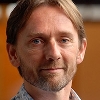 Olaf Kaper
Faculty of Humanities
-
 Michael Richardson
Faculty of Science