343 search results for “sun and spoken version” in the Staff website
-
Outer solar system possibly formed by a passing star
The many thousands of small celestial bodies beyond Neptune’s orbit may have ended up there due to a star that passed close to the solar system billions of years ago. This is shown by Leiden simulation expert Simon Portegies Zwart, along with his German and Dutch colleagues. ‘We are answering several…
-
ERC Starting Grants for seven Leiden researchers
Seven researchers from Leiden University have been awarded an ERC Starting Grant. This will enable them to start their own project, build their research team and put their best ideas into action.
-
Vacancy: Part-time Programme Assistant Position: Advanced MSc International Relations and Diplomacy
Education, Organisation, Human resources
-
Editing workflow
Whatever editing programme you choose to work with, an editing project generally follows the same workflow. Below you will find more information about each step in the editing process.
-
Digital assessments
Tests and assessments give you a better idea of how well students are doing. Keep reading to find out which ICT resources are available for the various assessment methods.
- Reporting fraud and plagiarism
-
Planet found too big for its parent star
The discovery of a planet far too large for its sun defies models about the formation of solar systems and planets. In a paper in Science, researchers, including Yamila Miguel of Leiden Observatory, report the discovery of a planet more than 13 times heavier than Earth orbiting the ultracool dwarf star…
-
Evidence of a massive stellar storm on a nearby star
Astronomer Joseph Callingham and his team have observed for the first time a clear signal from a giant burst from a star outside our solar system. This would have a devastating impact on any unfortunate planet orbiting the star.
-
From Azerbaijani to Swedish: ‘Multilingualism improves your understanding of others’
September 26 is the European Day of Languages. There are 24 official languages in Europe but some 200 languages in total are spoken on our continent. What good are all these different languages? And should we all learn Azerbaijani or Swedish? We asked Lisa Cheng, Professor of General Linguistics.
-
For the first time, astronomers witness the dawn of a new solar system
International researchers have, for the first time, pinpointed the moment when planets began to form around a star beyond the Sun. Using the ALMA telescope, in which the European Southern Observatory (ESO) is a partner, and the James Webb Space Telescope, they have observed the creation of the first…
-
Workshop: Arabic manuscripts and how to read them
Workshop
-
MIRD student Ricardo: ‘Students can change the world’
During International Student Week, from 14 to 18 November, we would like to put our international students into the spotlight. Ricardo Alexandre de Jesus Vaz (21) from Portugal is in his first year at FGGA and a student in the Master International Relations and Diplomacy (MIRD).
-
LACDR Barbecue
After two years the LACDR Barbecue took place again on Monday the 20th of June. This was a great success. In the sun while enjoying a drink and nice food, everyone had the opportunity to talk to each other again during a social event. Thanks again to everyone who helped during this event.
-
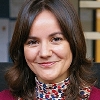 Maria del Carmen Parafita Couto
Faculty of Humanities
-
Students for Palestine panel discussion in The Hague on 24 May
Students for Palestine – a group of students from Leiden and The Hague – are holding a panel discussion in the Leiden University in The Hague Wijnhaven building on Tuesday 24 May entitled ‘Silencing Palestine’.
-
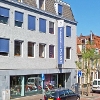 Plexus Student Centre
Kaiserstraat 25, Leiden
-
 Wijnhaven
Turfmarkt 99, The Hague
-
How did Proto-Indo-European reach Asia?
Five thousand years before the common era (BCE), Proto-Indo-European, the mother of many languages that are spoken today in Europe, Central Asia and South Asia, originated in eastern Europe. PhD candidate Axel Palmér has combined a 175-year-old hypothesis with new techniques to demonstrate how descendants…
-
Summer opening hours Leiden University College
Facility
-
Podcast: Self-image and study choice
Laura van der Aar talks about the role of self-image in making decisions for future education. In her research, Laura investigated the importance of paying attention to the development of self-image, and how this can better support teenagers in their study choice.
-
Do you want to share your thoughts about teacher development?
Education
-
Nancy Kula: ‘Languages are very diverse’
Nancy Kula has been Professor of African Linguistics since 1 February. Now is a good time to hear more about her field of expertise and academic interests.
-
Policing in the US: What’s Feminism Got to Do with It?
Lecture
-
Measuring the pull of gravity on a micron-sized particle
Tjerk Oosterkamp of the Leiden Institute of Physics managed to do the first-ever measurement of gravity on a tiny particle - just 0.43 milligrams - where the quantum regime starts. He explains in Physics World why this is so challenging.
-
Interview Sabine Bos
Sabine Bos
-
Honorary doctorate for Canadian-American astrophysicist Sara Seager
Leiden University will confer an honorary doctorate on astrophysicist Sara Seager for her work on exoplanets.
-
Is the Netherlands a tax haven or not?
No, the Netherlands is not a tax haven, the new State Secretary for Tax Affairs Marnix van Rij said shortly after his introductory meeting with Dutch Prime Minister Rutte. Yet there are numerous reports that describe the Netherlands' role as a tax haven.
-
Multilingualism in young children is a good thing: 'Languages support each other'
During Leiden City of Science 2022, Janet Grijzenhout and Hannah De Mulder will put multilingualism in the spotlight by organising multilingual storytelling afternoons. They hope to show parents that raising children multilingually is achievable as well as beneficial.
-
Sustainability and energy: AI research in Leiden, Delft and Rotterdam
From energy transition to the nitrogen crisis: artificial intelligence can be of great help. Researchers from the three universities in Zuid-Holland are seizing the opportunity. Three of them talk about collaborative research in the AI for Energy and Sustainability focus group within the Zuid-Holland…
-
Vici for Victoria Nyst: 'The history of sign language contributes to identity formation'
Victoria Nyst's love for sign language was sparked when she accidentally ended up at a deaf school while studying African linguistics. The university lecturer has since been awarded a Vici grant to research the history of these languages.
-
Jenneke van der Wal wins Ammodo Science Award: ‘Especially unstudied languages contribute to theory building’
For associate professor Jenneke van der Wal, things have been good recently. After being awarded a Vici and Una Europa grant, she has now also received an Ammodo Science Award. ‘It is a nice confirmation that I am doing valuable work.’
-
How AI helps map sign languages
Like spoken languages, sign languages evolve organically and do not always have the same origin. This produces different ways of communication and annotation. Manolis Fragkiadakis wrote his PhD thesis on this.
-
How seals point to an undocumented prehistoric language
Language can be a time machine: we can learn from ancient texts how our ancestors interacted with the world around them. But can language also teach us something about people whose language has been lost? PhD candidate Anthony Jakob investigated whether the languages of prehistoric populations left…
-
Michaël Peyrot appointed professor: 'We have a bright future ahead of us'
Michaël Peyrot has been appointed professor of Comparative Indo-European Linguistics at the Leiden University Centre for Linguistics with retroactive effect from 1 January. He is looking forward to passing on his love for the subject to a new generation of students.
-
Leiden Legal Technologies Program runner up for Gouden Zandloper
The Leiden Legal Technologies Program is runner up for the Gouden Zandloper (Golden Hourglass) for Legal Education & Research, the prize for the most innovative legal programme.
-
Staff Ombuds Officer publishes annual report
Organisation
-
Last starlight for space telescope Gaia
ESA’s space telescope Gaia, which maps the Milky Way, completes its active phase of scanning the sky on 15 January. Over the past decade, Gaia has made more than three trillion observations of about two billion stars and other cosmic objects. ‘Gaia is already the discovery machine of the decade,’ Leiden…
-
Keep it cool in this warm weather: tips for a cool(er) workplace
Facility
-
Homo erectus discovery in Indonesia features in news stories world wide
The Leiden archaeologist Harold Berghuis was closely involved in archaeological discoveries off the coast of Java. Skull fragments and other fossil remains provide new insights into the world of Homo erectus. The discovery was the subject of numerous news reports.
-
In memoriam Emile van Rouveroy van Nieuwaal (1939-2025)
On 4 December Professor Emile van Rouveroy van Nieuwaal passed away. Van Rouveroy van Nieuwaal worked at the African Studies Centre from 1967 to 2002, when the ASC was not part of Leiden University yet. He became professor by special appointment at Leiden University on behalf of Leiden Law School in…
-
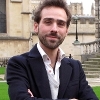 Max van Duijn
Faculty of Science
-
Dutch knowledge institutions suspend partnerships with Russia and Belarus
The Russian military assault on Ukraine has profoundly shocked knowledge institutions in the Netherlands, as represented by Universities of the Netherlands, the Netherlands Association of Universities of Applied Sciences, the Royal Netherlands Academy of Arts and Sciences, the Dutch Research Council,…
-
Wat ging er mis bij het pleegmeisje uit Vlaardingen?
Hoogleraar Jeugdrecht Mariëlle Bruning vertelde in Met het Oog op Morgen over schadelijke patronen in de pleegzorg.
-
Star birth: a slow and mysterious drama
A star does not just appear in the sky overnight. Its creation takes tens of thousands of years. Twenty years ago, astronomers took a picture of a star in its birth phase. The James Webb Space Telescope (JWST) could now capture that same star in much greater detail. This does not only provide beautiful…
-
Celebrating female computer scientists: ‘Computer science is for everyone’
Four female computer scientists share a common goal: to showcase the significant contributions of women in computer science and inspire their students. Together, they are organising this year’s Alice & Eve event, a one-day symposium dedicated to celebrating women in computer science. The event, scheduled…
-
Finding the origin of giant black holes
‘Space Antenna LISA will open an unprecedented window on the Universe,’ says astronomer Elena Maria Rossi. The mission will be the first one to detect Gravitational Waves from space. These can tell us more about the beginning of our Universe and the formation of black holes. With an NWO grant of twelve…
-
Stunning James Webb images show birth and death of massive stars
The James Webb Space Telescope continues to surprise us with stunning pictures, but of what exactly? Astronomer Nienke van der Marel shows with three images how massive stars lead short but explosive lives.
-
Researcher teaching in the classroom: ‘We need to imitate nature more closely’
How can we supply the growing world population with sustainable energy? At Laurens College in Rotterdam, Prof. Marc Koper speaks with the students about the crucial role of chemistry in the energy transition. Guest classes like this are a good way for school students to learn about the academic world,…
-
Archaeologists in action: stories from the field
During the summer, staff and students of the Faculty of Archaeology travel to all parts of the world, initiating or joining fieldwork projects. Read some of our students' stories here!
-
Introducing: Lewis Wade
Lewis Wade has been a Postdoctoral Researcher at the Institute for History since 1 September 2023. Below he introduces himself.