1,840 search results for “studies” in the Organisational structure
-
 Amalia Campos Delgado
Faculteit der Rechtsgeleerdheid
-
 Matthew Broad
Faculty of Humanities
-
 Lidewyde Berckmoes
Afrika-Studiecentrum
-
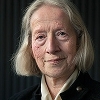 Corrie Bakels
Faculty of Archaeology
-
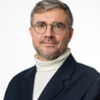 Henning Lahmann
Faculteit der Rechtsgeleerdheid
-
 Nico Schrijver
Faculteit der Rechtsgeleerdheid
-
 Gavin Robinson
Faculteit der Rechtsgeleerdheid
-
 Marlou Schrover
Faculty of Humanities
-
 Chloe Gros
Faculteit der Rechtsgeleerdheid
-
 Rebekka Grossmann
Faculty of Humanities
-
 Roos Stolker
Faculty of Governance and Global Affairs
-
 Jaap Corthals
Faculty of Governance and Global Affairs
-
 Maaike de Waal
Faculty of Archaeology
-
Clusters
All members of the Institute’s scientific staff are a member of one of its clusters, which serve as a forum for the coordination and further development of teaching and research. The Institute has three clusters: International Relations and European Politics Comparative and Dutch Politics Security and…
-
Sterrenkunde (BSc)
Contacts for the bachelor's programme Sterrenkunde. Education Office Astronomy Director of education BSc Dr. Michiel Hogerheijde Education Coordinator Martijn Lukkien Study Advisor Wouter Schrier, MSc Student Affairs Officer Bachelor Willemijn van Rijn, MA Student Affairs Officer Master Kim Nguyen,…
-
Astronomy (MSc)
Contacts for the master's programme Astronomy. Education Office Astronomy Director of Education MSc Dr. Reinout van Weeren Education Coordinator Martijn Lukkien Study Advisor Wouter Schrier, MSc Student Affairs Officer Master Kim Nguyen,…
-
Ombuds officer
The University Ombuds Officer deals with complaints from students who believe they have not been treated fairly by a university staff member or administrative body. Students can submit a complaint up to 12 months after the incident occurred, even if they have since completed their studies. The Ombuds…
-
Human Resources
The faculty's Human Resources Department advises and supports the Faculty Board and management staff at the institutes and staff departments on personnel matters, organisational development, staff planning, recruitment and selection, employment conditions, job classification, sickness absence, dismissal…
-
Liberal Arts & Sciences
A liberal arts and sciences education is “an approach to learning that empowers individuals and prepares them to deal with complexity, diversity, and change. It provides students with broad knowledge of the wider world (e.g. science, culture, and society) as well as in-depth study in a specific area…
-
Programme Committee
The Programme Committee of the Institute of Education and Child Studies advises the institute and faculty councils about everything that concerns education. Furthermore, the Programme Committee actively contributes to quality assurance of the Institute’s bachelor’s and master’s programmes.…
-
Research
Leiden Law School has four overarching, interdisciplinary research focus areas: Sustainability and law Technology, law and justice Trust in institutions Law and empirical research
-
Industrial Ecology (MSc)
Contacts for the master's programme Industrial Ecology. General contacts Programme Director Dr. A. Ghorbani Programme Coordinator Drs. Paula van den Berg and Marleen Zwetsloot MSc Study Advisor Drs. Paula van den Berg and Marleen Zwetsloot MSc Board of Examiners Dr. Ir. A. de…
-
Members of the Boards of Examiners
Faculty Board of Examiners Dr. J. Robbe - chairman Professor C.G. Breedveld-de Voogd (LAW) - vice chairman Dr. M.P. de Jong-de Kruijf (Child Law) Dr. R.M.F. de Massol de Rebetz LLM (Law and Society) Dr. Q. Mauer (Law and Society) Dr. I. de Vries (Criminology)…
-
Department of Research
The department of research is responsible for organisational and policy support of research within Leiden Law School. The department manages the registration of faculty research and is responsible for (internal) evaluations for the purpose of research assessments. The department provides…
-
Wiskunde (BSc)
Main contacts for the bachelor's programme Wiskunde are: General contacts Director of Education Dr. Martin Bright Education Coordinator Laura van Kempen-Helmsing Study Advisors Dr. Onno van Gaans (year 1) Dr. Mark Roelands (year 2 and 3) Student Administration Tatjana Stojcheska…
-
Molecular Science and Technology (BSc)
Contacts for the bachelor's programme Molecular Science and Technology (MST). General contacts Director of education Dr.ir. Volkert van Steijn (TU Delft) Education coordinator Dr. Michael Meijer Study Adviser Marjolijn Hinke-van Delft, MSc Drs. Marielle Nijsten Board of Examiners…
-
Education and Student Affairs
Education and Student Affairs is responsible for the support of all Education processes at the Faculty of Archaeology. We work according to a service agreement. Our main tasks are: Curriculum coordination and administration Student advice Support of several educational committees Advice on educational…
-
Application procedure
You can submit an ethics review request by filling out the ethics review request form and mailing it to ethiekmaatschappijwetenschappen@FSW.leidenuniv.nl. Before submitting an ethics review request, please consult the Ethics Review Committee of the Social Sciences Ethics Procedure and Questions…
-
Biology (BSc)
Contacts for the bachelor's programme Biologie. General Contacts Director of education Bachelor Maurijn van der Zee Policy officer Karin van Wanrooij Study Advisor Veli Yavuzturk Internship Coordinator BSc/MSc Education Coordinator Judith Jongenelen Teachers' Support …
-
Computer Science (MSc)
Contacts for the Master's programme in Computer Science. General contact Director of Education Dr. M. van Leeuwen Education Coordinator M.A. Tijmensen Study Adviser S.N. van der Valk
-
Boards of Examiners
De examencommissie van de Faculteit der Rechtsgeleerdheid zorgt voor de effectieve organisatie van alle tentamens en examens.
-
Course and Examination Regulations Archaeology
The outline of the programme is documented in the Course and Examination Regulations (OER). These regulations state the students' most important rights and obligations, with respect to the following (among others): How, when and how often can an exam be taken? Structure of the studies How long will…
-
Marketing & Communication
The Marketing & Communication Department handles marketing and communication for both students and staff in close cooperation with the institutes and central departments. The department focuses on student recruitment, science-, internal and social media communication. It also regularly sends out…
-
Bioinformatica (BSc)
Attention: Starting from the academic year 2023-2024, the first and second years of Bioinformatics will be part of Biology. The third year will still be part of Computer Science. Below are the contacts for the Bachelor's program in Bioinformatics. General contacts Director of education Dr. F.…
-
Electoral system
Leiden University has both a list system and a candidate system for elections. Co-participation councils decide for themselves which system they will use. List system The list system places the emphasis on the lists. Voters select one candidate on one list. Therefore by selecting a candidate, they also…
-
Bio-Farmaceutische Wetenschappen (BSc)
Contacts for the bachelor's programme Bio-Farmaceutische Wetenschappen (BFW). General contacts Director of education Prof.dr. R. Ramautar Head of education office Dr. M. Huigsloot Education coordinator R.M.A. de Vree, MA Study Adviser Drs. G.H. Degenaars Dr. J.D. Kruijer Board of Examiners…
-
Code of Conduct for Students of the Faculty of Humanities
The motto of Leiden University Praesidium Libertatis (“Bastion of Freedom”) means that we are committed to fostering an inclusive and safe learning and working environment that is conducive to academic inquiry and the free exchange of ideas. To create such an environment, the Faculty of Humanities expects…
-
National Sector Plans
Research conducted at Leiden Law School is closely aligned with research themes in the fields of social sciences and humanities within the National Sector Plans in the Netherlands. Through the sector plans for scientific research and university education launched in 2022, the Dutch government…
-
Programme Committee
Our programmes BSc Security Studies (BaSS) and MSc Crisis and Security Management (CSM) have a joint Programme Committee, composed for the half of students, and half of lecturers. The Education Committee monitors the quality of the programmes and advises the Programme Directors and the Dean on this…
-
Institute Council
The Institute Council consists of 15 members, including 12 members of the academic staff and 3 members from the support and management staff. The membership of the Institute Council is incompatible with that of the Institute Board. Staff members of the Programme Committee can be members of the Institute…
-
Participation: Students' Council
The Students’ Council (SR) is a representative advisory body in the LUMC. The council represents all students in the LUMC’s study programmes: Biomedical Sciences, Medicine, Pharmacy, Population Health Management, and Vitality and Ageing and gives (un)solicited advice on all faculty matters related to…
-
Committees
The University Council has set up three committees that will prepare large and/or long-term dossiers for council meetings. Each council member will in principle take part in one of the three committees. Education and Research Committee This committee will deal with dossiers on such subjects as: Study…
-
Polling stations
A polling station exists for every election of the University Council, Faculty Council and Employee Council. The polling station arranges the practical and formal matters regarding the elections, such as inspecting the list of voters, gathering candidate application forms and determining the election…
-
Human Resources
Our team of versatile HR professionals give creative recommendations and solutions that contribute to the organisational goals, job statisfaction and a healthy work climate for all staff at Humanities. The core values of HR: Approachable, independent, honest, making connections and development-orien…
-
Bachelor's Programme Committee
The Bachelor's Programme Committee is responsible for the constant process of adjusting and modifying the education programme, for instance, by means of education evaluations, both small-scale and large-scale. The Committee is concerned with: possible overlap between courses, whether courses follow…
-
Master's Programme Committee
Contributing ideas and discussing the master program, that is the job of the Master Program Committee (MOC). The Master Programme Committee is looking for new student members. Are you a Psychology master student and are you willing to improve education? Then apply now to become a part of the Committee. …
-
Leiden Law PhD Community (LLPC)
The Leiden Law PhD Community (LLPC) comprises all internal and external PhD candidates based at Leiden Law School. By organising social events, we aim to create a welcoming community for PhD candidates and encourage them to connect with other PhD candidates across Leiden Law School. PhD candidates are…
-
Education
On this page you can find resources for ethical research and teaching for both lectures and students. Checklist ethics for students Ethical dilemmas for lecturers and students
-
Arbitration Committee
Since 1 January 2020, the Collective Labour Agreement for Dutch Universities (CAO NU) has provided an option for staff members to submit certain employment-related decisions taken by their manager or the University to an Arbitration Committee. Arbitration Committee Mr. O. van Loon (Olaf) Chair and member…
-
Communication & Marketing
The Marketing & Communications Department of the Faculty of Governance and Global Affairs (FGGA) supports the Faculty Board and Faculty Office, as well as the two centres, the Dual PhD Centre, the Centre for Professional Learning, and the three institutes of the faculty: the Institute of Security…