963 search results for “must” in the Student website
-
First-Year students
Studying is already a lot of work, so on this page you'll find the most sought-after information for first-year students. Do you feel something important is missing? Let us know via the feedback button, and we'll improve it for the next student.
-
Programme
When deciding what to study you undoubtedly read a lot of information about your study programme. Leiden University employs various systems to provide information about programmes and courses and to facilitate communication between lecturers and students.
-
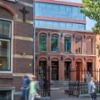 Schouwburgstraat
Schouwburgstraat 2, The Hague
-
Arranging graduation
You're about to graduate. That means there’s a lot to be arranged. The university expects you to take certain steps, as does your faculty and/or institute. Your faculty has various regulations and procedures in place that you need to follow carefully when arranging your graduation.
-
Course and exam enrolment
Course and exam enrolment
-
Internships, research, fieldwork, summer schools and more
internship, research project, fieldwork, summer school, conference, excursion, field trip, thesis
-
Internships and research in the Netherlands
How can you find an internship or research project and what arrangements do you need to make?
-
Binding study advice (BSA)
As a bachelor’s student at Leiden University, you will be issued with binding study advice (BSA). This means you must obtain sufficient study credits in the first year of your bachelor’s programme to be permitted to continue studying. Some programmes also have additional requirements.
-
To arrange upon your return
To arrange upon your return
-
Sustainable Humanities Internship Fund
Bachelor, Master
-
Thesis and papers
When writing a thesis or paper you must make good use of the insights you have gained during your lectures and studies so far. You should also refer to relevant literature and carry out your own research on the topic.
-
To arrange upon your return
To arrange upon your return
-
Internships and research in the Netherlands
How can you find an internship or research project and what arrangements do you need to make?
-
Arranging graduation
You're about to graduate. That means there’s a lot to be arranged. The university expects you to take certain steps, as does your faculty and/or institute. Your faculty has various regulations and procedures in place that you need to follow carefully when arranging your graduation.
-
Arranging graduation
You're about to graduate. That means there’s a lot to be arranged. The university expects you to take certain steps, as does your faculty and/or institute. Your faculty has various regulations and procedures in place that you need to follow carefully when arranging your graduation.
-
To arrange upon your return
To arrange upon your return
-
Student finance, benefits and scholarships
As a student, you may be eligible for Dutch student finance if you are a Dutch national or meet other specific criteria. You might also be eligible for rent or healthcare benefits. Planning on studying abroad? In some cases you can also request financial support.
- Anchoring Objects: Material culture and the dynamics of innovation in the ancient world
-
To arrange upon your return
To arrange upon your return
- LUC The Hague: Vacancy Student Assistant DREAM team
-
This shame-free evening also asks a little courage from the audience
At work and in love, shame follows us everywhere. Yet it is precisely by embracing your shame that you can free yourself from it. But how do you do that? You can learn in the new theatre lecture Shamelessly Shame-Free by Professor of Organisational Psychology Aukje Nauta.
-
Statement on Academic Freedom – The Rectors of the Dutch Universities (2025)
Without academic freedom, we might not have antibiotics, nor a deep understanding of human behaviour. Literary criticism, climate models, and ecological restoration would be severely limited; just like ethical reflection on artificial intelligence, justice, trauma, parenting, faith and hope. All these…
-
Julia Cramer in NRC: ‘My goal is to bring quantum technology into society’
‘Quantum technology is going to change the world, but most people don’t feel connected to it. I want to change that,’ says Julia Cramer, assistant professor at Leiden University. Known for her passion for science communication, Cramer actively seeks opportunities to share the wonders of quantum technology…
-
2025 Europe Hub master’s thesis prize accepts submissions
Leiden University’s Europe Hub invites submissions from all faculties for its annual Europe Hub master's thesis prize by 1 September 2025.
-
Governance in motion: How to combine steadfastness with responsiveness
The Dutch polder model has provided stability and administrative calm for many years, but is it still resilient enough to withstand the dynamics of today, or is it ‘too rigid’?
-
Defence Minister at Ukraine Symposium: 'We Europeans have only one chance to get this right'
Three years on, and interest in Ukraine certainly hasn't waned. The auditorium at the Wijnhaven location was fully booked on Monday. Hundreds of people, including top military brass, listened to Defence Minister Brekelmans' speech. He pointed out to them: 'Here in the Netherlands, we're now living in…
-
This is how artificial and human intelligence work together to strengthen democracy
How should the municipality of Eindhoven organise the reception of asylum seekers? What is the best electoral system for the Dutch Parliament? Governments regularly ask citizens for their opinions. Computer scientist Michiel van der Meer has improved the method used for citizen assemblies. He will defend…
-
Ethical guidelines to better regulate DNA research on human remains
Rapid developments in DNA techniques allow researchers to find out more and more about human genetics. An international group of scientists has drawn up five ethical guidelines to ensure that this DNA research is better regulated. Leiden archaeologist Marie Soressi – one of the signatories - explains…
-
How can the humanitarian disaster in Gaza be stopped?
Famine, bombing of civilians and the almost complete destruction of Gaza. The world looks on at an unfolding humanitarian disaster. Why have our international organisations failed to prevent this tragedy? An interview with Professor Jan Aart Scholte, an expert on globalisation and global democracy.
-
Health and safety
Health and safety
-
Financial support for delayed study progress
Financial support for delayed study progress via regulations on financial support for students (FOS)
-
Second- and Third-Year students
Studying is already a lot of work, so on this page you'll find the most sought-after information for second- and third-year students. Do you feel something important is missing? Let us know via the feedback button, and we'll improve it for the next student.
-
Studying with autism spectrum disorder (ASD)
Autism spectrum disorder, or ASD, is the term for a range of neurodevelopmental conditions or differences which can impact your studies at Leiden University.
-
Studying with dyslexia
Dyslexia is a learning disorder which is common among students and can impact your studies at Leiden University.
-
Studying with ADHD and ADD
AD(H)D stands for Attention Deficit(-Hyperactivity) Disorder, which is a common disorder that can impact your learning at Leiden University.
-
Violations of law during armed conflicts should be investigated – also by Russia
The chance that it will do so is about zero, but Russia is legally obliged to investigate violations of law during the war in Ukraine. States that enter into an armed conflict often deny liability, but under international humanitarian law and human rights they are obliged to investigate their military…
-
Updated nitrogen map and new strategy: How can we meet the nitrogen targets?
Nitrogen professor Jan Willem Erisman and Ton Brouwer have released a new report presenting scenarios to actually meet the agricultural nitrogen targets for 2030. Their message to politicians in The Hague: ‘Look at this approach — it is possible.’
-
Europe Hub MA thesis prize 2025: Call for Submissions
Education
-
Why is the formation process in Belgium so complex?
The Belgian elections are over. Now it is up to the formateur to form a cabinet, but that is difficult. Fauke Deceuninck, program leader of Politics and Governance at the Center for Professional Learning, explains to Speechmakers why that is.
-
An ethical compass is crucial to intelligence work
Intelligence and security services often operate in the shadows. Michael Kowalski calls for a clear, applied ethical framework as the foundation of intelligence work in a democracy.
-
Jan Willem Erisman on the nitrogen crisis: 'The measurement model works, but the minister is setting reduction targets that are too high'
Opponents of drastic nitrogen measures argue that the nitrogen calculation model is not reliable enough. Nitrogen professor Jan Willem Erisman: 'It is now much more important to discuss the choices we make on the basis of the outcome. The differences are much bigger than the uncertainties in the mod…
-
Cyber Security Governance Essentials
The new minor 'Cyber Security Governance Essentials' will start in September 2021. Third year bachelor students of The Leiden Institute of Advanced Computer Science (LIACS) and of the BSc Security Studies of the Institute of Security and Global Affairs (ISGA) who would like to deepen their knowledge…
-
Leiden Law Cast: Victimisation of sexually transgressive behaviour with Maarten Kunst
Leiden Law Cast is a podcast made by Leiden Law School, Leiden University, for everyone who wants to learn more about current legal issues.
-
The Vanuatu climate case goes far, but not far enough
In a landmark ruling, the International Court of Justice says that states are obliged to protect the climate. Jolein Holtz, a climate and human rights expert, believes the Court is too vague about the impact for future generations: ‘A missed opportunity’.
-
Wouter Hins on NPO Radio 1 about revoking licence of Ongehoord Nederland
The Dutch public broadcasting organisation NPO has asked State Secretary for Culture and Media Gunay Uslu to revoke the licence of Ongehoord Nederland. Wouter Hins, emeritus professor of media law, explains how unique the NPO’s request is.
-
Discontinuation of the Development of the Master’s in Environmental Humanities
In recent months, a number of academics, a sounding board group and the relevant directors of education, in collaboration with Campus The Hague, have been working on the development of a new Master’s programme: Environmental Humanities. With this programme, we aimed to offer a new and necessary perspective…
-
Data Management: Where to permanently store the digital archaeological datasets these days?
It is the end of your archaeological research project, and you may be wondering where to deposit your data. After the excavation, all of the finds are drawn, scanned, digitised, and the database is completed. Perhaps you have also accumulated a lot of data through further scientific analysis of the…
-
Hunting of European straight-tusked elephants was widespread among Neanderthals 125,000 years ago
Finds uncovered in the east of Germany show that Neanderthals stored and preserved vast amounts of meat and/or temporarily aggregated in larger groups to exploit the spoils
-
Jaap de Hoop Scheffer on Europe’s role in an uncertain world
At Leiden University College, Jaap de Hoop Scheffer urged Europe to show unity and strength in a world defined by fear, power politics, and uncertainty.
-
Hossam Ahmed: ‘Listen to your students’
Three Humanities lecturers received the Senior Teaching Qualification (SKO) this year. Lecturer Hossam Ahmed is one of them. What does he think makes for good education?