Lezing | YAL & Studium Generale
Time Talks: tijdsbeleving in verschillende vakgebieden
- Datum
- woensdag 20 mei 2026
- Tijd
- Toelichting
- Graag aanmelden
- Bezoekadres
-
Spui Campus
Spui 5
2511 BL Den Haag - Zaal
- 1B.12
Welke betekenis heeft tijd in de bestudering van taal, het verleden en het universum?
Onderzoekers van de Young Academy Leiden vertellen tijdens dit Engelstalige programma over de rol die tijd in hun vakgebied speelt. Welke betekenis heeft tijd, en hoe hebben mensen door de geschiedenis heen geschreven en nagedacht over tijd, in de sterrenkunde, archeologie, kunstgeschiedenis en taalkunde?
Na korte presentaties gaan de sprekers met elkaar in gesprek over de overeenkomsten en verschillen tussen de beleving van tijd in hun vakgebieden. YAL-onderzoeker Anne Urai modereert dit gesprek. Uiteraard is er ruimte om vragen te stellen.

De presentaties
Dr. Marcel van Daalen - Astronomy
In astronomy and cosmology, we concern ourselves with timescales of many millions to billions of years. In this talk, we compare the time scale of the age of the Universe to historical events on Earth, consider how our solar system will evolve over the next few billion years, and our Universe as a whole over the next tens of billions of years.
Dr. Arjan Louwen - Archeology
In archeology, time is a pivotal concept. It can be approached from many different angles: from old-fashioned typo-chronological schemes (think of how pottery changes over time) to estimate when something was made, to radiocarbon dating. And from reconstructing how people in the past experienced transitions or important moments in life, to time-pressure in commercial archeological field projects. However, the biggest challenge archaeologists face when time is of the essence, is resolution: how much time was involved in something that happened in the past? How long did events take, how quickly did changes happen? How do we begin to grasp that certain amount of time?
Dr. Lieke Smits - Art History
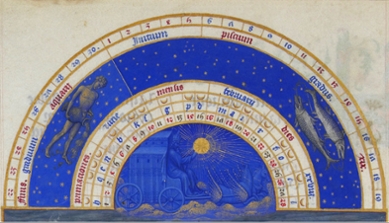
How did people in the late medieval Low Countries structure their days? Time was increasingly measured and monetized. The bestselling book of the period, however, the Book of Hours, promoted time for prayer and contemplation throughout the day. In this talk, we will see how different notions of time existed next to each other and how medieval temporalities inspire present-day philosophers and artists.
Dr. Sara Petrollino - Linguistics
To be announced
This English spoken event is part of the Young Academy Leiden’s Season of Interdisciplinarity: Spring of Time and is a collaboration between YAL and Studium Generale.