

Daan Roovers in the 54th Huizinga Lecture: ‘Democracy is more than winning elections’
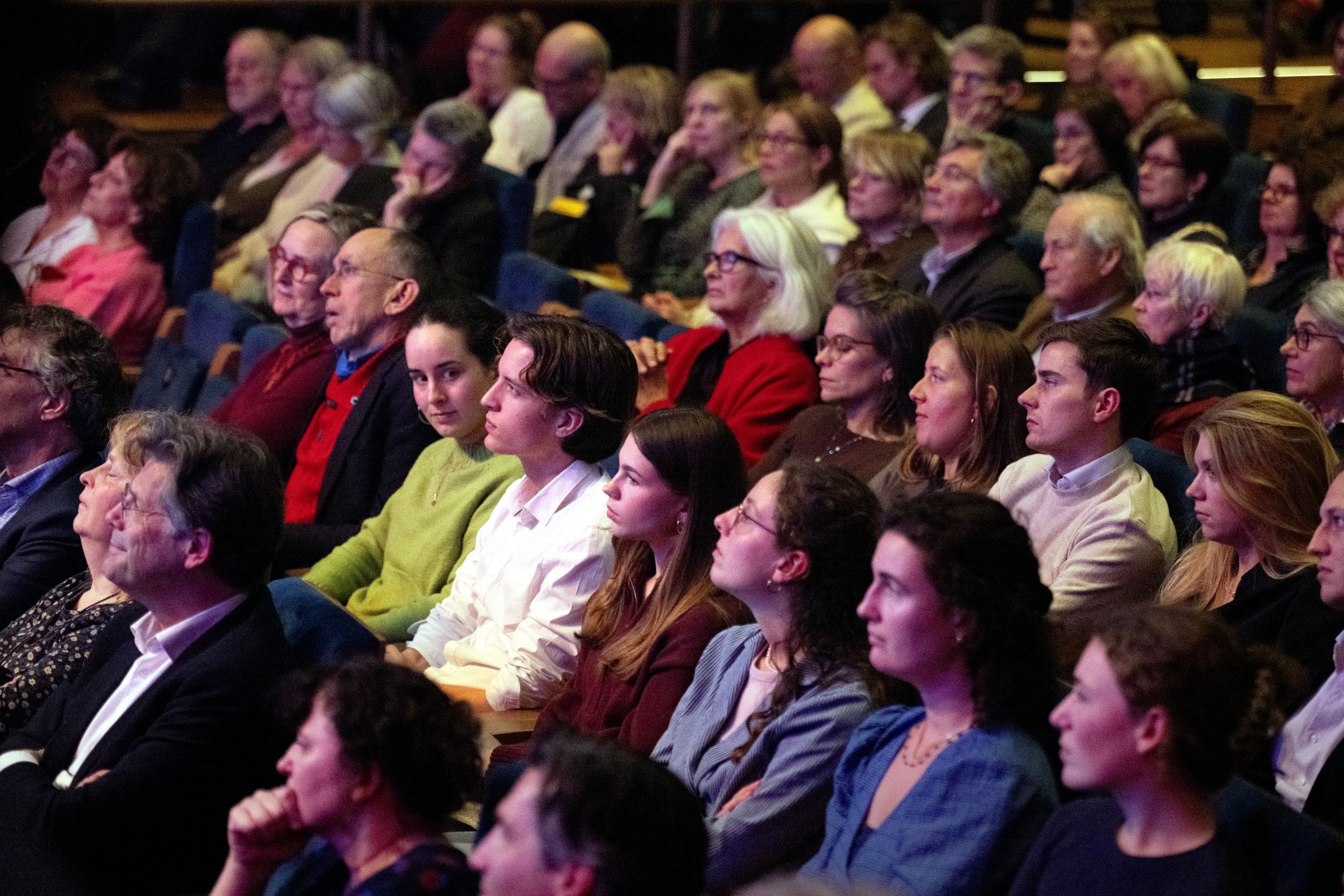
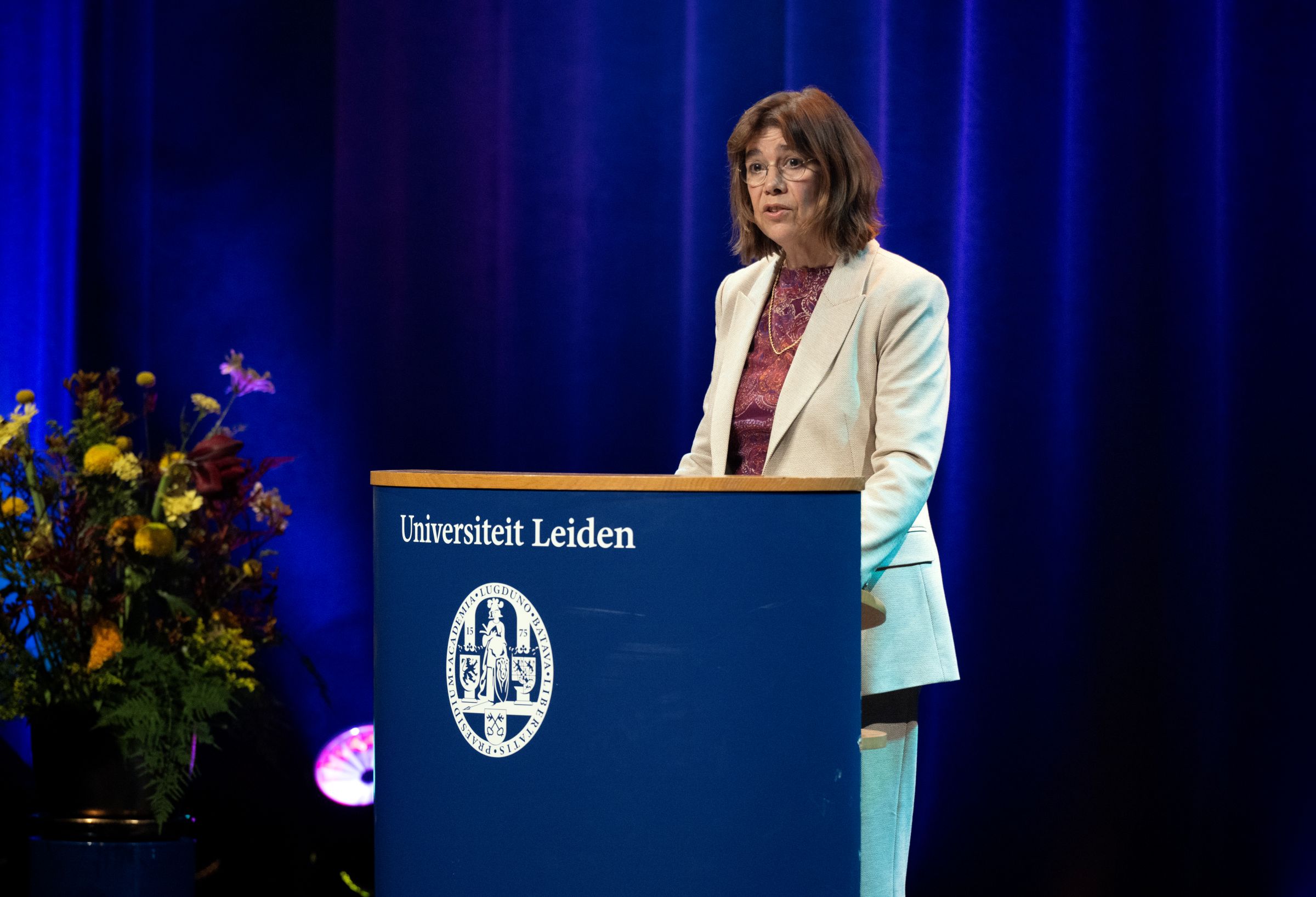
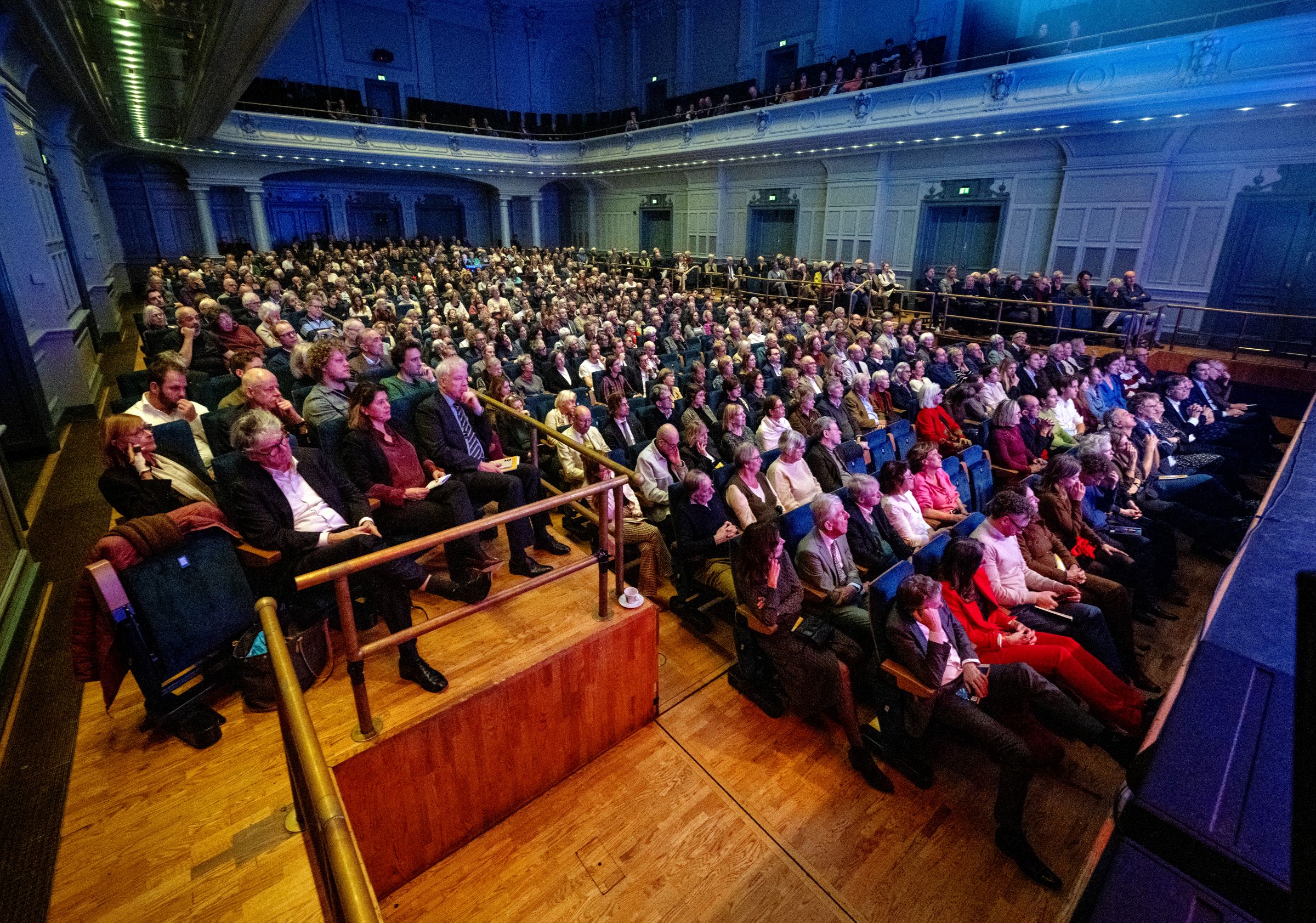
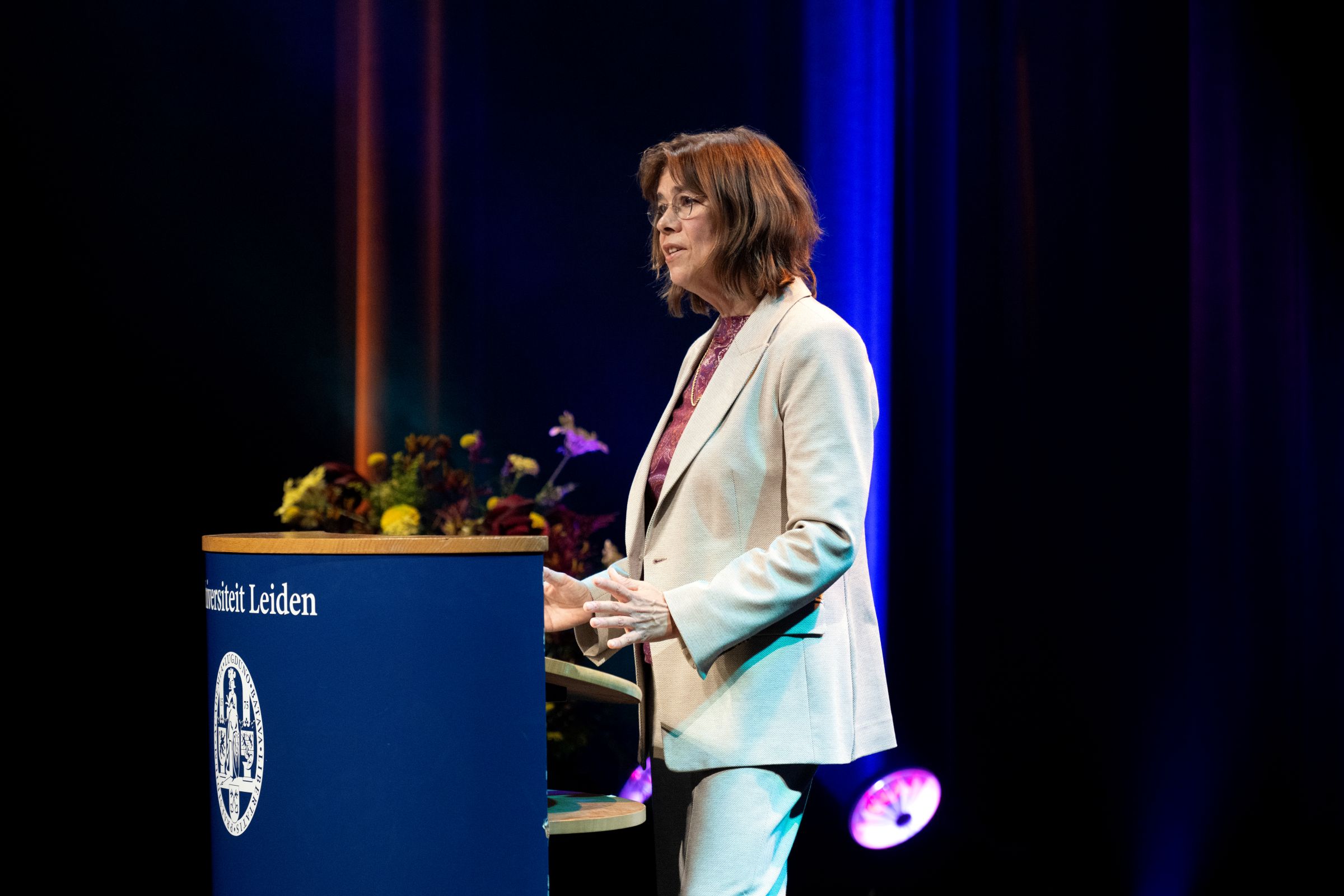
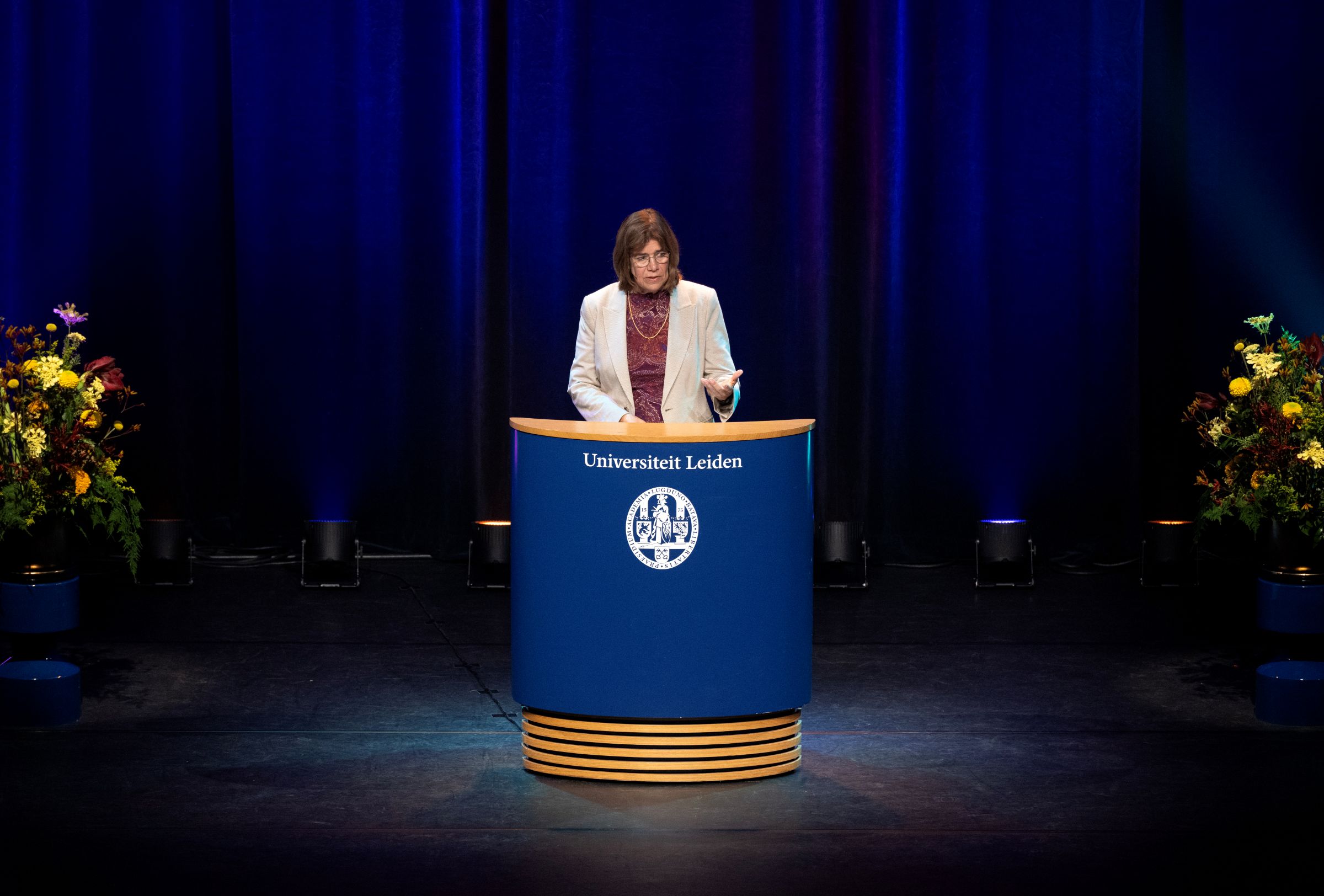
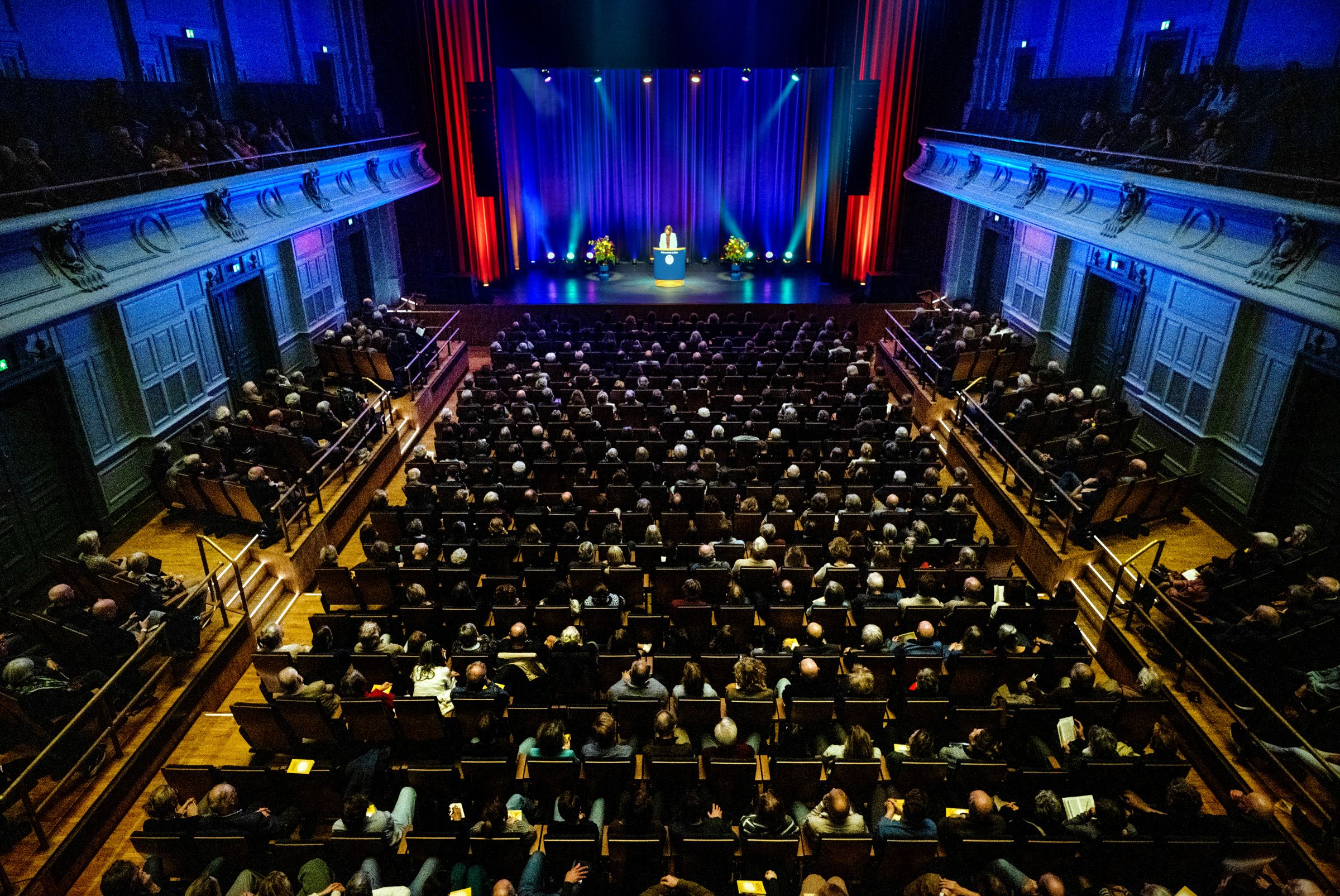
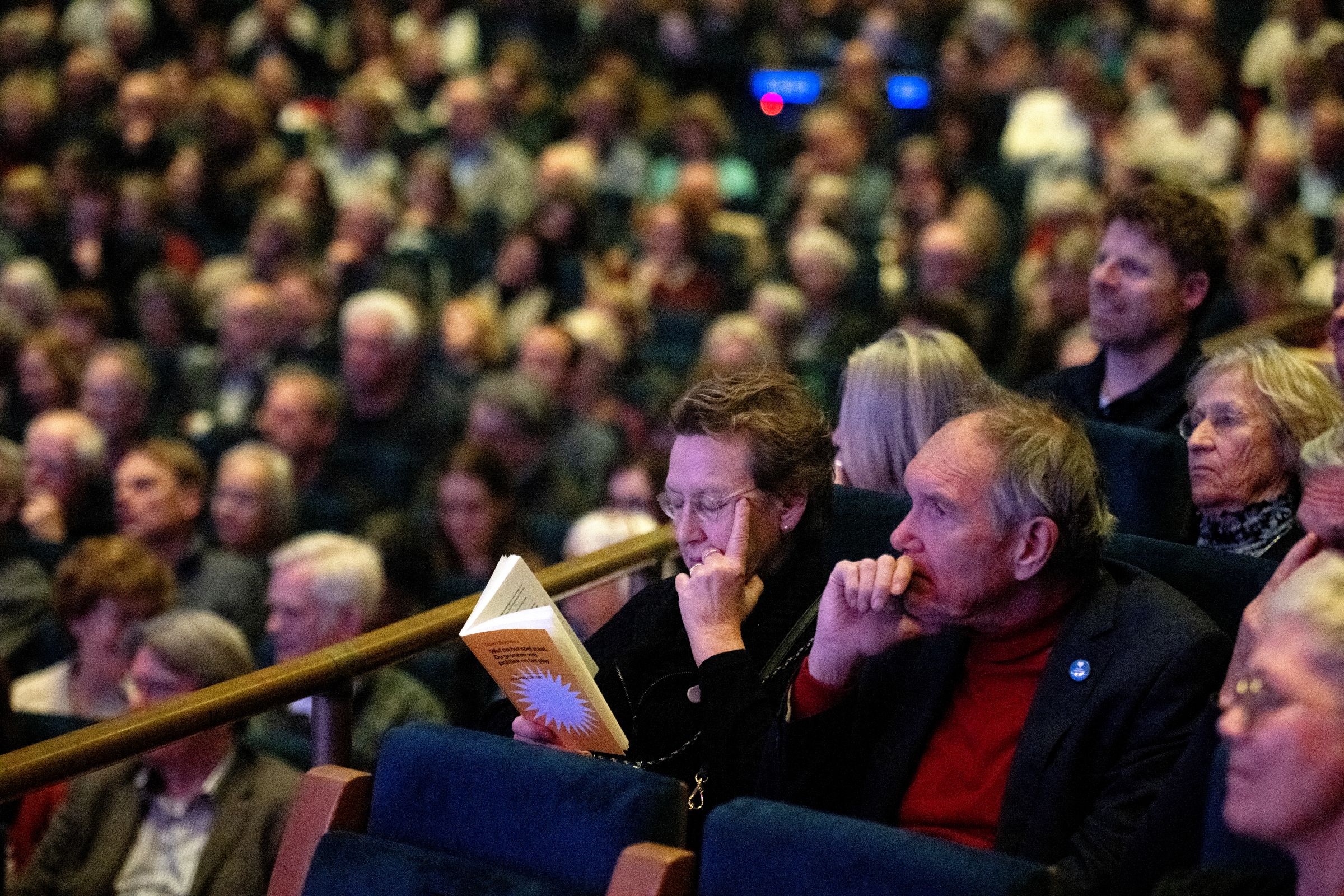
In a packed Stadsgehoorzaal, philosopher and Member of the Senate Daan Roovers delivered the 54th Huizinga Lecture. It was a passionate plea for a form of politics thatt is not only about winning, but also about talking and playing.
In this lecture named after Johan Huizinga, speakers traditionally relate to the work of this historian and former rector of Leiden University. Roovers admitted halfway through the lecture that this was quite a challenge for her. The work had not really grabbed her attention when she first read it, but, and here Huizinga's family members in the front rows could breathe a sigh of relief, she went on: ‘That was down to me.’ On closer inspection, his definition of play proved to be very helpful in understanding the problems of contemporary democracy.
Roovers had already outlined these problems earlier. We are increasingly inclined to equate the means of ‘elections’ with the goal of ‘democracy’. The result is reduced ‘to a single clear statement by the majority, which can then feel justified in silencing the minority.’
From competition to game
In reality, democracy only begins after the elections, Roovers argued, citing Huizinga. The election may be a contest for victory, but it is afterwards that the parliamentary game, ‘filled with rules, rituals, customs and self-imposed conventions’ begins. The aim of that game is not to blindly do what the majority want, but to take decisions that meet the requirements of the rule of law, in which the rights of minorities are also respected. In such an environment, every decision is based not only on a vote, but also on public debate.
That process requires constant protection, as Roovers pointed out when she quoted Dean Henk te Velde. 'Huizinga wanted to take the game so seriously that the (political) game took precedence over partisanship, and in the 1930s that position was directed primarily against the National Socialists. With all the attacks on parliament, it was good that its culture was also defended.'
Political or sports reporter?
Preserving the parliamentary game is a task for politicians and citizens, but also for political journalism, which, according to Roovers, seems to have turned into a ‘particular form of sports reporting.’ Metaphors such as ‘Paris is still a long way off’ and ‘this is a rearguard action’ reduce politics to a competition in which the majority is the only thing that counts. This ignores the political content and risks violating the rights of others. Vigilance is therefore needed. 'Without this ongoing commitment to every word and every law, democracy itself, as a conquest of history, is at stake,' Roovers told her audience in her closing remarks.