
From small programme to established field: ‘Science communication is becoming ever more important’
Anne Land has been working at Science Communication & Society — the department that researches and teaches science communication — for fourteen years. What makes her work special? ‘That moment when students suddenly realise: this is exactly what I want to do.’

Watching students develop remains the most rewarding part of her job. Over those fourteen years, Land has progressed from postdoc to associate professor, and she now also leads the research cluster within Institute Biology Leiden. She took over the role from Professor Ionica Smeets. ‘It’s refreshing to learn something new,’ she says.
‘I really enjoy working with students,’ she adds. ‘Sometimes you see them have a real eye‑opening moment. Someone discovers: this field suits me. That never stops being special.’ She sees that development up close — both in lectures and in one‑to‑one supervision during placements. ‘You can genuinely help students find their direction. That’s very satisfying.’
Discovering what we don’t yet understand, together
In her work, Land combines teaching with research. Her focus is on science museums: how people learn there, and what sparks their enthusiasm for science. ‘What’s nice is that we do a lot of research together with students,’ she says. ‘You explore things together that we don’t fully understand yet — and try to work out how to answer those questions.’

Does this object belong in a museum?
One of her first research projects with a science museum was immediately successful. In collaboration with Naturalis, she studied the role of ‘real objects’ in museums. One of her students immersed himself completely in the topic.
‘He designed an experiment in which children could indicate whether something “belongs in a museum”. He built an installation that allowed them to give their opinion on different objects. The children loved it.’ The project yielded valuable data. ‘The student wrote a paper that we were almost able to submit straight to a scientific journal, and the museum was very interested in the outcomes,’ Land says proudly.
‘For me, this was an ideal example: research that has real impact and involves close collaboration with practitioners.’ Such collaborations are valuable but also require care, she adds. She now works with other museums too, including Rijksmuseum Boerhaave and Teylers Museum. ‘But partnerships like these need ongoing investment and a shared sense of purpose.’
Twenty years of science communication in Leiden
This year marks the twentieth anniversary of the Science Communication and Society specialisation. Land notes that the core of the programme has remained the same. ‘In any form of science communication, youmust think about your aim, your audience and the approach that fits. And the research we do is rooted in the social sciences — for many science students, that’s a completely new perspective.’
‘Students want to contribute to societal challenges, such as climate change, and see science communication as a way to make a difference.’
At the same time, the field has evolved. ‘Topics such as trust in science and misinformation have become much more prominent. There is also far more emphasis on genuine interaction between science and society. And we’ve grown significantly.’ The department has expanded from four to around fifteen staff members, while student numbers have increased from ten to about fifty per year.
Driven students, growing field
Students themselves have also changed, Land observes. ‘They are often more intrinsically motivated. They want to contribute to societal challenges, such as climate change, and see science communication as a way to make a difference.’ Within the university, the field is increasingly taken seriously. ‘In the past, it was sometimes seen as something extra. Now it is much more recognised as a fully-fledged discipline.’
No year is the same
What makes her job so appealing? ‘The combination: working with colleagues, guiding students, and having the freedom to keep exploring new questions.’ That variety continues to motivate her year after year. ‘So far, no two years have been the same.’
Does she see herself still working at Science Communication & Society in twenty years’ time? She laughs. ‘I secretly expect I will be. Because if I were to leave, I would immediately miss two things: my colleagues and working with students.’
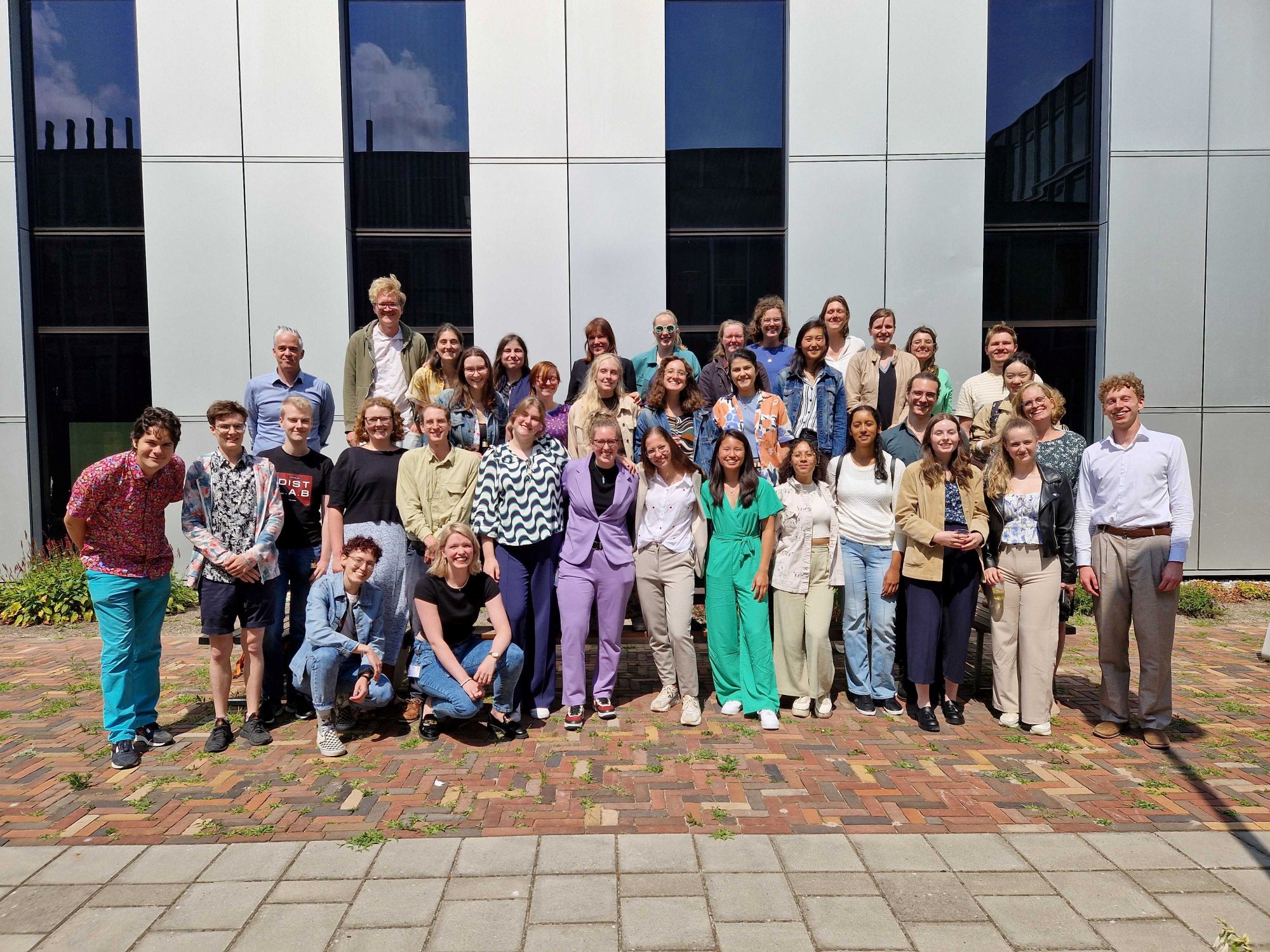
About the Master’s specialisation Science Communication and Society
The Science Communication and Society (SCS) specialisation focuses on science communication in the broadest sense. The programme centres on the relationship between science and society, and covers both knowledge and practical skills in communicating science. Students from the Faculty of Science and from Biomedical Sciences (LUMC) can take this specialisation during their master’s programme.