

Utrecht’s buried treasures: Roman boats along the old Rhine
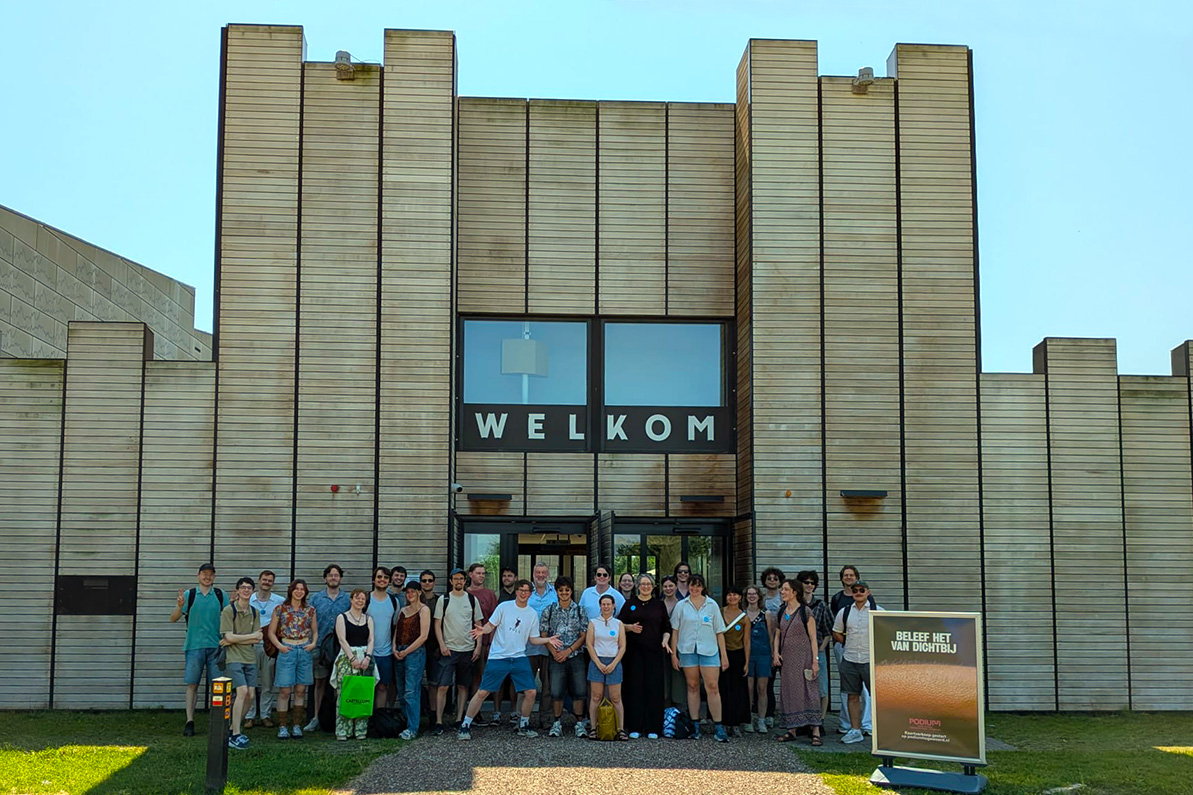
Students and staff from the Ancient History department recently visited Utrecht for the fifth annual study trip, combining a museum visit with a boat trip on a replica Roman vessel along the city’s canals.
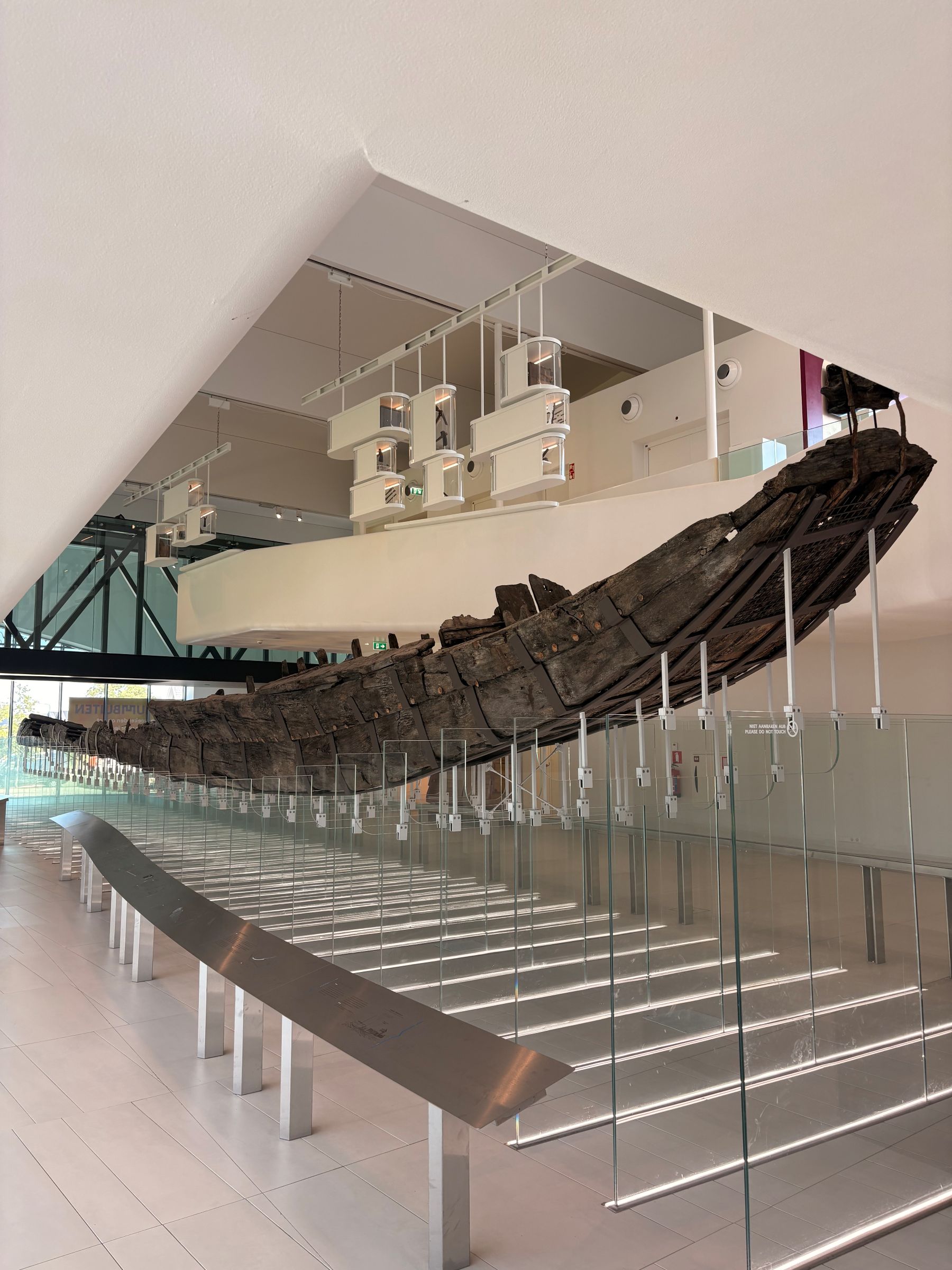
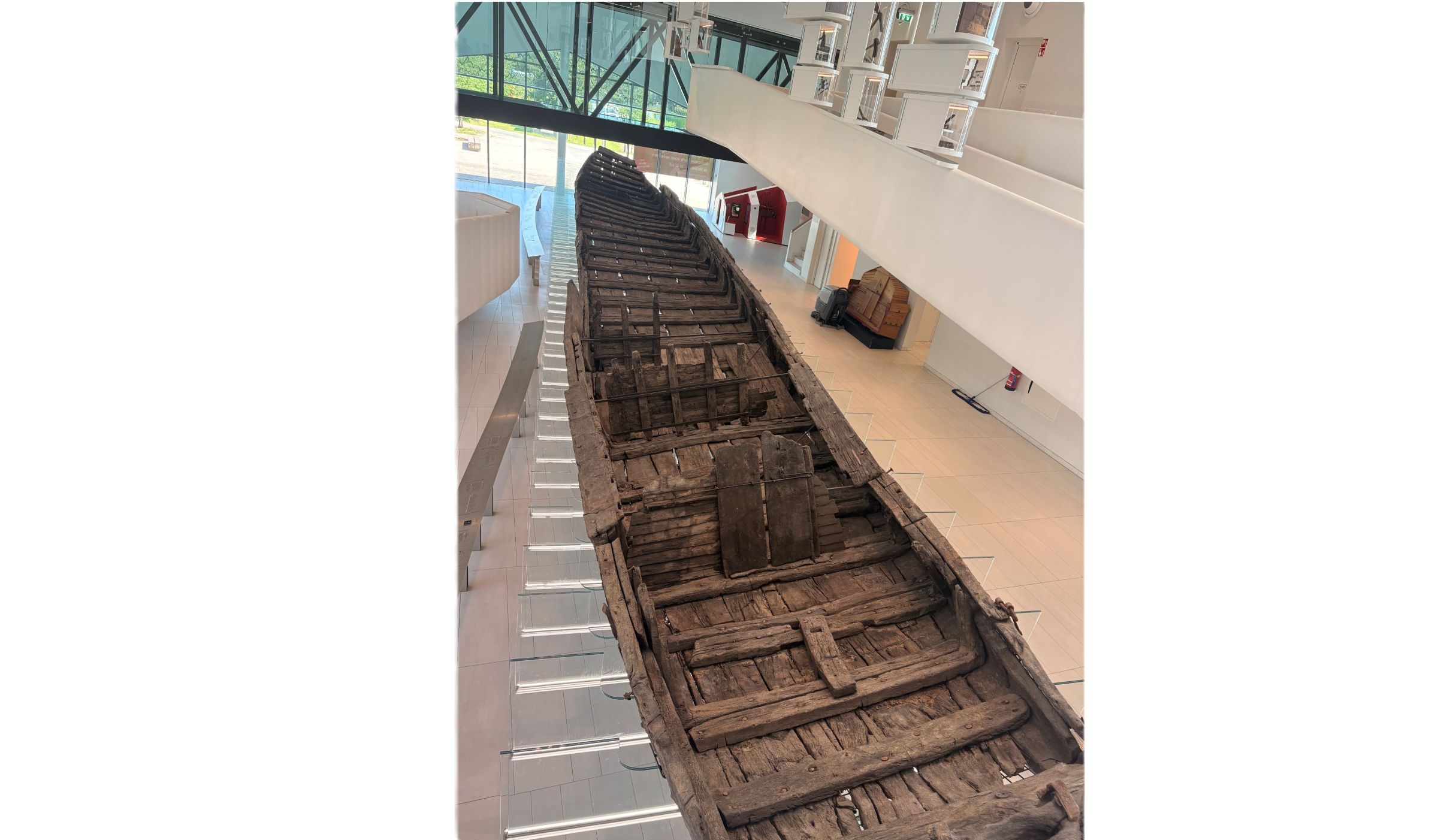
The day began at Museum Hoge Woerd, an archaeological museum built on the site of an ancient Roman fort in the Leidsche Rijn district. Here, two volunteers provided a wonderful tour of the museum. According to the museum’s website, its centrepiece ‘De Meern 1’ (named after its founding place) is the most complete Roman riverboat ever found in Northwestern Europe.
The ship went down around 190 CE in a tributary of the Rhine, possibly due to a navigational error, preserving some of the ship’s inventory such as a toolbox and the captain’s personal belongings: among others, two pairs of shoes in size 41-42 and 35, a cooking pot, scissors, and a dip pen. The vessel is displayed exactly as archaeologists uncovered it in 2003, offering visitors a rare opportunity to see the ship as it emerged from the ground rather than as a reconstructed model.
‘De Meern 1’ is not an isolated find. The Leidsche Rijn district has yielded numerous Roman vessels over the years, ranging from dugout canoes to large flat-bottomed transport ships used to supply the frontier forts along the Rhine. This stretch of the river formed the northern border of the Roman Empire for several centuries, and river traffic was central to its logistics.
The broader significance of these ships is underscored by a recent development: as reported by NRC on 23 June 2026, the six Roman ships excavated at Zwammerdam in the early 1970s are finally being brought together and restored at Museumpark Archeon in Alphen aan den Rijn, after spending decades dispersed across various storage facilities. While the Zwammerdam ships are being restored to their original appearance, ‘De Meern 1’ was preserved and exhibited as it was found, which is part of its appeal.
Our next stop on this ever-warmer day was a leisurely lunch break providing ample opportunity to admire the nearby gardens, and then the afternoon brought a fitting conclusion to the day: a boat trip along Utrecht’s canals on a replica of the ‘De Meern 1’. The replica, known as ‘Per Mare ad Laurium’, seats up to 35 passengers and offers a tangible sense of travel along the waterways that once connected the Roman frontier. Despite the summer heat, the group remained in good spirits, and the day ended with a shared dinner in the city centre.
The annual study trip has become a highlight of the Ancient History department’s calendar, bringing together staff, students, ancient history, and lively discussion outside the classroom. The success of this year’s excursion has certainly set the bar high for next year.