

Never home alone: which species share your house (unwanted or not)?
From spiders in the bathroom to mice in the kitchen, we share our homes with far more species than we realise (whether we like it or not). Researchers at Leiden University and the University of Helsinki are collecting stories about how people live alongside these non-human housemates.
‘Biodiversity isn’t just in forests or parks,’ says Leiden biologist Tuomas Aivelo. ‘It also exists much closer to home, or actually, in- and outside our own houses.’
The research project HOMINGS – More than just Human Home explores how humans share their living spaces (inside and outside) with other species: such as other animals, plants, and microbes.
‘A home is never truly just for humans,’ says Aivelo. ‘There are always other species living alongside us. Sometimes we welcome them, and sometimes we really don’t. We want to understand how people negotiate living alongside other species, make choices and take responsibility for their co-inhabitants.’
‘When I learned that house spiders often die of dehydration, I started leaving a small piece of moist toilet paper in the corner of the room. The spiders come there to drink. I know many people would think that’s strange, but in my world it feels completely normal.’ - participant

Living with other species
‘I have quite some experience with the “unwanted species”’, Aivelo says jokingly. The research project grew out of his previous work on urban rats, ticks, and parasites in Finland. Now, Aivelo and his colleagues are studying the Dutch context, comparing stories collected in Finland with those in the Netherlands. “The species people encounter are, of course, different, but we are curious whether Dutch people approach biodiversity differently than the Finns do,’ he explains.
Houses are built to keep nature outside. So, when a spider crawls up on the wall or a garden snail slowly explores the windowsill, humans can’t help but respond. ‘When ants appear in the kitchen, we Google: “Ants in the kitchen, what should I do?’”. Aivelo recalls one mouse that initially seemed harmless, but quickly became a problem when one turned into two, raiding the kitchen cabinets. ‘I tried different kinds of bait and got to know the mouse better; maybe a little too well. Even though I wanted to get rid of it, I couldn’t help feeling empathy for it as well.’
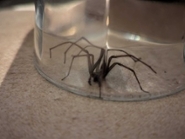
These everyday encounters, he explains, are exactly what the researchers are interested in: ‘Naming a spider, designing a squirrel-proof birdfeeder, or negotiating with a garden snail: all these smalls acts show how humans shape, and are shaped by, the other species around them.’
‘There has been a bee nest next to our back door for many years. We live peacefully with them. Every day one of them gets lost inside our house, but it soon flies out again. We’ve taught our children to help the lost ones by closing the blinds so the bees fly toward the light and the open door.’ - participant
From bird plank to multi-species design
Bird feeding offers a historical perspective on human-animal negotiation. In 19th-century Finland, people simply spread breadcrumbs on a plank at the windowsill to watch birds. Over time, feeders evolved: roofs and poles kept snow and predators away, feeding slots excluded larger birds, and perches separated food from potential pathogens.
‘This is an early example of what we now call multi-species design,’ says Aivelo. ‘Humans observe other species, adapt their environment and respond creatively, a kind of negotiation that happens in yards and homes every day.’
Responsibility and nature connectedness
Living with other species isn’t just practical: it raises ethical questions. ‘Humas have the power to do a lot and it’s cliché, but with great power comes great responsibility,’ Aivelo notes. Solutions must be sustainable for all participants: humans and non-humans alike.
The project challenges the way we perceive nature. Aivelo: ‘We often think of nature as somewhere else, outside our homes. But we are nature. Even at home, we are part of the ecological web.’ This perspective encourages us to rethink everyday interactions with spiders, mice, snails, and garden wildlife — seeing them as part of a shared home rather than intruders.
‘Two crows have been visiting our yard for years. They like to steal our dog’s squeaky toys and bring them back to us. I started giving them peanuts, and over time we became friends. One of them, Riitta, now even knows how to solve a small puzzle to get a treat underneath.’ - participant
Call for stories
The researchers invite Dutch residents to share their stories of living with other species at home, indoors as well as outdoors. These stories can involve snails, rodents, spiders, fruit flies, your neighbour’s cat, squirrels or moulds and fungi – all kinds of experiences are welcome. Home or its yard can be whatever you perceive as your own area: it can be a flat, house, farmhouse or a cottage. Positive, negative, or surprising encounters are all welcome, and participants can submit more than one story. The questionnaire asks only for age, gender and a short narrative.
To the questionnaire!