
A real professor in the classroom: ‘Did you sweat in the Sweat Room?’
It may be the best tradition of them all: on the university’s birthday, its professors go to primary schools to teach a special lesson. This year, 75 professors visited 44 local schools. ‘How does stress get into your body?’
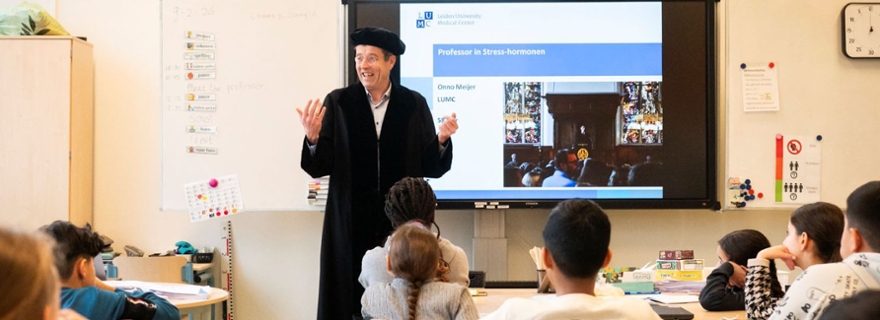
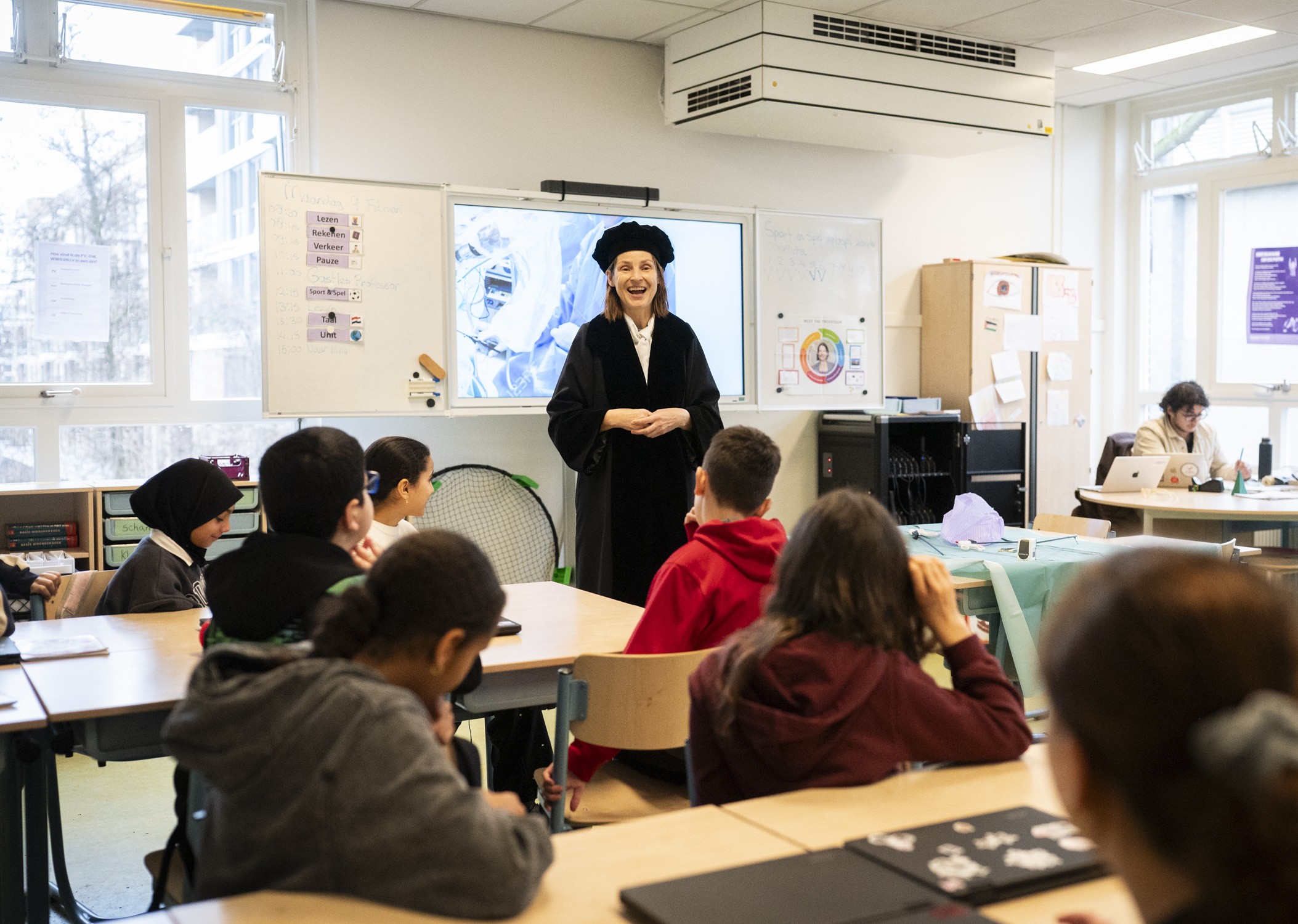
There’s a buzz of excitement as Onno Meijer sweeps into class 7B wearing his long black gown. ‘Hello everyone!’ he says. ‘I’m a professor. It’s great to be here. Perhaps you’d like to be a professor when you grow up.’
The children from the Anne Frank primary school in The Hague have already had a few introductory lessons from their teacher. They know that Meijer is a professor of ‘stress hormones’, so the questions come thick and fast. Why did you choose stress hormones? How does stress get into your body? Did you sweat in the Sweat Room? What’s your favourite colour?
How the brain works
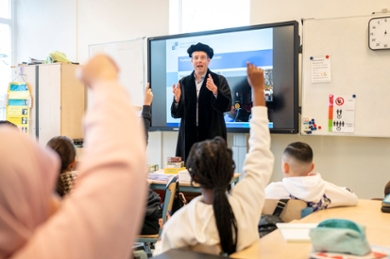
Meijer explains that he chose this field because he’s ‘super curious’ and wanted to understand how the brain works. He tells the children about the role of stress hormones: how they prepare the body for flight. But also how long-term stress can make you unwell.
Breathing
‘Who sometimes feels stressed? And where do you feel that?’ The pupils don’t need long to think. ‘In my tummy,’ says one. ‘In my breathing,’ says another. Meijer shows them a photo of his office in the LUMC. The children are impressed by the size of the building. ‘I help develop new treatments. But it’s even better if people don’t have to go to hospital at all.’
Hospital instruments
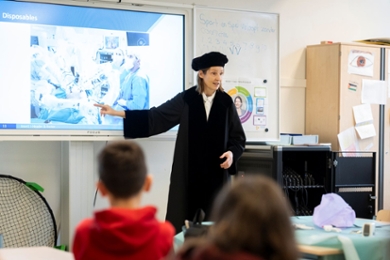
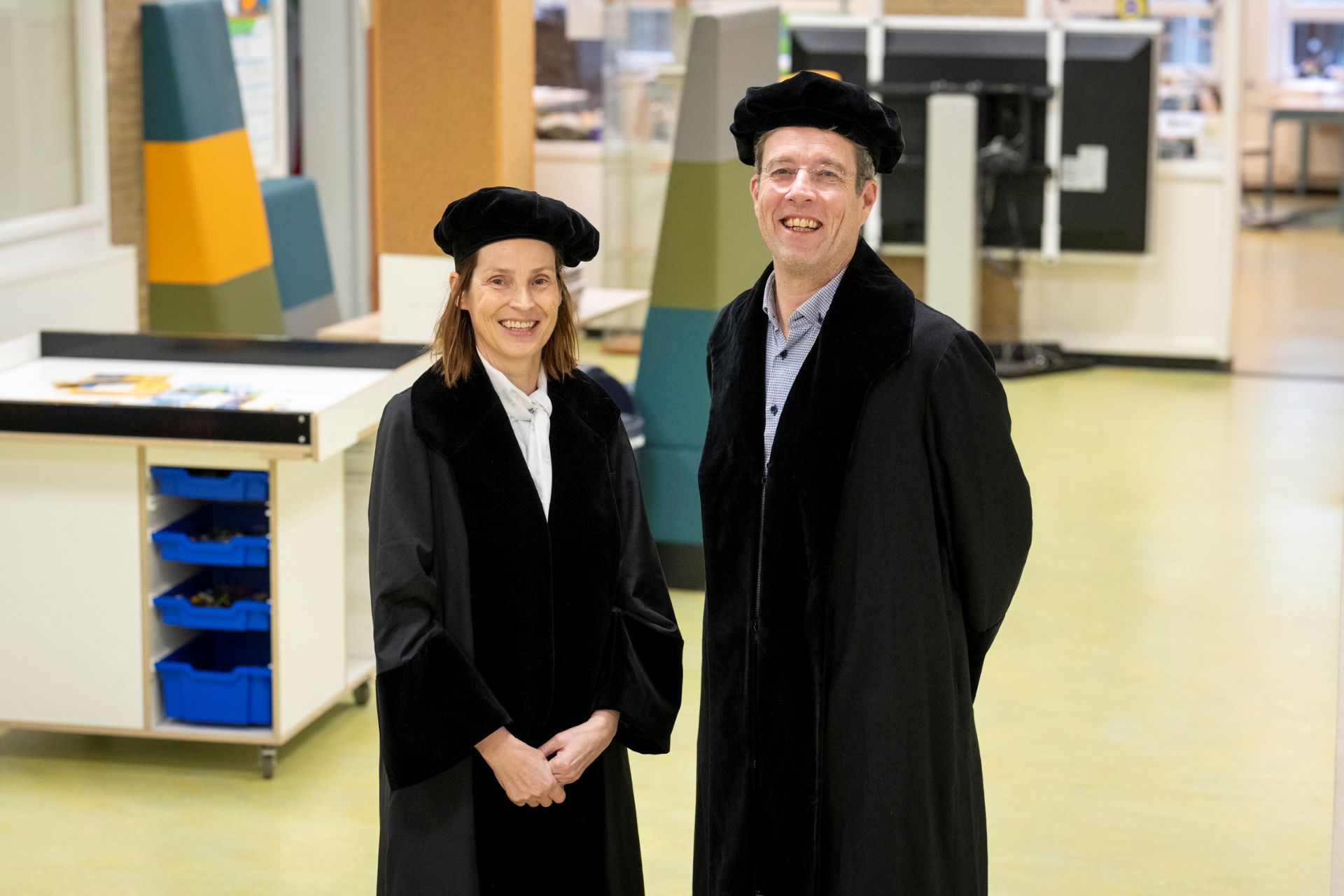
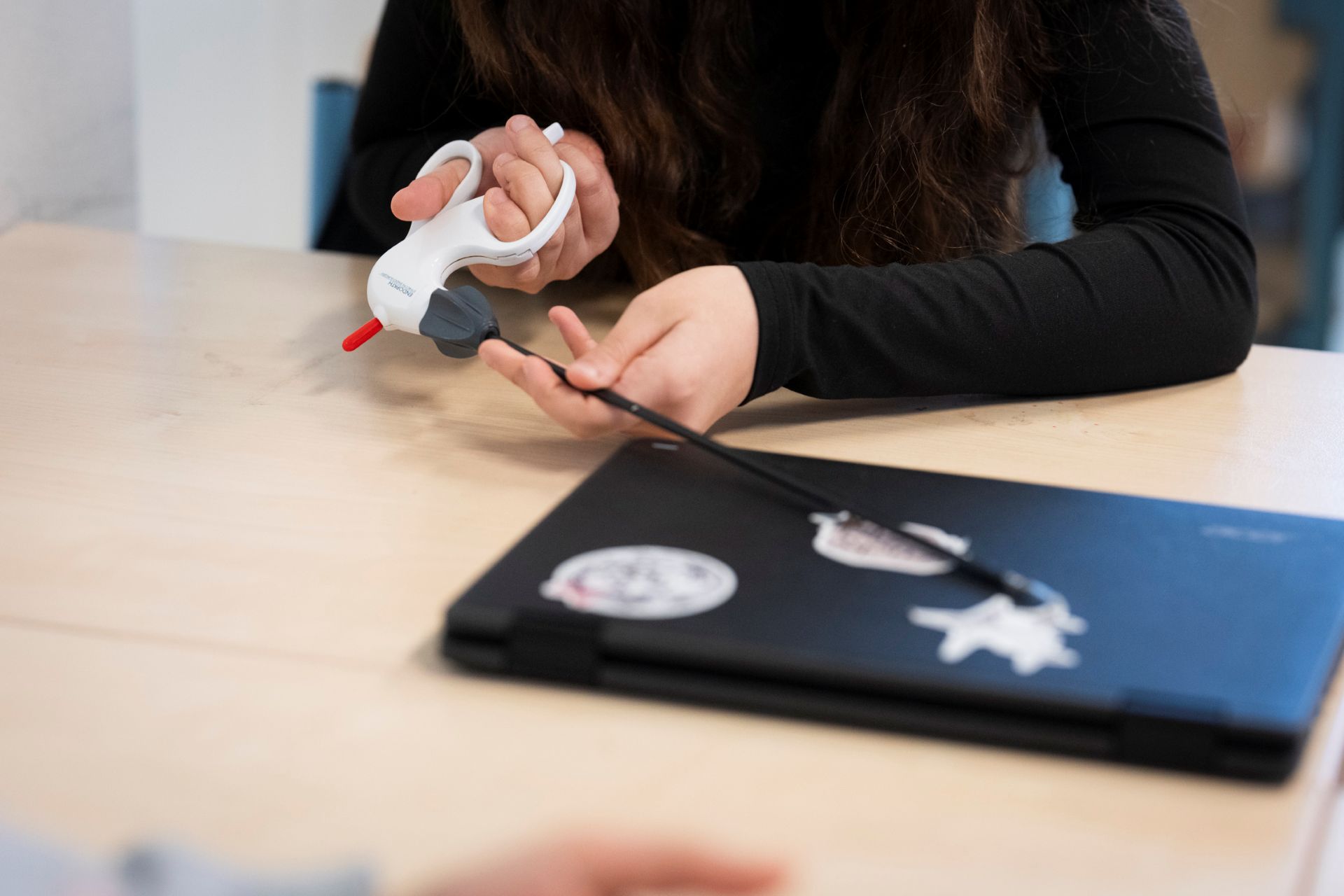
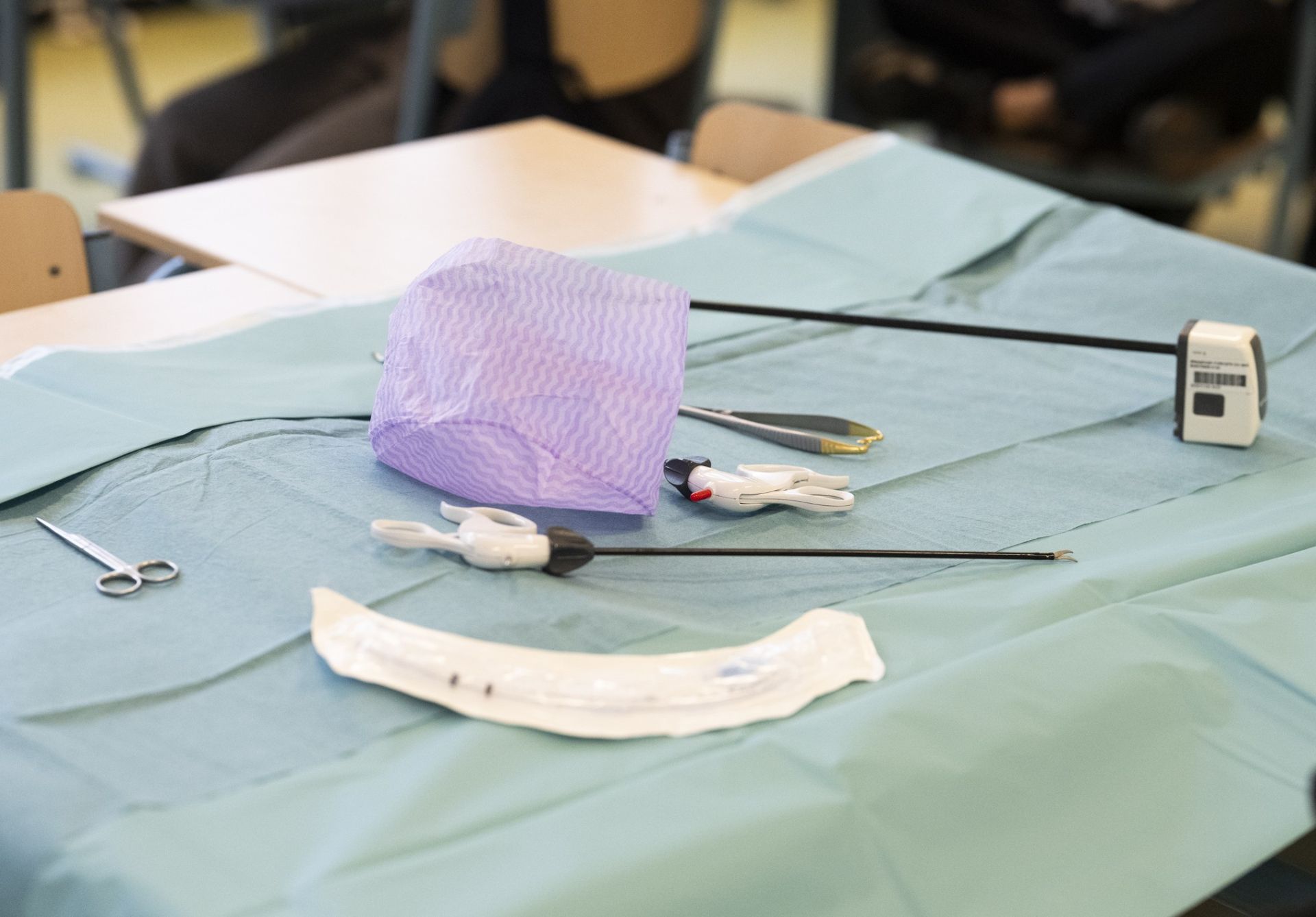
The building is also where Nicole Bouvy works as a surgeon. She’s brought along a selection of hospital instruments: forceps, a surgical gown and a small robotic arm. The children eagerly pass them around as Bouvy talks about spectacular new developments such as remote surgery, where a robotic arm responds to a joystick, allowing a doctor in Paris, for example, to operate on a patient in New York.
She too emphasises that it’s best to avoid the need for surgery altogether – by living healthily and taking part in screening programmes. But sometimes, she adds, illness is just a matter of bad luck.
Operations
The children in her class also have plenty of questions. ‘Why do operations take so long?’ asks a boy with a large scar across his face. ‘Because we want to do everything very carefully,’ Bouvy explains. The boy tells her he has had several operations for cancer but is doing well now. Moved by his story, Bouvy warmly shakes his hand.
Bouvy goes on to talk about the need for recycling in healthcare, pointing out that many medical items are used once and then thrown away. At the end of the lesson, she asks who would like to work in healthcare one day. Several hands shoot up. ‘Wonderful,’ she says. ‘We need you.’