Nobel Prize winner Paul Krugman back in The Hague: ‘Good policy is not always good politics’
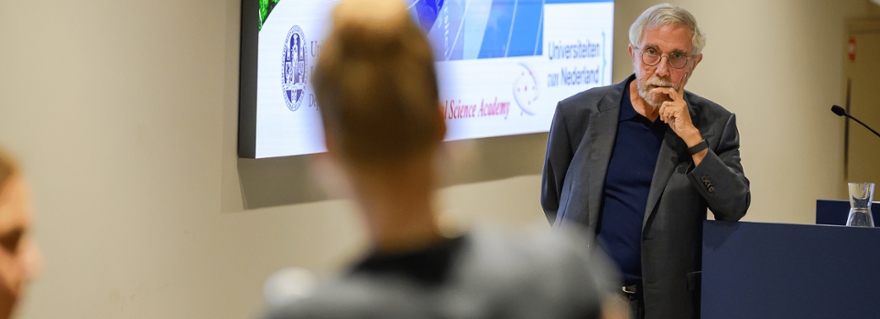
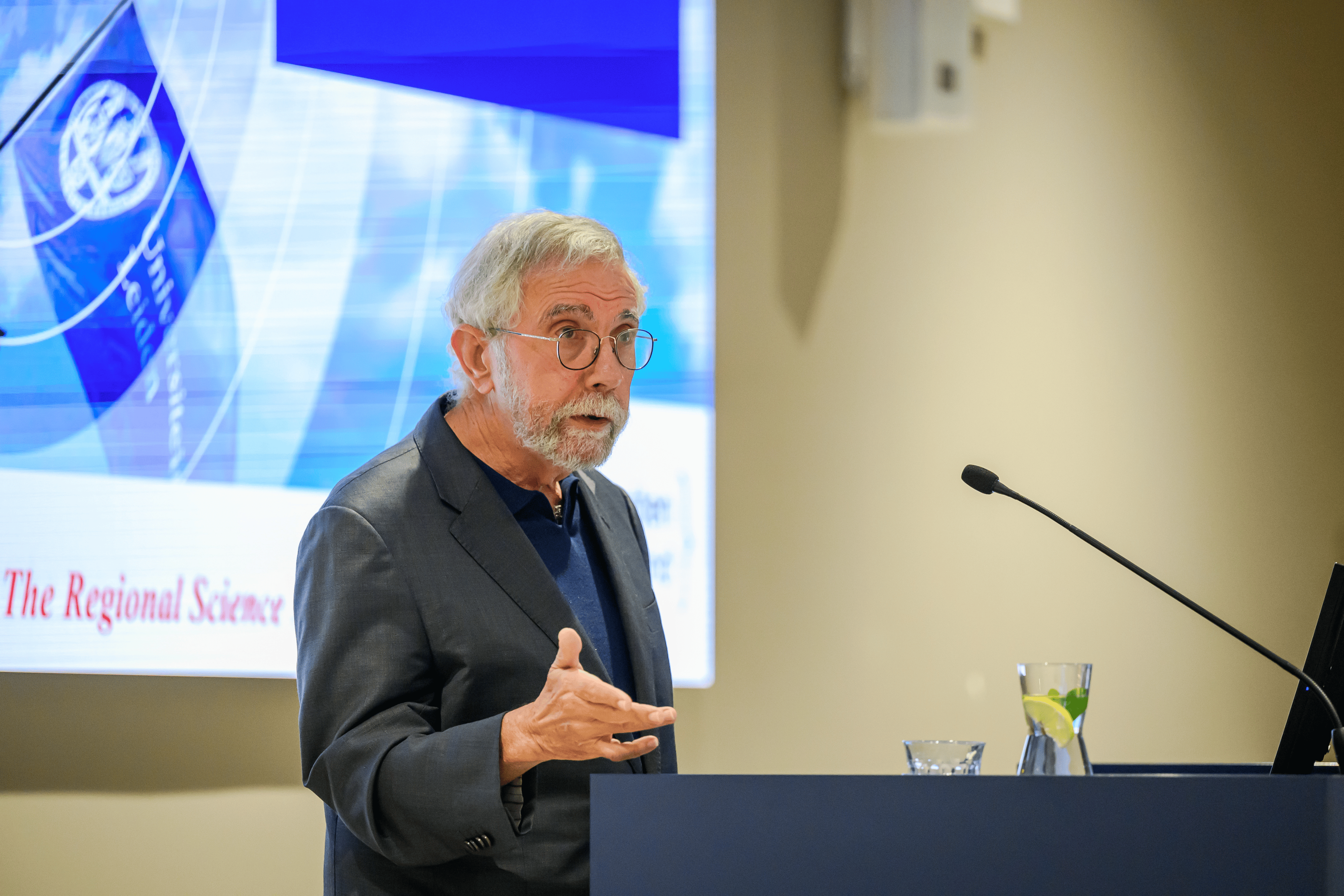
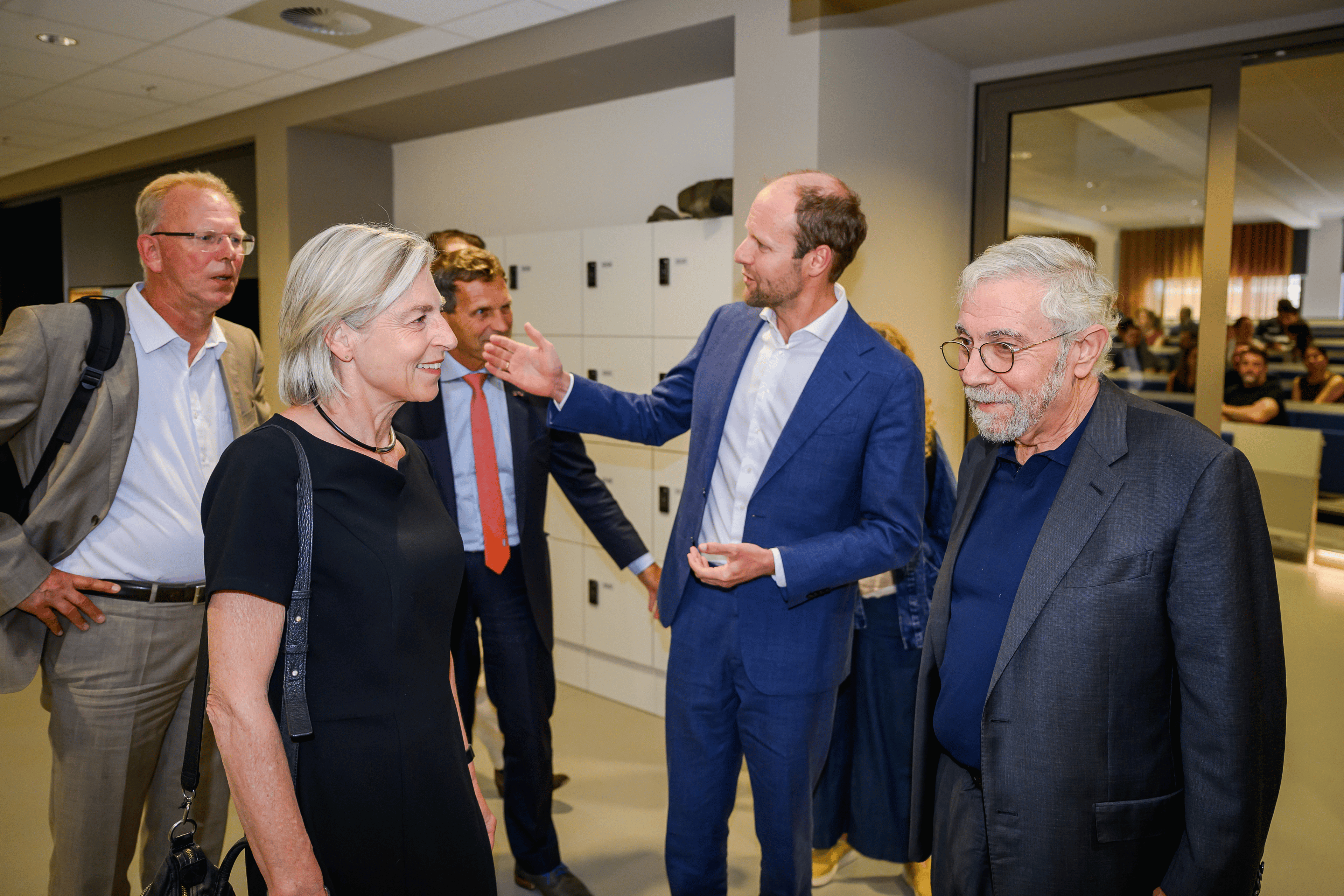
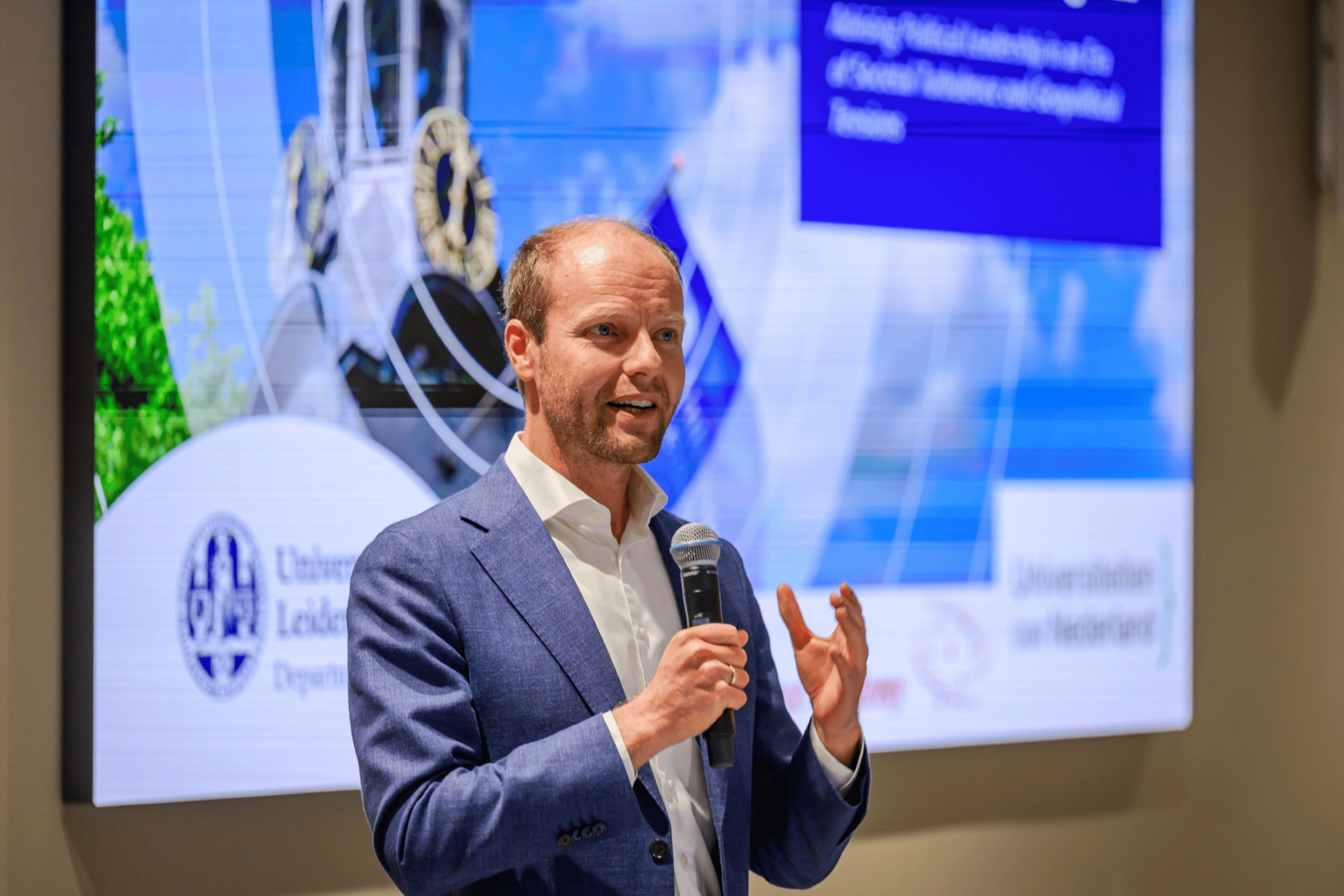
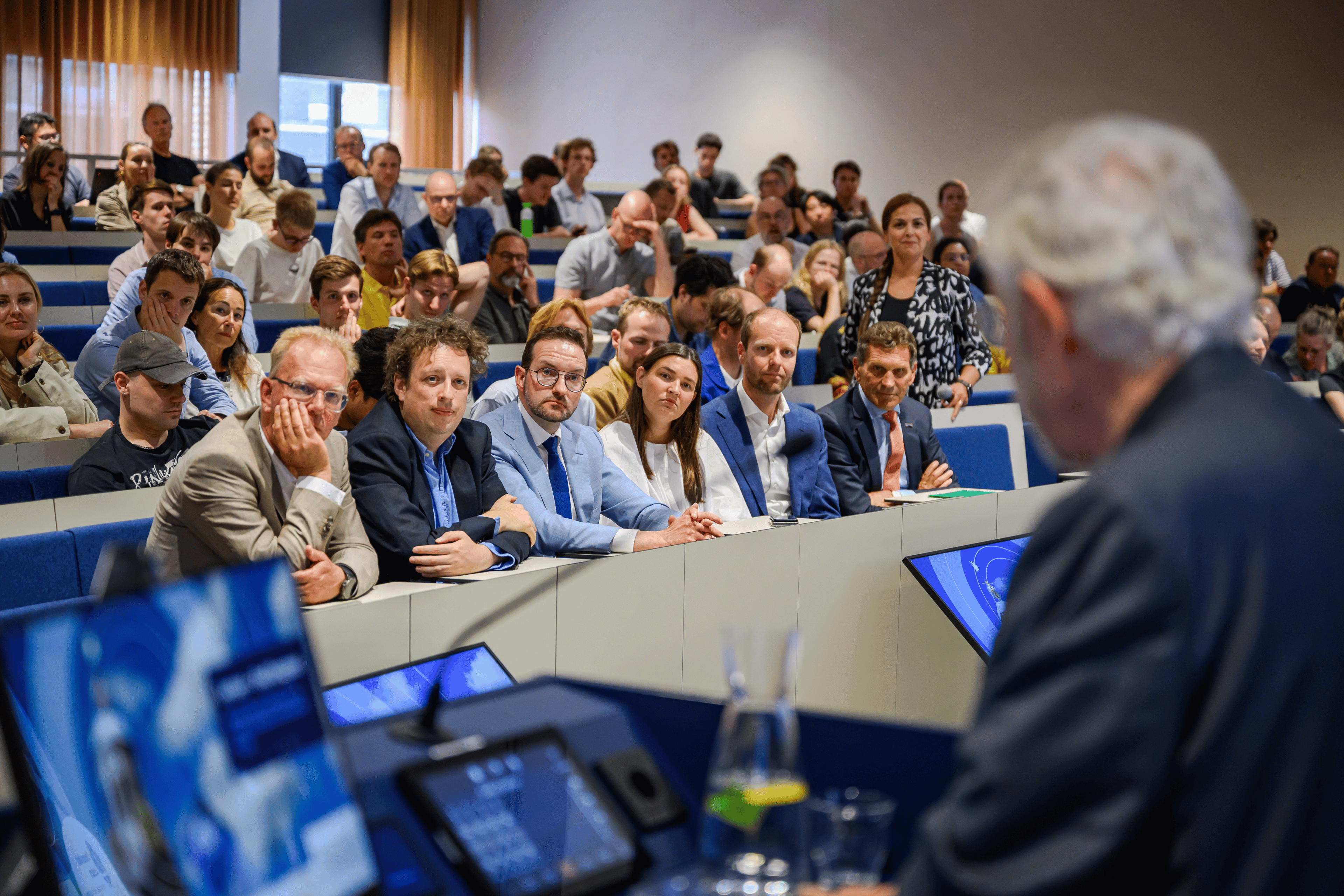
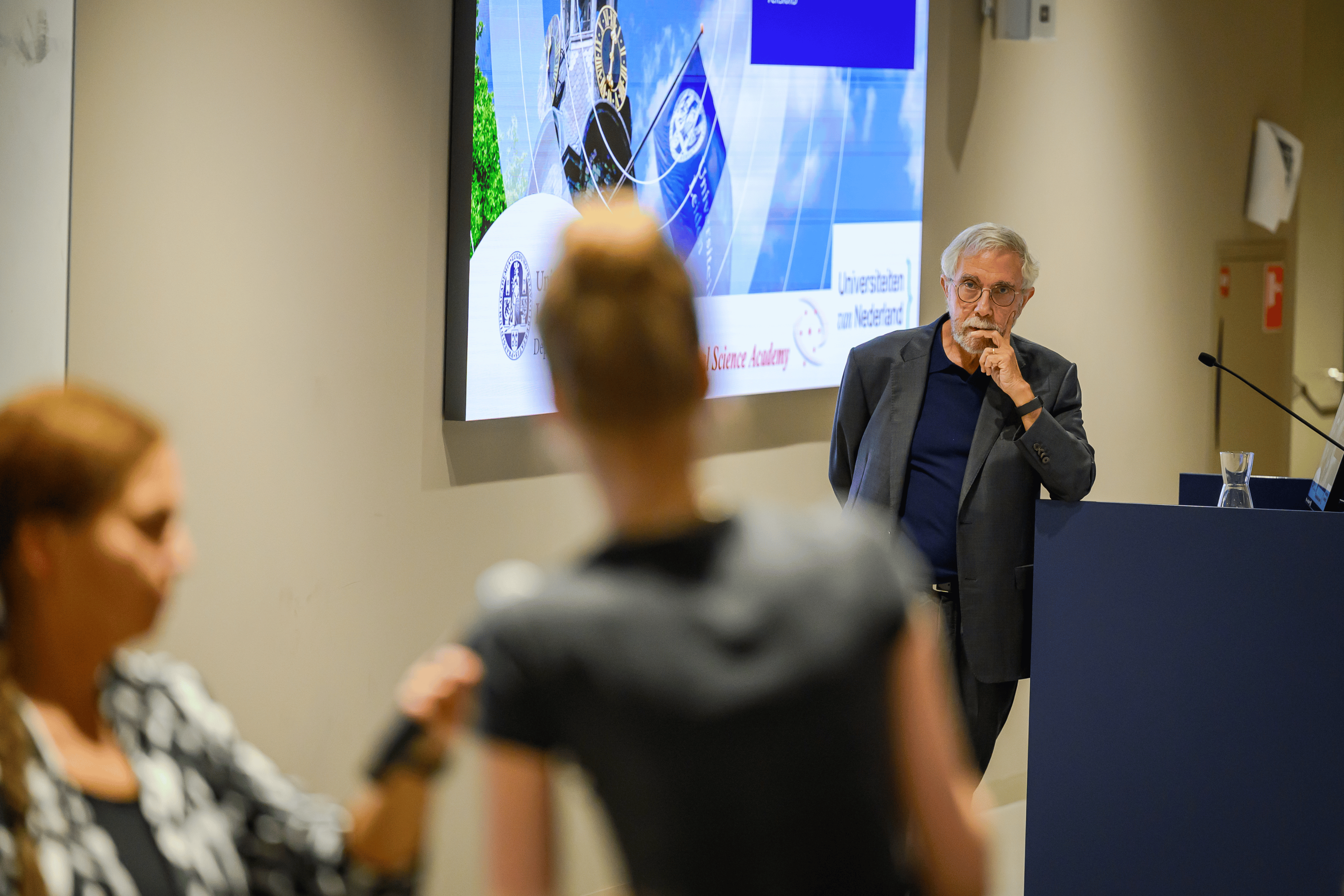
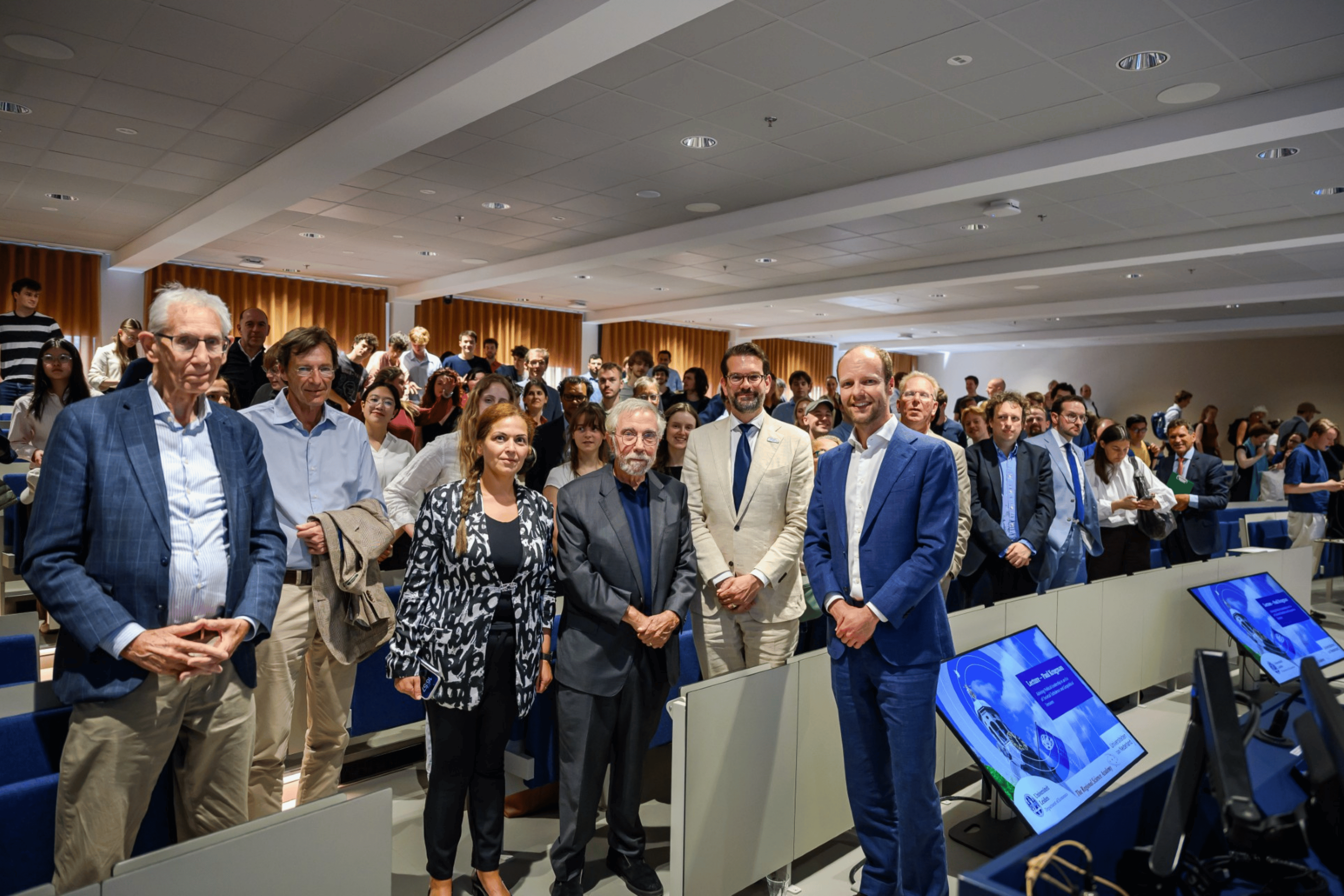
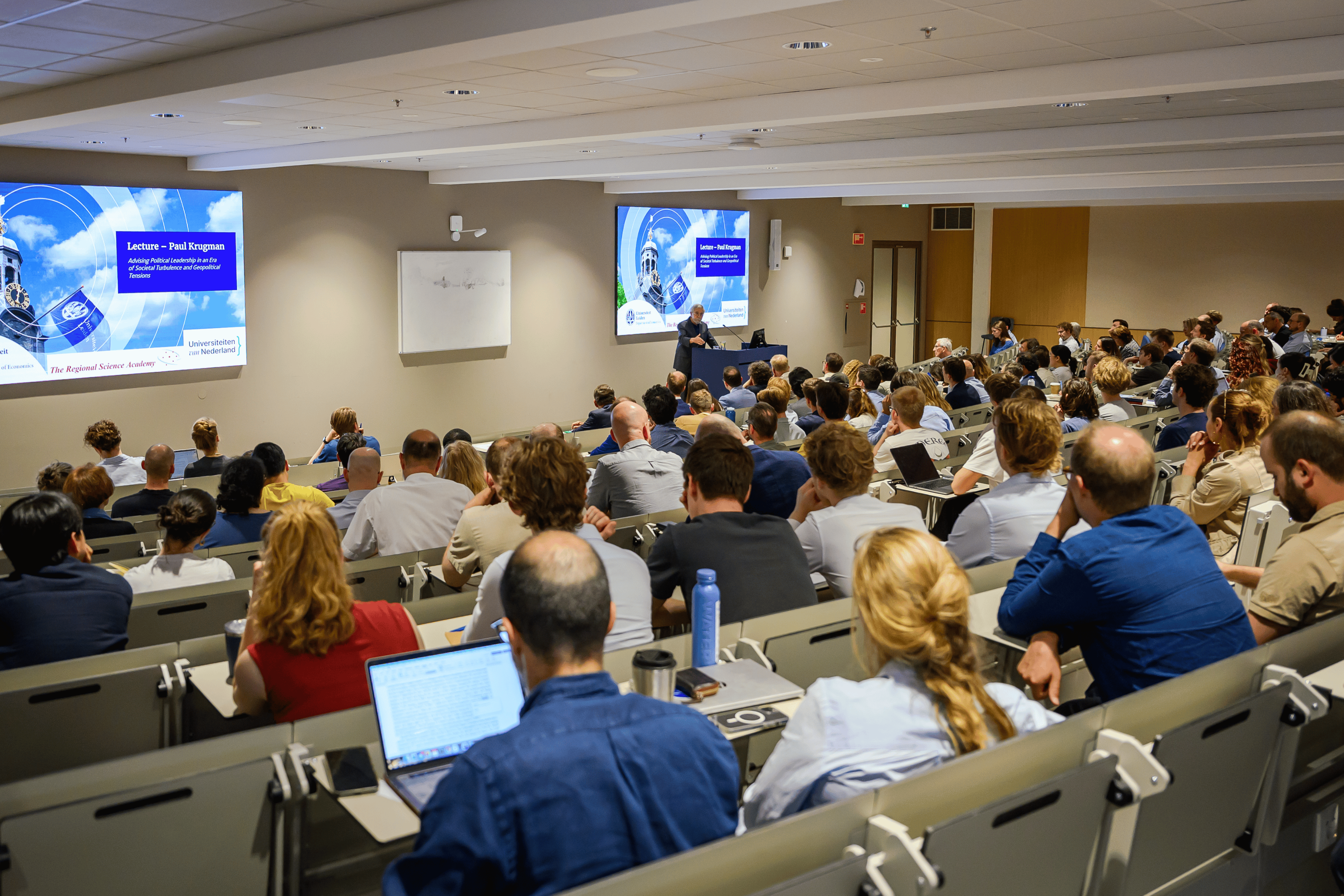
For the second time this academic year, Nobel Prize winner Paul Krugman visited The Hague. Addressing a packed lecture theatre in our new Spui building, he spoke to students, staff and professionals about the tension between economic advice and political decision-making.
According to Krugman, economic research has two faces: fundamental research aimed purely at acquiring knowledge, and applied research that aims to influence decision-making in the real world.
When it comes to influencing decision-making, he identifies three stages at which things can go wrong:
- From research to applicable knowledge: not all research can be directly applied to actual problems.
- Conveying applicable knowledge to policymakers: even practical insights do not always reach politicians or are not fully understood.
- Prompting policymakers to act: even when they grasp the problem, they do not always act on it.
Krugman explains that it is therefore not enough simply to practise ‘good’ economics. The knowledge must also be translated into policy and actually applied by politicians. To illustrate this he refers to two recent crises: the financial crisis in 2008 and the Covid-19 pandemic in 2020.
‘Shadow banks’
The collapse of Lehman Brothers on 15 September 2008 surprised most economists. Not because there was no economic theory to explain it, but because the influence of shadow banks – institutions that operated like banks but were not formally classified as such – had been underestimated. ‘Many of us, me included, were therefore surprised by how vulnerable the system turned out to be,’ the economist adds.
Although the crisis itself came as a surprise, its progression could be explained well in economic terms. The effects of the crisis policy were predictable, and the numbers added up. Krugman: ‘It was actually very much textbook economics.’
And yet, many governments implemented the wrong policies. Politicians responded swiftly by imposing severe spending cuts: exactly the opposite of what economic theory prescribed. Because when households, businesses, and the government all tighten their belts at the same time, the recession only gets worse. Krugman call this a classic error in reasoning: what seems logical for an individual becomes disastrous when everyone does it as the same time.
Dark Ages
According to the Nobel Prize winner, this was due in part to the way the science of economics has evolved. In the years leading up to 2008, academic economists had increasingly focused on abstract models that had to meet strict theoretical requirements. These would not always be directly useful when needed to underpin crisis policy. In that respect, central banks and think tanks were better positioned: they worked with models and insights that were immediately applicable to policymaking. ‘In this respect, they were like monasteries that kept knowledge alive during the Dark Ages,’ Krugman explains. When the crisis hit, they were therefore better equipped to provide rapid, usable advice.
At the same time, politicians and many business leaders fell back on intuitive ideas about how the economic world works. ‘These ideas were instinctive, grounded in their personal experiences, but almost all of them were wrong,’ Krugman continues. ‘One of the worst sinners was probably the European Commission.’ It adopted positions held by a small minority within the economics profession, selectively citing economists who supported those views. ‘Unfortunately, those studies were elevated.’
COVID-19
According to the economist, when the COVID‑19 pandemic broke out, a financial crisis initially loomed that could have been even worse than in 2008. This time, however, policymakers around the world applied the lessons learned from past crises. Instead of austerity, they opted for generous stimulus measures and large‑scale support packages. In doing so, they prevented a severe recession and long‑lasting economic damage.
The outcome: the world did experience a terrible year, but not a terrible decade. ‘That was no coincidence,’ Krugman emphasises. ‘That was down to economic knowledge, understanding and their influence on policymaking.’
‘But the world is not fair,’ he continues. ‘In retrospect, the policy response to COVID was excellent, yet the governments that implemented it were later punished by voters who were angry about the ensuing inflation.’ Good policy, as it once again became clear, is not always good politics.
Professor of Economics Olaf van Vliet on Krugman’s lecture
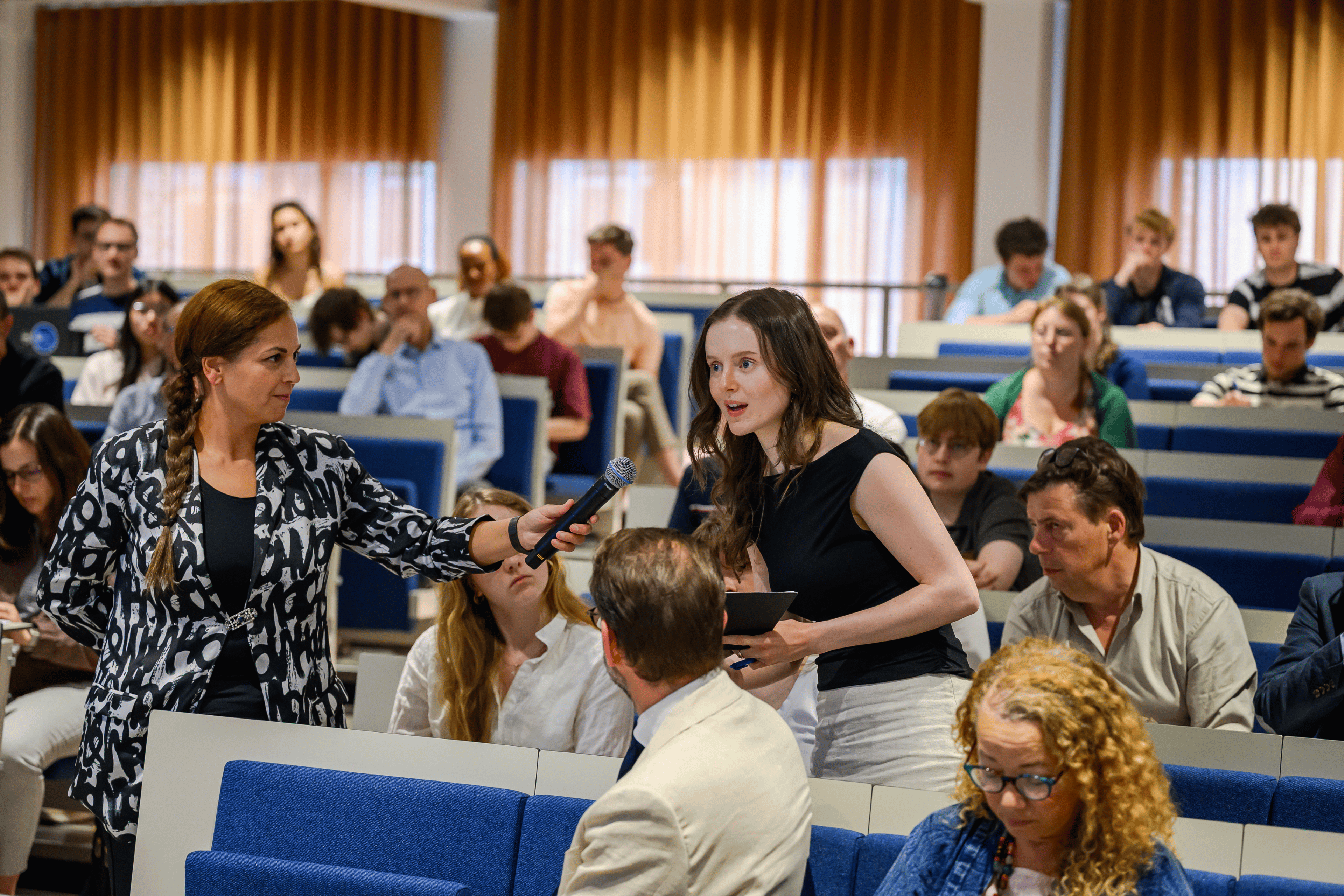
‘Paul Krugman’s lecture was truly inspiring. Students say they appreciated the ample time reserved for them to ask questions. We economists have an important task in translating the findings of academic research into concrete policy recommendations. Professor Krugman has once again underlined how important this is. The question of how policy can be designed that is not only substantively strong, but also attracts public support, is a significant and fascinating puzzle and one that we will continue to focus on in the coming years.’
Organisation
The meeting was organised by Leiden Law Academy and the Economics department of Leiden Law School, in collaboration with Universities of the Netherlands (UNL) and The Regional Science Academy.