1,123 search results for “cell chemistry” in the Staff website
-
First quantum biosensor can detect rapid, invisible changes in cells
The laboratory of Leiden researcher Alireza Mashaghi is the first in the world to implement a quantum biosensor installation from QT-Sense. This enables the detection of extremely rapid and almost imperceptible changes in cells, providing essential insights for treating diseases.
-
Chemistry as the key to medical innovation
Is it a coincidence that three chemists from the same department have each independently received a ZonMw grant? 'No,' the researchers agree in unison. 'The role of chemistry in medical biology is becoming increasingly important, and we’ve worked hard to make this happen.'
-
 Micha Drukker
 -
 Dennis Claessen
 -
What does a cell eat? This new tool makes it visible
What if you could watch a single cell eat in real time? This could answer questions about diseases such as cancer. PhD candidate Yixuan Wang has developed a glowing chemical tool that makes this possible, revealing how living cells take in nutrients.
-
The career choices of cells
How does an embryonic stem cell decide if it becomes a heart cell or a kidney cell? That’s the question computational biologist Maria Mircea studied for her PhD research. She looked at the inside of individual cells to analyse how they change. This is what she discovered.
-
 Willem Fibbe
 -
Making the invisible visible with ‘click chemistry’
Sander van Kasteren (Professor of Molecular Immunology) makes the invisible visible. He will explain more in his inaugural lecture.
-
 Frank Schaftenaar
 -
Medical milestone at LUMC: first Dutch patient receives CAR T-cell therapy for autoimmune disease
The LUMC has become the first institution in the Netherlands to treat a patient with an autoimmune disease using CAR T-cell therapy.
-
300 million euros for new international stem cell consortium
The Leiden University Medical Center (LUMC), the Danstem Institute from the University of Copenhagen and the Murdoch Children’s Research Institute in Melbourne have received 300m euros from the Novo Nordisk foundation. The aim of this new international consortium is to bring stem-cell based therapies…
-
How bittersweet sugar chemistry targets pathogens
The challenge is considerable, but so is the satisfaction when it succeeds: creating complex sugar molecules that play a role in biology.
-
Bacteria without cell wall gobble up DNA from environment
A bacterium hiding from the immune system and picking up bits of DNA from its environment. The result: gaining new traits, such as better protection against antibiotics. Fortunately, we have not found such a damning scenario yet. However, PhD student Renée Kapteijn did find the first clues, which…
-
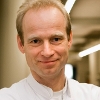 Douwe Atsma
 -
How cells talk by pulling on a fibre network
Mechanics play a larger role in blood vessel formation, and other developmental biology, than previously thought. Cells appear to respond to mechanical signals, such as pressure. Through the extracellular matrix, a network of fibrous proteins, cells can supposedly exchange those mechanical signals over…
-
Modified caffeine molecules help medical research move forward
Before researchers can develop targeted drugs, they need to know exactly how a disease works. Biochemist Bert Beerkens created molecules that allow them to find out. He used caffeine as the basis for new molecules that enable research into certain receptor proteins on cells.
-
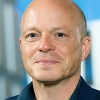 Erik Danen
 -
 Noortje Dannenberg
 -
 Roxanne Kieltyka
 -
‘To truly understand the brain, we must understand the chemistry’
How do fats and enzymes in the brain contribute to multiple sclerosis? In his PhD research, Daan van der Vliet combined chemistry and neuroscience to gain new insights into how brain disorders develop.
-
 Joost Beltman
 -
 Tessa Vergroesen
 -
 Ewa Snaar-Jagalska
 -
How to hijack natural destruction in cells: ‘We need to understand it through and through’
Destroying proteins from the Golgi apparatus of the cell in a controlled manner. That is the focus of chemist Marta Artola’s pioneering research. By developing a groundbreaking technology to target specific proteins in the Golgi, Artola aims to unlock new ways for drug development. For this ambitious…
-
Sugar chemistry – Wouter Remmerswaal’s unrelenting pursuit of understanding
The dark matter of biology: clumps of sugar molecules that, for example, form sugary webs around pathogens. We know very little about them. Wouter Remmerswaal threw all his talent into the challenge – both in the lab and as a modeller – and succeeded. He received his PhD on 12th September.
-
Young, sleeping memory cells are crucial in fighting a reinfection
Researchers from the Netherlands Cancer Institute, the Leiden University Medical Center (LUMC) and Oncode have created a tracking system that can reveal how often cells have divided. This allowed them to find a yet undiscovered population of immune cells: young memory cells that behave like stem cells.…
-
How cells determine the fate of proteins (and can we do it too?)
Cells in our bodies are often threatened by errors in our own proteins. The FLOW consortium, comprising scientists from various institutions including Leiden, is poised to meticulously map out for the first time how cells control proteins, correcting or removing faulty ones. This endeavour holds promise…
-
 Anita Liao
 -
 Alexander Kros
 -
Grants for research on immune cells, vegan cheese and PFAS detection
Researchers at the Faculty of Science work at the frontiers of knowledge every day, tackling today’s major societal challenges. Their work is recognised through grants, prizes and other awards. We highlight some of these achievements below.
-
 Marjolein Crooijmans
 -
Greater understanding of specialised cell could prevent strokes
Ilze Bot wants to reduce the prevalence of cardiovascular diseases. Her research focuses on mast cells, which protect us from infections but can also make us ill.
-
How cells work together: the mathematics behind biological shapes
How do biological cells join forces to form a structure? In her PhD research, Daphne Nesenberend uses mathematics to show how forces and cooperation between cells create structure – and how simulations and experiments can reinforce each other.
-
forming embryo to cancer metastasis: the significance of collective cell movement
Luca Giomi has the first results of his ERC consolidator grant. He discovered that epithelial cells move collectively but in different ways, depending on the scale you look at. It is hexatic at small scales, and becomes nematic at larger scales: it is a multiscale order. This collective movement of…
-
Sander van Kasteren: from molecule builder to Professor of Chemical Immunology
Sander van Kasteren only noticed some small, subtle changes since he was appointed professor on 1 May. Still, he has to get used to the idea, even though he had been working towards the professorship for a few years. ‘I don't quite see myself as a professor yet.'
-
 Lies Bouwman
 -
 Arthur Ram
 -
Helping students with micro-macro thinking in chemistry
How do classroom demonstration experiments help students learn chemical reasoning? Marie-Jetta den Otter, PhD student at ICLON, researched this. She defends her thesis on 6 December.
-
collagen to canvas: interactive artwork brings the world between our cells to life
What’s really happening in the space between the cells in your body? With the Collagen Canvas project, students from Leiden University invite you to explore this question by blending science with art. This interactive artwork immerses you in the dynamics of the extracellular matrix—the invisible structure…
-
Tunnel vision alarm in the search for more efficient hydrogen cells
A tenacious postdoc researcher persuaded Professor Marc Koper to research the oxygen reduction reaction. In Koper's eyes, there was little of interest there. But they promptly discovered a whole new way to improve fuel cells on hydrogen and oxygen. Their article appeared in Nature Catalysis on 07 Ju…
-
Leiden chemists discover new ways in which single-celled organisms organise their DNA
It has only recently been discovered that single-celled organisms (bacteria and archaea) also have histones—proteins that structure DNA. Now, Leiden PhD candidate Samuel Schwab has found that the histones in these organisms are much more diverse than previously thought. Schwab and his colleagues describe…
-
The Nobel Prize in Chemistry went to an AI model (and rightly so)
Not experiments and lab coats, but computers and artificial intelligence: this year's Nobel Prize in Chemistry went to the inventors of the groundbreaking AI model, AlphaFold. This programme accurately predicts protein structures based on their genetic code—a crucial step in understanding biological…
-
 Christine Mummery
 -
 Serkan Aslan
 -
 Inge Snijders
 -
 Batuhan Can
 -
Inexhaustible source of human heart muscle cells allows strong reduction of animal testing
Researchers at the Leiden University Medical Centre (LUMC) have managed to culture human heart muscle cells on a massive scale. This is an exceptional achievement because it is very difficult to replicate heart muscle cells outside the body. Using a special technique, the researchers have now created…
-
Stiffness and viscosity of cells differ in cancer and other diseases
During illness, the stiffness or viscosity of cells can change. Tom Evers demonstrated this by measuring such properties of human immune cells for the first time. ‘The stiffness of certain cells could be a way to make a diagnosis,’ Evers said. He defended his thesis on March 26th.
-
 Alma Kuijpers
ICLON
-
LUMC will administer first Dutch stem cell gene therapy to patients
Researchers and clinicians at Leiden University Medical Centre (LUMC) are about to begin a milestone clinical study. It will be the first time a stem cell gene therapy developed in the Netherlands is used in a clinic. The therapy will be used to treat children with SCID, a rare disorder where children…