2,890 search results for “state cell technology” in the Public website
-
The unexpected power of small states
One of the baffling aspects of international power politics is the unexpectedly major influence exercised by particular small states. Professor of International Studies and Global History Isabelle Duijvesteijn discovered that peace missions and development aid help generate power. Inaugural lecture…
-
Engage in Far-Right Social Movement Activism in the Present-Day United States
In the present-day United States, to what degree(s) are far-right men and women similar and/or dissimilar in their motivating factors for engaging in far-right social movement activism?
-
European roadmap for graphene applications in science and technology
More than 60 European researchers and industry partners have set out their roadmap for the application of graphene in marketed products. Leiden chemist Grégory F. Schneider believes that graphene and other layered materials can in the future be used for DNA sequencing applications.
-
Exploring 3D technology in pottery studies: ‘It is the future’
In the depots of the Faculty of Archaeology, many artifacts, accumulated after decades of fieldwork across the world, are stored. A new project, the Leiden Inventory Depot (LID), aims to unlock this wealth of information to the outside world. The 3D scanning of objects takes a central role in this endeavor.…
-
Burden Sharing for What? NATO Implications of Three US Visions
In this article, Linde Desmaele examines the dilemmas created by US burden sharing policies from the perspective of Washington's European protégés.
-
Gold nanoparticle-peptide conjugates for biomedical applications
Despite the fact that gold nanoparticles (GNPs) are one of the most studied nanoparticles, there is still a necessity for new approaches allowing for effective protective coating to enable wider use of GNPs in biomedical applications.
-
Illusions as the key: how spatial technology can help patients
Spatial technology such as virtual reality can help patients who have difficulty with spatial cognition, for instance if they keep on losing their way. In her inaugural lecture, neuropsychologist Ineke van der Ham will talk about the importance of avatars, the patient experience and room for innovat…
-
Vidi Grant for Stefan Semrau: how does bioelectricity shape embryonic development?
Leiden biophysicist Stefan Semrau was granted an NWO Vidi earlier this month. He will use the grant to study the role of electricity in embryonic development and tissue regeneration.
-
Marco van Eijk new OD of Life Science & Technology
As of 1 September, Marco van Eijk has been appointed Director of Education of the bachelor's programme Life Science & Technology. He succeeds Marcellus Ubbink, who moved to the position of Scientific Director of the Leiden Institute for Chemical Research (LIC). Van Eijk has been appointed for a period…
-
Cellular Forces: Adhering, Shaping, Sensing and Dividing
Promotor: Prof.dr. T. Schmidt
-
Danica Mast in Mare on using technology to move people
Danica Mast, PhD candidate at LIACS, investigates how technology can encourage people to move more. In Mare she explains more about the so-called exertion interfaces and her research at Lowlands.
-
 Erik Kroon
Faculty of Archaeology
-
 Friso Selten
Faculty of Governance and Global Affairs
-
How globalisation is changing the welfare state
As a result of globalisation, migration and technological advances, politicians have to make complex choices about social security and labour market policy. Professor by special appointment Olaf van Vliet will speak about this topic in his inaugural lecture on 7 June.
-
The Chilean Model of Pension Reform as a Lopsided Exportschlager
In this paper, the authors outline how the UK and USA adopt the Chilean pension model without proper attribution, potentially distorting the lessons.
-
Leiden technology research receives funding from NWO and businesses
A CT scanner to treat eye cancer, energy-efficient software for the future and a test to identify male chick eggs. Three projects by researchers from Leiden University are to receive funding from research funder NWO’s Open Technology programme, to which the business sector also contributes.
-
‘Technology for a healthy future for kidney patients’
Technological innovations such as home dialysis could significantly improve the quality of life and health of kidney patients. Professor Joris Rotmans therefore wants to continue pushing for new medical technology, as he will explain in his inaugural lecture on 24 March.
-
 Dennis Broeders
Faculty of Governance and Global Affairs
-
Breaking the Unbreakable: Computational and Biochemical Identification of Polyethylene-Degrading Enzymes
Engineering an efficient microbial enzymatic polyethylene degradation pathway via an innovative combination of biochemistry and computational biology tools for enzyme discovery and characterization.
-
Colloquium: Old Books and New Technologies (6-7 May 2021)
On 6 and 7 May 2021, KBR, in partnership with the Campus Condorcet of Paris, the National Library of Luxembourg, the KB national library of the Netherlands, the universities of Ghent, Leuven, Liège, Mons and Namur, and the Vlaamse Erfgoedbibliotheken, will be holding an international conference on medieval…
-
Tracing Players Playing Traces: Non/Human Music in Modern and Contemporary Literature
Musical instruments are multiple things: they are objects but also means of communication; they are technological and also deeply connected to embodiment through the player; and they leave certain cultural traces (Ricoeur 1975/1984). This research project explores how literary texts from the 19th century…
-
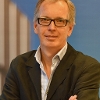 Remko Offringa
Faculty of Science
-
Plant-based diet can help unlock technology to harness huge CO2 removal
Bioenergy with carbon capture and storage (BECCS) is a promising method for removing carbon dioxide (CO2) from the atmosphere and simultaneously generating energy. Yet this method is controversial, as it may require a great deal of land and water. Researchers at Leiden University have now proposed a…
-
How engaged documentary filmmakers use new technologies in their work
CADS lecturer Sander Hölsgens is one of the initiators of the NWO Smart Culture Project Documenting Complexity (project number CISC.KC.212). This project investigates how and why engaged documentary filmmakers use new technologies in their work. One of the outputs of this project is the series ‘In Whose…
-
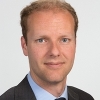 Olaf van Vliet
Faculty of Law
-
Early Colonial Mosaics, Transculturation within Ceramic Repertoires in the Spanish Colonial Caribbean 1495-1562
What can continuity and change in the manufacturing of locally made ceramics from the early colonials Spanish towns of Concepción de la Vega, Cotuí and Nueva Cádiz (1492-1600) tell us about the choices people made in ceramic production as a reaction the the changing social environment?
-
‘Immigration doesn’t threaten welfare states’
It is often thought that immigration threatens the solidarity on which redistribution relies. But looking at the post-war period, PhD candidate Emily Anne Wolff finds that this is not the case.
-
Maarten Aalbers presented during the “State Aid Compliance Seminar” in The Hague
On 10 May Maarten Aalbers, PhD-fellow and research staff member at the Europa Institute, participated in the “State Aid Compliance Seminar”, hosted by Europa decentraal, the EU law center for local and regional authorities in the Netherlands. Maarten Aalbers presented on the interaction between EU competition…
-
Regenerative medicine
Repairing organs, tissues and cells to fight chronic diseases.
-
Cardiovascular Pharmacology
The Cardiovascular Pharmacology research group headed by Ilze Bot aims to elucidate the mechanisms that underlie atherosclerotic plaque destabilization, which is the key process that leads to acute cardiovascular syndromes such as a myocardial infarction or stroke.
-
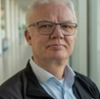 Bob van de Water
Faculty of Science
-
Vascular and Regenerative Medicine
Methods of treatment for chronic illnesses are limited. Doctors and researchers at Leiden University Medical Center (LUMC) and Leiden University are working on new therapies as an alternative for organ transplants. The goal is to cure the illnesses by restoring organs to their original function. Stem…
-
Research
An overview of the research at the Cancer Dug Target Discovery group.
-
2009 State visit to Mexico & Indigenous People
As part of the state visit to Mexico a theme lunch on indigenous cultures was organised.
-
Cancer Drug Target Discovery
In this research group, headed by Prof. Erik Danen, the aim is to unravel cellular signaling mechanisms in normal and diseased cells, with a long-standing interest in cell adhesion signaling. In complex multicellular organisms such as ourselves, a division of labor emerges where different tissues and…
-
Development & Disease in Microbial Sciences
Microbial Sciences'contribution to the Development & Disease research theme is to perform world-class research to understand cellular morphogenesis, growth, development and virulence of microbes.
-
Therapeutic intervention to enhance atherosclerotic plaque stability-projects
For more information regarding ongoing research projects, please contact Dr. Ilze Bot.
-
Cancer Therapeutics and Drug Safety
In this research group, headed by Bob Van de Water, cell signaling programs that underlie adverse drug reactions as well as cancer development and progression are unraveled. Adverse drug reactions involve cell injury in critical target organ cells which leads to the activation of cellular stress response…
-
Cancer Drug Target Discovery
We focus on a better understanding of the mechanisms of cancer drug resistance and metastasis.
-
Immunotherapy to limit atherosclerosis
Atherosclerosis is a chronic inflammatory disease, and vaccination may be an attractive method to induce long lasting protection against endogenous factors that contribute to the development of atherosclerosis. We have shown that for example vaccination against modified LDL or interleukin-12 limits…
-
Blood vessels on a chip make the cause of dementia visible
New technology offers many new possibilities for research, such as on dementia. ‘Organ-on-a-chip’ is a new technology in which small bits of organ are grown out of stem cells on a small plastic plate. A small piece of blood vessel, heart or nerve offers many new possibilities for research, such as…
-
Robots, Healthcare, and the Law
Eduard Fosch-Villaronga, Marie Skłodowska-Curie Postdoctoral Researcher at eLaw- Center for Law and Digital Technologies, just published a book on Robots, Healthcare, and the Law. Regulating Automation in Personal Care.
-
RNA splicing in breast cancer progression
In this thesis, we aimed to better understand the underlying mechanisms involved in TNBC progression and metastasis formation and discover new targets to reduce breast cancer related deaths.
-
Targeted Therapy for Triple-Negative Breast Cancer
The research described in this thesis focused on identifying novel drug targets and synergistic combinations for triple-negative breast cancer (TNBC), a virulent subtype of breast cancer with a dismal prognosis and limited therapeutic options.
-
Protease-Responsive Targeted Delivery of Chemotherapeutics Holds Great Promise for the Treatment of Pancreatic Ductal Adenocarcinoma
Pancreatic ductal adenocarcinoma (PDAC) is the deadliest common cancer, with only 8% of patients surviving for five years. One reason for this poor outcome is that current chemotherapy treatments are highly toxic, often leaving patients too sick to receive treatment or forcing doctors to lower the dose…
-
Immune Activation and Tolerance
The Immune Activation and Tolerance group is headed by Dr. Bram Slütter. Vaccination is an experimental, but promising, treatment strategy for atherosclerosis. Previous work has shown that immunization of mice with modified LDL particles can reduce atherosclerotic lesion development, however such vaccines…
-
Computational modeling of tumor growth and metastasis and the role of the immune system in tumor destruction
In this project, we aim to obtain a quantitative understanding of the role of the immune system in tumor regression, of the role of tumor cell heterogeneity in cancer growth and of tumor cell migration properties.
-
Will AI be listening in on your future job interview? On law, technology and privacy
The law and Artificial Intelligence (AI) applications need to be better aligned to ensure our personal data and privacy are protected. PhD candidate Andreas Häuselmann can see opportunities with AI, but dangers if this does not happen.
-
 Alireza Mashaghi Tabari
Faculty of Science
-
Evolution and development of flowers, fruits and inflorescences of Phalaenopsis and other orchid species
The study of orchid flowers, fruits, and inflorescences is crucial due to the remarkable diversity of orchid species and their unique adaptations to pollinators and seed dispersers. However, our understanding of the evolution and development of these organs within the orchid family remains limited.