
300 search results for “plants” in the Student website
-
450 trees for Leiden: join us
Leiden University and Stadslab Leiden invite you to improve the Leiden and The Hague environment with 450 extra trees – a living reminder of 450 years since the Relief of Leiden and the foundation of Leiden University.
-
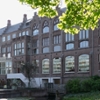 P.J. Veth
Nonnensteeg 1-3, Leiden
-
Archaeologist Amanda Henry traces ancient diets and human adaptability with a Vici grant
Dr Amanda Henry has secured a prestigious Vici grant for her groundbreaking research project, Hominin FoodWays: Changing Diet and Food Processing Across Climate Frontiers. This five-year study, set to begin in September, aims to unravel the dietary adaptations of Eurasian hominins between 1.8 and 0.9…
-
Barbara Gravendeel appointed new scientific director of Hortus Botanicus Leiden
Barbara Gravendeel has been appointed as the new scientific director of Hortus botanicus Leiden. Additionally, she has been named Professor of Plants and Society. Gravendeel succeeds Paul Keßler, who held the position for nineteen years. Currently, she works as a group leader at Naturalis Biodiversity…
-
From a child in the orchard to director of the botanical garden
At the age of six, Barbara Gravendeel already knew what she wanted to be: a biologist. The seed was planted in the garden of her childhood home: an old orchard surrounded by a large hedge. Since 1 May, she has been the scientific director (prefect) of the Hortus botanicus in Leiden, and all the pieces…
-
Plastics are causing stress to crops (and biodegradable alternatives do too)
Micro- and nanoplastics cause stress to crops such as lettuce and carrots, PhD candidate Laura Julia Zantis found. This can lead to reduced growth and a lower nutritional value. Biodegradable plastics have this effect too, likely because of chemicals they release during degradation.
-
Biology student Martijn Verkuilen wins Unilever Research Prize
Martijn Verkuilen is the winner of the Unilever Research Prize 2022. By transferring DNA from a plant into yeast, he made the first move to produce a new drug for type 2 diabetes. He collected his prize in Wageningen on 24 November.
-
Plane trees moved to Herta Mohr building
The plane trees from the forecourt of Cluster North have been moved to the Herta Mohr building (Cluster South). The trees could not remain in their original location because of the forthcoming renovation of Cluster North. They have been moved already in advance of the flowering season. In June, the…
-
Dr. Henry in Nature: How Ancient People Fell in Love with Carbs
In 2011, Dr. Amanda Henry published her findings from dental plaque picked from the teeth of Neanderthals who were buried in Iran and Belgium between 46,000 and 40,000 years ago. Plant microfossils trapped and preserved in the hardened plaque showed that they were cooking and eating starchy foods including…
-
Archaeologist Amanda Henry linked to Naturalis as Professor by Special Appointment on the Evolution of the Human Diet
Starting September 2024, Amanda Henry has started a new role as Professor by Special Appointment on the Evolution of the Human Diet at Naturalis Biodiversity Center in Leiden. She will use this position to draw closer ties between the Faculty of Archaeology and Naturalis, and explore means for public…
-
Wat is er te doen op de Leidse Museumnacht?
Op zaterdag 3 juni vindt de Museumnacht Leiden plaats. Ook dit jaar zijn Leidse wetenschappers en studenten onderdeel van de programmering.
-
Gorlaeus rooftop garden: from student project to green meeting spot
On top of the Gorlaeus Building’s bike parking sits a hidden green surprise: Leiden’s largest rooftop garden. Since this academic year, the garden has been open to all students and staff.
-
Major European research into microplastics in agricultural soils: grant for Thijs Bosker
Thijs Bosker, Associate Professor of Environmental Sciences at Leiden University College (LUC) and the Institute of Environmental Sciences (CML), has received funding as part of a large consortium to study the impacts of microplastics on agricultural soils. The project will receive 7 million euro of…
-
No matter the weather: honours students explore the 'wilderness' in Wassenaar
With a combination of incidental sunshine, torrential rain, and wind chills, weather conditions were not ideal for a hiking excursion. Even so, last Saturday, honours students braved a trek across an estate and a golf club in Wassenaar to learn about the relationship between gardens and nature. From…
-
Unveiling the hidden world of wood
For four years, Vicky Beckers examined thin slices of wood under a microscope, mapping the anatomy of two plant families. Her research helps identify different wood species, benefiting both the timber trade and archaeology.
-
Green Ideas Competition: how can we make the Faculty greener?
Organisation
-
Three Leiden papers in top 10 most cited of Journal of Archaeological Science: Reports
At the start of the year a lot of journals publish lists of their most cited papers of the previous year. Three papers published by Leiden archaeologists were ranked in the top 10 of the Journal of Archaeological Science: reports.
-
Rob Schilperoort Memorial unveiled at Leiden Bio Science Park
The Rob Schilperoort Memorial will be unveiled at the Leiden Bio Science Park on Saturday 16 September. This gigantic gate stands at the entrance to the park, which is also named after Schilperoort, its founder.
-
CML talents receive Stans Award 2024
CML grants three Stans Awards each year, known as the best student thesis, best PhD paper and best outreach from the past year. The CML staff nominated students and colleagues and this year’s jury Prof.dr.ing. Jan Willem Erisman and Prof.dr.ir Willie Peijnenburg made the final decision.
-
Satellites reveal: these ecosystems are the most vulnerable to drought
More severe droughts that will also last longer: this will primarily be a problem for irrigated croplands, as discovered by environmental scientist Qi Chen. Mixed forests with a variety of plant species will be the least vulnerable. Chen compared the effects of drought on different ecosystems across…
-
Watch the best films of Visual Ethnography alumni on Alexander Street Press
The Leiden University Visual Ethnography collection has been added to Alexander Street Press, an educational streaming video service. The master’s specialization Visual Ethnography has supported many talented individuals to produce inspiring films. About 70 master’s thesis films of the past 8 years…
-
Start pilot cultivating rice on peatland
Is polder rice a feasible circular alternative for cows on peatland? A pilot experiment started this week. On May 22nd, researchers from Leiden University and Wageningen University & Research (WUR) planted roughly 3,000 rice plants on the Polderlab near Leiden. The researchers want to test rice as a…
-
Construction of new bicycle parking started
Facility, Organisation
-
Educational adventures in the tropics: discovering rainforests in Borneo
Photographing fluorescent flowers, searching for frogs and shooting tropical cucumbers out of trees: this is only a small part of the course Tropical Biodiversity and Field Methods. For this class, master’s students biology traveled to Malaysian Borneo for two weeks to gain experience in fieldwork.…
-
'Society would flourish with new farming styles’
‘The climate crisis is the greatest threat we face,’ says Leiden University environmental scientist Paul Behrens. ‘And yet, there is hope. In the near future, I think we will wonder why we didn’t make these changes earlier.’
-
NWO grant for insecticides without side effects for humans and wildlife
Maurijn van der Zee searches for insecticides that protect crops without harming wildlife or leaving residues in our food. His GREENSHIELD project received funding from the NWO Open Technology Programme.
- Over 2700 euros to Liveable Planet project thanks to NSE respondents
-
Pure Basic: soup, snacks and sandwiches for every budget
You may already have seen them in the larger restaurants in the teaching buildings: simple yet tasty hagelslag or cheese sandwiches. Students asked and the University Services Department (UFB) has delivered with its new Pure Basic line. Now there is a lunch for every budget.
-
Many playgrounds unsuitable for children with autism
Playgrounds often fail to accommodate children with autism, according to researchers Carolien Rieffe and colleagues. They have published an essay offering practical advice on how to make all children feel safe and welcome for Autism Week (Dutch) and World Autism Autism Awareness/ Acceptance Day on 2…
-
Sterre won an award for her research on how CO₂ is changing our food
Sterre ter Haar has won the Rachel Carson Graduation Prize for her thesis on how rising levels of CO₂ affect the nutrient content of plants. For the Industrial Ecology student, the award is a crowning achievement after a difficult period of recovering from long COVID.
-
Fenna IJtsma delved into four centuries of Leiden greenery: 'Leiden people have always sought out greenery'
Over the past year, historian Fenna IJtsma delved into 'four centuries of historical greenery'. As part of the Heritage Deal, with input from biologists at Naturalis and others, she looked for inspiration and examples from the past to contribute to a future climate-proof city centre.
-
Psychologists at Lowlands Science: can virtual reality trigger a psychedelic experience?
Fantastic plants, dizzying patterns and pulsating sounds: researchers from Leiden are going to study the effects of a simulated psychedelic trip on the mind and body at Lowlands Festival. Why might this be interesting for therapies?
-
What DNA in droppings can reveal about an animal’s diet
Imagine scanning lion dung or a mouse dropping and instantly knowing exactly what and how much the animal has eaten. Thanks to new DNA techniques, this is becoming increasingly feasible. PhD student Kevin Groen tested how effective these techniques are at unraveling the diets of wild animals.
-
Environmental Humanities connects disciplines as well as people: ‘We need integration’
By means of a presentation, a panel discussion, and activities in the fresh air, the event themed ‘Environmental Humanities’, organised by the Honours College Humanities, managed to unite both people and disciplines. ‘There is a gap between humanities and sciences, but they are more alike than you might…
-
Anthropologist Anna Notsu co-creates children’s book together with Biate community
In collaboration with the Biate community of Meghalaya (Noth East India), I am co-creating the first-ever bilingual picture book in the Biate language. The project began with Biate schoolchildren collecting stories about their environment — stories shared by parents, neighbours, and village elders.
-
ERC Starting Grant for research on Climate citizenship
"Climate citizenship” explores how adapting environments to climate change can change the way people interact with each other and with government. It focuses on nature-based or 'green' climate infrastructure projects that make use of natural entities or dynamics. With an ERC grant, anthropologist Andrew…
-
Tirong Guo discovered materials that bring efficient artificial photosynthesis closer
After hard work in the lab, Chemist Tirong Guo has developed a group of materials that provide a stable and efficient foundation for artificial photosynthesis. Will this enable the large-scale production of hydrogen and other useful compounds in the most sustainable way possible? Guo will defend her…
-
 Eduard Pop
Faculty of Archaeology
-
 Marcel Tijsterman
Faculteit Geneeskunde
-
 Amanda Henry
Faculty of Archaeology
-
 Mariana Avalos Garcia
Faculty of Science
-
Archaeologist Anastasia Nikulina interviewed for podcast Hortus Amsterdam
The Hortus Talks is a podcast series as well as a botanical college tour, recorded in the greenhouse in the middle of the Hortus Amsterdam. The theme of the podcast was plant migration. In this context Anastasia explained the importance of understanding how hunter-gatherers impacted past landscapes…
-
Explore gardening: participants wanted for Community Garden pilot
Social
-
Archaeologist interviewed about the carnivore diet
The carnivore diet, a fact or just a trend?
-
Breakthrough artificial photosynthesis comes closer
Imagine we could do what green plants can do: photosynthesis. Then we could satisfy our enormous energy needs with deep-green hydrogen and climate-neutral biodiesel. Scientists have been working on this for decades. Chemist Chengyu Liu will receive his doctorate on 8 June for yet another step that brings…
-
Four Leiden Scientists: 'Environmental risks of new pesticides with nanoparticles insufficiently examined'
The environmental risks of new pesticides containing nanoparticles are inadequately researched, according to four Leiden scientists in the scientific journal Environmental Science & Technology. They call for an examination of the long-term and environmental effects of pesticides containing nanoparti…
-
Jiyan Ilbrink: ‘Gardening allows me to put my research into practice’
When assistant professor Jiyan Ilbrink isn't working at the university, she can be found in her vegetable garden. On the plot of land around the corner from her home, she grows the most delicious tomatoes, zucchini, and potatoes.
-
A preposterous mix? Willem Otterspeer covers the University’s history one more time
The biographer of Leiden University, Willem Otterspeer, has a new book out. In ‘De stad, de dood en de dichters’ (The City, Death and the Poets) he combines his love for the University and poetry with autobiographical reflections. ‘With my magnifying glass I discovered yet more new details in the pr…
-
Professor argues: ‘Let nature take its course’
Give organisms like plants and animals the freedom to move, interact and meet their own needs, and they will thrive on their own, says Professor Geert de Snoo. Our interference often ends up doing more harm than good.
-
Early hunter-gatherers reshaped Europe’s ecosystems long before agriculture
In a new study published in PLOS One, Leiden archaeologist Anastasia Nikulina, together with an international team from France, Denmark, the United Kingdom and the Netherlands, challenges the long-held belief that early humans had minimal impact on their environment before the rise of farming.