
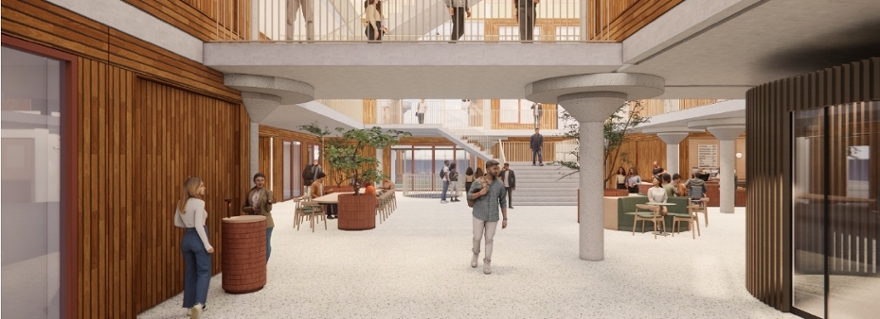
Interior design Aleida Nijland: light, recognisable and future-proof
During the meeting on 26 February with the future users of Aleida Nijland, design agency Studio Linse presented the interior design. The design is based on earlier input from users, and focuses on functionality, comfort and a future-proof working environment. The interior has been designed to be a pleasant, user-friendly space that will also be easy to maintain. The more than 25 attendees responded positively to the inspiring design.
From outside to inside: light, openness and greenery
Where the existing building was perceived as dark, the new design revolves around light and transparency. Greenery and natural materials are brought inside, partly through the courtyard garden. At the same time, attention is paid to a sense of comfort and safety: warm materials, rounded shapes and comfortable seating areas create a welcoming atmosphere.
Four houses – four seasons
The original building consisted of four ‘houses’. This concept is reflected in the interior, with each house representing a season and having its own colour scheme. Spring and summer are located on the north side of the building; autumn and winter on the south side. This layout ensures recognition and orientation, with colour palettes and graphic elements that differ per ‘house’. Studio Linse drew from a collection of references to poetry, landscapes and materials for their inspiration.
-
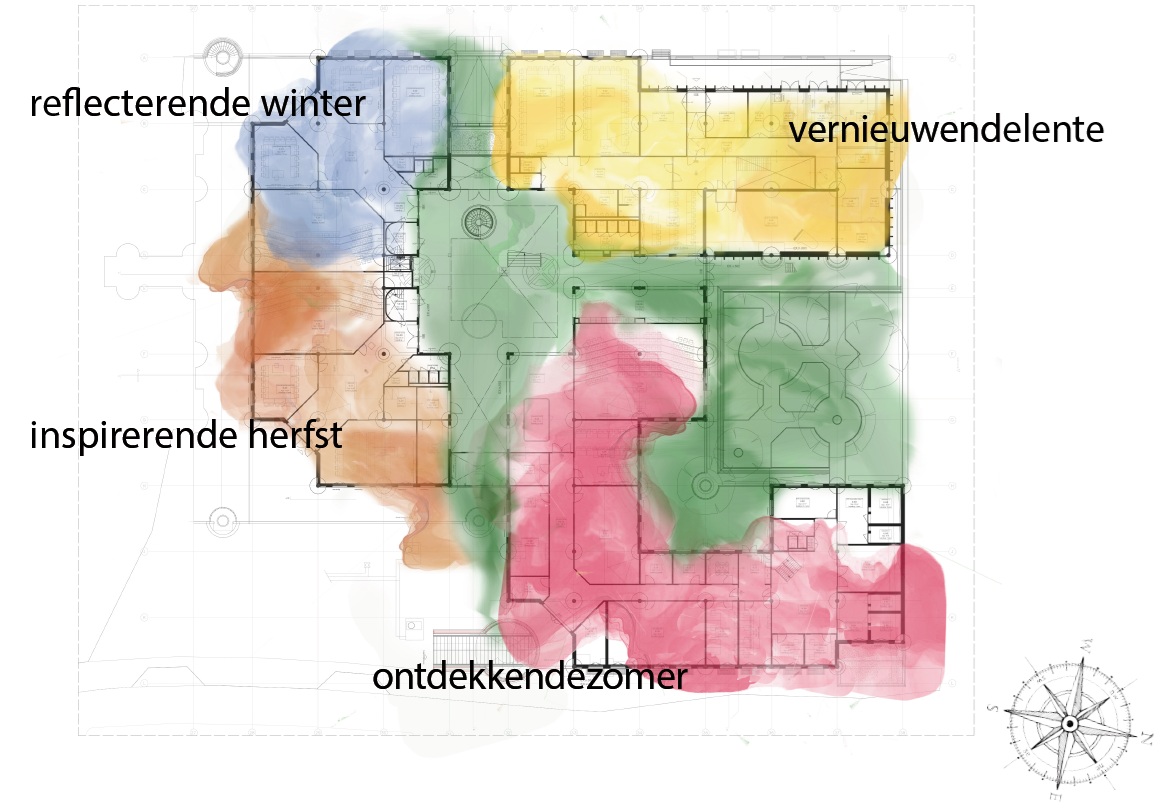
Orientation - season per house (This interior design is not final.) -
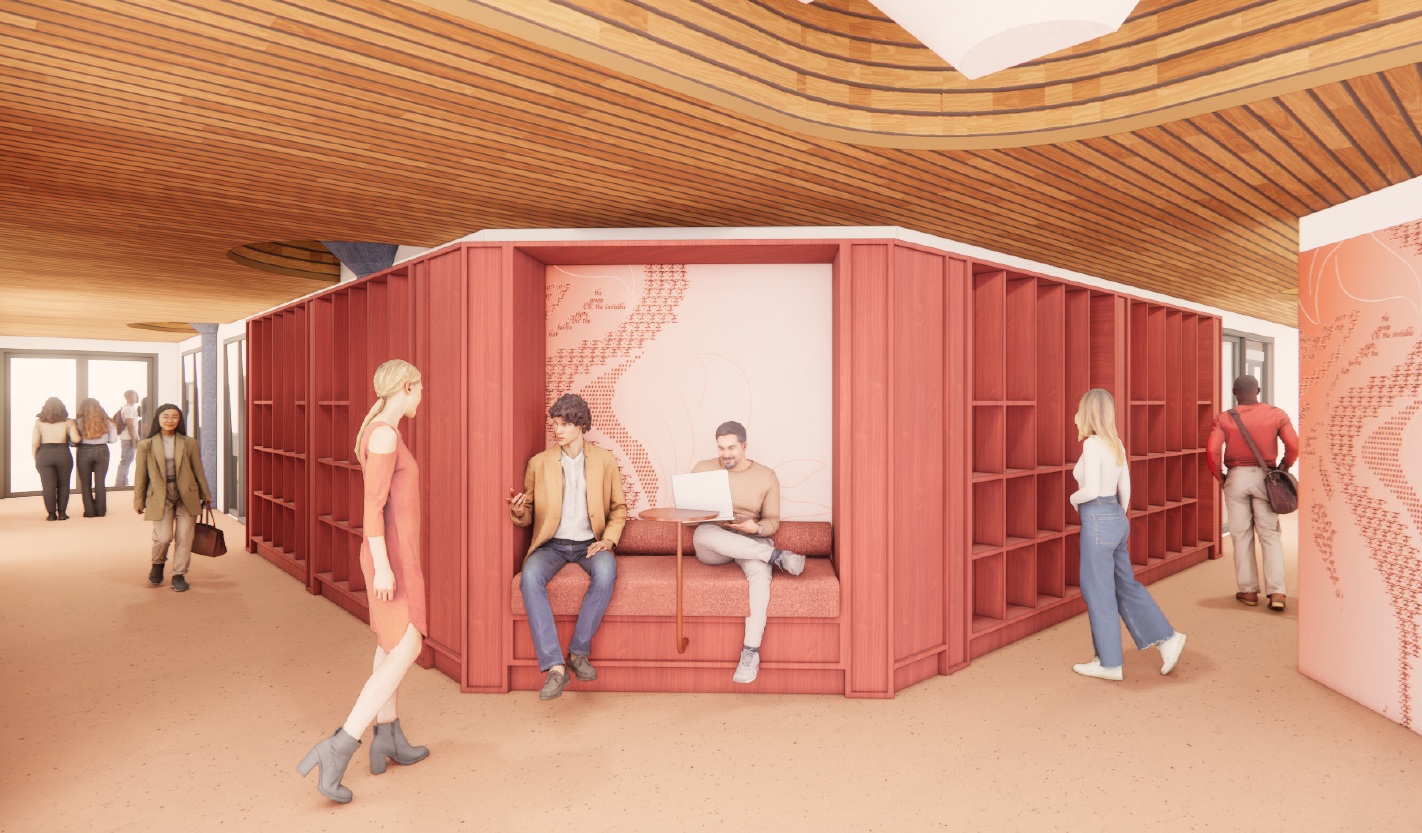
Impression season summer (This interior design is not final.)
The atrium: heart of the building
The atrium constitutes the heart of the building and offers space to meet and work briefly. Key elements include:
- Seating areas to meet, have discussions or work briefly
- A multifunctional reception desk
- A large communal table
- A coffee corner
The translucent roof — still being designed — will be similar to the roof of Herta Mohr, as will the terrazzo floor.
Garden corridor and workspaces
The corridor leading to the courtyard garden will be a bright walkway with seating areas, benches and vending machines integrated into niches. It offers space for short encounters and breaks.
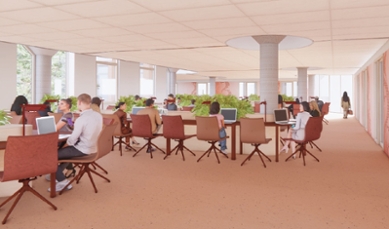
On the second floor, in the ‘autumn and winter area’, functional elements are concealed in a wall of cabinets, alternated with seating, printers, bookshelves and a pantry. This creates calm and clarity. The common room becomes a space for informal work and meeting, with a long table, small separate tables, a bar and a kitchenette.
A red colour scheme has been chosen In the entrance area, where the Labs will be located, with different shades on the floors and walls, guiding users to all labs and studios.
-
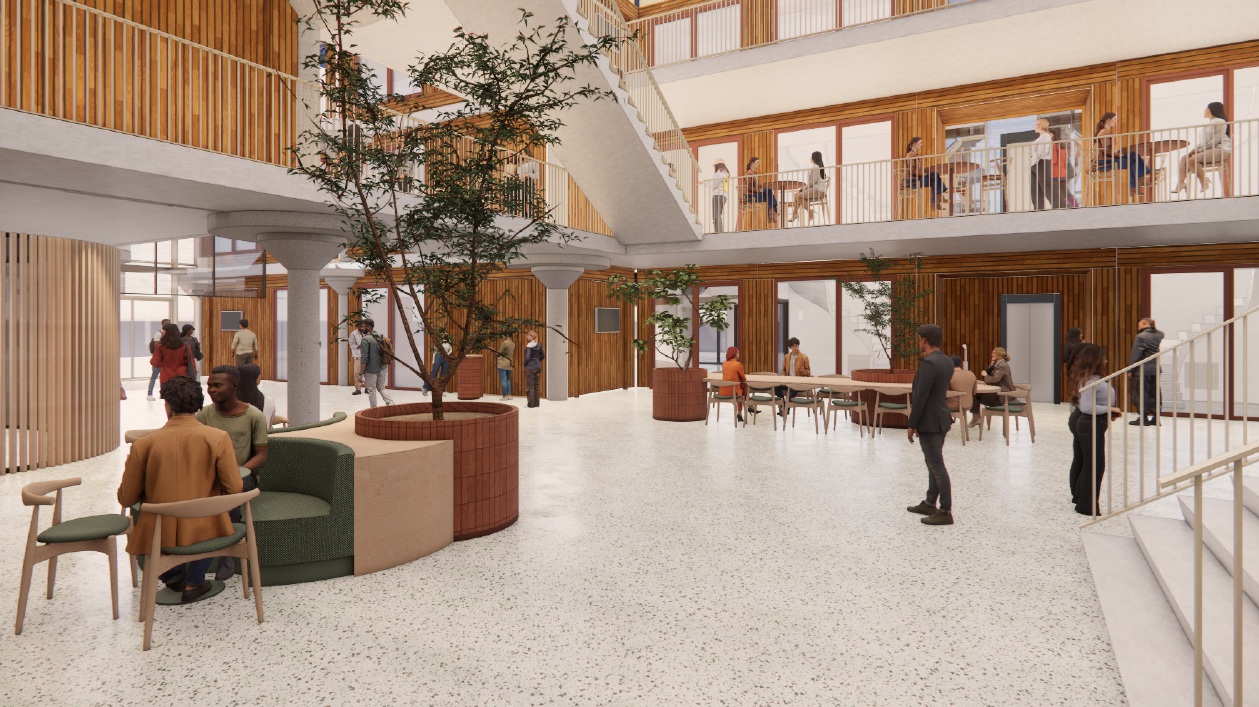
Atrium (This interior design is not final.) -
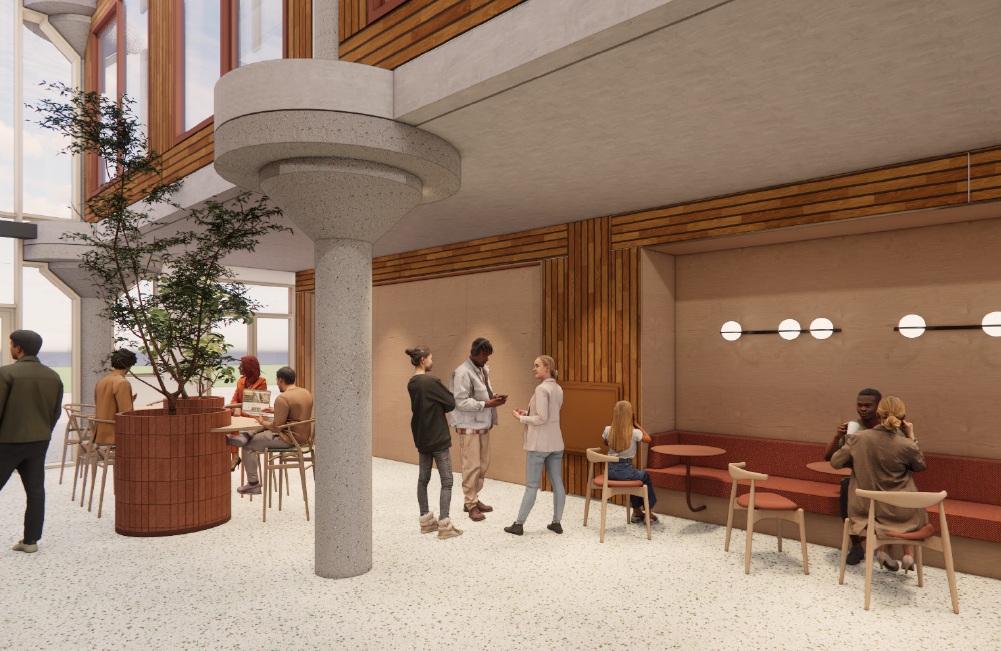
Impression garden corridor (This interior design is not final.)
Summary of questions raised during the meeting
Use of spaces
- Common room: primarily intended for LUCL, but accessible to all staff.
- The current student space, housed in Huizinga and previously in De Vrieshof, will not move to Aleida Nijland for now; it will remain in Huizinga.
- Students can move throughout the building, but some spaces are specifically intended for staff. The outdoor garden is considered an additional meeting place for students and lecturers.
Facilities
- Coffee bar: fewer seats than in the other building due to limited space and smaller capacity; options for adding a few seats are being explored.
- Power outlets: the request for at least one outlet per seat will be taken into account.
- Waste points: comments will be taken into consideration; placement will be optimised to reduce waste.
Interior & identity
- Designs with texts and poems will follow in a later design phase.
- Vegetable garden: a space will be created in either the courtyard or rooftop garden.
- PhD candidates: the wish for larger group rooms (6–8 people) is being explored.
Outdoor space
- Requests for more seating areas and picnic tables will be examined.
Next steps toward an attractive, sustainable campus
With this design, the campus is taking a significant step towards a modern, sustainable and inviting environment for work and study. In the coming period, the design will be developed further and shared through the staff website. Future users will be kept informed by email.
If you have any questions about the design or the development of Aleida Nijland, please send an email to Hc-info@hum.leidenuniv.nl.