1,189 search results for “biological cock” in the Public website
-
Bouncing gel balls popular in the media
The explanation from physicist Scott Waitukaitis for the screaming and bouncing gel balls in a hot pan has been covered in several media, including the Washington Post.
-
Skin Deep? Reading the Surfaces of the Body in Ancient Greek Literature and Science
The skin has recently gained attention within body studies for its many specific cultural and social associations, in addition to its biology. This project aims to examine the different layers of meaning and the functions invested in the skin in ancient Greece: how did ancient Greek literary and medical…
-
Research
The chemical industry must continue to innovate for a more sustainable, healthier society. The reseachers from the Leiden Institute of Chemistry (LIC) contribute by applying their knowledge to themes such as sustainability, energy and health.
-
About the programme
The MSc programme Physics offers 5 research-oriented specialisations where you can focus on Theoretical Physics, Quantum Matter and Optics, Biological and Soft Matter, or Cosmology. You can also combine Physics with education, management or science communication.
-
Topological decoding of biomolecular fold complexity
Biological polymers, including proteins and the genome, undergo folding processes crucial for their proper functioning. Even slight changes in the folding structure of these biopolymers can have significant implications, leading to the development of various pathological conditions, such as neurodegenerative…
-
Anisotropy in cell mechanics
Mechanical interactions between cells and their environment play an important role in many biological processes.
-
Liposomes as delivery system for allergen-specific immunotherapy
In this book liposomes are explored as delivery system for allergen-specific immunotherapy. Both cationic and anionic formulations are prepared with Bet v 1, one of the allergens in birch pollen.
-
Search and rescue: tackling antibiotic resistance with chemistry
With the rise of multi-drug resistant bacterial pathogens, the possibility of a post-antibiotic world is quickly becoming reality.
-
Human skin equivalent barrier optimization
The currently available in vitro generated human skin equivalents resemble the human skin in many aspects. However, some essential barrier characteristics do not fully mimic the native barrier. Consequently, the human skin equivalents cannot be used for screening of drugs for skin penetration.
-
Quantifying nucleosome dynamicsand protein binding with PIE-FCCS and spFRET
In this thesis I describe the results of Pulsed Interleaved Excitation and Fluorescence (Cross) Correlation Spectroscopy (PIE-F(C)CS) combined with single-pair Förster Resonance Energy Transfer (spFRET) used to study dynamics in single nucleosomes, which depends on subtle differences in the length of…
-
Microneedle-based drug and vaccine delivery via nanoporous microneedle arrays
In the literature, several types of microneedles have been extensively described. However, porous microneedle arrays only received minimal attention. Hence, only little is known about drug delivery via these microneedles. However, porous microneedle arrays may have potential for future microneedle-based…
-
Flow Cytometry Core Facility
The LUMC Flow Cytometry Core Facility accommodates all research and diagnostic flow cytometry equipment of the LUMC.
-
BioTherapeutics
Research in the BioTherapeutics research programme is aimed at a smoother and speedier transition from preclinical research to pharmacological interventions, and the delivery of drugs in the human body by use of small molecules and biologics.
-
Two-photon luminescence of gold nanorods: applications to single-particle tracking and spectroscopy
Gold nanorods are biocompatible nanoparticles that present an excellent two-photon signal that can be used to get high spatial resolution inside living cells. Gold nanorods are photostable and therefore can be followed inside cells for long time, with possible applications as trackers in live cells.
-
Immunotherapy to limit atherosclerosis-projects
For more information regarding ongoing research projects, please contact Prof. Johan Kuiper.
-
Potentiation of Gram-positive specific antibiotics against Gram-negative bacteria through outer membrane disruption
Extending our current arsenal of antibiotics is key to staying ahead in the arms race between humans and resistant bacteria.
-
Why Leiden University?
The Leiden Institute of Chemistry (LIC) offers a unique tailor-made programme in Chemistry. You can customize the programme to your own interests and ambitions with the help of your own personal mentor. Your study will focus on either Chemical Biology or Energy & Sustainability. During the Master's…
-
More efficient learning thanks to sleep
Young children, adolescents and students may experience learning difficulties as a result of lack of sleep. Dr Kristiaan van der Heijden investigates sleep problems and solutions for various age groups.
-
Dual appointment of seven new Medical Delta professors
Seven new Medical Delta professors revealed their research plans in a lecture marathon on 21 June. The professors at Leiden University, the LUMC, Delft University of Technology and the Erasmus Medical Centre Rotterdam operate at the interface between life sciences and health and technology.
-
Chimpanzees recognise one another from their rear ends
It is important for social animals to be able to recognise one another quickly. Humans are able to recognise each other immediately from their faces. Faces are also important for chimpanzees, but a new study by neuropsychologist Mariska Kret in PLOS ONE shows that the animals' buttocks also play a…
-
Leiden University wins the 2016 Kalshoven IHL Moot Competition
Every year, the Netherlands and Belgium Red Cross organize the Frits Kalshoven International Humanitarian Law Moot Court Competition, which brings together students from both Dutch and Belgian universities.
-
Leiden University wins the 2019 Frits Kalshoven International Humanitarian Law Competition
Every year, the Netherlands and Belgium Red Cross organize the Frits Kalshoven IHL Competition, which brings together students from both Dutch and Belgian universities.
-
Research Themes
Members of the collective explore what it means to be ‘human’, in the past and present, from a range of different perspectives and inter-disciplinary approaches.
-
Research with animals
At Leiden University, in both our biomedical and biological research, we use laboratory animals. Learn more about these specific areas of research and the goals we aim to achieve through these studies.
-
Molecular Physiology
Molecular Physiology is a research group at the Leiden Institute of Chemistry dedicated to the design, synthesis and application of chemical tools to study important biological and biomedical questions. The group is headed by Prof. Dr. Mario van der Stelt and includes the research lines of Assistant…
-
Fires, Food and the Evolution of Human Detoxification Capabilities
A study by a Leiden-Wageningen group shows that present-day humans are biologically poorly equipped to deal with the toxins they are regularly exposed to in smoky environments: compared to earlier hominins, we modern humans are probably even worse off. The study appeared in Molecular Biology and Evolution.…
-
Protein condensates as Materials
We have recently discovered that there are biological proteins that phase separate out of solution much the way oil will de-mix from water (see movie). These form dense, liquid-like phases called protein condensates.
-
Theoretical Physics
In the spirit of 'unity in diversity', our objective is to promote insight into and appreciation for the wonder that the same physical laws and mathematical concepts apply to the whole of nature, from the largest to the smallest energy and length scales. We strive for the application of abstract theoretical…
-
Flagships
In CCLS several subgroups have formed, below you can find an overview of these groups with the names of the leading researchers and a short outline of the project.
-
Education
Education & outreach
-
Bright Horizons: Adjunctive Light Therapy for PTSD
Exploring the synergy of light therapy and exposure psychotherapy to enhance PTSD treatment outcomes.
-
New professor Luca Giomi creates his own physics of living systems
Swarms of drones, pedestrians or the cells in your body. Those are all examples of active matter: materials whose building blocks can move autonomously. That’s what Luca Giomi studies. Giomi has been appointed Professor of theoretical physics in the area of soft matter and biological physics at the…
-
 Donny de Bruin
Faculty of Science
-
Tuo Maidina
Faculty of Science
-
 John van Noort
Faculty of Science
-
 Silvana Caipa Cure
Faculty of Science
-
Yvonne Kerkhof
Faculty of Science
-
Jingjing Wang
Faculty of Science
-
 Wim van Saarloos
Faculty of Science
-
Sourav Roy
Faculty of Science
-
Sander Kammeraat
Faculty of Science
-
 Margot Teunisse
Faculty of Science
-
 Martina Huber
Faculty of Science
-
 Connie van Gent-van Dorp
Faculty of Science
-
Tommaso Gili
Faculty of Science
-
 Colin Meulblok
Faculty of Science
-
 Edgar Groenen
Faculty of Science
-
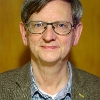 Peter Gast
Faculty of Science
-
 Jeremy Ernst
Faculty of Science
-
 Alexandre Morin
Faculty of Science